

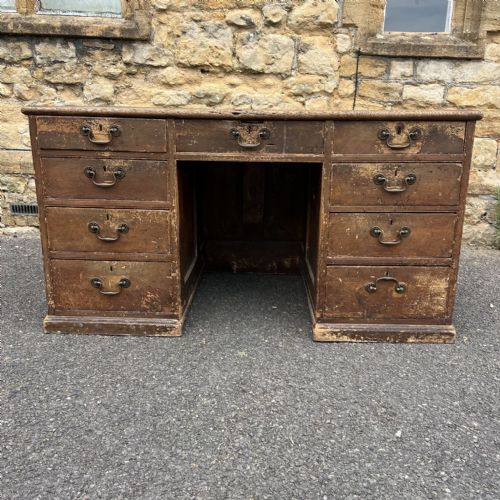
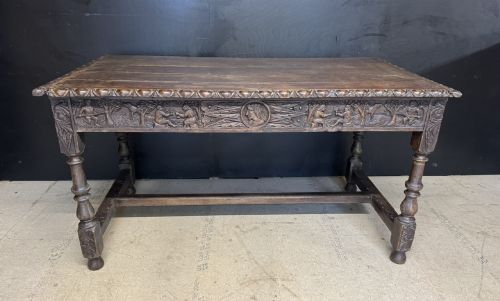
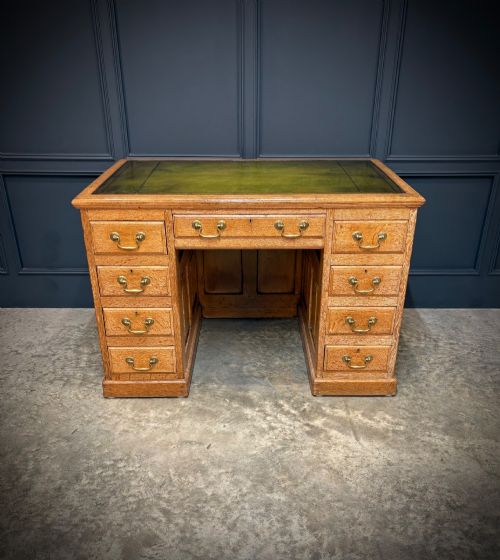
Victorian Oak Writing Desk
A victorian oak writing desk brings solid nineteenth-century gravity to a room, offering sturdy work surfaces built for real correspondence and record keeping.
Victorian Oak Writing Desk
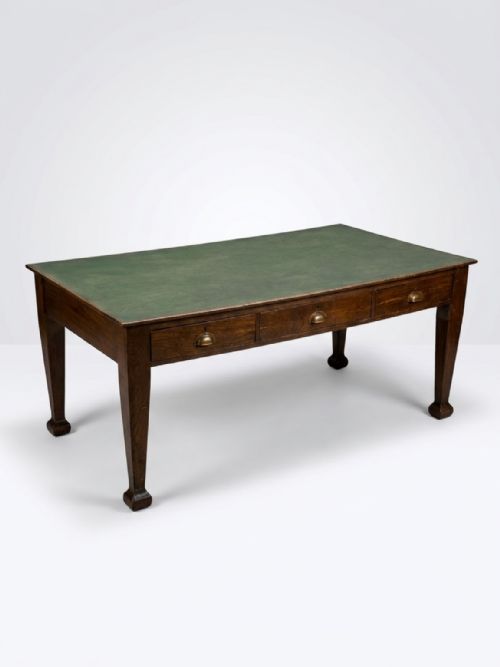
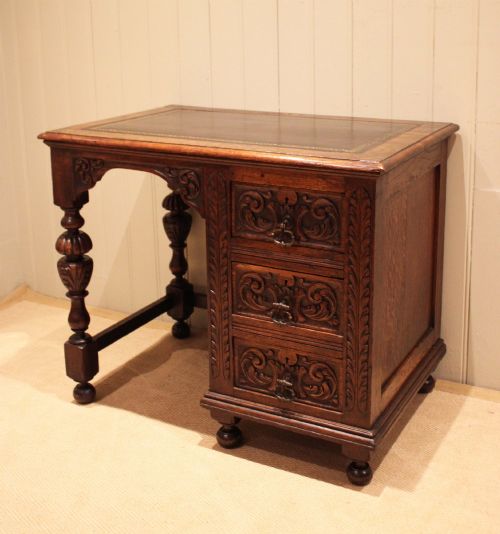
A buyer seeking a victorian oak writing desk encounters twin pedestal forms, kneehole tables, and slant-front bureaux dating from the mid-nineteenth century through to the early twentieth century. These practical pieces originate from domestic studies, estate offices, and institutional libraries across Britain.
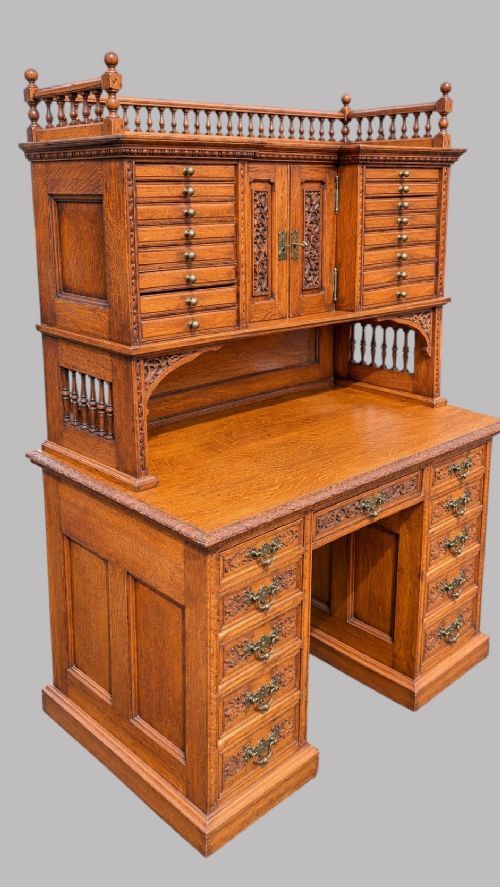
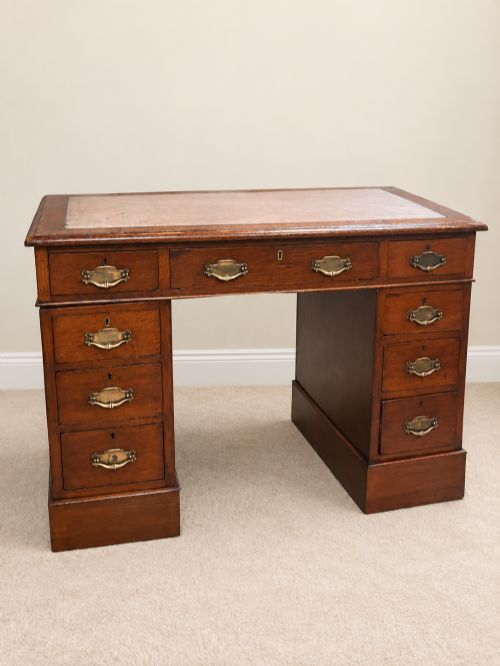
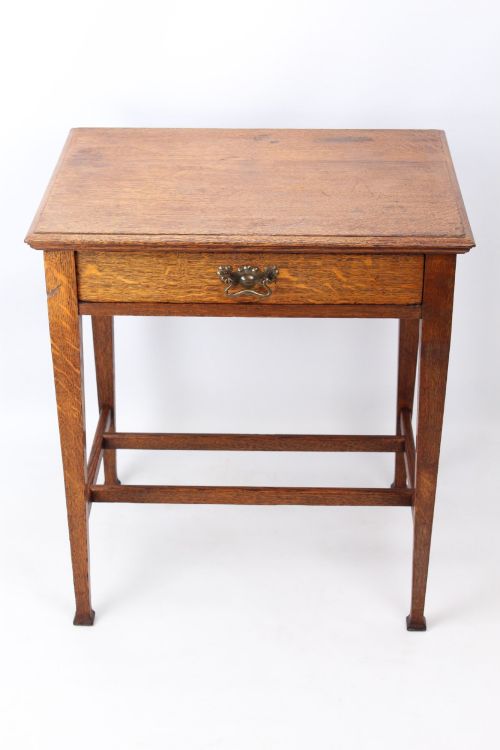
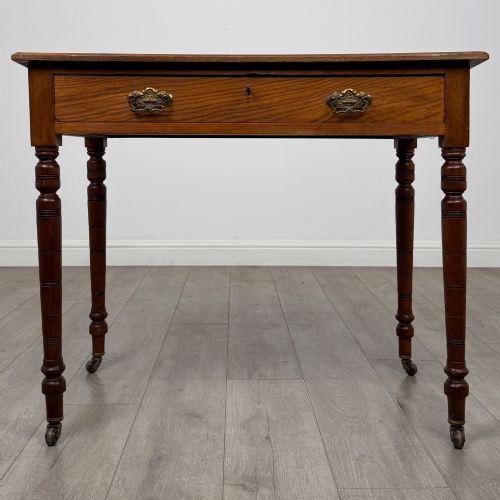
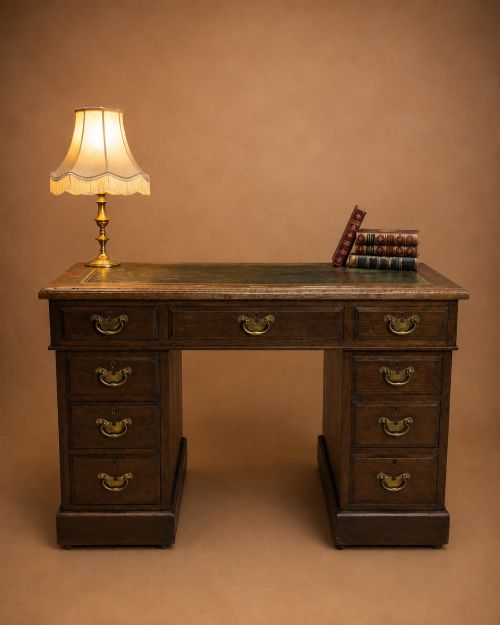
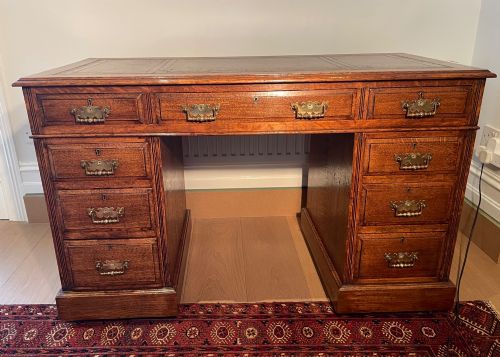
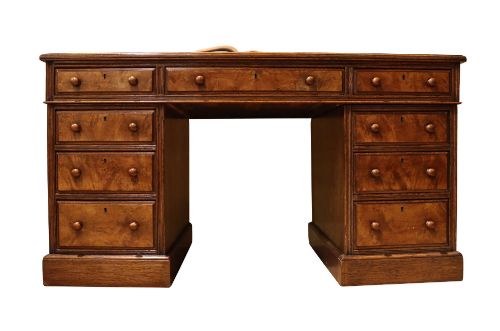
Pedestal configurations dominate the selection, featuring banks of drawers flanking a central recess, alongside simpler writing tables equipped with one or more frieze drawers. Heavier partners desks and carved library tables appear frequently, reflecting the formal administrative needs of the period.
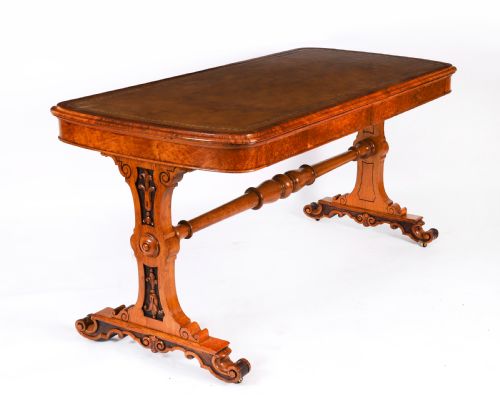
Stylistic variations range from restrained aesthetic movement designs and arts and crafts simplicity to heavily carved gothic revival and neo-jacobean expressions. Oak remains the consistent structural constant across these diverse formats, often enhanced by burr walnut veneers or golden figured grain.
Materials and Construction
Makers utilised solid oak and golden oak for structural frames and primary drawer carcasses, frequently pairing these with secondary timbers like pine and mahogany for drawer linings. Quarter-sawn oak surfaces often display distinct medullary rays, valued for both strength and decorative figure.
Writing surfaces typically incorporate inset tooled leather or gilt-tooled skivers, bordered by thumb-moulded solid wood edges. Brass drop handles, ceramic castors, and working lever locks provide the functional hardware essential to nineteenth-century cabinet work.
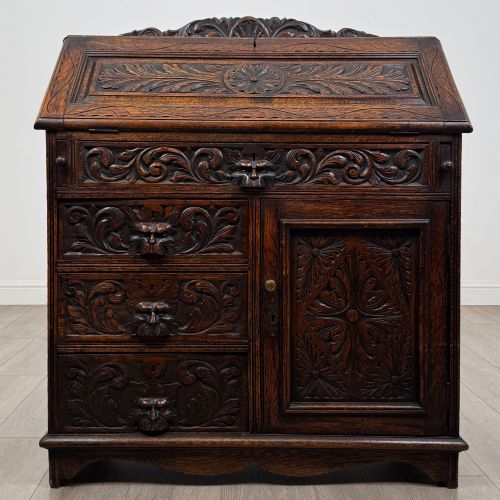
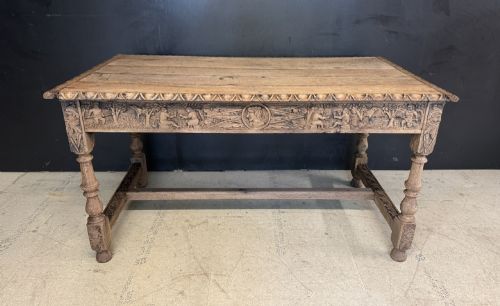
Carved ornamentation, including green man motifs, lions' heads, and linenfold panels, is executed directly into the solid timber or applied via moulded mouldings. Drawers employ traditional hand-cut dovetail joints, securing long-term durability under daily use.
Victorian Oak Writing Desk Retail Price Guide 2026
Typical asking prices for victorian oak writing desk among the pieces listed under this phrase on Sellingantiques today, from the lower quarter to the upper quarter. They describe what is for sale here now, not the wider market.
Estate desks occasionally conceal hidden spring-loaded compartments behind innocent-looking pigeonholes for secret correspondence.
Standards of Execution
Quality separates through the selection of timber, distinguishing plain utilitarian boards from highly figured golden oak, pollard oak, or matched burr walnut veneers. Superior examples exhibit continuous grain matching across drawer fronts and symmetrical figure disposition on expansive tops.
The sophistication of the joinery and carving dictates upper tiers of craftsmanship, moving away from mass-produced factory milling toward crisp, deep relief work executed by skilled hands. Original fitted interiors, complete with secret compartments, pigeonholes, and matching stationery boxes, elevate the integrity of a piece.
The inclusion of maker signatures, stamps, or documented attributions to notable cabinet-making firms provides a distinct benchmark of excellence. Retention of original brasses, functioning locks with matching keys, and undamaged leather writing surfaces further define the better survivors.
James Shoolbred & Co·Blyth & Son·Gillows
The Victorian Oak Writing Desk Glossary
- Pedestal desk
- A heavy freestanding desk comprising two banks of drawers supporting a top, often arranged as a nine-drawer block.
- Partners desk
- A large double-sided writing table designed for two people to sit opposite one another, featuring drawers on both faces.
- Kneehole desk
- A compact writing desk with a central recessed space for the legs, flanked by single or double columns of small drawers.
- Bureau
- A desk featuring an angled hinged flap that drops forward to reveal an internal arrangement of pigeonholes and small drawers.
- Skiver
- A panel of split sheepskin or goat leather inset into the top of a desk to provide a smooth writing surface.
Victorian Oak Writing Desk: Frequently Asked Questions
How do I tell a partners desk from a standard pedestal desk?
Partners desks feature working drawers and cupboards on both sides, allowing two people to work face-to-face across the centre of a room. Standard pedestal desks have drawers on the front only and sit flush against a wall.
Examining the rear panel reveals either fielded panels or matching drawer banks, confirming the double-sided utility intended for boardrooms and libraries.
What is a green man carving on these desks?
A green man motif depicts a human face surrounded by or sprouting from foliage, vines, or leaves, symbolising rebirth and the spirit of vegetation. This decorative carving style appeared frequently on gothic revival and late nineteenth-century oak furniture.
Cabinet makers used this sculptural detail to add classical and folkloric depth to drawer fronts and corners.
Are these desks suitable for daily computer work?
Nineteenth-century writing desks accommodate modern laptops and paperwork comfortably, provided the kneehole height and depth match ergonomic needs. Many pedestal designs offer generous surface area and deep drawers for modern storage.
Care should be taken to protect the historical leather skiver and polished oak surfaces from heat and moisture.
How do I care for the leather writing surface?
Leather skivers require gentle cleaning with a slightly damp, soft cloth and periodic treatment with neutral leather balms to prevent cracking. Avoid harsh chemical cleaners or excessive water, which can damage the underlying gold tooling and wood.
Using a blotter or desk pad during heavy writing preserves the vintage leather for future years.