
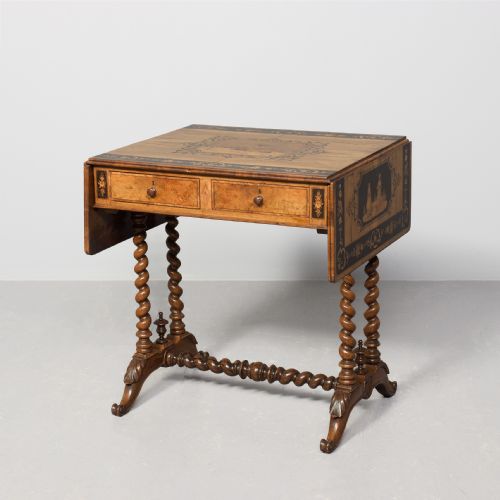
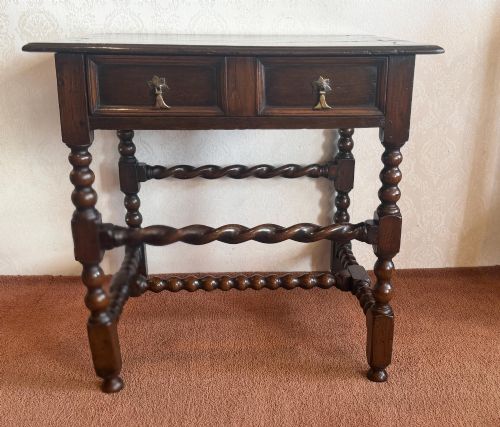
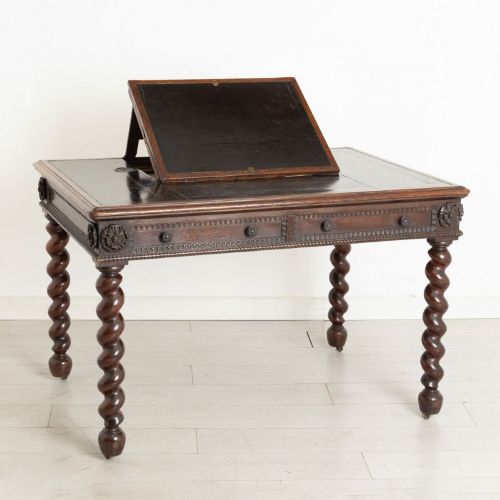


Barley Twist Writing Table
A barley twist writing table brings sculptural turned timber and practical workspace into a room, offering sturdy charm for daily study.
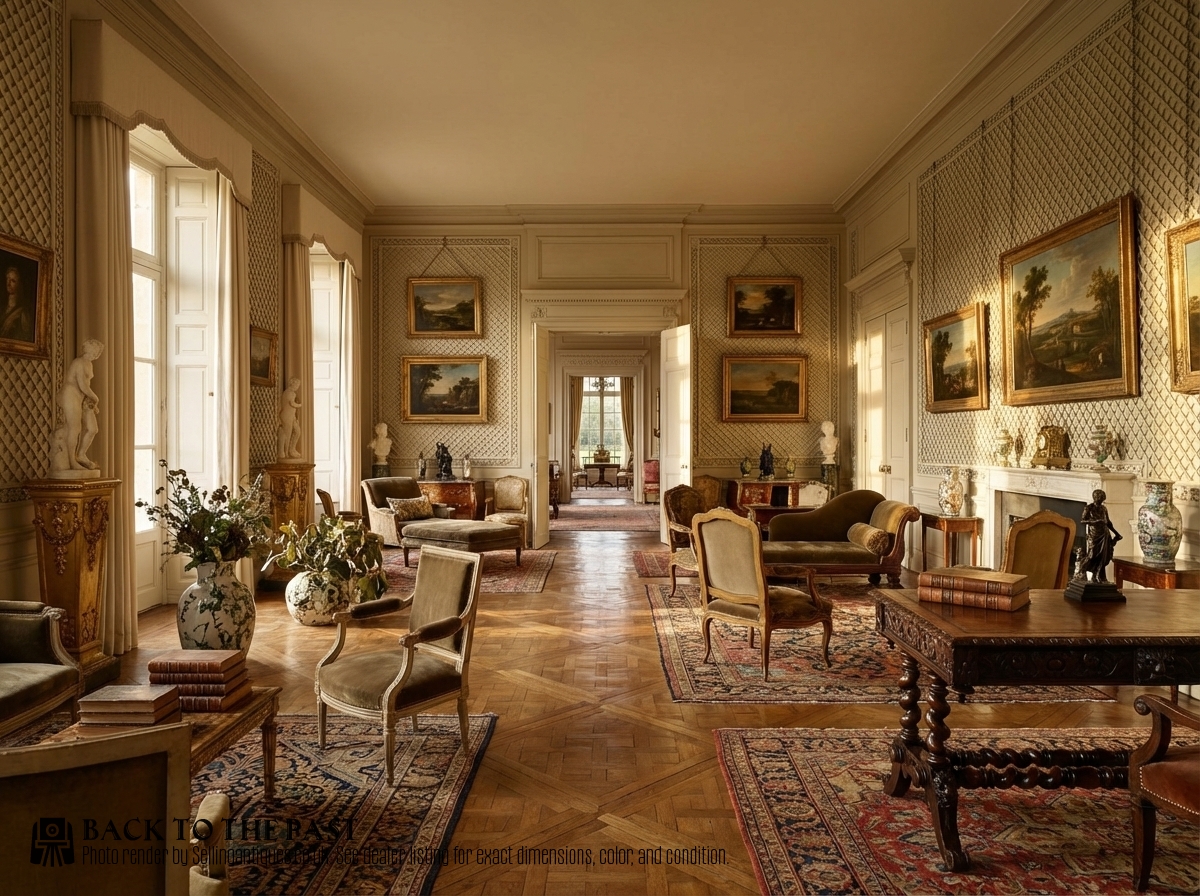
Barley Twist Writing Table
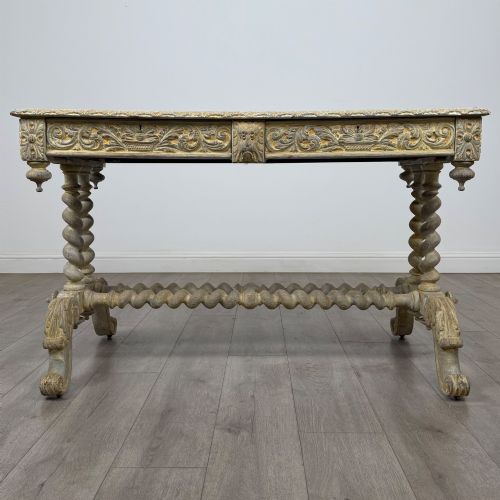
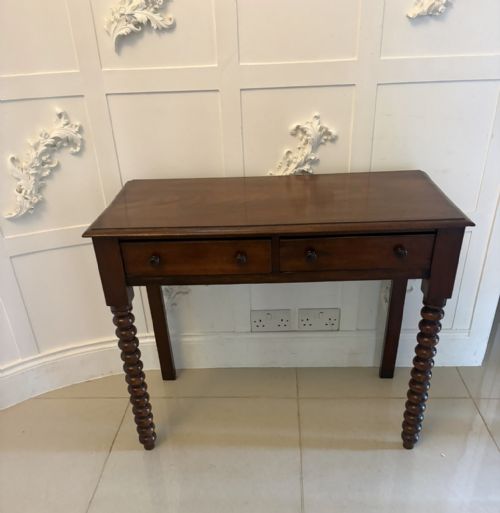
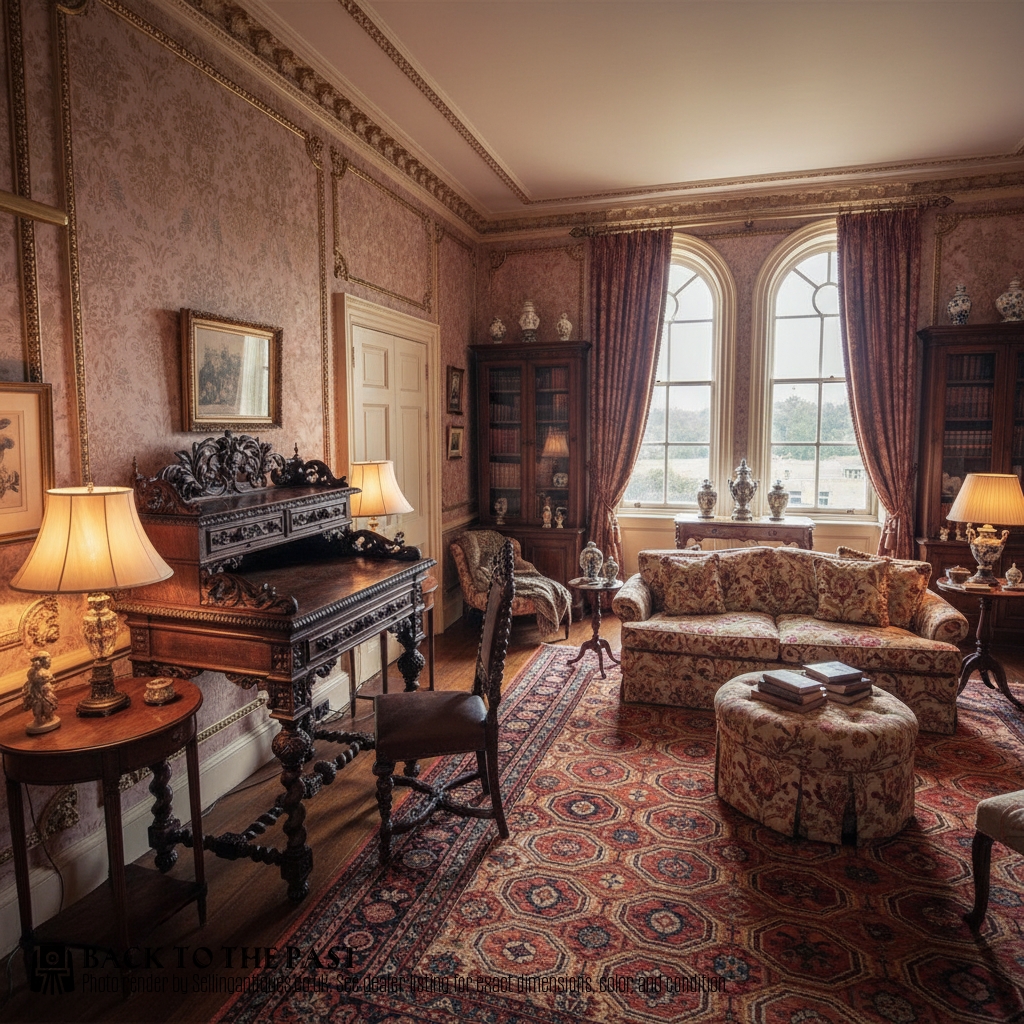
A barley twist writing table combines a functional surface for correspondence with distinctive helical turned legs, often appearing across nineteenth-century Victorian pieces and earlier revival styles. These items serve as practical desks, side tables, or library furnishings, carrying a heritage of solid craftsmanship.
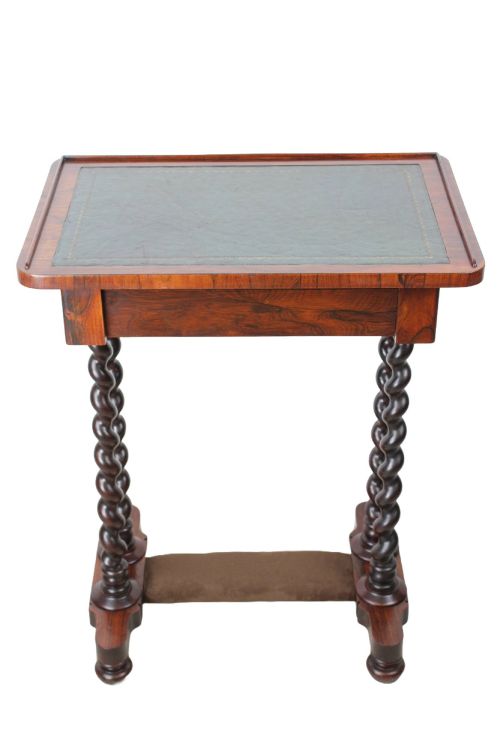
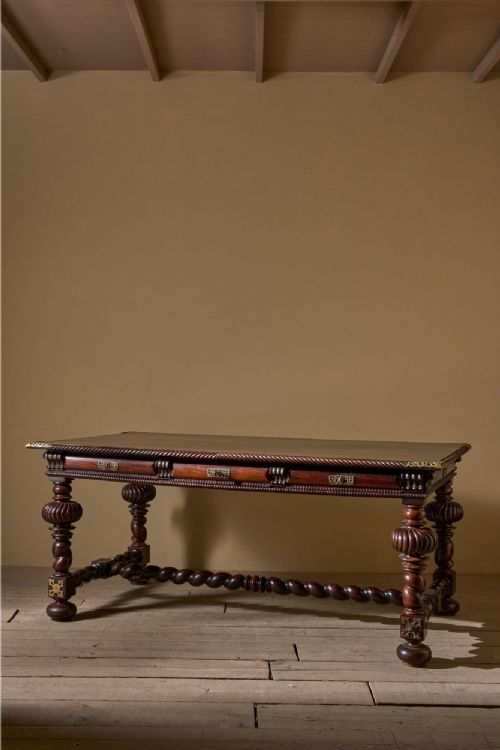
The most common versions met on this page date from the Victorian period, frequently shaped in carved oak or rich rosewood. Makers drew on Jacobean and seventeenth-century influences, applying deep spiral turnings to structural supports beneath leather-lined or timber writing surfaces.

How they were made
Cabinet makers utilised dense hardwoods such as oak, walnut, mahogany, and rosewood to construct the frames, ensuring the spiral turnings held their crisp profiles. Turning a timber column into a precise helical twist required steady hand-chiselling or lathe work, followed by thorough polishing to bring out the natural grain.
Many writing surfaces incorporated fitted inserts of tooled leather, whilst finer examples featured marquetry inlay, oyster veneering, or brass fittings. Structural integrity relied on traditional joinery techniques, uniting the turned legs with sturdy stretchers to support heavy timber tops.
Barley Twist Writing Table Retail Price Guide 2026
Typical asking prices for barley twist writing table among the pieces listed under this phrase on Sellingantiques today, from the lower quarter to the upper quarter. They describe what is for sale here now, not the wider market.
What varies in quality
The distinction between standard utility items and exhibition pieces lies in the precision of the timber carving and the selection of materials. Superior examples display deeply undercut spiral turnings, unwarped solid timber tops, and refined secondary woods.
Detailing in the decorative elements, such as intricate marquetry inlay, matched veneer grains, and high-grade brass hardware, separates simpler regional workshop items from exceptional cabinet maker output.
Edwards & Roberts
The Barley Twist Writing Table Glossary
- Barley twist
- A helical turn resembling a twisted rope, carved or lathed into furniture legs and columns. This decorative motif gained prominence in seventeenth-century English joinery and experienced revivals during the Victorian era.
- Marquetry inlay
- Decorative patterns formed by fitting contrasting veneer slices into a prepared timber ground. Craftsmen utilise this technique to ornament table tops and drawer fronts with floral or geometric designs.
- Oyster veneering
- The practice of slicing small branches transversely to produce circular, oyster-like patterns in wood grain. Walnut and laburnum timbers lend themselves particularly well to this decorative surface treatment.
- Stretcher table
- A table featuring horizontal rails connecting the legs near the floor for added stability. These wooden bars brace the structural load of heavy writing desks and side tables.
- Library table
- A large freestanding table designed for reading and writing, finished on all sides for placement in the centre of a room. These heavy pieces often incorporate drawers for stationery storage.
Barley Twist Writing Table: Frequently Asked Questions
What is a barley twist writing table?
A barley twist writing table is a desk featuring spiral-turned wooden legs that support a flat surface used for correspondence and study. These pieces blend functional workspace with decorative turned joinery popular in historical revival periods.
They appear in various timbers such as oak, walnut, and rosewood, often equipped with drawers for stationery storage. Their sturdy construction makes them suitable for everyday use in modern studies or living rooms.
How do I date a barley twist table?
Dating relies on examining the timber species, joinery methods, and the style of the carving. Nineteenth-century Victorian examples often show machine-assisted turning and standardised drawer construction compared to earlier seventeenth-century work.
Secondary woods used inside drawers and the type of finish applied also offer clues to the period of manufacture. Comparing the hardware and structural design against known revival eras helps narrow down the origin.
Where should I place a writing table?
A writing table works well placed against a wall or positioned centrally in a room if the back is finished with matching timber. Because many examples feature detailed grain and carved spiral legs, they suit studies, libraries, or living spaces.
Keeping them away from direct heat sources and strong sunlight protects the timber surface and any leather inserts from drying out over time.
What woods were used for these desks?
Cabinet makers utilised domestic and exotic hardwoods depending on the period and workshop standards. Oak and mahogany appear frequently across Victorian and Georgian pieces, providing robust support for daily writing.
Exotic timbers such as rosewood, walnut, and olivewood also feature prominently, selected for their rich grain patterns and suitability for fine veneer work.