



Barley Twist Library Desk
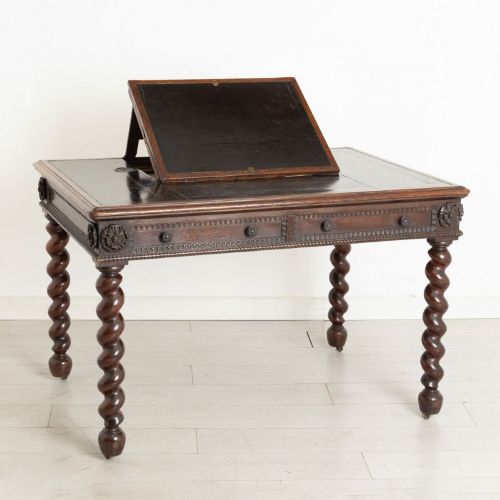
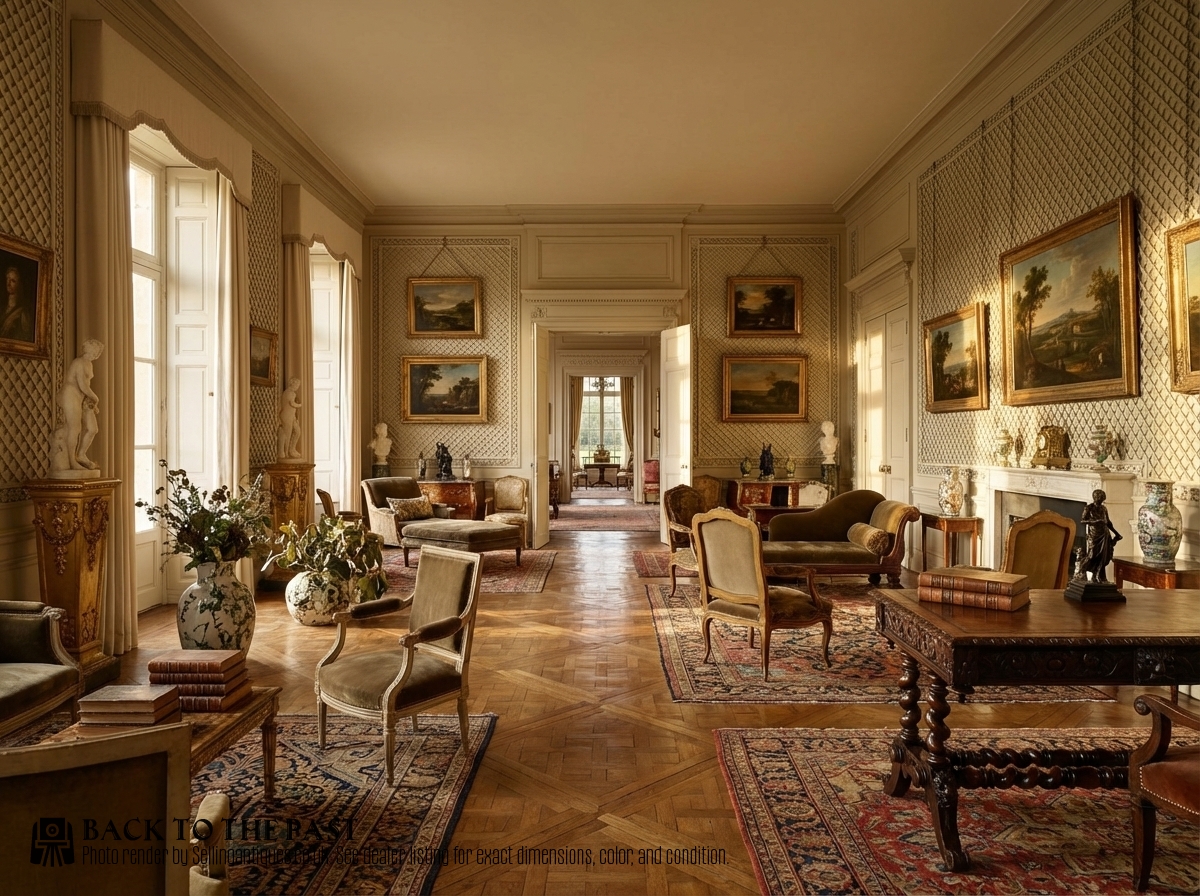
A barley twist library desk brings heavy timber and spiralled legs into a study, offering a working surface rooted in revival styles.
Barley Twist Library Desk
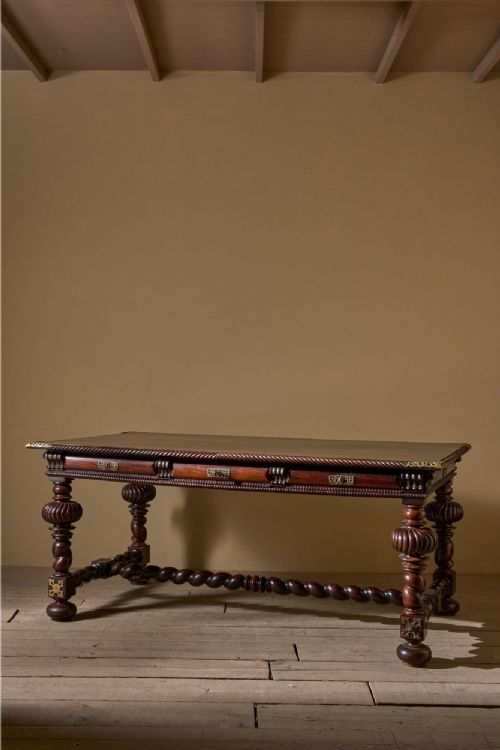
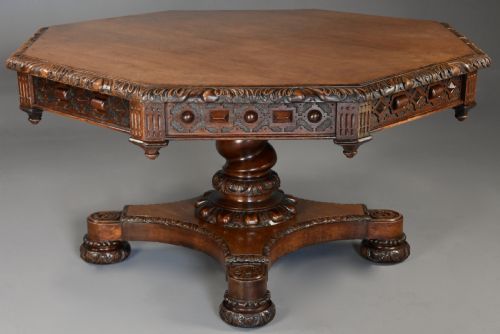
When you search for a barley twist library desk, you encounter heavy timber furniture designed for writing and study, most frequently found in oak across Victorian and revival periods. These pieces combine functional writing surfaces with the distinctive spiralled turning that defines the style.
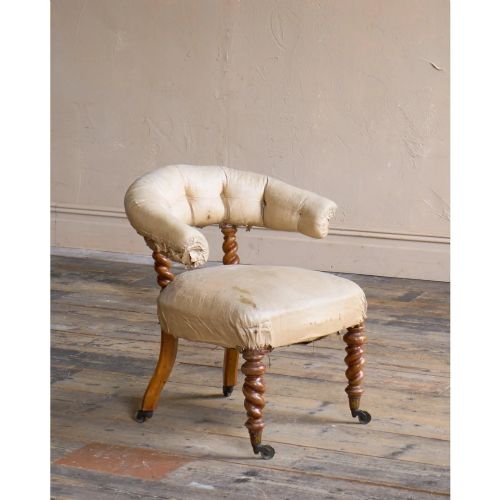
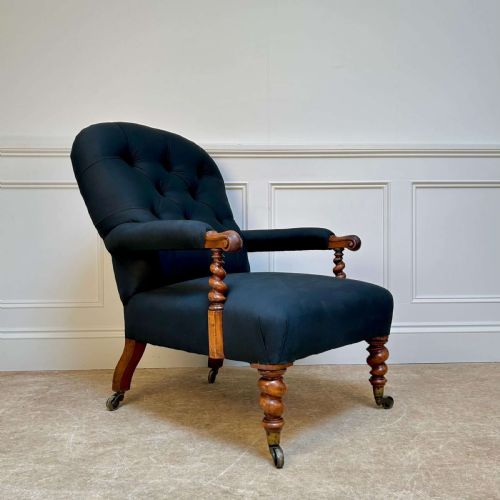
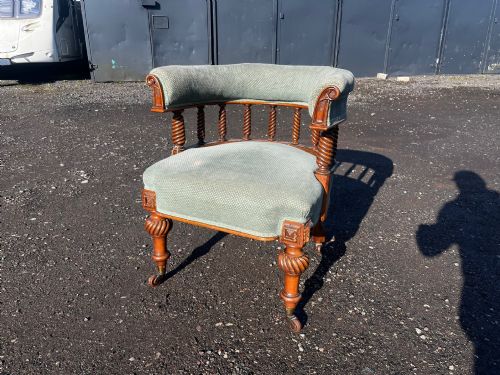
The selection ranges from compact side tables to large library tables and architectural desks, often accompanied by matching armchairs featuring similar turned woodwork. Oak predominates, alongside walnut, rosewood, and mahogany.
Origins stretch from the eighteenth century through the nineteenth century and into early twentieth-century revivals, drawing on Jacobean, Carolean, and Gothic influences.
How they were made
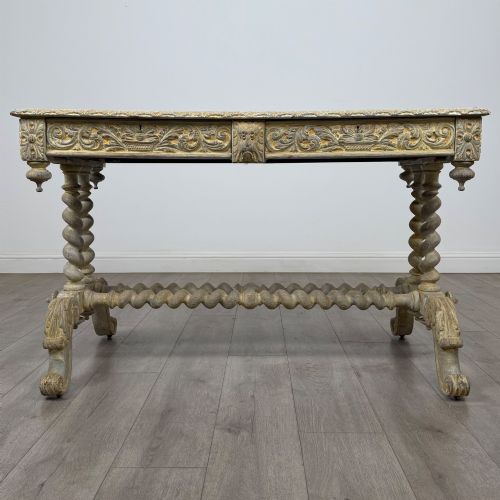
Cabinetmakers constructed these desks primarily using solid oak and walnut, occasionally incorporating exotic woods like rosewood and satinwood for veneer work. Turned elements such as barley twist legs required lathe work, while decorative panels and borders frequently displayed deep hand carving.
Leather inserts appeared frequently on writing surfaces, sometimes tooled or gilt, while structural hardware relied on brass fittings. Upholstered seating used traditional materials including calico and fabric over sturdy wood frames.
A grinning Green Man carved into oak stares out from beneath one Victorian table top.
What varies in quality
The distinction between standard production and exhibition quality lies in the crispness of the timber carving and the selection of figured veneers such as oyster walnut or marquetry. Superior examples display balanced proportions, dense hardwoods, and precise turning on the twist legs.
Joinery execution and the integration of secondary timbers dictate the longevity and structural integrity of each desk. Maker attribution, when present, elevates a piece through documented craftsmanship and superior finishing.
C Hindley And Sons·Edwards And Roberts
The Barley Twist Library Desk Glossary
- Barley twist
- A decorative turning technique resembling a spiralled rope, commonly utilised on table legs and chair supports. This form gained prominence during the seventeenth century and saw revivals in Victorian furniture.
- Library table
- A large freestanding table designed for a study or library, finished on all sides to allow placement in the centre of a room. These surfaces often incorporate drawers for writing materials.
- Neo-Jacobean
- A nineteenth-century revival style mimicking seventeenth-century English furniture design. It is characterised by heavy proportions, geometric paneling, and dark oak construction.
- Oyster veneering
- A method of cutting branches transversely to produce circular or oval veneer patterns resembling oyster shells. This technique appeared on fine tables during the seventeenth and eighteenth centuries.
- Goncalo Alves
- A dense tropical hardwood with contrasting dark brown and light golden-brown markings, sometimes utilised in nineteenth-century cabinetmaking.
Barley Twist Library Desk: Frequently Asked Questions
What is a barley twist desk?
A barley twist desk is a writing table featuring spiralled wooden legs and supports. These pieces draw heavily on seventeenth-century revival aesthetics.
They combine practical writing surfaces with robust timber construction, typically in oak or walnut.
How do I date an oak desk?
Dating relies on timber selection, construction methods, and stylistic influences such as Gothic or Jacobean revival motifs. Secondary woods and hardware also provide clues to the period.
Earlier pieces often exhibit hand-cut joinery and native hardwoods, while later revivals utilise machinery and varied imported timbers.
Where should I place a library table?
Library tables work best freestanding in the middle of a room because their finished backs allow all-round viewing. They suit studies, libraries, and large reception spaces.
Ensure adequate clearance around the table for chairs and movement.
Are these desks suitable for daily work?
These desks provide sturdy writing surfaces well-suited for daily use. Many feature drawers for stationery storage.
Leather tops require care to prevent drying, but solid timber surfaces endure regular writing tasks.