
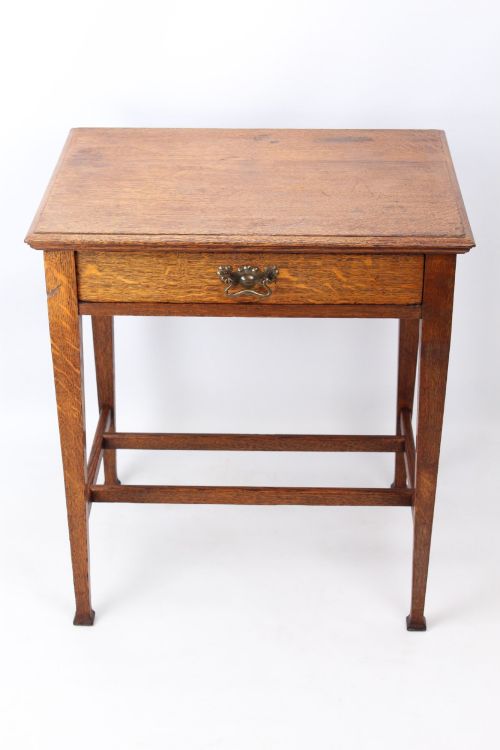
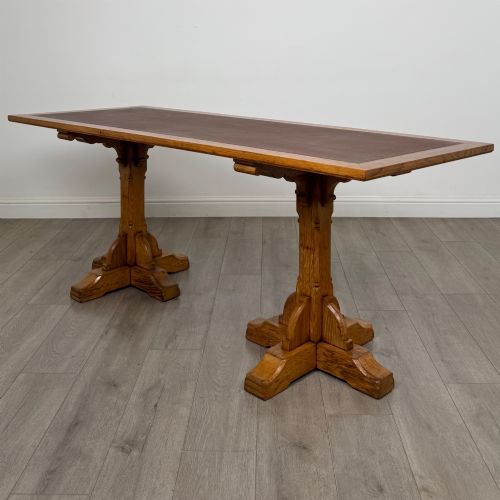
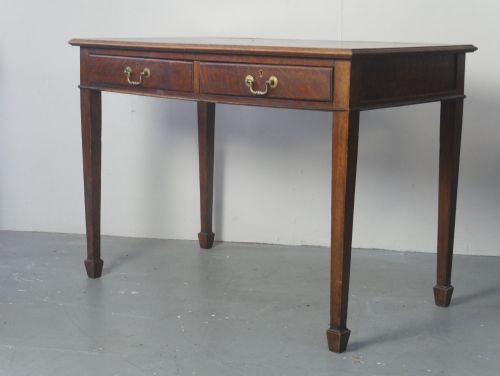
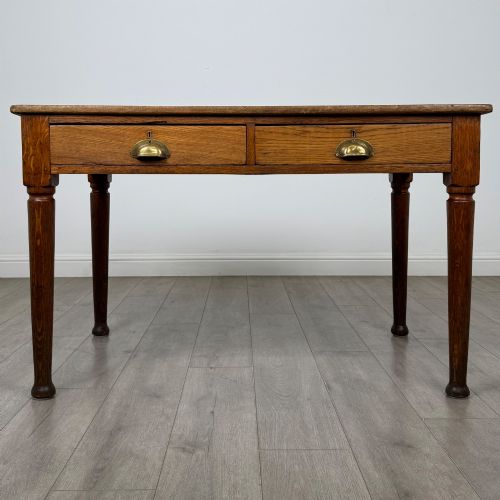

Edwardian Oak Study Table
An edwardian oak study table brings functional British craftsmanship and sturdy timber into a workspace.
Edwardian Oak Study Table
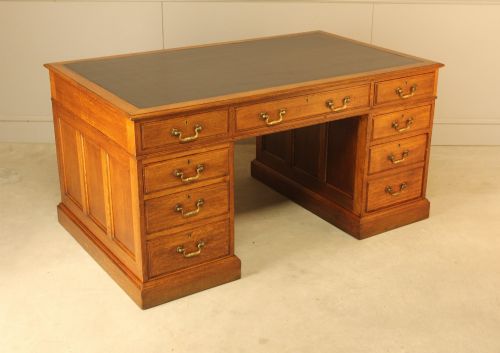
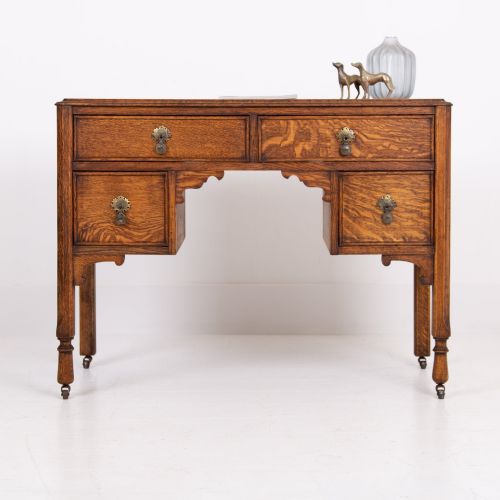
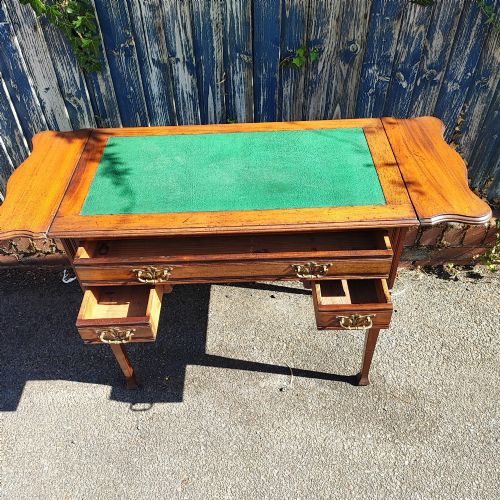
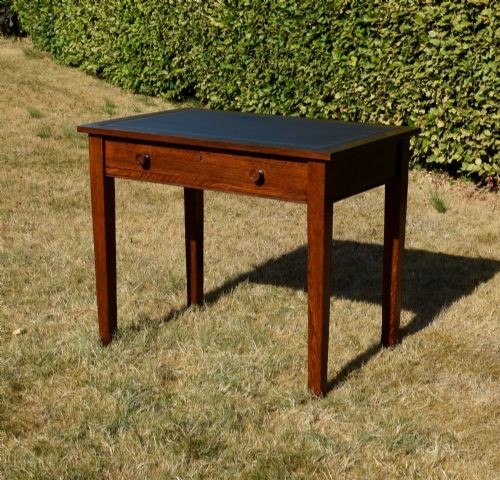
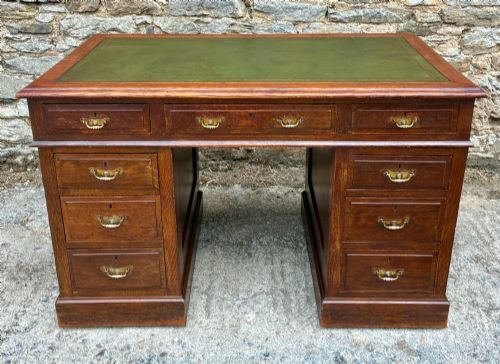
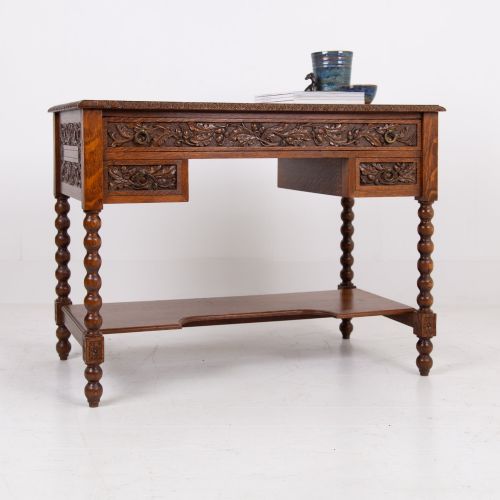
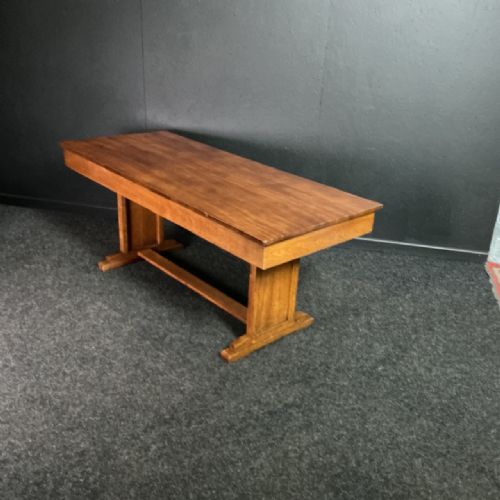
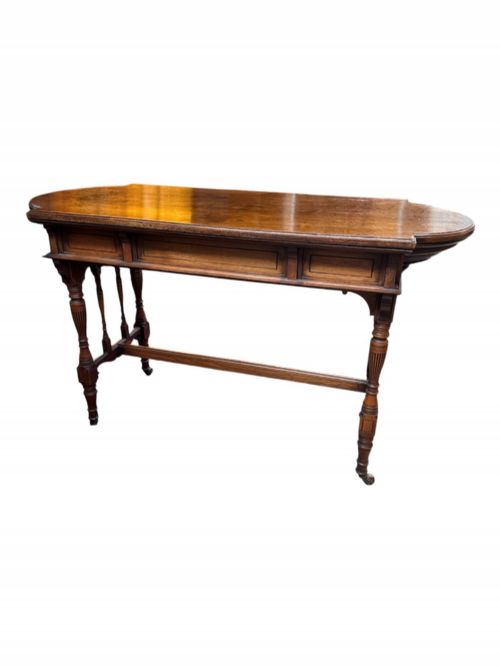
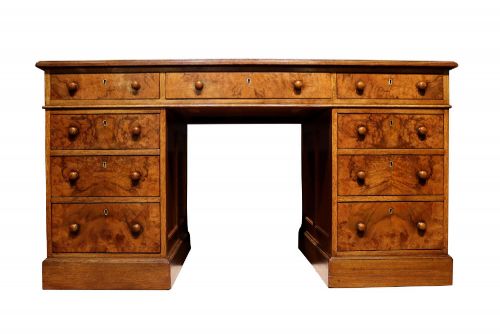
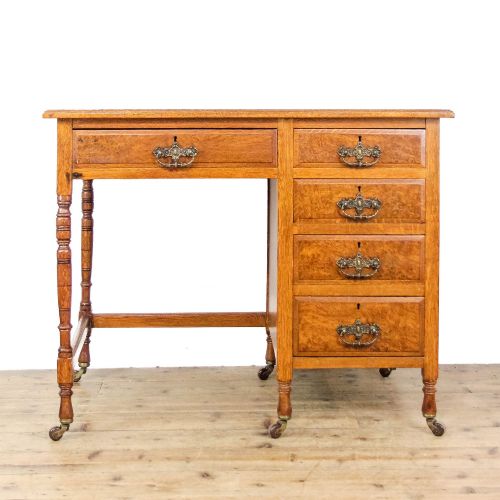
When you search for an edwardian oak study table, you encounter practical furniture designed for reading, writing, and administrative tasks. The listings here encompass pedestal desks, kneehole desks, partners tables, and library tables produced around the turn of the twentieth century. These pieces range from compact single-person writing desks to large institutional library tables intended for communal use.
The Edwardian period examples sit alongside late Victorian and early twentieth-century interpretations, showing how utility remained central to their construction. Many pieces adopt straightforward rectangular proportions, sometimes featuring drawers arranged beneath the writing surface or flanking a central kneehole. The designs prioritize surface area and knee clearance over excessive ornamentation, reflecting the serious purpose of a home study or office.
Materials and Construction Methods
Solid oak provides the primary structural framework for these desks, supplemented by secondary timbers like ash or mahogany in drawer linings. Timber is frequently selected for its prominent grain pattern, presenting either a deep golden hue or a paler, limed finish depending on the specific period taste. Carpenters joined these panels using traditional methods that allowed the wood to move naturally with changes in room humidity.
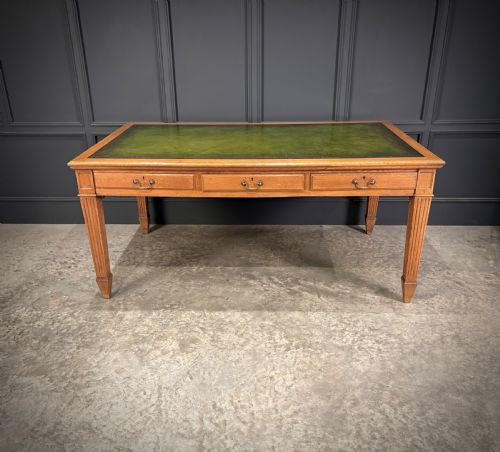
Writing surfaces are frequently inset with panels of tooled leather, providing a tactile texture for daily use. Brass hardware appears on drawer pulls and handles, ranging from simple drop rings to more elaborate stamped backplates. Internal drawer construction often reveals hand-cut dovetail joints, which offer structural stability for heavy, repeated use.
Distinctions in Quality and Execution
The distinction between standard office furniture and exhibition-grade pieces lies in the selection of materials and the refinement of the joinery. Superior examples utilise finely figured oak across all visible surfaces, including the back panels of free-standing partners desks, rather than relying on secondary woods in less conspicuous areas. Drawer interiors constructed from solid mahogany or oak with precise dovetails indicate a higher standard of workshop production.
Design ambition also separates everyday utilitarian desks from bespoke commissions. Pieces associated with notable cabinet makers or specific retail houses display subtle carvings, crossbanding in contrasting timbers such as satinwood or kingwood, and original hardware that integrates harmoniously with the overall proportion of the table.
James Shoolbred·Edwards & Roberts·Jenners
The Edwardian Oak Study Table Glossary
- Partners desk
- A large double-sided desk designed for two people to work opposite one another, featuring drawers and cupboards on both sides. This form was traditionally used in banks, libraries, and estate offices.
- Kneehole desk
- A pedestal desk featuring a central recessed space for the legs beneath the writing surface, flanked by vertical stacks of drawers. It provides a compact footprint while offering substantial storage.
- Library table
- A large freestanding table used primarily for sorting papers or reading, often finished on all four sides so it could sit in the centre of a room. These tables generally lack the stacked pedestal drawers found on standard desks.
- Crossbanding
- A decorative technique where a border of veneer is applied around the edge of a table top or drawer front with the grain running perpendicular to the main surface. This adds visual framing to the primary timber.
- Dovetail joint
- A traditional interlocking corner joint formed by trapezoidal pins and tails, glued together to resist tension and pull apart forces. It remains a hallmark of durable cabinet making.
Edwardian Oak Study Table: Frequently Asked Questions
What is an edwardian oak study table?
An edwardian oak study table is a sturdy wooden desk or library table produced in the early twentieth century for writing and administrative work.
These pieces typically feature solid oak construction, often incorporating inset leather writing surfaces and multiple storage drawers for everyday use.
How do I tell an Edwardian desk from a Victorian one?
Edwardian desks often display lighter oak tones and simpler, cleaner lines compared to the heavier proportions and darker finishes common in earlier Victorian pieces.
However, stylistic overlap remains common around the turn of the century, as cabinet makers continued traditional methods while adopting brighter interior aesthetics.
Where were these tables used originally?
These tables served in domestic studies, public libraries, estate manager offices, and school reading rooms across Britain.
Their robust construction was intended to withstand heavy daily administrative tasks and institutional use.
How do I care for a leather top?
Leather writing surfaces require gentle dusting and occasional conditioning with appropriate leather balms to prevent drying and cracking over time.
Avoiding direct sunlight and excessive heat helps preserve the suppleness and the gold tooling on the leather inset.