

Brown Oak Library Table
A brown oak library table brings deep grain and solid proportions to a study, offering a working surface rooted in nineteenth-century craftsmanship.
Brown Oak Library Table
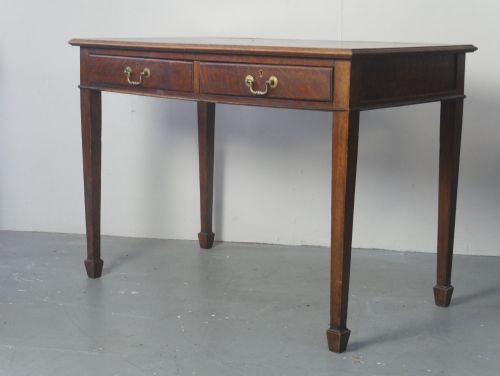
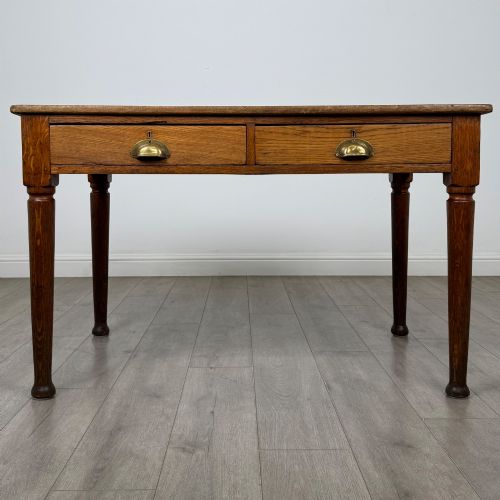
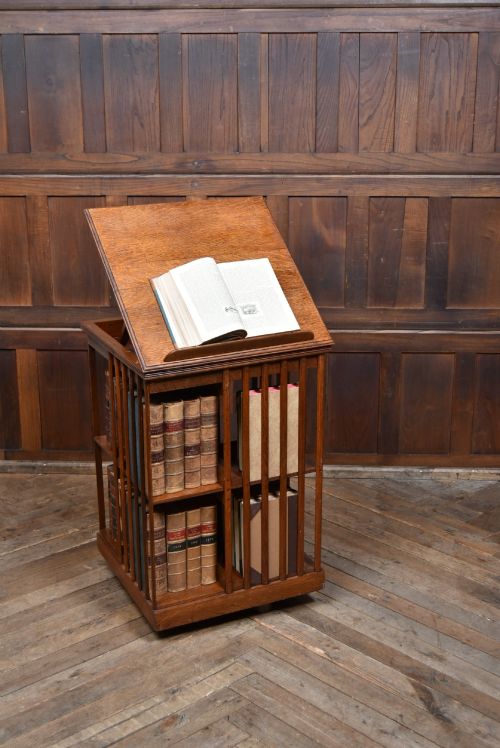
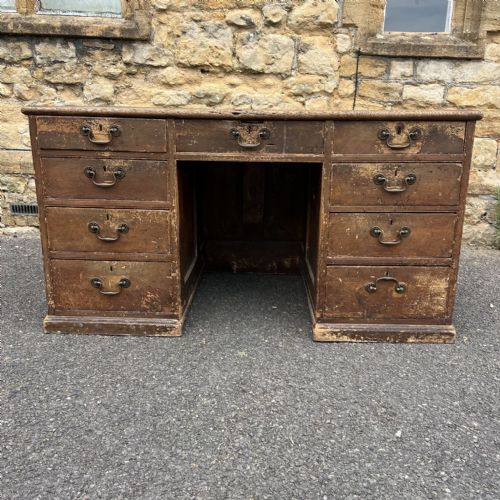
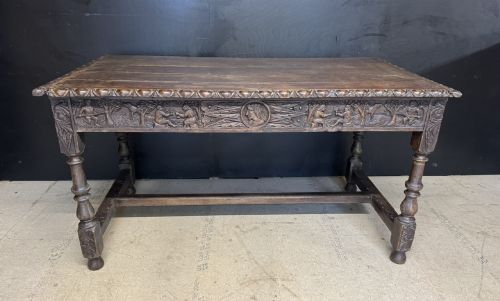
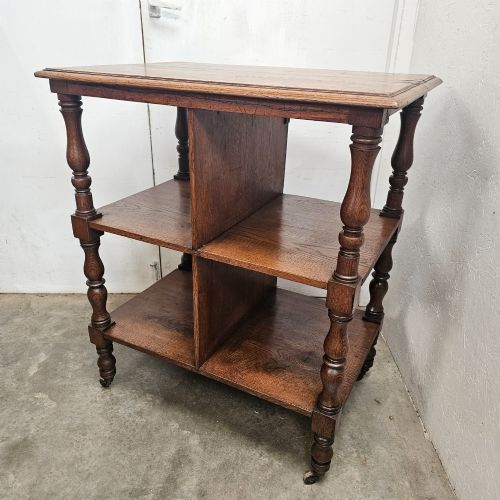
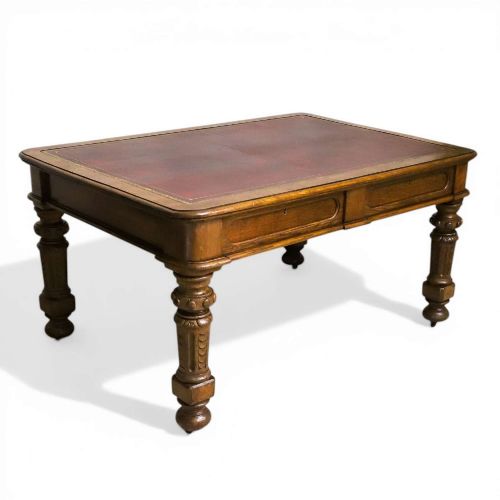
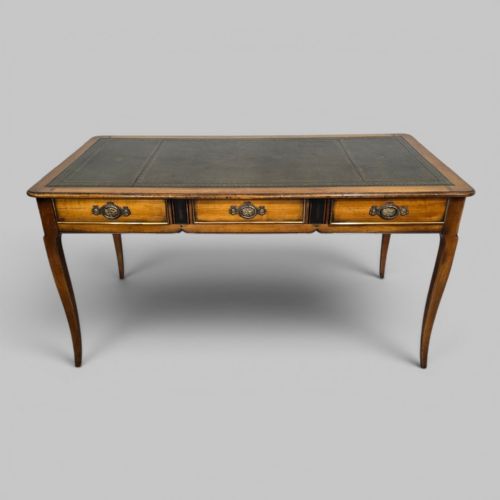
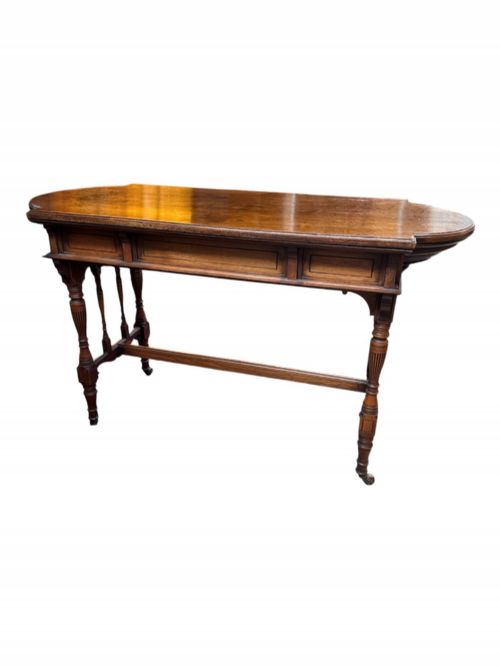
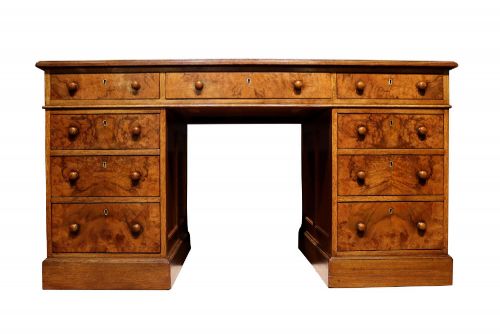
A brown oak library table is a substantial piece of furniture designed for study and writing, appearing most frequently in Victorian and Edwardian iterations on this page. These tables often feature generous proportions, deep drawers, and occasionally leather writing surfaces suited for daily use.
How they were made
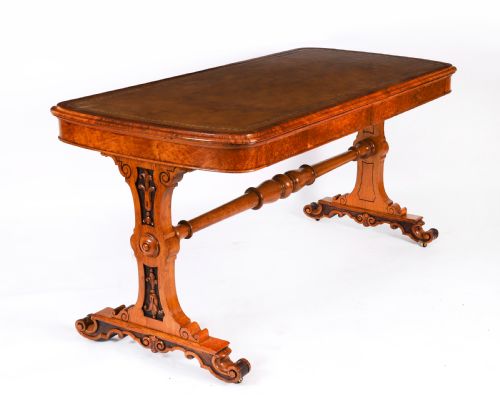
Cabinet makers utilised solid oak alongside specialised veneers like pollard and burr oak to create striking patterns on the timber surfaces. Brass hardware, leather inserts, and occasionally cast iron components appear in the construction of handles, framing, and writing surfaces.
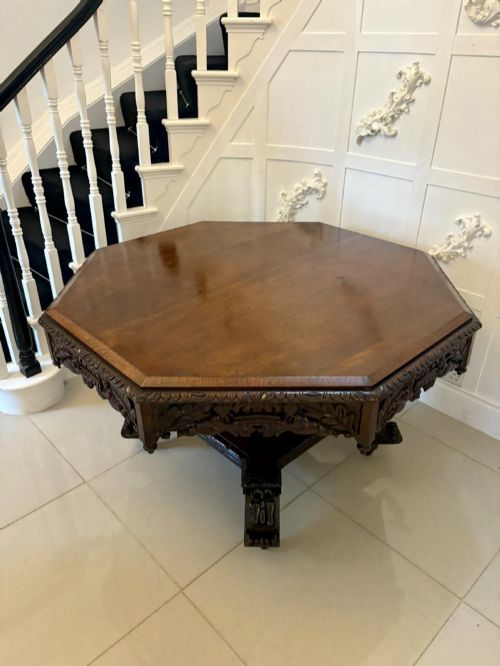
Joinery techniques ranged from straightforward drawer construction to heavily carved details reflecting Elizabethan, Jacobean, and Gothic Revival styles. Makers shaped these tables to stand free in a room, finishing both sides for partners' use or shaping edges with deep moulding.
Listings feature oak alongside leather, brass, and cast iron across nineteenth-century and early twentieth-century periods.
What varies in quality
The visual impact of the timber grain marks the distinction between standard utilitarian furniture and exceptional cabinet work, particularly when pollard or burr oak is selected for the top. Crispness in carved details, such as Gothic tracery or applied moulding, reveals the hand of a more skilled workshop.
Structural integrity and the retention of original brass fittings, leather inserts, and fitted drawers dictate the standing of a piece. Tables retaining their original French polish and balanced proportions command greater appreciation among collectors.
Gillows·T Wilson·James Shoolbred·James Winter and Sons·Gillow and Co
The Brown Oak Library Table Glossary
- Pollard oak
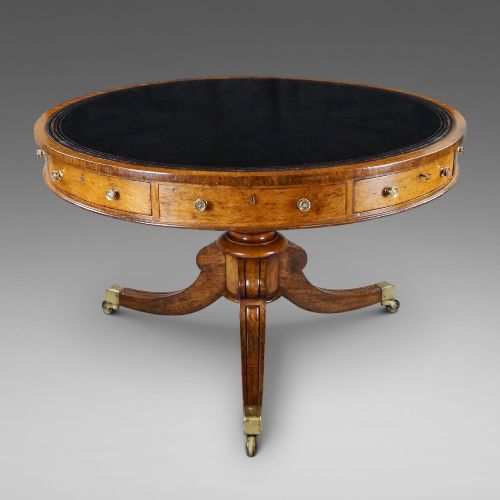
- Timber taken from trees that have been pollarded, producing a dense, knotty grain pattern with rich figuring. This decorative veneer frequently appears on Regency and Victorian writing tables.
- Partners desk
- A large double-sided desk designed for two people to work opposite one another, featuring drawers and cupboards accessible from both sides. These heavy pieces typically anchor the centre of a large study.
- Gothic Revival
- A nineteenth-century design style drawing inspiration from medieval architecture, characterised by pointed arches, trefoils, and heavy carving. Tables in this style often display robust structural framing.
- Centre table
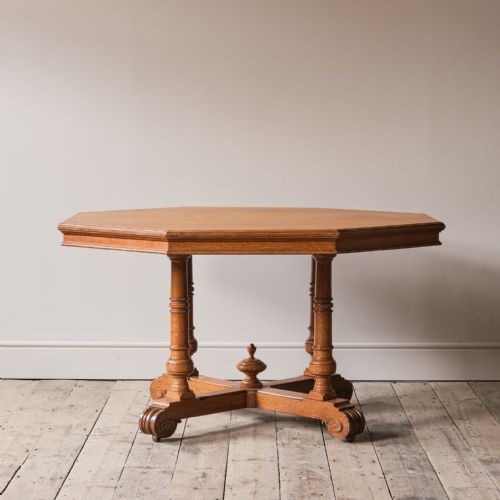
- A freestanding table designed to be viewed from all sides rather than pushed against a wall. These circular or octagonal forms often occupy the middle of a library or hall.
- Burr oak
- An abnormal growth on an oak tree that yields highly figured, swirling wood grain when sliced into veneers. Cabinet makers utilised this timber on tabletops to create striking visual movement.
Brown Oak Library Table: Frequently Asked Questions
What is a brown oak library table used for?
These tables served as heavy-duty writing desks and central work surfaces in nineteenth-century libraries, studies, and administrative rooms. Their expansive tops accommodated large volumes, ledgers, and writing materials.
Today, they function as impressive executive desks or central library tables in domestic and professional interiors, providing both workspace and substantial storage drawers.
How do I identify a Victorian library table?
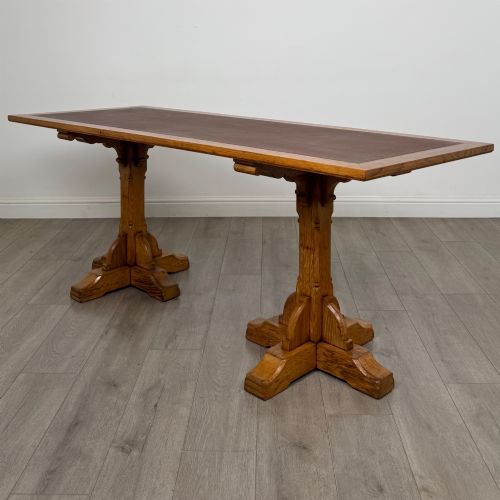
Victorian examples frequently display heavier proportions, dark oak patination, and robust structural elements like twin pedestals or turned legs. Many incorporate carved details influenced by Gothic Revival or Elizabethan styles.
Look for structural hallmarks such as hand-cut dovetails in the drawers, brass locks, and inset leather writing surfaces framed by decorative wood borders.
What is pollard oak?
Pollard oak is harvested from trees that were systematically cut back at trunk height to promote dense, branching growth. This pruning creates a highly speckled, knotty timber figure.
Cabinet makers valued this wood for fine veneers on nineteenth-century tabletops and desks, where the swirling patterns added visual richness to functional furniture.
How do I care for a leather top?
The leather writing surfaces on these tables benefit from gentle cleaning with a slightly damp cloth followed by specialised leather balms to prevent cracking. Avoid harsh chemical cleaners and excessive moisture.
Keeping the room at a stable humidity protects both the antique leather and the surrounding oak timbers from warping or drying out over time.