
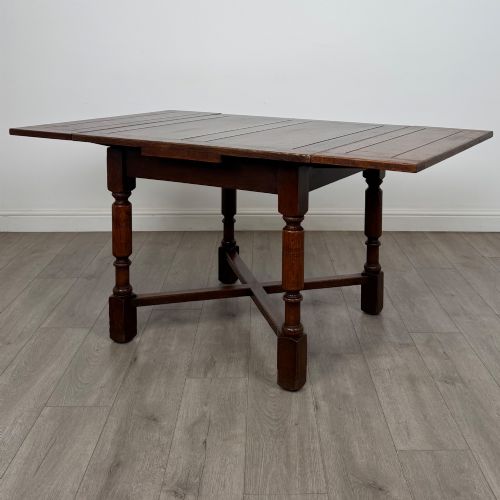
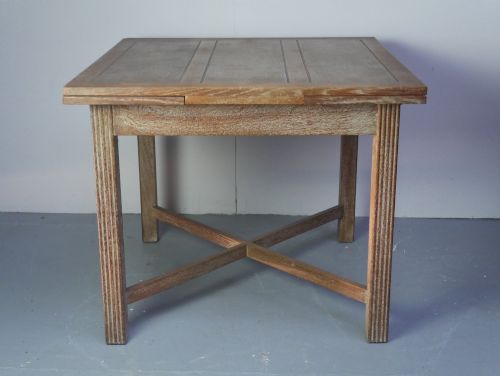


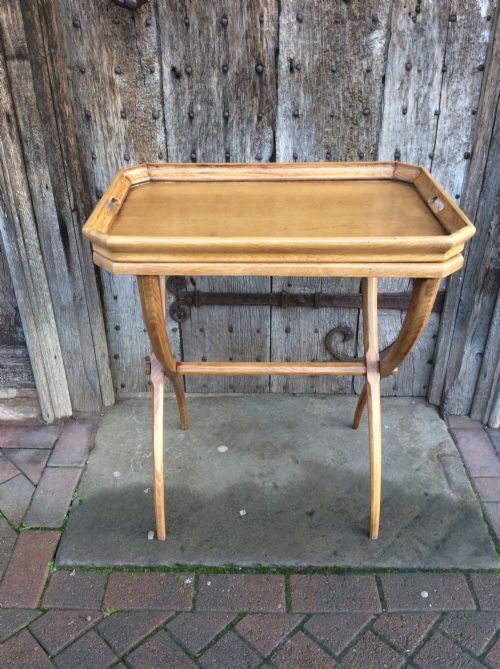

X Frame Oak Table
An x frame oak table provides a sturdy architectural base and dependable surface for dining or serving.
X Frame Oak Table
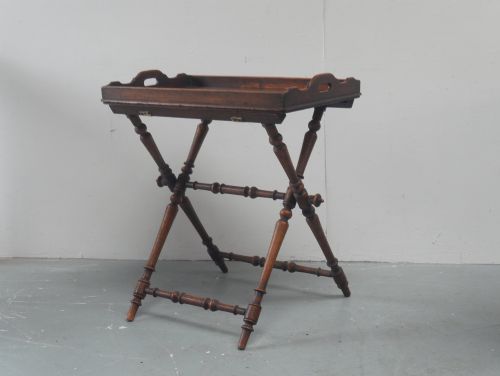
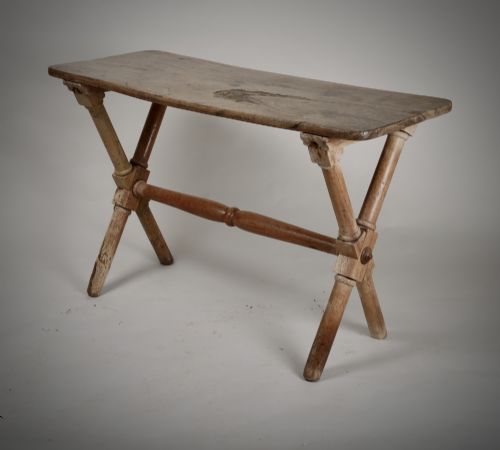
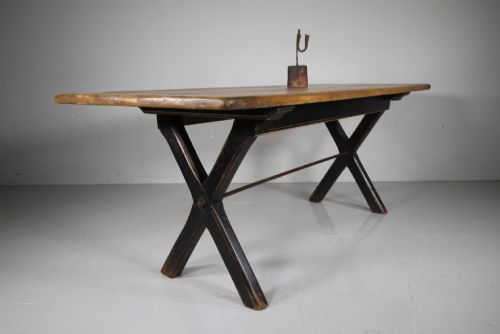
An x frame oak table combines structural strength with intersecting diagonal supports beneath the surface. Buyers searching this phrase encounter sturdy dining tables, tavern tables, and occasional furniture rooted in 19th-century and Edwardian traditions.
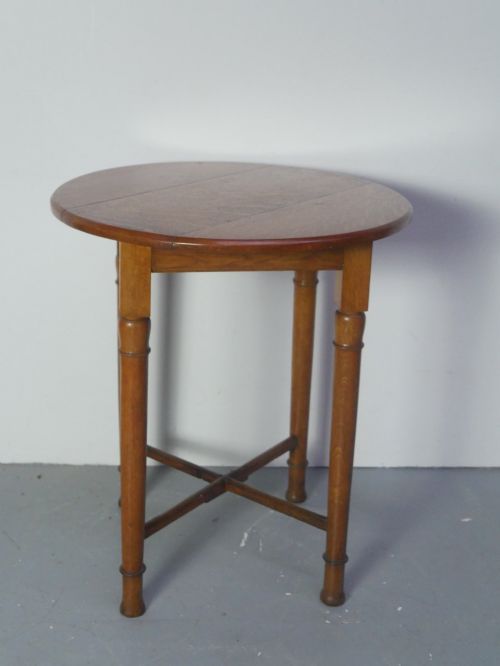
The most common examples on this page are dining and tavern tables utilising solid oak timbers and characteristic cross-braced legs. These forms range from rustic farmhouse interpretations to refined Arts and Crafts designs.
How They Were Made
Joinery relies heavily on solid oak timbers shaped with traditional framing techniques to support the heavy diagonal cross-members. Metal elements such as brass or iron appear in associated hardware, bells, and trays accompanying the furniture.
Surfaces demonstrate various finishes including limed treatments, blonde tones, and natural wax polishes that highlight the grain of the wood. Secondary materials like pine or elm occasionally appear in structural or auxiliary parts.
One historical snapshot captures an original watercolour featuring a squirrel eating nuts next to a dish of apples on an oak table.
What Varies In Quality
The integrity of the intersecting x-frame joints dictates the long-term stability and load-bearing capacity of the piece. Superior examples display precise timber selection with consistent grain patterns across the main top and the structural base.
Refinement in the carving and edge detailing distinguishes standard utility tables from bespoke workshop productions. The depth of the patina and the condition of the original timber surfaces further separate ordinary pieces from exceptional ones.
Heals·Gillows
The X Frame Oak Table Glossary
- X-frame
- A structural table base formed by two intersecting diagonal legs that cross in the centre. This configuration provides lateral stability without requiring traditional corner posts.
- Tavern table
- A robust utilitarian table traditionally utilised in public houses and domestic kitchens. These pieces typically feature thick tops and heavy underframes designed for daily service.
- Arts and Crafts
- A design movement prioritising honest construction, visible joinery, and simplified forms. Objects from this tradition reject excessive machine ornamentation in favour of hand-finished integrity.
- Refectory
- A long dining table format historically used in monastic or communal dining halls. The proportions allow for extended seating down both flanks of the surface.
X Frame Oak Table: Frequently Asked Questions
How do I identify an x frame oak table?
Look underneath the top surface for intersecting diagonal wooden braces that form a distinct cross shape. These supporting legs replace standard vertical posts at the corners.
Examine the timber species and construction joints to confirm the use of solid oak and period appropriate joinery methods.
Where were these tables used historically?
These tables served various practical functions in domestic dining rooms, country kitchens, and public taverns. Their sturdy construction made them suitable for heavy daily use.
Smaller variants also functioned as occasional side tables or serving surfaces within period interiors.
How do I care for an oak surface?
Maintain the wood by applying natural beeswax periodically to nourish the grain and protect against moisture. Avoid placing the timber in direct sunlight or near heat sources.
Clean spills promptly with a dry or slightly damp cloth without using harsh chemical detergents.