
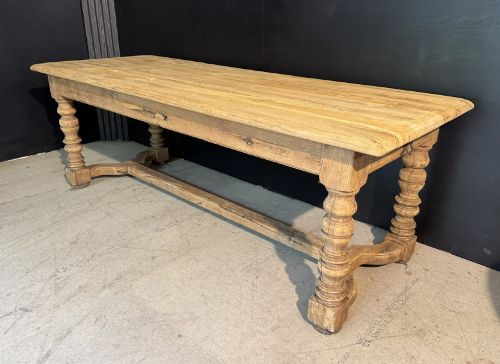


Carved Frieze Desk
A carved frieze desk brings traditional craftsmanship and period character into a modern workspace.
Carved Frieze Desk
A carved frieze desk combines functional writing space with decorative woodwork beneath the top surface. When you search for a carved frieze desk, you find pieces originating from the eighteenth, nineteenth, and early twentieth centuries. These tables and writing surfaces appear in diverse regional interpretations and revival styles.
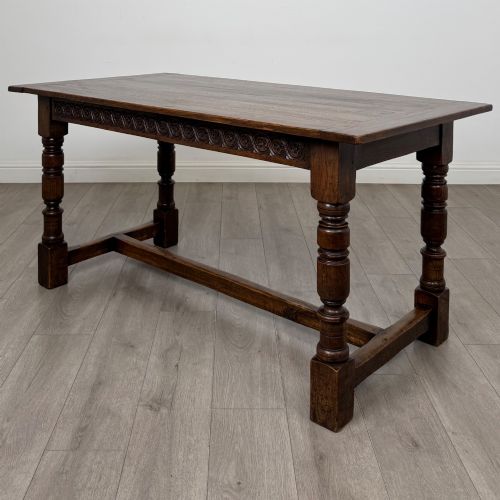
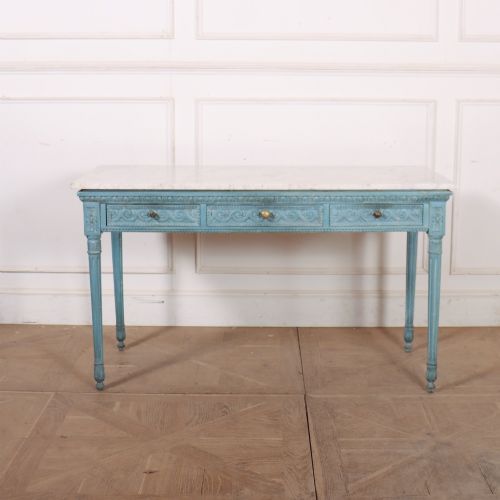
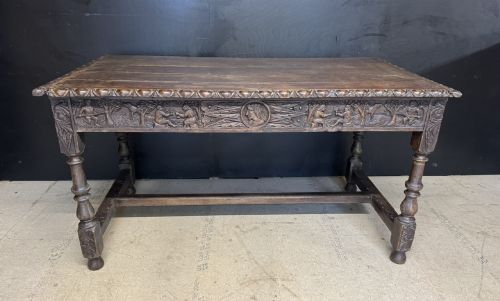
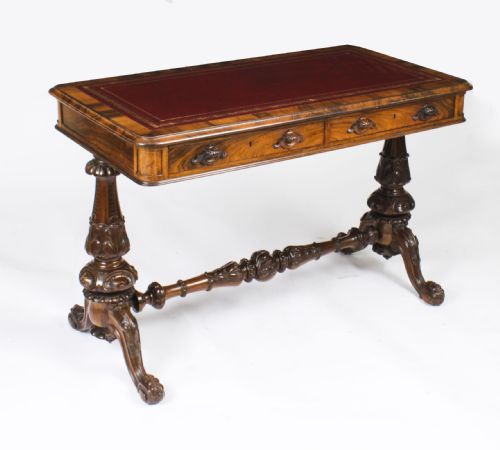
The versions most commonly met on this page date from the nineteenth century and utilise rich timbers like oak, walnut, and rosewood. Formats range from pedestal desks and writing tables to side tables and library tables incorporating drawers. Each piece displays distinct historical influences, from William IV and Victorian to Jacobean Revival and Italian Neoclassical.
How they were made
Cabinet makers constructed these pieces using solid hardwoods such as oak, walnut, rosewood, and padouk, frequently pairing them with brass hardware and leather writing inserts. The structural framework often relies on traditional joinery methods to support heavy writing surfaces and pedestal bases.
Carving was executed by hand directly into the timber, particularly along the frieze beneath the top edge, creating relief patterns that define the aesthetic of the piece. Secondary materials like iron and marble appear on specific regional forms, whilst painted finishes feature on select provincial examples.
One stubborn nineteenth-century oak table arrives with three internal drawers specifically sized for storing seventeenth-century bibles.
What varies in quality
The depth and crispness of the hand carving along the frieze separate standard utility items from superior examples of cabinet work. Well-executed pieces show precise chisel work and careful integration of ornament with the structural lines of the desk.
Timber selection and figure significantly influence the character of the piece, with richly grained rosewood or figured walnut commanding greater visual presence than plain surfaces. The quality of secondary woods used in drawer construction and the stability of the overall frame also indicate the standard of original manufacture.
Edwards and Roberts
The Carved Frieze Desk Glossary
- Frieze
- The horizontal band situated directly beneath the top surface of a table or desk, frequently decorated with carvings, mouldings, or drawers.
- Pedestal desk
- A heavy freestanding writing table supported by two vertical columns of drawers on either side of a central kneehole.
- Library table
- A large freestanding table designed for a library or study, often finished on all four sides with frieze drawers.
- Padouk
- A dense tropical hardwood known for its deep reddish-brown colour, utilised in nineteenth-century cabinet making.
- Refectory
- A long narrow table style historically used for dining, adapted in later periods for serving and side table use.
Carved Frieze Desk: Frequently Asked Questions
How do I identify a nineteenth-century desk?
Nineteenth-century desks typically display traditional construction methods such as hand-cut dovetails in the drawer linings and solid timber framing without modern particle boards. Examining the underside and drawer interiors reveals tool marks and timber ageing consistent with the period.
Stylistic cues such as Victorian proportions, William IV turning, or specific revival motifs help anchor the piece within the 1800s. Comparing the timber grain and hardware style with documented examples from the era confirms the manufacturing timeframe.
Can I use an antique table as a computer desk?
Many antique writing tables and library tables function effectively as modern computer desks, providing ample surface area for laptops and screens. Their sturdy construction and generous height make them practical for daily administrative tasks.
Consider the kneehole clearance and drawer depth beneath the frieze to ensure comfortable seating posture. Adding a protective leather or felt blotter preserves the historic top surface from daily wear.
How should I care for a antique wooden desk?
Maintain antique wooden desks by keeping them away from direct sunlight and sudden temperature shifts that cause timber to split. Regular dusting with a soft, dry cloth prevents particulate accumulation on carved friezes and polished surfaces.
Apply periodic applications of appropriate wax polish to nourish the wood and maintain the finish. Avoid using modern silicone-based sprays, which can penetrate the historic polish and damage the patina.