



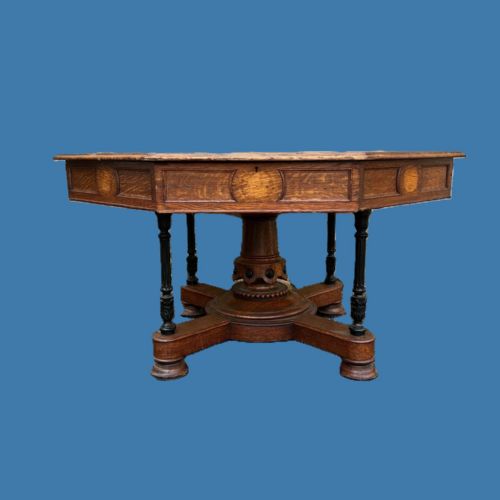


Dark Oak Centre Table
A dark oak centre table anchors a room with rich grain and substance, offering a commanding surface designed to stand free in any space.
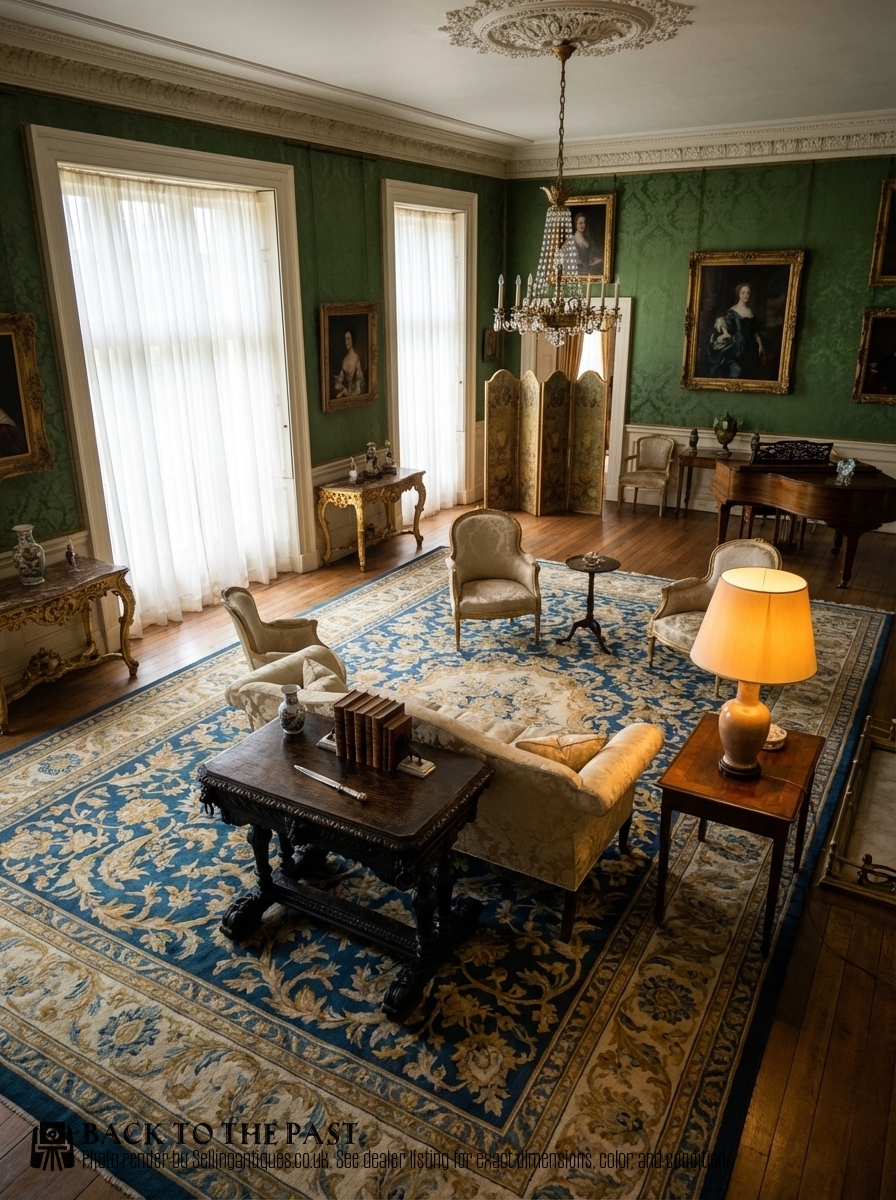
Dark Oak Centre Table
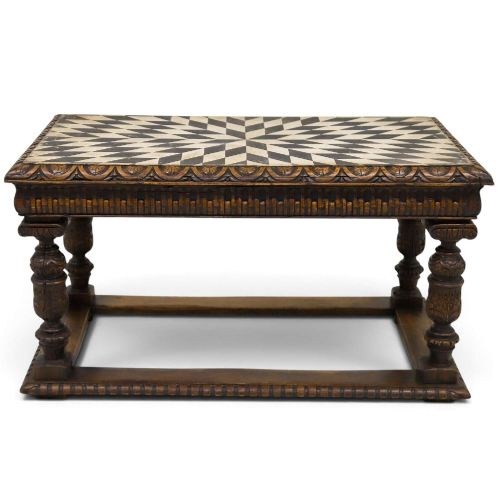
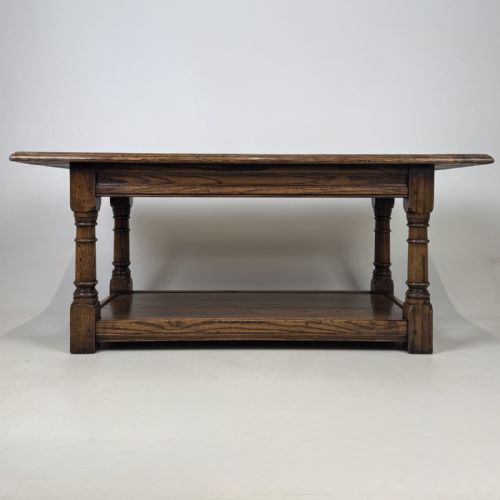
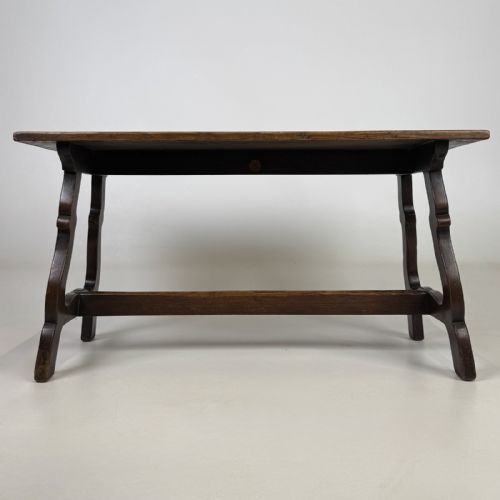
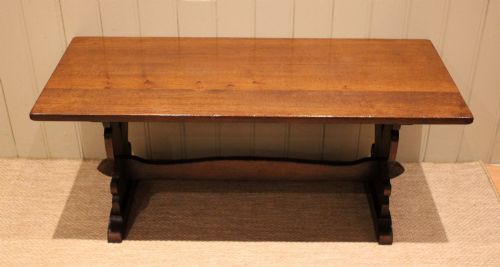
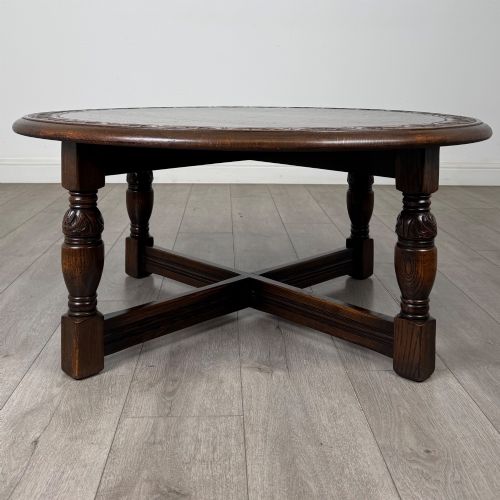
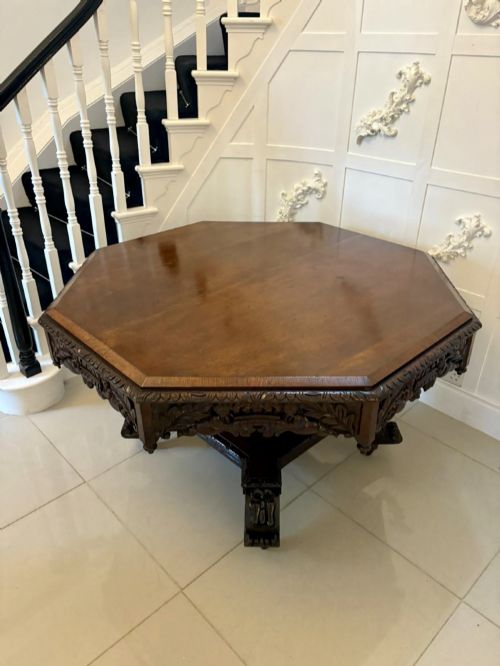
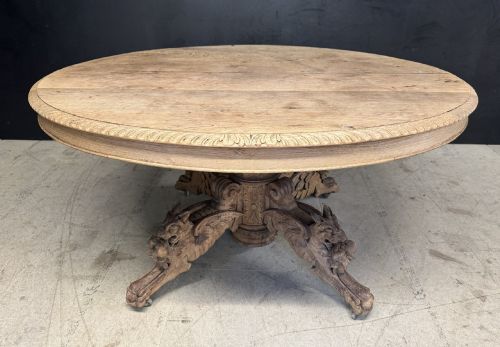
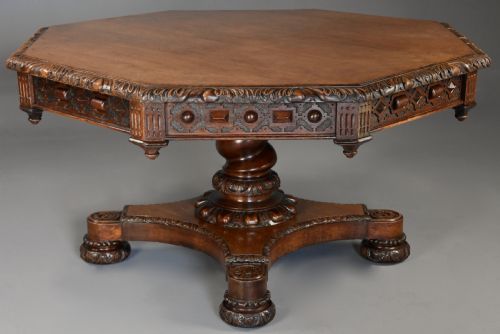
When searching for a dark oak centre table, collectors look for freestanding pieces designed to be viewed from all sides within a room. The selections span heavy Victorian Gothic Revival works, rustic farmhouse variants, and early seventeenth century tavern tables built from solid timber.
Most examples encountered here date from the nineteenth century, drawing heavily on earlier Elizabethan, Jacobean, and Renaissance styles through deep relief carving and sturdy turned legs. Formats range from large circular library tables and octagonal variants to low coffee tables and traditional refectory styles.
These pieces served various domestic and institutional functions, from formal library desks and hall tables to central dining surfaces. Their robust construction allows them to endure heavy daily use while retaining a distinct architectural presence.
Materials and Construction
The primary material is solid oak, often darkened by age, fuming, or finishing techniques to highlight the dense grain patterns. Craftsmen frequently combined this heavy timber with inset leather writing surfaces, brass fittings, and occasional iron supports.
Joinery relied on traditional pegged mortise and tenon frames, ensuring structural rigidity for large library and dining formats. Carved wood details, including geometric strapwork and foliate motifs, were executed directly into the solid oak framework by hand.
Dark Oak Centre Table Retail Price Guide 2026
Typical asking prices for dark oak centre table among the pieces listed under this phrase on Sellingantiques today, from the lower quarter to the upper quarter. They describe what is for sale here now, not the wider market.
Several pieces conceal their working origins as rent tables, once used by estate stewards to collect tenant payments into rotating compartments.
Defining Quality and Craftsmanship
Quality rests in the crispness of the hand-carved ornamentation and the selection of deeply figured timber for the top surface. Superior examples display harmonious proportions between the heavy base and the tabletop, alongside period-appropriate joinery.
The sophistication of stylistic revivals dictates value, with pieces incorporating nuanced Elizabethan or Gothic architectural elements standing apart from simpler utilitarian formats. The integrity of the original timber surface without modern alterations remains paramount.
The Dark Oak Centre Table Glossary
- Centre table
- A freestanding table finished on all sides, intended to be placed in the middle of a room rather than against a wall.
- Gothic Revival
- A nineteenth-century design movement resurrecting medieval architectural motifs such as pointed arches, tracery, and heavy carved panels.
- Library table
- A large sturdy table historically used for reading and holding heavy folios, frequently fitted with drawers and inset leather panels.
- Jacobean
- An early seventeenth-century English style characterised by robust proportions, turned legs, and geometric panel moulding.
- Refectory table
- A long, narrow dining table traditionally used in communal dining halls and constructed with thick wooden legs and stretchers.
Dark Oak Centre Table: Frequently Asked Questions
Where should I place a centre table?
These pieces work best when given adequate clearance to be viewed from all four sides, making them ideal for the middle of a large living room, library, or entrance hall.
Because they lack the need for a wall anchor, they naturally guide foot traffic and create a focal point in open spaces.
How do I care for an antique oak top?
Maintain the wood by applying traditional beeswax periodically to nourish the grain and protect against excessive dryness from modern heating.
Avoid placing hot items or liquids directly onto the bare timber or leather inserts to prevent permanent marking of the antique surface.
Are these tables suitable for daily dining?
Many historical forms, particularly those from the Victorian and refectory traditions, were built with heavy dining and working use in mind.
Ensure the height and leg clearance match your seating requirements before committing a library or centre table to dining duty.
How do I identify a Gothic Revival piece?
Look for architectural details such as pointed arches, quatrefoils, heavy linenfold panelling, and deep chamfered edges carved into the oak.
These elements reflect nineteenth-century makers reinterpreting medieval church and monastic furniture designs for domestic interiors.