





Antique Oak Foyer Table
An antique oak foyer table brings weight and presence to an entrance, offering a surface of rich grain and historic character.
Antique Oak Foyer Table
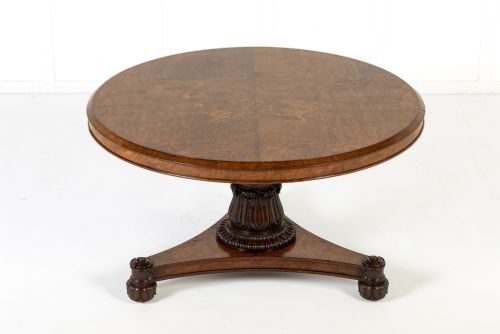
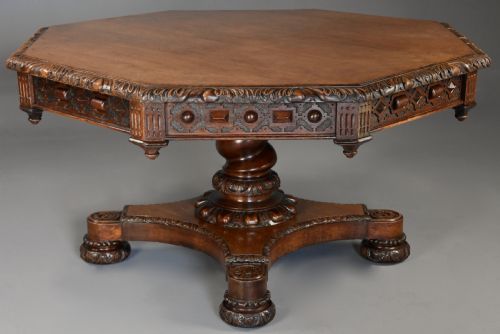
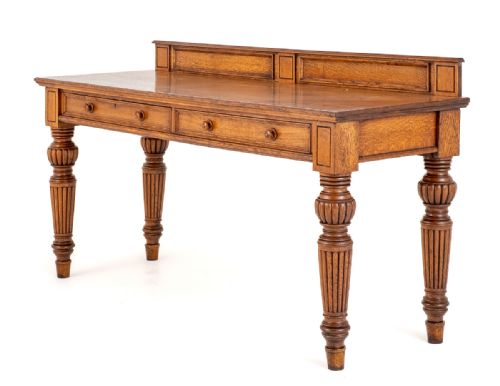
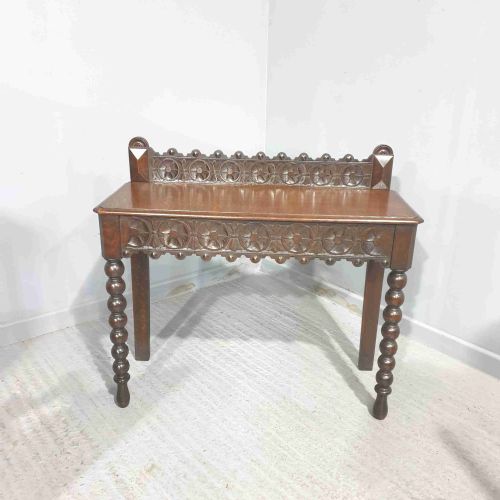
Buyers seeking an antique oak foyer table will encounter forms spanning from Victorian centre tables to console and hall tables dating across the nineteenth and early twentieth centuries. These pieces function practically in an entrance hall while displaying period details such as Jacobean Revival carvings, Gothic influences, or clean Arts and Crafts lines.
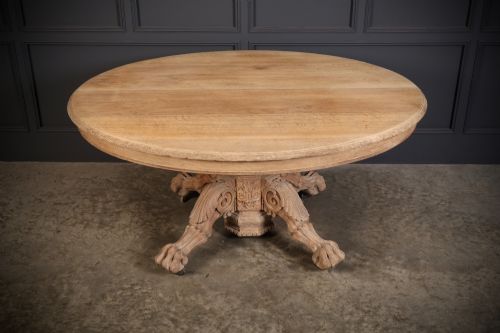
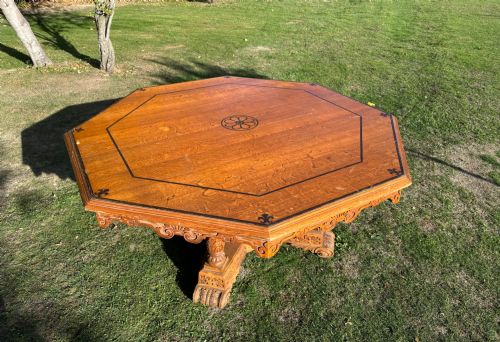
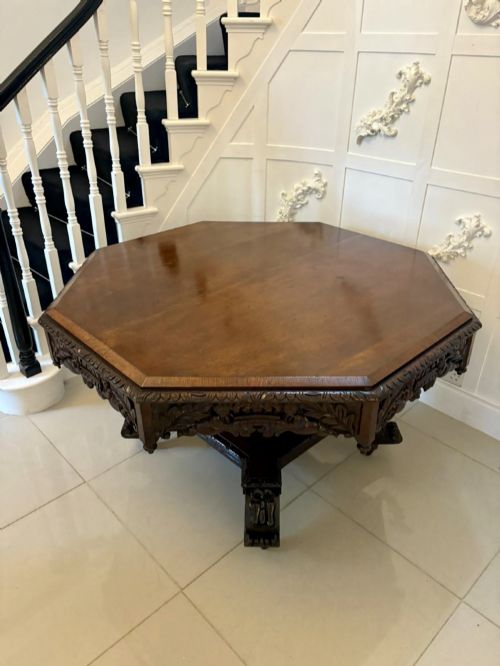
The most common versions met on this page are centre tables and hall tables rendered in solid or pollard oak, often featuring carved legs, octagonal or oval tops, and occasional marble or leather surfaces. They reflect the diverse revivalist tastes of the Victorian era alongside simpler vernacular designs.
Materials and construction
Makers utilised solid timber, frequently selecting oak alongside pollard oak for its distinctive burr pattern, while occasionally incorporating contrasting materials like Siena marble, giltwood, or inlaid walnut. Surfaces were shaped into octagonal, oval, or rectangular formats, supported by robust pedestals, lion masks, and carved paw feet.
Joinery relied on traditional framing and pegging methods to sustain large proportions and heavy loads, particularly evident in library and serving tables. Carving was executed by hand, displaying deep relief work in styles ranging from Pugin-inspired Gothic to Elizabethan revival.
Antique Oak Foyer Table Retail Price Guide 2026
Typical asking prices for oak foyer table among the pieces listed under this phrase on Sellingantiques today, from the lower quarter to the upper quarter. They describe what is for sale here now, not the wider market.
Several tables feature carved lion masks keeping a silent, watchful guard over the hallway floor from their perch on the paw feet.
Distinguishing quality
The highest tier of these tables is distinguished by the depth and crispness of hand carving, the selection of figured timber such as pollard oak, and the integration of specialist top materials like marble or tooled leather. Lesser examples rely on plain, unfigured boards and mechanical joinery with minimal ornamentation.
Proportion and structural integrity dictate the enduring appeal of each piece, where balanced dimensions and original timber patination outweigh mere age. Tables retaining their authentic surface finish and substantial weight sit firmly at the upper end of the range.
The Antique Oak Foyer Table Glossary
- Centre table
- A freestanding table designed to be viewed from all sides, commonly placed in the middle of a room or grand hallway.
- Console table
- A table fixed or placed flat against a wall, frequently supported by decorative legs or brackets rather than four freestanding posts.
- Pollard oak
- Timber taken from a tree that has been pruned close to the trunk, producing a dense, highly figured grain prized for decorative veneer.
- Jacobean Revival
- A nineteenth-century architectural and furniture style emulating the heavy, geometric carved woodwork of the early seventeenth century.
- Parquetry
- Geometric mosaic woodwork used for decorative tops, created by fitting small pieces of timber together in patterned arrangements.
Antique Oak Foyer Table: Frequently Asked Questions
Where should I place a foyer table?
These tables suit grand entrance halls and wide corridors where they provide a practical surface for post, keys, or decorative objects. Their freestanding or wall-abutting forms anchor the space immediately upon entering a property.
Ensure adequate clearance around the piece for movement, particularly with octagonal or large centre table formats that command significant floor area.
What is the difference between a hall table and a console table?
A hall table is typically designed to stand independently on four legs within a passage, whereas a console table is structurally intended to rest against a vertical wall. Console variants often rely on wall brackets or two front legs for support.
Both forms serve similar entrance functions, but console designs frequently incorporate more elaborate front legs, such as carved paw feet or lion masks.
How can I identify a Victorian Gothic revival table?
Look for architectural motifs such as pointed arches, heavy chamfering, and deep linenfold or geometric carving inspired by medieval design. These pieces often exhibit a darker honey oak tone and robust, substantial proportions.
Such tables frequently reflect the design principles popularised by figures like Pugin, combining sturdy utility with ecclesiastical decorative details.