

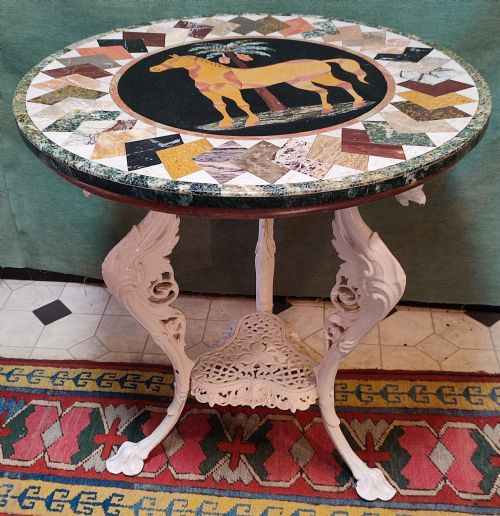


Geometric Inlaid Table
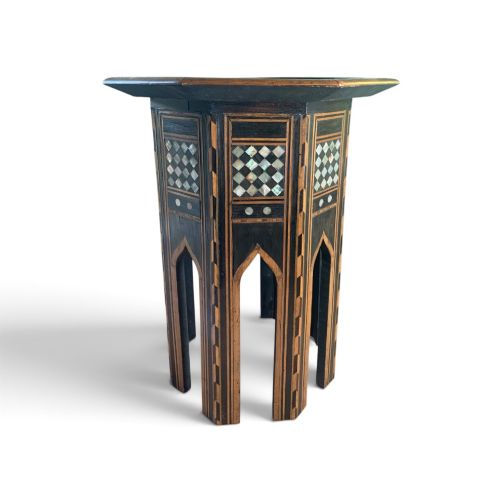
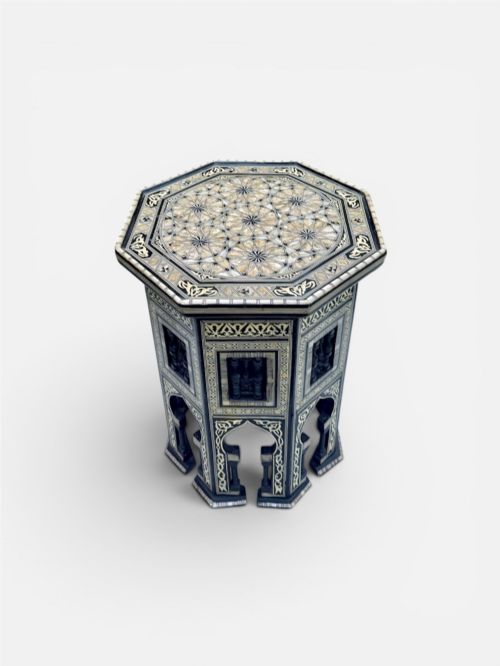
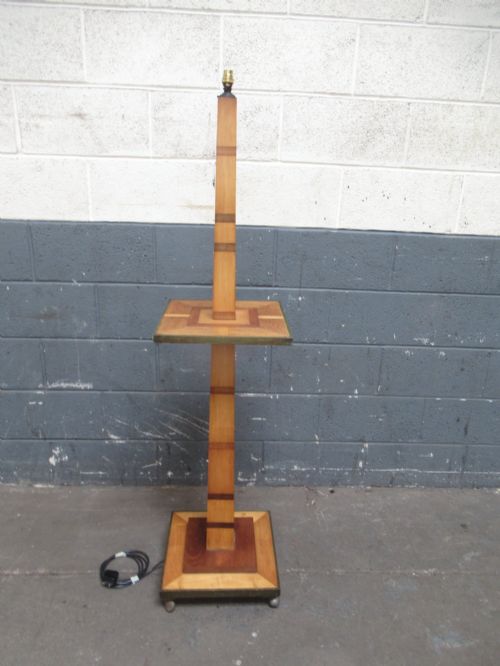
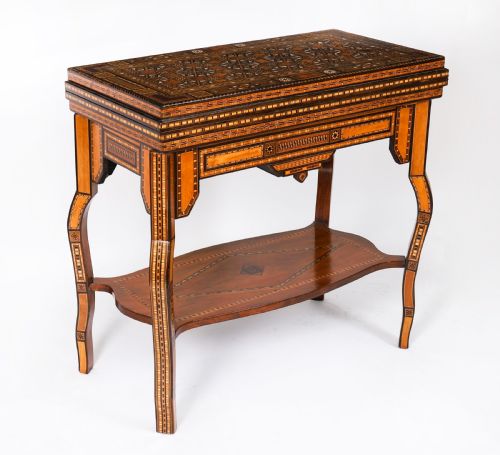
A geometric inlaid table brings intricate wood patterns into a room, offering both a functional surface and a masterclass in marquetry.
Identifying the geometric inlaid table
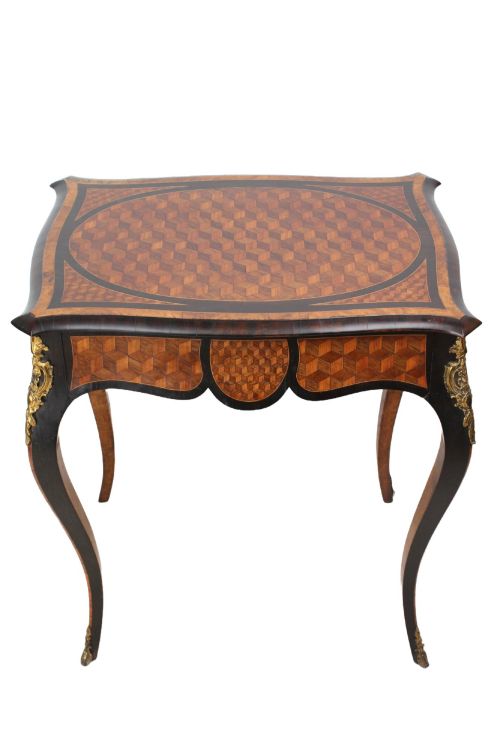
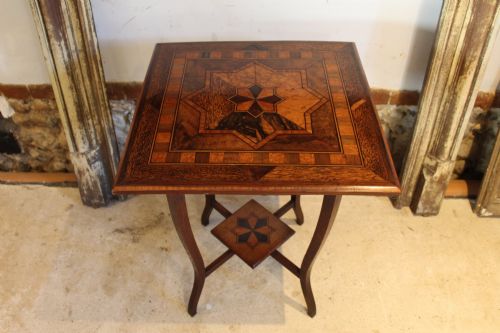
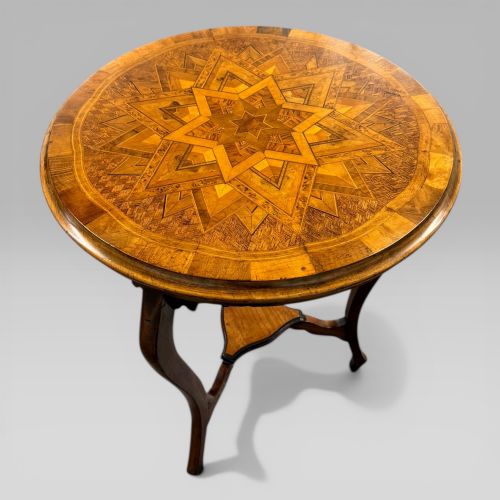
A geometric inlaid table unites functional furniture with complex surface decoration, creating precise patterns across the top using various contrasting timbers. These pieces appear primarily from the Victorian era and the early twentieth century, spanning specific regional expressions like Killarney ware and New Zealand colonial work.
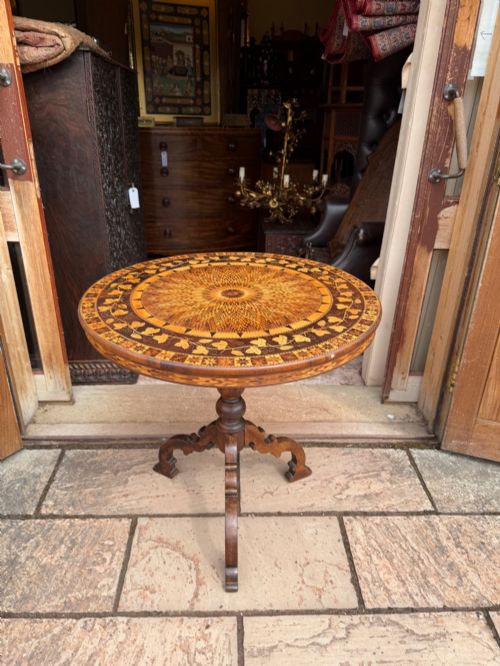
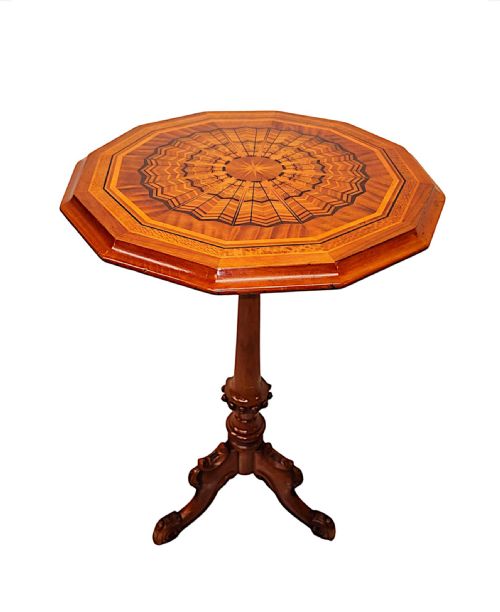
The forms on this page range from compact tripod and occasional tables to larger centre, hall, and side tables. Walnut serves as the most frequent primary timber, often combined with native woods, rosewood, oak, arbutus, and yew.
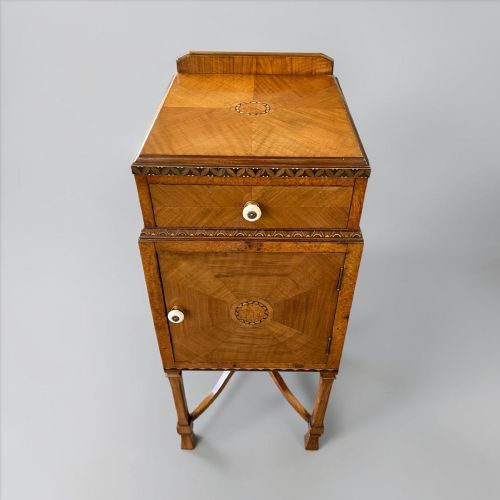
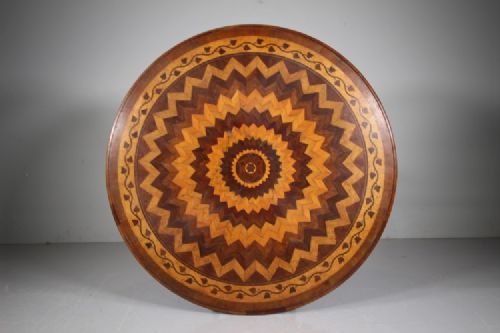
Buyers seeking these works encounter distinct stylistic variants, including late Victorian parquetry designs and curious hybrid forms that incorporate smokers' cabinets. The craftsmanship relies heavily on the juxtaposition of light and dark veneers to form sharp angles, cubes, and star motifs.
Materials and construction
Cabinetmakers constructed these tables using a sturdy foundational carcass of oak, walnut, or other native timbers, upon which they laid thin sheets of veneer. The geometric patterns depend on the precise cutting of small wood pieces fitted tightly together before application.
The palette draws on the natural tones of walnut, rosewood, birch, arbutus, and yew wood, allowing makers to achieve contrast without artificial staining. Surfaces are then smoothed and polished to highlight the grain direction of each individual tile within the parquetry or inlay.
Retail Price Guide 2026
Typical UK retail prices for geometric inlaid table, calculated from the Sellingantiques database of over a million retail prices indexed since 2003. This retail price guide relies exclusively on Sellingantiques data; no external sources or auction records are used, so the figures do not describe the wider market.
Some Victorian examples doubled as smokers' cabinets, proving that nineteenth-century relaxation required both geometry and a place to store pipes.
Assessing quality and execution
Quality rests in the precision of the geometry and the tightness of the joints between disparate timber species. Superior examples maintain absolute symmetry and flush surfaces where the individual wooden elements meet, showing no gaps or filler in the intersections.
The choice of woods also distinguishes the tier of a piece, with rarer native timbers and variegated specimen veneers indicating higher ambition in the workshop. The integration of the top into stable support structures, such as tripod bases or octagonal frames, governs the overall structural integrity.
The Geometric Inlaid Table Glossary
- Parquetry
- Geometric mosaic woodwork used for floors and tabletops. It relies on the precise arrangement of regular wood blocks to form repeating patterns.
- Veneer
- A thin slice of fine wood applied to a coarser secondary timber. This technique allowed makers to utilise expensive or figured grain efficiently.
- Tripod table
- A small freestanding table supported by a central pillar and three legs. This form gained immense popularity during the nineteenth century for occasional use.
- Killarney ware
- Irish decorative woodwork typically featuring intricate marquetry made from local timbers such as arbutus and yew. These items often depict local landmarks or traditional motifs.
- Specimen wood
- Furniture constructed from a multitude of different tree species, often gathered from a specific region. The varied natural colours create a mosaic effect without reliance on dyes.
Frequently Asked Questions
What is a geometric inlaid table?
A geometric inlaid table is a piece of furniture featuring a decorative top composed of small, precisely cut pieces of different woods arranged in repeating mathematical patterns.
These tables function primarily as occasional, side, or centre pieces, combining utility with intricate surface artistry.
How do I date a geometric inlaid table?
Dating relies on examining the secondary timbers, construction methods, and stylistic cues inherent to periods like the Victorian era or early twentieth century.
Makers often utilised specific regional woods and hardware styles that correspond to distinct decades of production.
What woods are used in these tables?
The materials typically include walnut, rosewood, oak, and birch, alongside specialised regional timbers such as arbutus and yew wood.
Craftsmen selected these varied species for their contrasting natural colours to make the geometric patterns stand out sharply.
Where should I place a tripod table?
A tripod table suits small spaces, corners, or beside a chair as an occasional surface for books or lamps.
Its central pillar design allows for flexible placement without taking up excessive floor space in a room.