

Jacobean Style Side Table
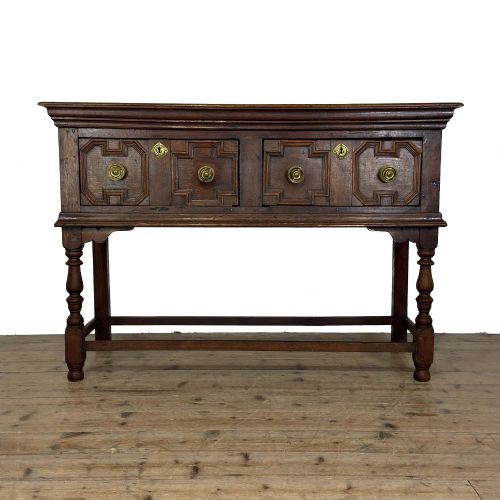
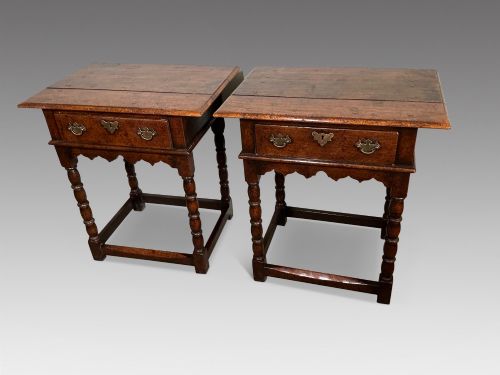
A jacobean style side table brings heavy timber, turned legs and historic English presence directly into a room.
Jacobean Style Side Table
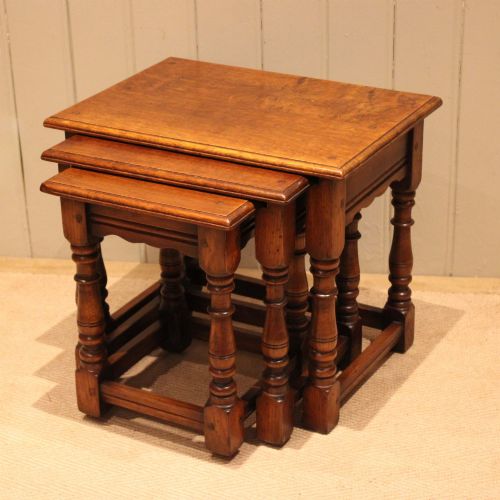
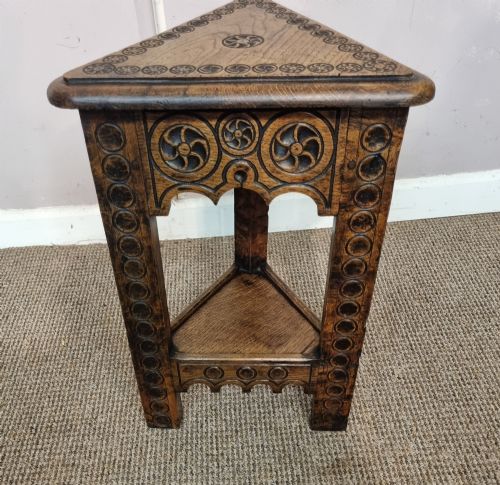
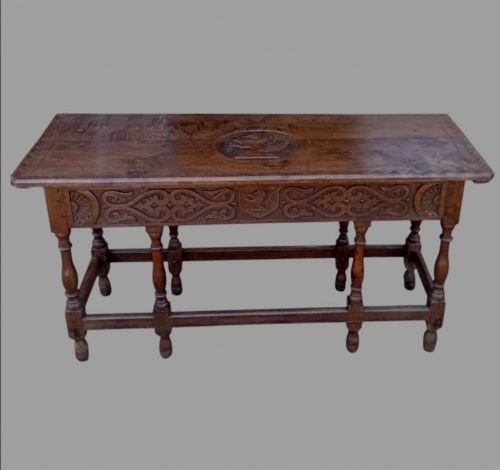
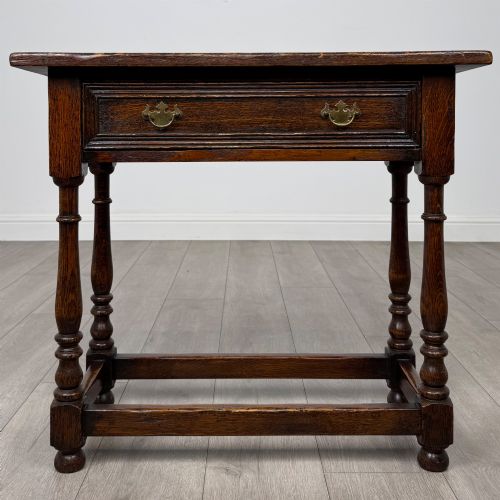
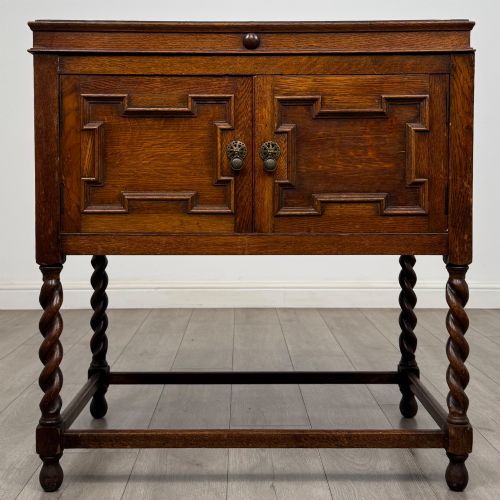
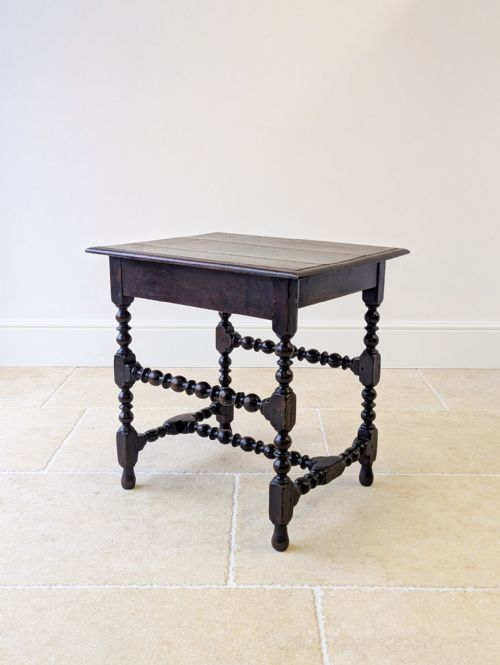
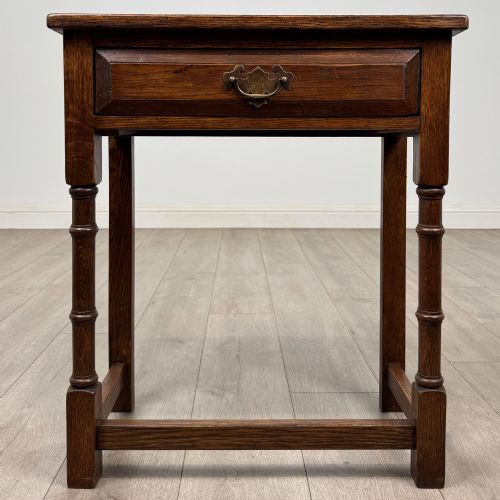
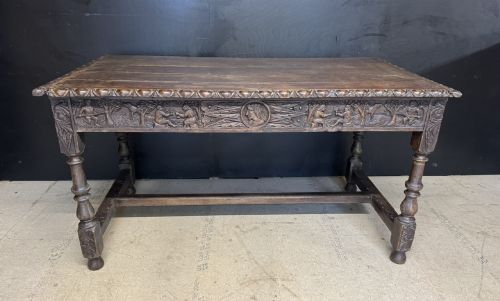
When you search for a jacobean style side table, you encounter sturdy timber furniture drawing on seventeenth-century proportions and ornamental turning. The pieces on this page emerge primarily from the nineteenth and early twentieth centuries, spanning revival periods from Victorian and Edwardian decades up to the nineteen-thirties.
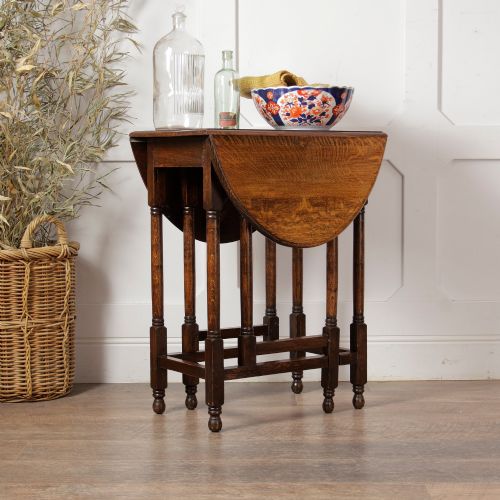
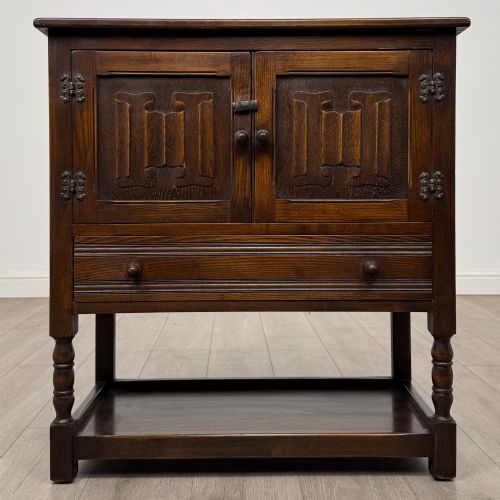
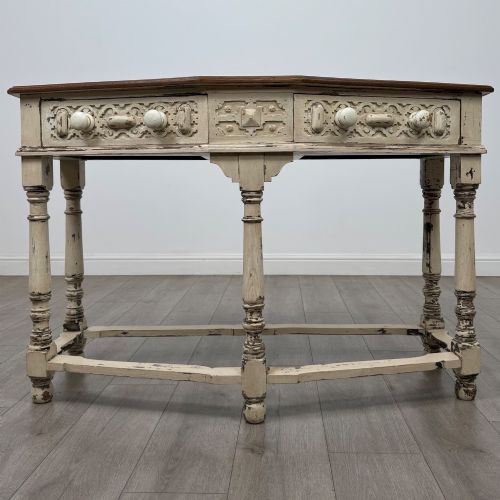
While the search targets side tables, the surviving material includes gateleg designs, occasional tables, joint stools and dresser bases executed in the same heavy idiom. Oak predominates, accompanied by walnut, yew wood and occasional painted surfaces, reflecting the longevity of English country house tastes.
How They Were Made
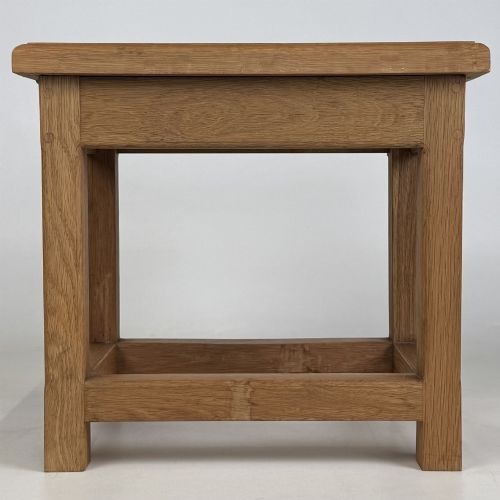
Makers relied heavily on solid oak, selected for grain and strength, supplemented by walnut and yew wood for specific occasional pieces. Joinery relied on traditional methods such as mortise and tenon joints, particularly visible in joint stools and drawer frames.
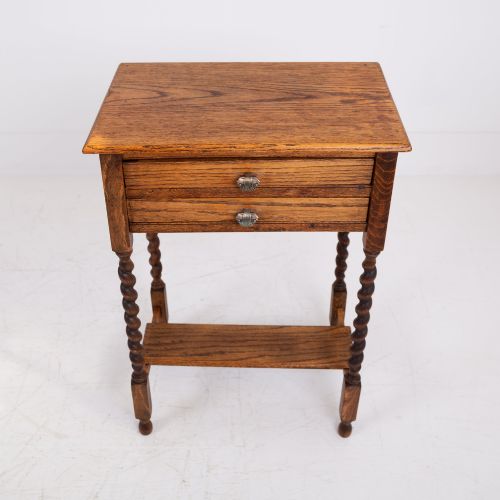
Surface ornamentation involved hand-carving, linenfold panels and characteristic turning techniques including barley twist and bobbin turning. Brass and iron hardware, from drop handles to hinges, fastened doors and drawers on larger side cabinets and dresser bases.
Jacobean Style Side Table Retail Price Guide 2026
Typical asking prices for jacobean style side table among the pieces listed under this phrase on Sellingantiques today, from the lower quarter to the upper quarter. They describe what is for sale here now, not the wider market.
Several small tables feature secret lift-top compartments, handy for hiding rogue teaspoons from unexpected callers.
What Varies in Quality
The distinction between ordinary and superior examples rests upon the crispness of the hand-carving and the choice of timber figure in the oak. Heavy, dense boards with prominent medullary rays indicate better material selection than plain, uniform planks.
Construction details differentiate workshop output, notably the integrity of the joinery in turned legs and drawer linings. Pieces retaining their original brass hardware and proportional balance command greater respect than those altered or clumsily restored over subsequent centuries.
The Jacobean Style Side Table Glossary
- Barley Twist
- A type of turning shaped like a helix, resembling a twisted rope. This technique appeared frequently on table and stool legs during revival periods.
- Joint Stool
- A sturdy wooden stool constructed with mortise and tenon joints rather than turned legs inserted into a seat. They often served double duty as small occasional tables.
- Linenfold
- A style of wood carving that imitates folded parchment or linen. It typically decorates panels on cupboards and cabinet doors.
- Gateleg Table
- A table with hinged drop leaves supported by swing-out legs. This form allowed surfaces to expand or fold down against a wall.
- Dresser Base
- A low sideboard fitted with drawers or cupboards beneath a heavy top surface. These pieces provided substantial storage in traditional English dining rooms and halls.
Jacobean Style Side Table: Frequently Asked Questions
What periods do these tables come from?
The selection spans authentic seventeenth-century examples alongside nineteenth-century Victorian and twentieth-century Edwardian revivals. Most pieces on this page date from the late nineteenth century through the nineteen-thirties.
Revival furniture often borrows motifs from earlier centuries while employing the manufacturing techniques of its own era. Examining the timber grain and joinery helps distinguish original period work from later interpretations.
How were side tables used originally?
These tables served practical functions in hallways, parlours and dining rooms for holding lamps, books or serving dishes. Smaller versions functioned as bedside cabinets or occasional stands for tea.
In country houses, sturdy oak tables stood against walls to display silver or provide a surface for household tasks. Their robust construction allowed them to withstand daily domestic use over generations.
Are these tables made of solid wood?
Most pieces listed are constructed from solid oak, walnut or yew wood rather than veneered substitutes. Carpenters selected dense native hardwoods to ensure structural stability and durability.
Painted wood and painted oak variants also appear, showing how later makers adapted traditional forms to changing interior decoration styles. Solid timber construction allows for deep hand-carving and turning.
How do I care for antique oak furniture?
Maintain oak surfaces by applying natural beeswax sparingly and buffing with a soft cloth to preserve the finish. Avoid placing timber furniture near direct heat sources or in fluctuating humidity.
Regular dusting prevents particle buildup in carved crevices and turned details. Proper care protects the patina built up over decades of handling.