
Antique Parquetry Table
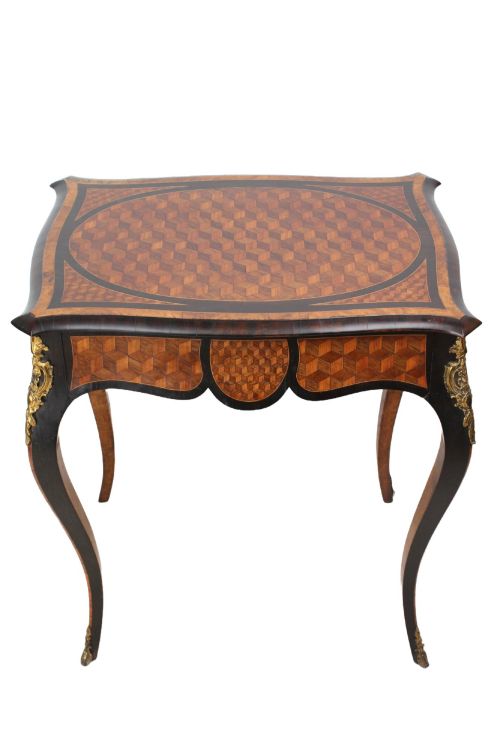
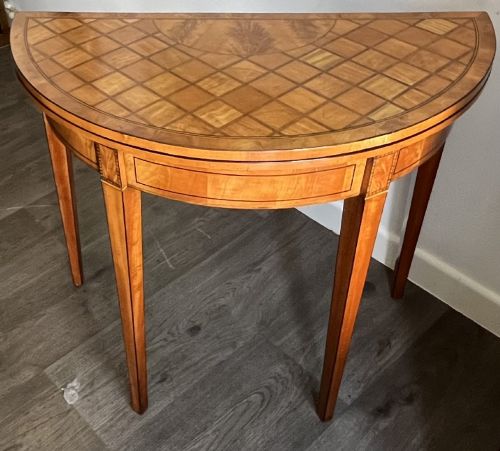
An antique parquetry table brings geometric precision into a room through contrasting wood veneers arranged in repeating patterns.
Form and Period
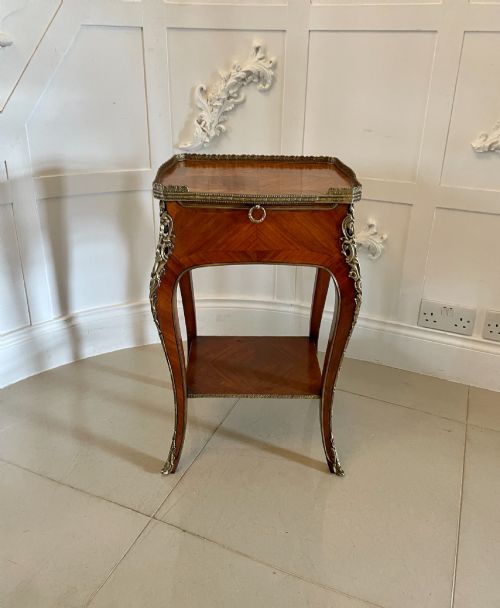
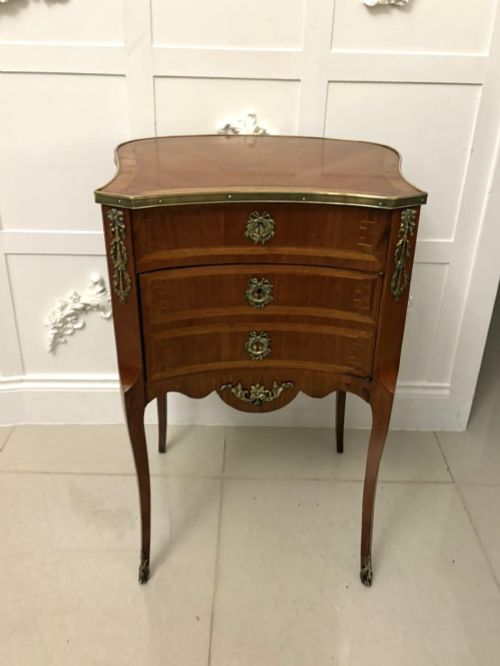
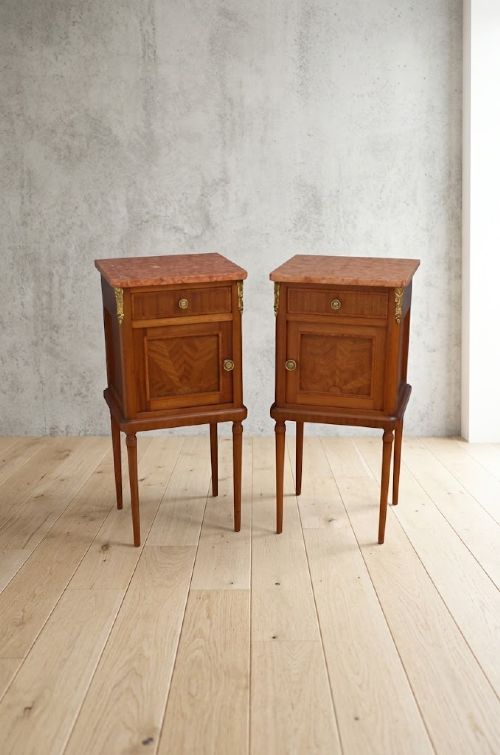
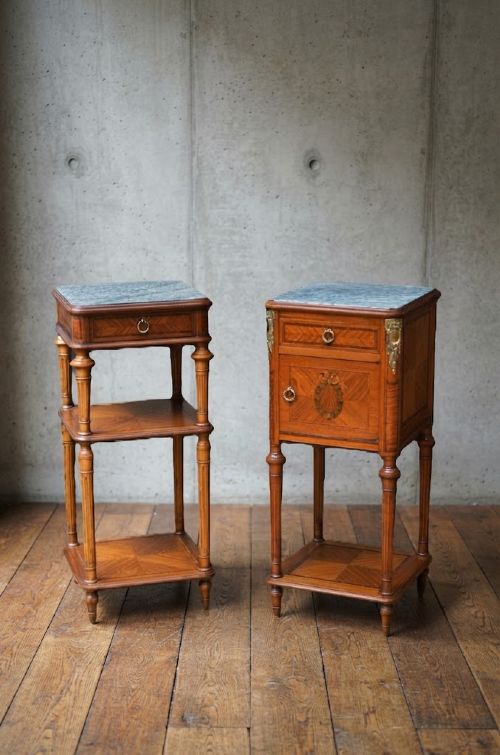
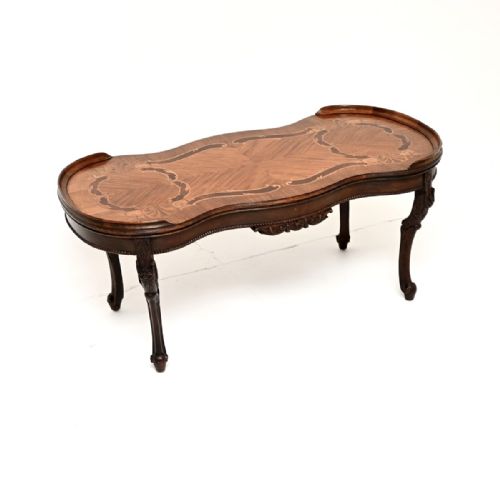
An antique parquetry table displays geometric wood veneer compositions across surfaces ranging from small occasional pieces to large dining formats. The periods span from the seventeenth century through to the nineteenth century and the early twentieth century, showing substantial variety in regional interpretation.
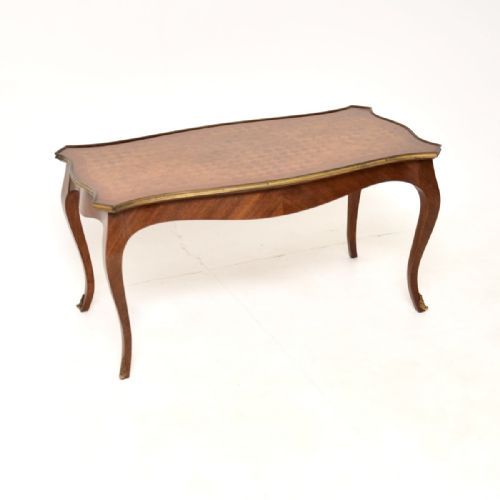
The most common formats met here are occasional tables, side tables, and work tables, alongside dining tables and card tables. French provincial and colonial examples appear frequently, alongside British and New Zealand pieces shaped by local timbers.
Forms adapt to specific domestic uses, including draw-leaf dining tables, nest of tables, and specialised games tables with fold-over tops. The surface design remains the unifying feature across these diverse domestic types.
Materials and Construction
Cabinetmakers constructed these tables using a carcase of solid timber such as oak, mahogany, or walnut, onto which thin veneers were applied. Woods like kingwood, satinwood, and various specimen timbers provided the contrasting tones needed for geometric compositions.
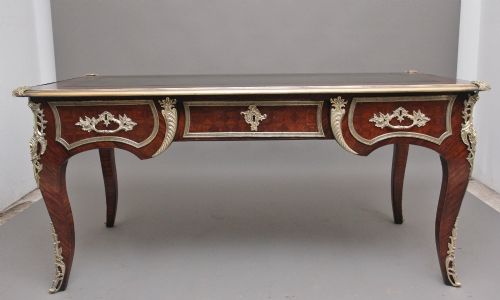
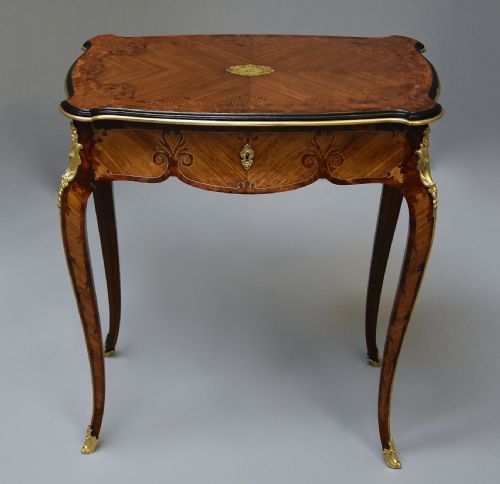
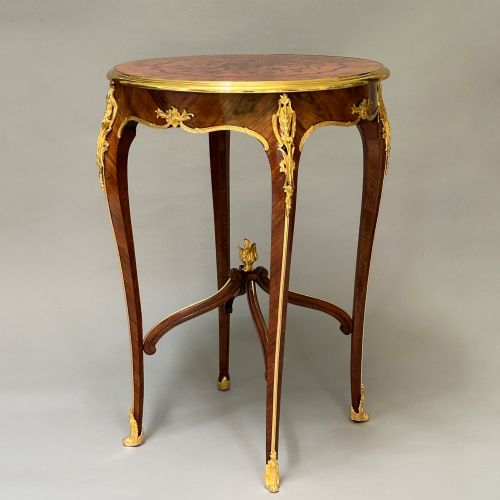
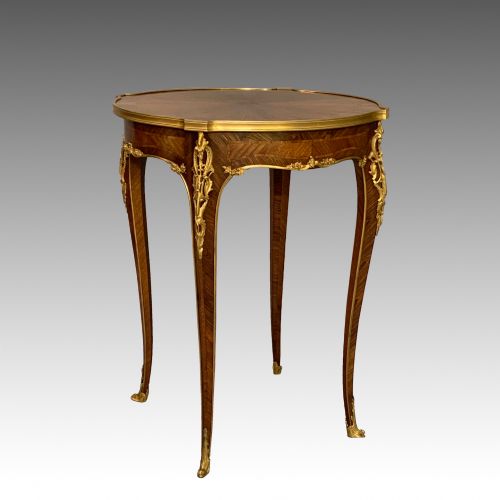
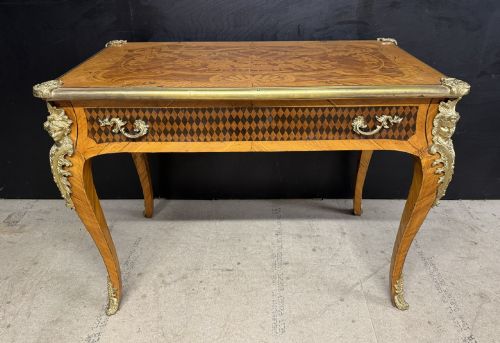
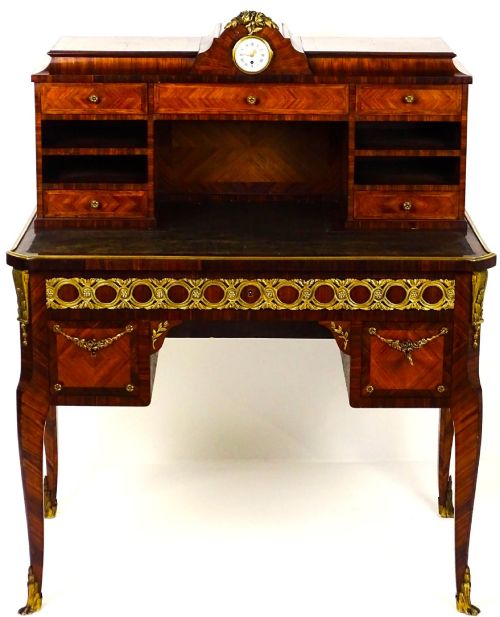
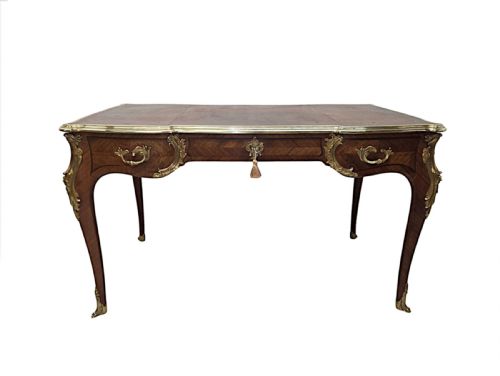
Makers utilised precise cutting techniques to fit individual pieces of wood veneer together in repeating patterns like cubes or chequers. Metal mounts in ormolu frequently decorated the edges, legs, and corners of French tables.
Retail Price Guide 2026
Typical UK retail prices for parquetry table, calculated from the Sellingantiques database of over a million retail prices indexed since 2003. This retail price guide relies exclusively on Sellingantiques data; no external sources or auction records are used, so the figures do not describe the wider market.
Some tables double as games surfaces with hidden compartments for cards and backgammon, built for nineteenth-century parlor entertainment.
Design and Execution
Excellence in an antique parquetry table rests on the precision of the veneer geometry and the harmony of the contrasting wood selections. Finer examples maintain strict alignment across complex patterns without gaps or filler.
The choice of secondary timbers and the presence of fine mountings, such as chased ormolu, distinguish standard production from exceptional cabinetwork. Structural integrity in the joints and stability in the veneered surface dictate the enduring success of the piece.
Ralph Turnbull·Anton Seuffer
The Antique Parquetry Table Glossary
- Parquetry
- Geometric mosaic of wood veneers arranged in repeating patterns such as cubes, lozenges, or chequers. This technique decorates table tops and cabinet surfaces.
- Veneer
- Thin slice of figured wood applied to a stable secondary timber carcase. This method allows cabinetmakers to display decorative grain without risking the stability of solid timber.
- Ormolu
- Gilt-bronze decorative mounts applied to furniture edges and legs. This material gained widespread use in French cabinetmaking during the eighteenth and nineteenth centuries.
- Specimen Woods
- A collection of various native and exotic timbers used within a single piece to provide contrast. These collections often reflect regional botanical interests.
- Draw-leaf
- An extending table mechanism where extension leaves store beneath the main top and pull out when needed. This design expands surface area efficiently.
Frequently Asked Questions
How do I clean an antique parquetry table?
Dust regularly with a soft, dry cloth to prevent particulate buildup on the delicate veneer surface. Avoid abrasive cleaners, moisture, and direct sunlight, which can dry out the historic timbers.
Apply a traditional beeswax polish sparingly when the wood appears dry, buffing gently to maintain a soft sheen. Professional conservation is recommended for any lifting veneer or damaged mountings.
Can I use an antique parquetry table daily?
These tables served practical domestic functions historically as work surfaces, card tables, or dining furniture. Using coasters and placemats protects the historic veneer surface from heat and moisture rings.
Maintain stable room humidity and temperature to prevent the wood substrate and veneer from expanding or contracting. Careful daily use ensures the geometric patterns remain intact for years to come.
How do I distinguish French from English tables?
French tables frequently incorporate exotic woods like kingwood alongside chased ormolu mounts and serpentine lines. Styles such as Louis XV influence many of these continental pieces.
English and colonial examples often rely on native timbers like oak, walnut, or local colonial woods with simpler structural forms. The choice of secondary framing timbers inside the construction also reveals regional origin.
What is the difference between parquetry and marquetry?
Parquetry strictly uses geometric arrangements like cubes, triangles, and lozenges to create abstract repeating patterns across a surface. The focus remains on the optical interplay of contrasting wood grains.
Marquetry employs pictorial or floral motifs, depicting scenes, urns, or foliage using diverse coloured veneers. Some tables combine both techniques within a single decorative scheme.