





Spiral Turned Leg Table
A spiral turned leg table brings tactile rhythm into a room, offering distinct historical character through its signature twisted timber uprights.
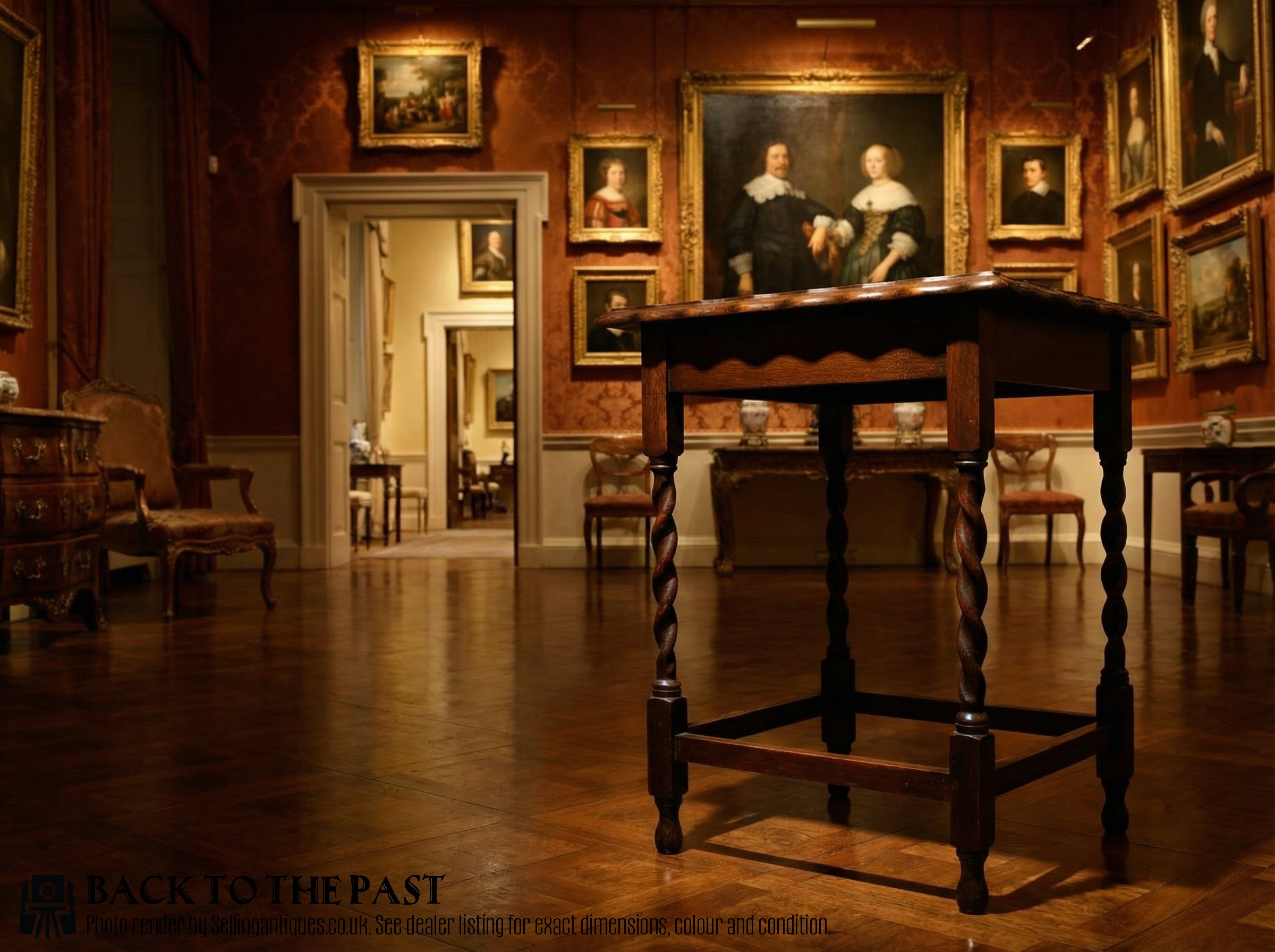
What these tables are
A spiral turned leg table spans multiple centuries of British and European cabinetmaking, appearing in forms such as side tables, centre tables, and dining tables. These pieces emerge across distinct eras including the seventeenth century, the Regency period, and the early twentieth century.
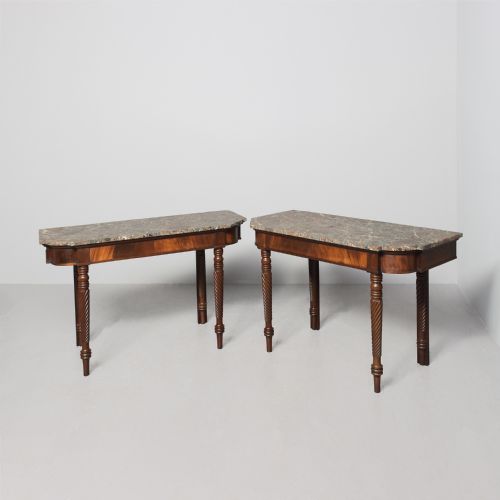
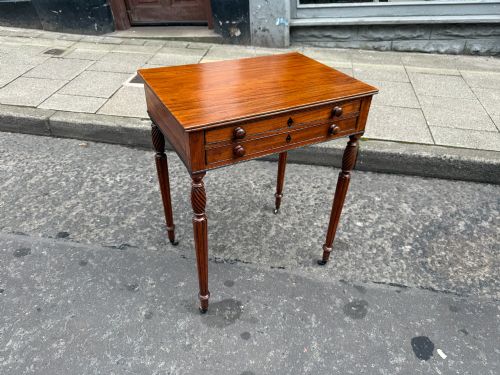
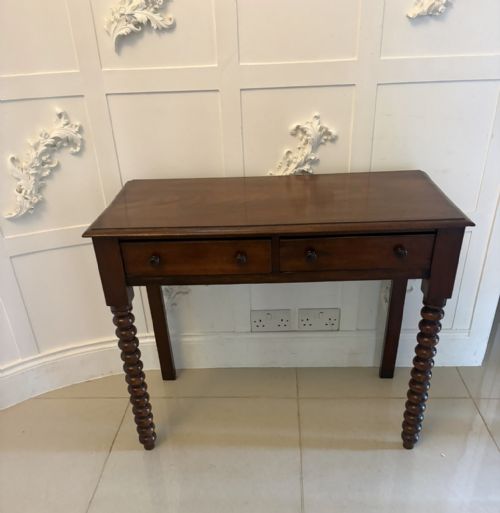
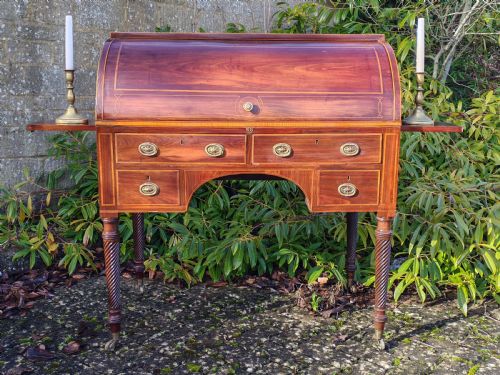
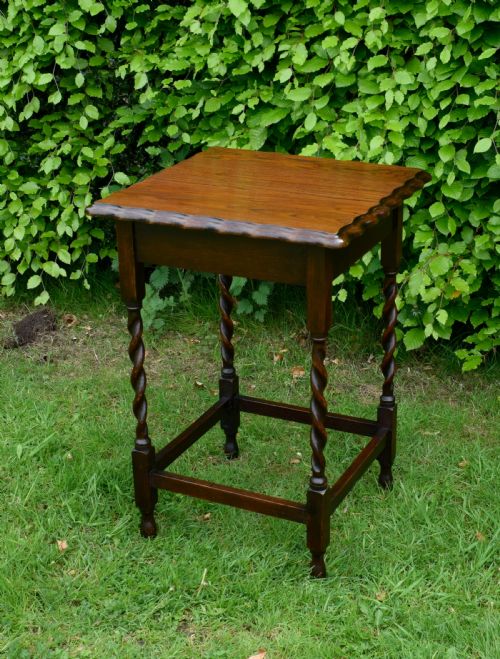
Buyers encounter diverse configurations on this page, ranging from oak barley twist examples to sophisticated William and Mary marquetry side tables. The selection also includes mahogany sofa tables, satinwood ladies work tables, and grand extending dining tables.
Origins vary between British workshops and continental centres, with Dutch Baroque parquetry pieces sitting alongside Scottish Regency furniture. Functional types extend from small occasional tables to break-front marble-topped hall tables and writing desks.
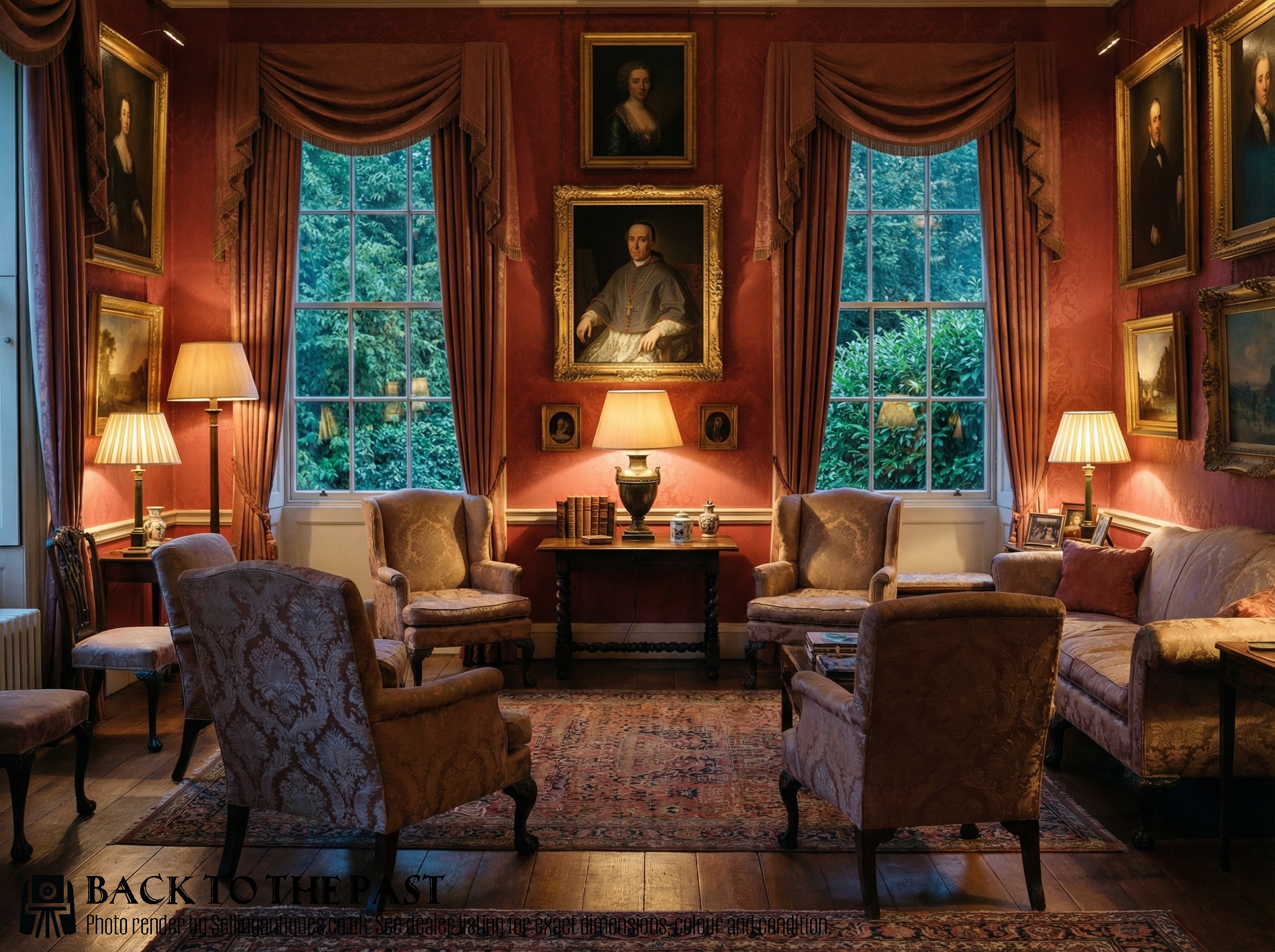
How they were made
Cabinetmakers utilised a rich palette of solid timbers and veneers, working primarily in oak, mahogany, walnut, satinwood, and sycamore. Dark accents often appear in ebony, whilst certain hall and side tables incorporate marble tops and brass mounts.
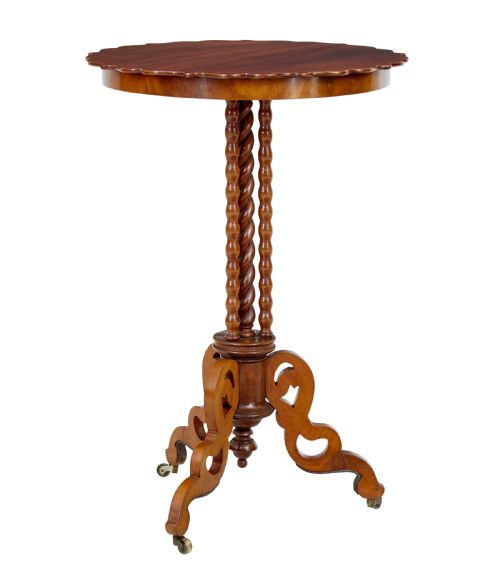
Surface decoration required high levels of skill, employing intricate parquetry and marquetry to create geometric patterns and floral motifs across tabletops. Turning timber into precise spiral or barley twist formations defined the structural legs of seventeenth-century and revival pieces.
Retail Price Guide 2026
Typical UK retail prices for spiral turned leg table, calculated from the Sellingantiques database of over a million retail prices indexed since 2003. This retail price guide relies exclusively on Sellingantiques data; no external sources or auction records are used, so the figures do not describe the wider market.
Materials represented across the inventory include oak, mahogany, walnut, satinwood, ebony, brass, and marble.
What varies in quality
The sophistication of the timber selection and the precision of the surface inlay dictate the tier of a piece. Elaborate parquetry and figured mahogany command attention through meticulous grain matching and placement.
Structural integrity rests on the execution of the turned legs and the joinery connecting the base to the top. Refined proportions and harmonious design distinguish exceptional examples from simpler vernacular work.
Gillows
The Spiral Turned Leg Table Glossary
- Spiral turn
- A rounded wooden leg shaped into a continuous helical twist. This decorative turning technique became popular in seventeenth-century furniture.
- Marquetry
- The art of applying thin pieces of wood veneer to a structure to form decorative patterns. Craftsmen utilised various coloured timbers to create pictorial designs.
- Parquetry
- A geometric mosaic of wood pieces used for surface decoration. This technique frequently appears on seventeenth-century tabletops.
- Sofa table
- A small rectangular table traditionally placed in front of a sofa. These pieces typically feature drop leaves on either side.
- Break-front
- A piece of furniture where the central section projects forward from the flanking parts. This architectural arrangement adds depth to large side and hall tables.
Frequently Asked Questions
What is a spiral turned leg table?
A spiral turned leg table is a piece of furniture supported by legs shaped with a distinctive helical twist. These tables appear in various forms, including side tables, dining tables, and writing desks.
Craftsmen produced these tables across multiple historical periods, utilising timber turning techniques to add architectural movement and texture to domestic interiors.
How were these tables used historically?
Depending on their specific form, these tables served diverse functions in period homes. Smaller examples acted as side, work, or occasional tables for holding lamps and writing materials.
Larger variants functioned as centre tables, sofa tables, or extended dining tables capable of seating numerous guests for formal meals.
How do I distinguish seventeenth-century pieces from later revivals?
Seventeenth-century pieces often utilise solid oak or walnut, displaying the construction methods and patination characteristic of the period. Parquetry and marquetry work on these early tables differs in execution from later interpretations.
Revival pieces, such as those from the early twentieth century, adopt similar turning styles but exhibit different timber seasoning, tool marks, and secondary woods.
How do I care for a antique wooden table?
Maintaining an antique table requires protecting the wood and polished surface from extreme humidity and direct sunlight. Regular dusting with a soft, dry cloth preserves the finish without building up residue.
Applying occasional appropriate wax helps nourish older timbers like mahogany and oak, maintaining their natural lustre over time.