

17th Century Table
A 17th century table brings centuries of structural honesty and dark timber warmth into a modern room.
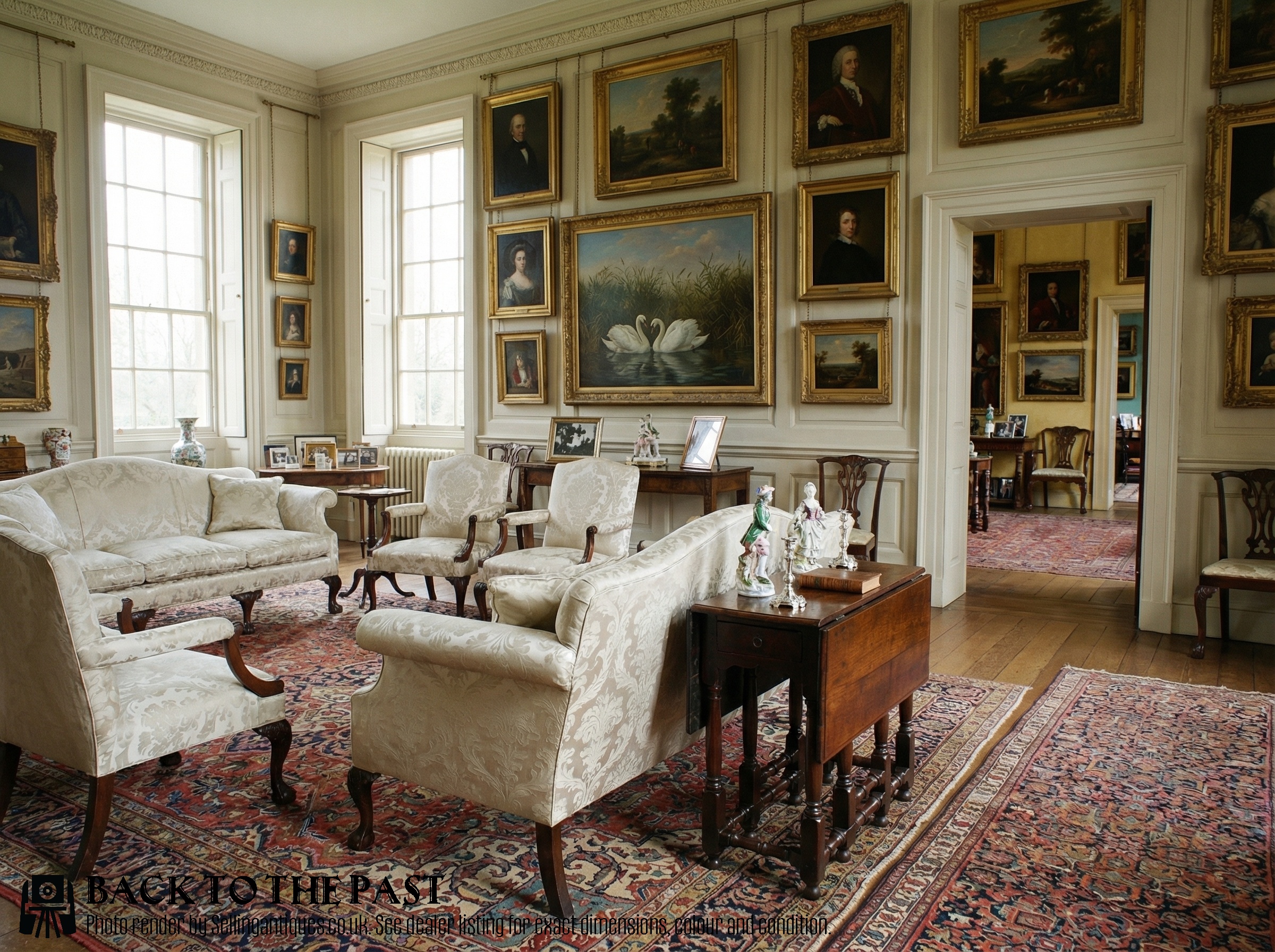
17th Century Table
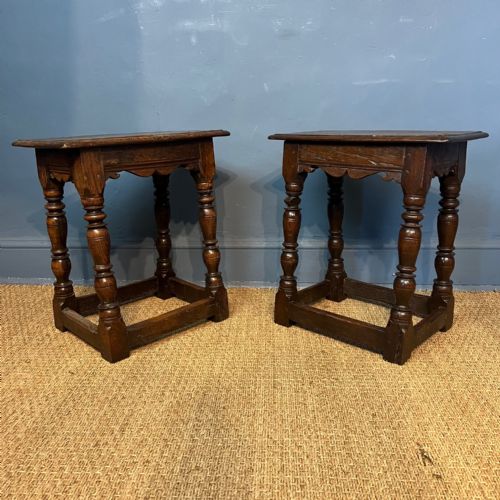
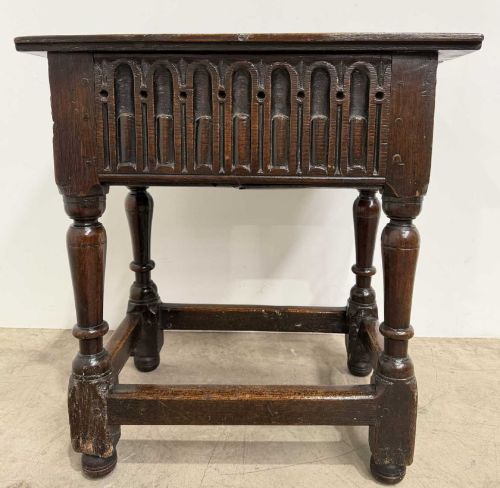
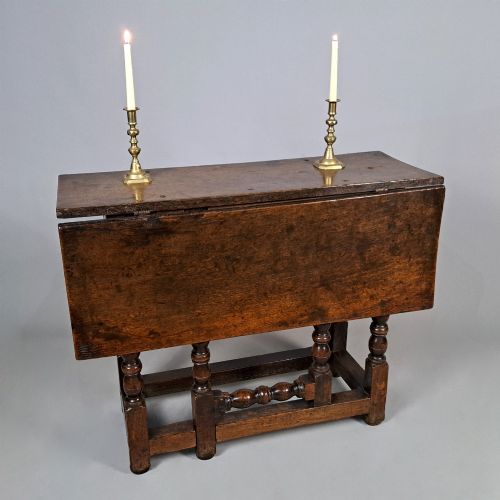
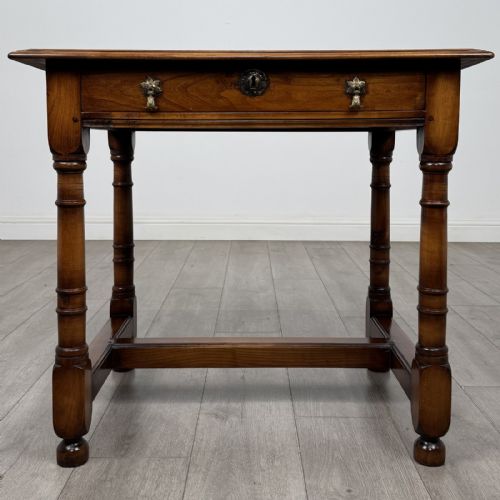
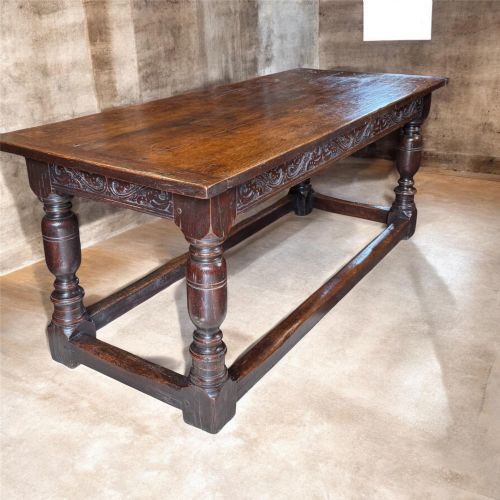
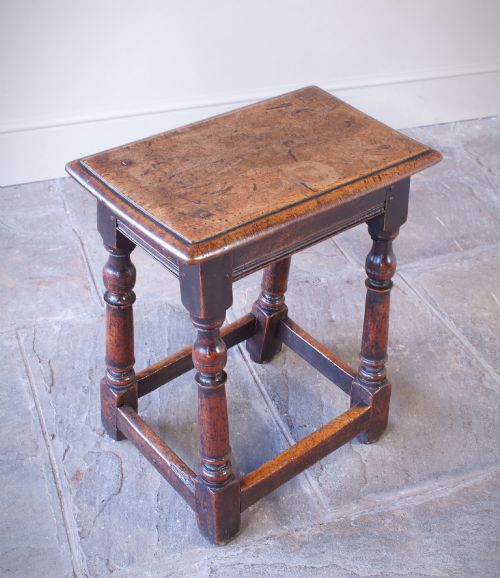
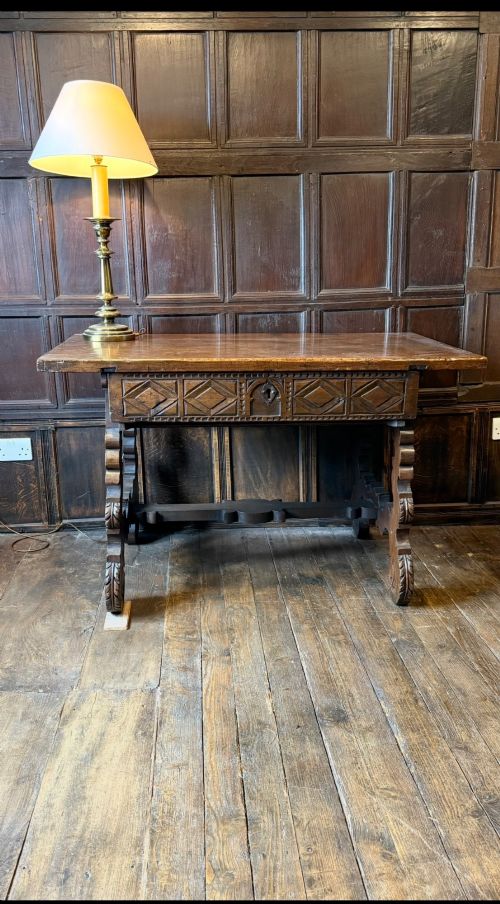
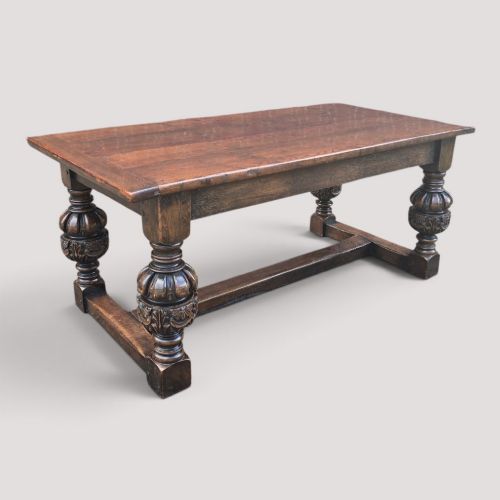
A 17th century table predominantly appears as a side table, gateleg table, or refectory table built for domestic or formal dining use. Oak forms the backbone of these pieces, alongside walnut and fruitwood variations reflecting English, Spanish, French, and Italian origins.
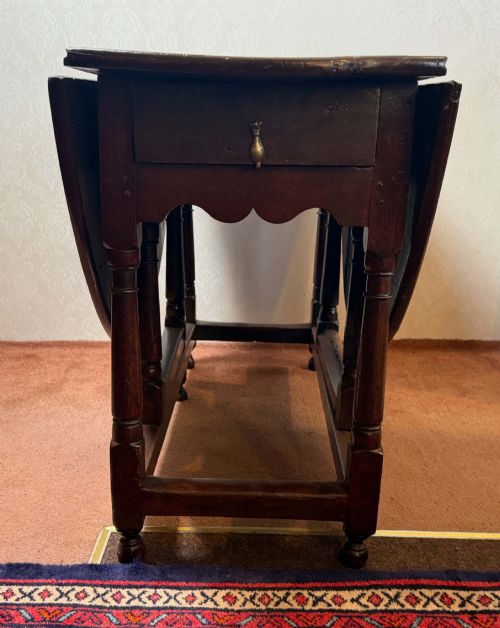
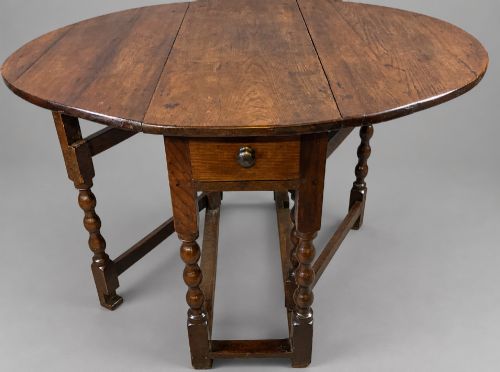
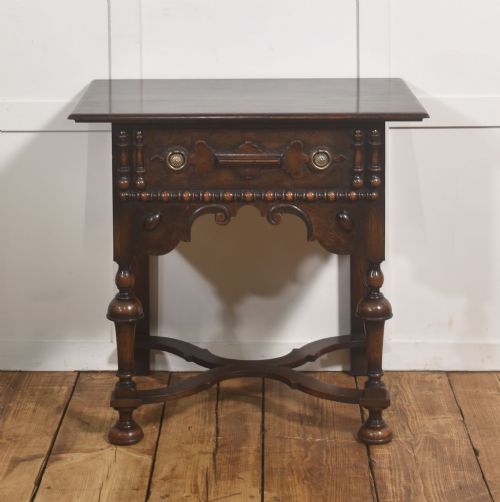
Side tables and gateleg variants offer flexible surfaces with drop leaves or single drawers, while larger refectory tables provide substantial dining proportions. These forms showcase the evolving joinery and domestic requirements of the period.
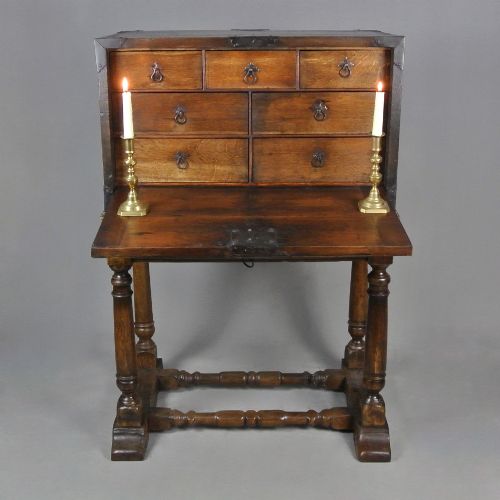
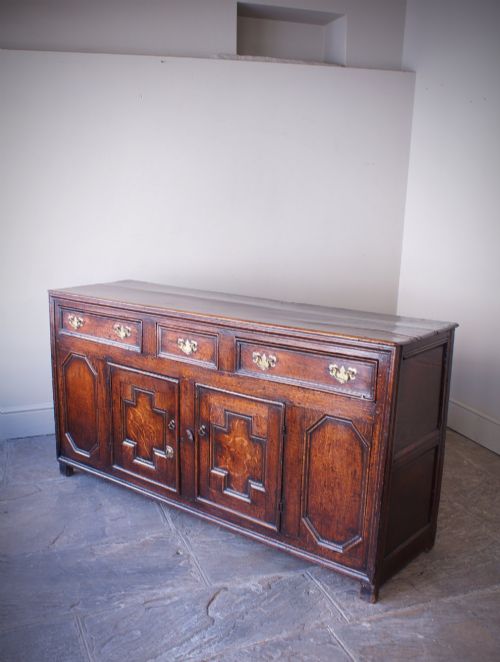
The selection ranges from country oak examples with simple pad feet to elaborate Spanish Baroque walnut designs and William and Mary marquetry pieces. Buyers encounter both utilitarian farmhouse boards and highly decorative reception furniture.
Materials and construction methods
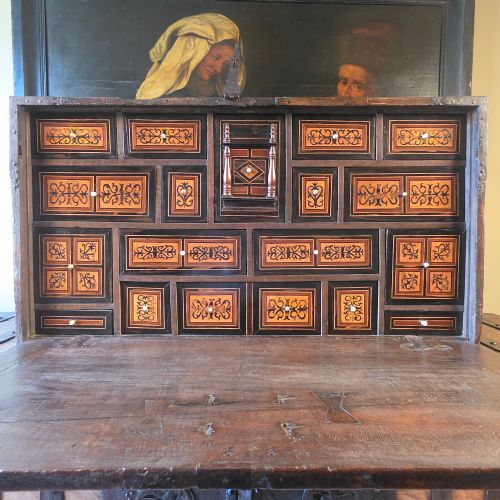
Joiners relied heavily on solid oak, walnut, elm, chestnut, and fruitwood, often enhanced with intricate oyster veneer, marquetry, and inlay using olive and holly wood. Wrought iron and standard iron hardware provided structural bracing and operational support for moving leaves.
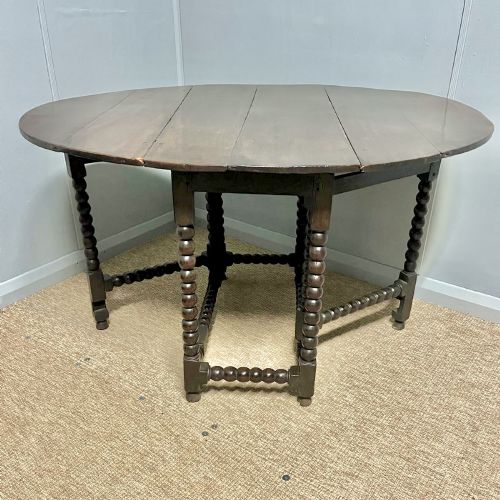
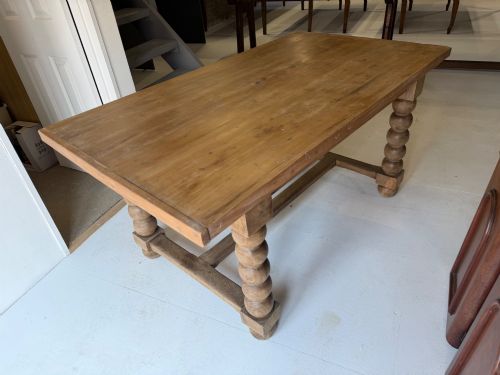
Turned elements such as bobbin twist, barley twist, and baluster legs defined the vertical supports of many pieces, alongside carved details like grotesque masks. Construction depended on pegged mortise and tenon joints to secure heavy timber tops to sturdy underframes.
17th Century Table Retail Price Guide 2026
Typical asking prices for 17th century table among the pieces listed under this phrase on Sellingantiques today, from the lower quarter to the upper quarter. They describe what is for sale here now, not the wider market.
Some tables feature hidden drawers for keeping small valuables safe from prying eyes.
Distinctions in construction and material quality
The sophistication of surface decoration and timber selection dictates the standing of a piece, moving from plain utilitarian boards to complex marquetry and oyster veneer patterns. The integrity of the timber, the crispness of turned legs, and the preservation of original drawers and hinges separate ordinary utility from exceptional craftsmanship.
Regional variations and stylistic influences, from Spanish Baroque carving to William and Mary marquetry, introduce distinct levels of design ambition. The balance between structural timber and decorative surface veneer reveals the original maker's skill and intended setting.
The 17th Century Table Glossary
- Gateleg table
- A drop-leaf table with hinged legs that swing out to support the opened leaves.
- Refectory table
- A long, narrow dining table traditionally used in monastic refectories and large halls.
- Marquetry
- Decorative veneer work forming intricate patterns using various contrasting woods.
- Oyster veneer
- Cross-cut circular sections of small branches arranged in decorative patterns.
- Bobbin twist
- A turned wooden leg resembling a string of bobbins or spools.
17th Century Table: Frequently Asked Questions
How do I identify a 17th century table?
Look for heavy solid timbers like oak and walnut, hand-pegged joinery, and period-appropriate turned legs such as bobbin or barley twist supports.
Examine the underside and drawer construction for signs of hand tool work and period-correct iron hardware rather than modern screws.
Where were these tables made?
Surviving examples originate across Europe, with English, Spanish, French, Italian, and Dutch workshops producing distinct regional styles.
Local timber availability and prevailing artistic influences, from austere country forms to elaborate Baroque ornamentation, determined the regional output.
How do I care for antique timber?
Keep the timber away from direct heat sources and dramatic humidity shifts to prevent the ancient wood from splitting or warping.
Apply traditional wax sparingly and buff gently with a soft cloth to maintain the natural lustre of the aged surface.
What is a gateleg table used for?
These tables served flexible daily functions in historic homes, expanding easily for dining and folding down to save floor space.
Drop leaves supported by swinging legs allowed the furniture to adapt quickly to different rooms and company sizes.