




Spanish Baroque Furniture
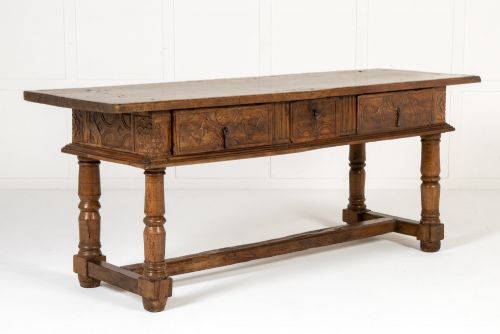
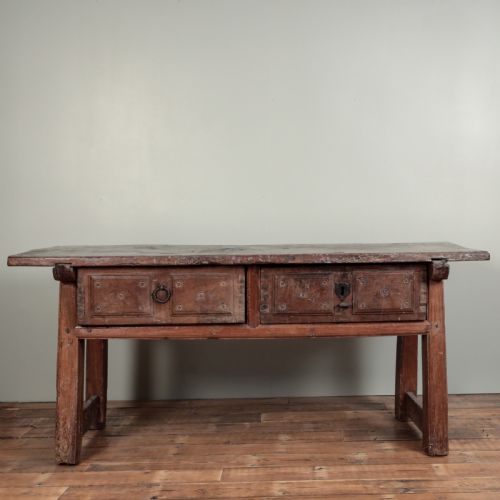
Spanish baroque furniture brings severe, heavy walnut forms and wrought iron bracing into a room, offering austere grandeur.
Spanish Baroque Furniture
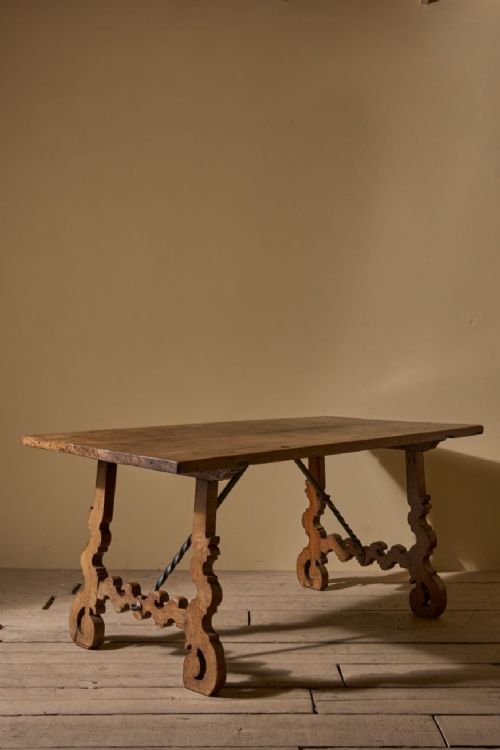
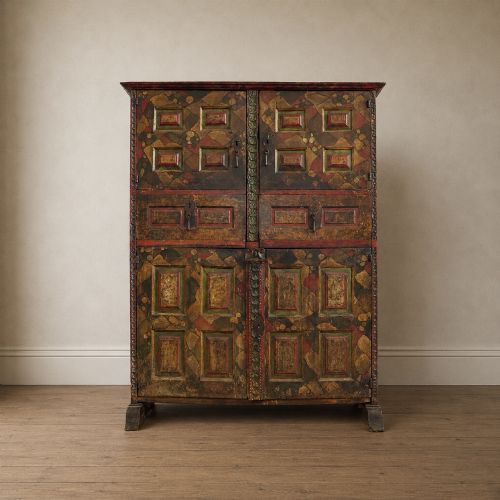
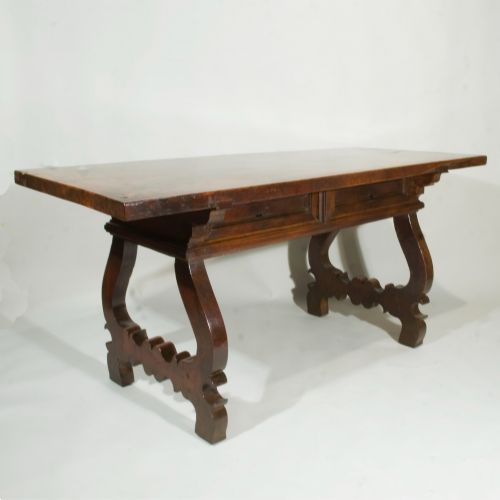
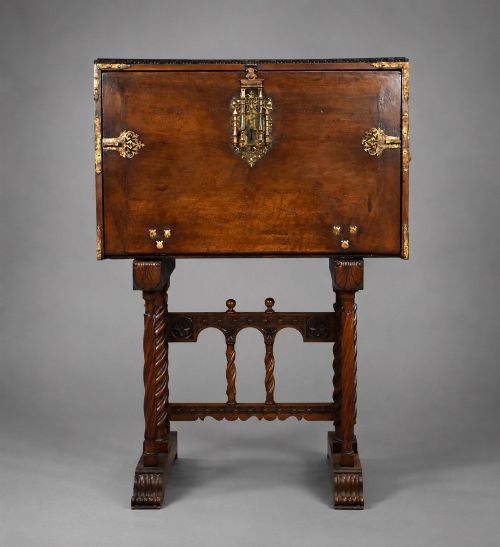
Spanish baroque furniture encompasses heavy walnut tables, housekeeper's cupboards, and intricately fitted bargueño cabinets dating principally from the seventeenth century. These substantial forms display the architectural severity and dark timber tones characteristic of Iberian craftsmanship from the period.
Tables dominate the available selection, ranging from massive walnut dining pieces to smaller side tables and centre tables incorporating fruitwood. Alongside these surfaces appear storage boxes, cabinets on stands, and occasional brass braseros.
While seventeenth-century examples set the historical standard, eighteenth-century variants and later revival pieces from nineteen-twenty also appear. Walnut remains the primary medium across these centuries, frequently paired with iron supports.
Materials and construction
Solid walnut provides the heavy structural foundation for the vast majority of these cabinets, tables, and boxes. Fruitwood occasionally supplements the primary timber in seventeenth and eighteenth-century centre tables.
Wrought iron serves as essential structural bracing, visible in the arched stretchers beneath tables and decorative mounts on cabinets. Polychrome pigment adds colour to specific housekeeper's cupboards, while tortoiseshell embellishes select cabinets on stands.
Spanish Baroque Furniture Retail Price Guide 2026
Typical asking prices for spanish baroque furniture among the pieces listed under this phrase on Sellingantiques today, from the lower quarter to the upper quarter. They describe what is for sale here now, not the wider market.
Listings feature walnut predominantly, alongside wrought iron, brass, fruitwood, and tortoiseshell across the seventeenth and eighteenth centuries.
Distinctions in quality
Quality rests in the integrity of the solid walnut construction and the authenticity of the surface patina developed over centuries. Early solid walnut tables with untouched patination represent the upper tier of the range.
The complexity of internal drawer arrangements in bargueño cabinets and the preservation of original polychrome paint or tortoiseshell veneers separate standard functional items from superior collector pieces.
The Spanish Baroque Furniture Glossary
- Bargueño
- A traditional Spanish chest or cabinet with a drop-front lid enclosing numerous small drawers and compartments. These portable writing cabinets often rest on dedicated stand structures.
- Brasero
- A traditional metal vessel designed to hold burning coals for room heating. These hearth accessories are typically fashioned from brass.
- Polychrome
- Painted in several colours. This decorative treatment appears on specific seventeenth-century housekeeper's cupboards.
- Stretchers
- Horizontal wooden or iron cross-beams connecting table legs for added stability. Wrought iron stretchers are characteristic of Iberian table design.
- Patina
- The surface sheen and mellowing acquired by timber over long periods of use and ageing. Good original patina indicates minimal restorative interference.
Spanish Baroque Furniture: Frequently Asked Questions
What is a bargueño cabinet?
A bargueño is a traditional Spanish writing cabinet featuring a drop-front lid that opens to reveal an elaborate arrangement of small drawers and compartments. These pieces were designed to be portable and typically rest upon decorated wooden stands.
They served as secure desks for correspondence and the storage of valuables in seventeenth-century interiors.
How do I live with heavy walnut tables?
These robust walnut tables require minimal maintenance beyond regular dusting and occasional waxing to nourish the timber. Their dark tones and solid construction anchor a dining room or hallway effectively.
Keep them away from direct heat sources to prevent the solid walnut from splitting over time.
What are iron stretchers used for?
Wrought iron stretchers connect the legs of Spanish tables to provide structural rigidity and prevent the heavy walnut frame from wobbling. They reflect the practical integration of durable metalwork in Iberian furniture design.
These arched iron braces also contribute significantly to the austere aesthetic of the pieces.
How are seventeenth and eighteenth century pieces told apart?
Seventeenth-century items typically display heavier architectural proportions, austere surfaces, and simple geometric mouldings executed in solid walnut. Eighteenth-century examples often incorporate lighter construction and secondary timbers like fruitwood.
Examination of joinery techniques and hardware also helps establish the approximate period of manufacture.