


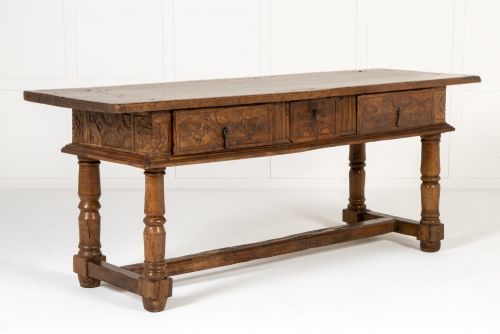

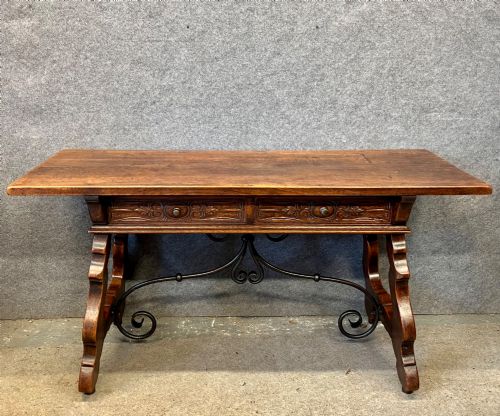

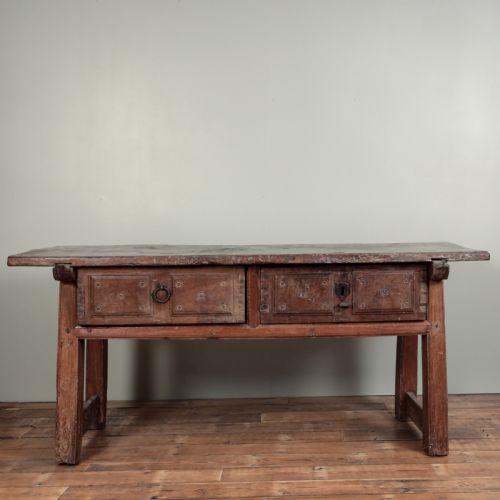


Antique Spanish Desk
An antique spanish desk brings substantial walnut timber and historical weight into a room, offering a commanding surface for daily writing.
Antique Spanish Desk
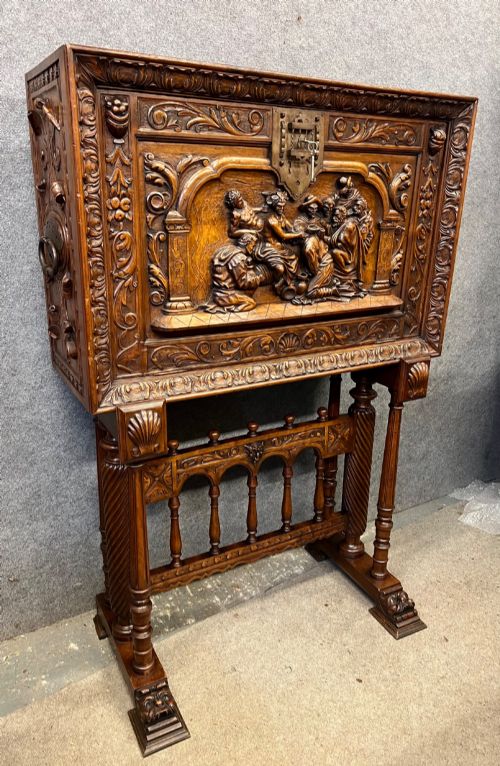
When you search for an antique spanish desk, you encounter substantial writing cabinets, refectory tables, and side tables dating from the seventeenth century onward. Walnut forms the backbone of these pieces, often accompanied by oak, fruitwood, and ebonised timber.
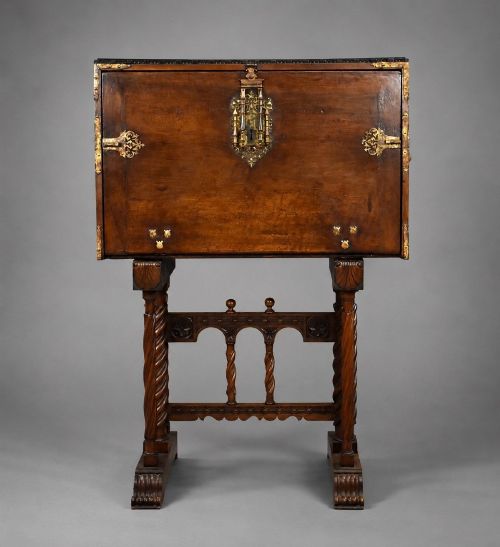
The seventeenth-century pieces include elaborate bargueño and papillero cabinets on stands, while later nineteenth-century examples often present as simpler walnut or oak tables. These forms span baroque, Renaissance, and rustic farmhouse styles.
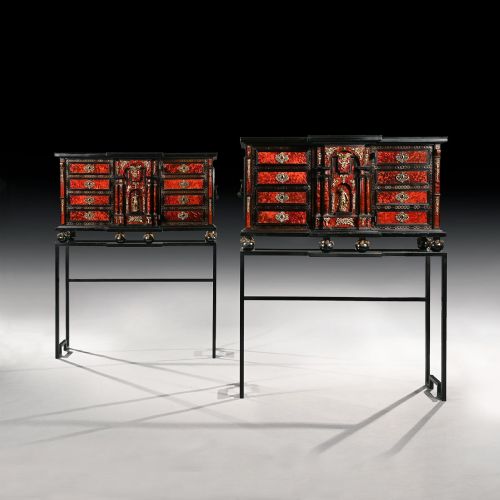
The selection ranges from heavily mounted tortoiseshell and gilt bronze cabinets to primitive pine tables and lighter oak variants. Buyers find both formal architectural writing furniture and utilitarian rustic surfaces.
Materials and construction
Solid walnut and oak provide the primary structural integrity for these pieces, supplemented by fruitwood and ebonised wood details. Wrought iron, brass, and gilt bronze appear in hardware, mounts, and structural braces.
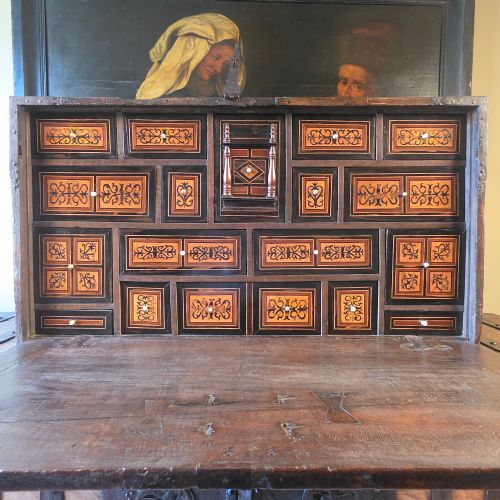
Cabinet makers utilised fine inlays, tortoiseshell panels, and ebonised surfaces to achieve the ornate finishes seen in seventeenth-century pieces. Simpler tables rely on straightforward joinery, trestle supports, and thick timber tops.
Antique Spanish Desk Retail Price Guide 2026
Typical asking prices for spanish desk among the pieces listed under this phrase on Sellingantiques today, from the lower quarter to the upper quarter. They describe what is for sale here now, not the wider market.
The inventory spans the seventeenth century to the early twentieth century, incorporating baroque and rustic farmhouse styles.
Distinctions in quality
The sophistication of the timber work and the complexity of the cabinet interior separate standard surfaces from exceptional writing cabinets. Seventeenth-century examples with intricate tortoiseshell panels and gilt bronze mounts represent the upper echelon of craftsmanship.
Proportion, timber selection, and the presence of original structural elements dictate the standing of each piece. Tables and desks featuring dense walnut with a rich patina outclass later reproductions and heavily restored variants.
Antoine Bofill
The Antique Spanish Desk Glossary
- Bargueño
- A traditional Spanish writing cabinet featuring a drop-front lid that conceals numerous small drawers and compartments. These portable desk boxes usually rest on dedicated wooden stands.
- Papillero
- A small cabinet used for storing papers and documents, structurally similar to the bargueño but typically more compact. It sits upon a matching stand or table base.
- Refectory table
- A long, narrow dining or working table characterised by heavy timber construction and stretcher supports. Seventeenth and eighteenth-century examples form a significant portion of early Spanish tables.
- Ebonised wood
- Timber treated with a chemical stain or finish to imitate ebony. This dark, polished treatment appears frequently on seventeenth-century baroque cabinets.
Antique Spanish Desk: Frequently Asked Questions
What is a bargueño cabinet?
A bargueño is a traditional Spanish drop-front writing cabinet designed to sit on a separate stand. It opens to reveal an elaborate arrangement of small drawers and decorative compartments used for correspondence and valuables.
These pieces combine functional storage with decorative status, often featuring intricate inlay, gilt bronze mounts, or tortoiseshell panels.
How do I identify a seventeenth century piece?
Seventeenth-century pieces typically feature heavy solid walnut construction, baroque or Renaissance stylistic elements, and hand-forged iron hardware. The presence of tortoiseshell, ebonised wood, and complex cabinet interiors also points to this early period.
Later nineteenth-century and revival pieces often display lighter oak timbers or simplified proportions compared to their seventeenth-century predecessors.
How should I care for walnut furniture?
Walnut surfaces benefit from consistent indoor humidity levels and protection from direct sunlight to preserve the wood and original patina. Regular dusting with a soft, dry cloth maintains the finish without chemical buildup.
Avoid placing these tables near heat sources that could cause the historic timber to dry out or split.
Where were these tables used?
These writing cabinets and tables served administrative and domestic functions in grand homes, monasteries, and administrative offices across Spain. They provided secure storage for documents and a sturdy surface for writing.
Today, they function effectively as writing desks, console tables, or focal points in studies and living areas.