




Spanish Baroque Table
A genuine spanish baroque table brings commanding presence to a room, rooted in centuries of master woodworking and severe architectural form.
What these pieces are
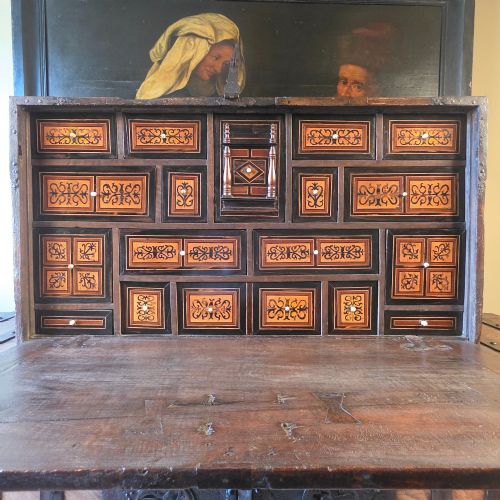
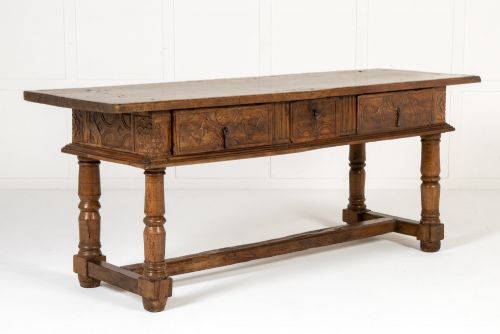
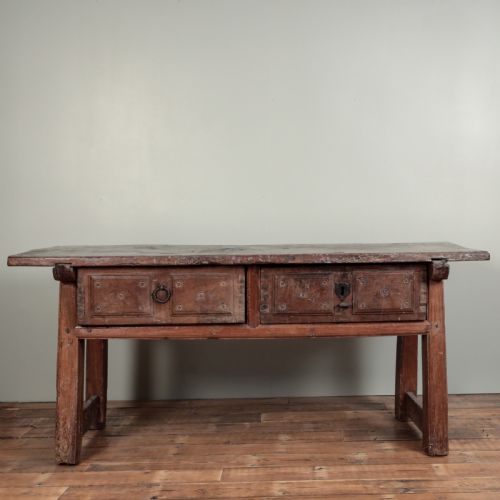
When you search for a spanish baroque table, you encounter heavy timber furniture designed for grand domestic spaces. The selection spans authentic seventeenth, eighteenth, and nineteenth-century examples alongside later revival pieces from nineteen-twenty.
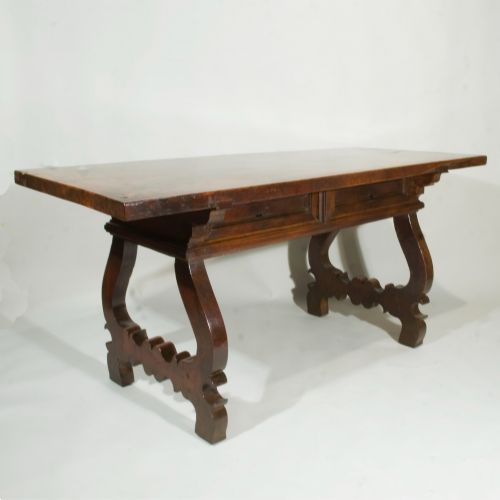
The form encompasses several functional types including large dining tables, refectory tables in the Catalonia style, console tables, side tables, and ebonised centre tables.
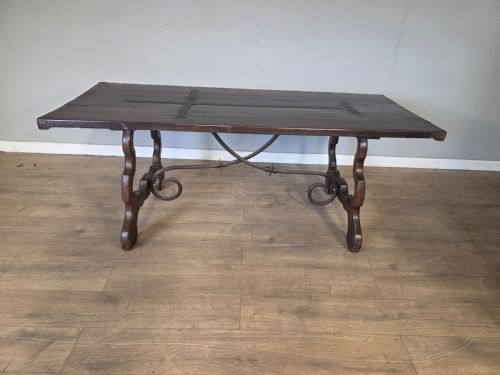
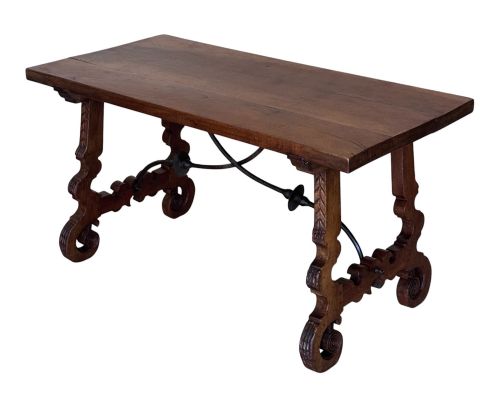
Walnut dominates the material record, frequently accompanied by oak and wrought iron supports that define the regional architectural vocabulary.
How they were made
Joiners constructed these tables primarily from solid walnut and oak timbers, selecting planks for structural strength and natural grain figure. Surfaces gained their appearance through age and original patina rather than heavy synthetic finishes.
Wrought iron and iron components provide essential structural bracing, particularly in the stretcher systems beneath the main surfaces. Ebonised wood appears in specific nineteenth-century examples to mimic more costly exotic hardwoods.
Retail Price Guide 2026
Typical UK retail prices for spanish baroque table, calculated from the Sellingantiques database of over a million retail prices indexed since 2003. This retail price guide relies exclusively on Sellingantiques data; no external sources or auction records are used, so the figures do not describe the wider market.
Some tables feature iron stretchers so stubborn they have outlasted the original flooring beneath them.
What varies in quality
The division between an ordinary piece and a superior one rests on the integrity of the timber and the depth of the original patina. Early seventeenth-century pieces display a heavy solidity and surface wear that later revivals attempt to replicate.
Construction details such as the weight of the walnut planks and the architectural refinement of the iron stretchers separate standard regional work from exceptional examples.
The Spanish Baroque Table Glossary
- Refectory table
- A long, narrow dining table traditionally used in monastic dining halls. These examples often incorporate robust wooden framing and stretcher supports.
- Console table
- A table designed to stand against a wall, frequently featuring shaped legs or iron brackets. These pieces served decorative and functional purposes in formal hallways.
- Ebonised wood
- Timber treated with a dark stain or chemical process to imitate ebony. This technique appears on nineteenth-century centre tables to create a striking monochrome surface.
- Patina
- The surface sheen and colour acquired by wood through decades of handling, polishing, and environmental exposure. A good original patina indicates genuine age and careful preservation.
- Stretcher
- A horizontal wooden or iron beam connecting the legs of a table for stability. In these forms, they often feature scrollwork or iron bracing.
Frequently Asked Questions
How do I care for a walnut table?
Keep the timber away from direct heat sources and strong sunlight to prevent the wood from drying and splitting. Feed the surface occasionally with appropriate natural wax to maintain the protective finish.
Avoid using silicon-based polishes or damp cloths that might damage the historical patina. Regular dusting with a soft, dry cloth preserves the character of the grain.
Are these tables suitable for daily dining?
Many of these pieces were built for functional use in large halls and continue to serve well as dining or kitchen tables. Their solid walnut and oak construction provides the necessary stability for everyday gatherings.
Use protective mats under hot dishes and liquids to safeguard the historic wood surfaces from marking. Proper placement ensures the stretchers and iron supports carry weight evenly.
How can I tell a seventeenth-century table from a revival piece?
Authentic seventeenth-century examples display deep tool marks, natural timber shrinkage, and a consistent historical patina accumulated over centuries. Revival pieces from nineteen-twenty often show more uniform machine-sawn elements and lighter wear patterns.
Examine the underside and joints for hand-cut joinery methods characteristic of early periods. The density and weight of the solid walnut also offer clues to the age of the timber.
What is the difference between a side table and a console table?
Console tables are specifically designed to stand flat against a wall, sometimes relying on architectural brackets or legs at the front. Side tables are freestanding items that can be moved around a room as needed.
Both forms utilise walnut and iron materials within this tradition, but their proportions suit different wall spaces and interior layouts.