
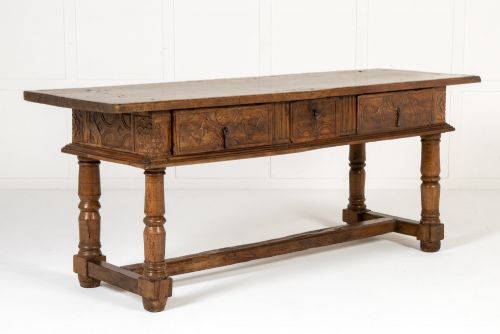


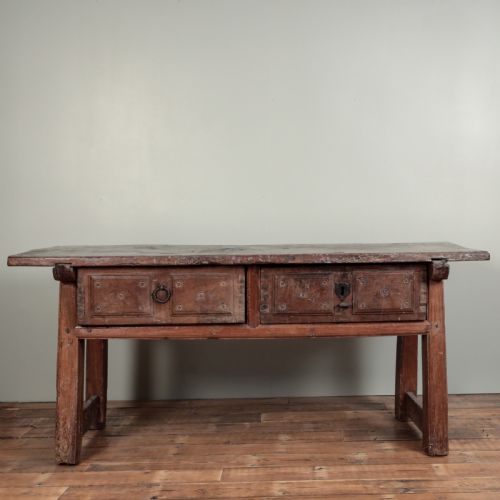


Spanish Walnut Table
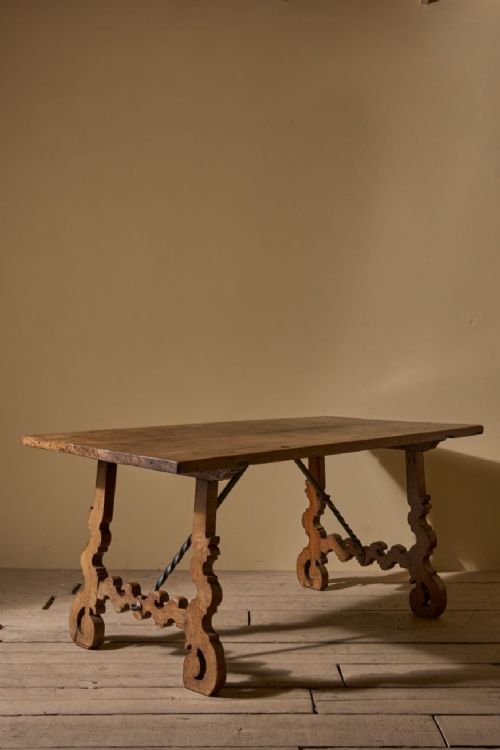
A spanish walnut table brings heavy timber, dark grain and centuries of Iberian provincial craft directly into a room.
Spanish Walnut Table
A spanish walnut table typically spans the seventeenth, eighteenth and nineteenth centuries, appearing in forms ranging from large refectory dining boards to compact side tables and console pieces. These works carry the weight of Iberian domestic history, constructed for utility in large halls and modest homes alike.
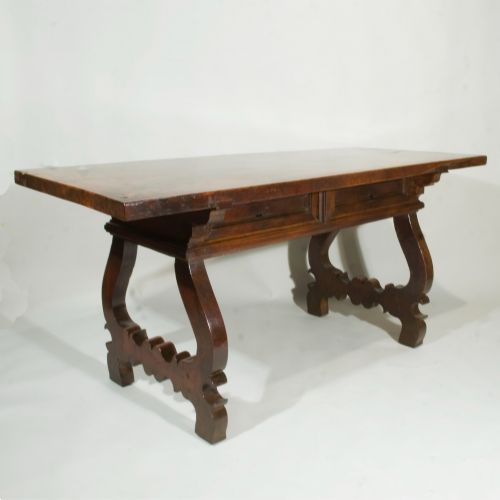
The version most commonly met on this page is the side table or dining table in seventeenth or eighteenth-century walnut, often showing the deep timber tones and straightforward joinery characteristic of the period. Alongside these true period pieces, later nineteenth-century revivals and twentieth-century interpretations also appear in the selection.
Materials and Construction
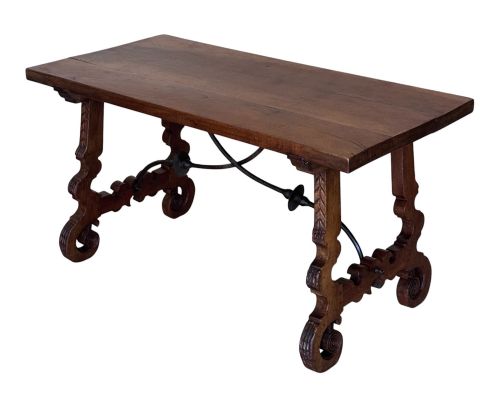
Construction relies primarily on solid walnut timbers, occasionally complemented by secondary woods such as fruitwood, oak or rosewood, combined with wrought iron supports or stretchers. Cabinetmakers shaped these heavy boards with hand tools, frequently utilising single-plank tops and sturdy underframing designed to support daily domestic life.
Surface finishing centres on developing a natural patina through wax and age, while specific examples incorporate iron hardware, brass accents or bone inlay. The joinery remains robust and direct, prioritising structural stability above concealed connections.
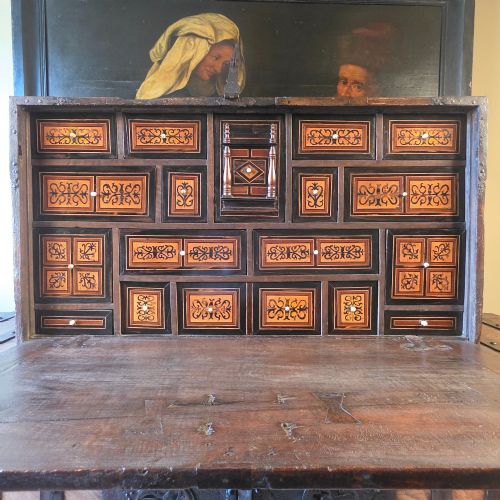
Several examples include secret boxes and writing compartments, built for hiding letters and small valuables from curious guests.
Judging Quality and Character
Quality separates objects by the integrity of the timber and the depth of the original surface patina. Pieces retaining their early single-plank walnut tops and undisturbed seventeenth or eighteenth-century finish sit at the higher end of the scale.
Proportion and the preservation of original ironwork or stretchers also dictate the stature of an example. Later revivals and heavily restored surfaces offer domestic utility while differing in historical weight from untouched early works.
The Spanish Walnut Table Glossary
- Patina
- The deep sheen and surface colour developed by walnut timber through decades of handling, polishing and exposure to light. It serves as a key indicator of age and authenticity.
- Refectory
- A long dining table style traditionally used in communal dining halls. These forms offer substantial length and generous proportions for modern seating.
- Stretcher
- A horizontal wooden or iron beam connecting the legs of a table to provide structural rigidity. In Iberian pieces, wrought iron scroll stretchers frequently add decorative support.
- Console table
- A wall-mounted or freestanding side table designed for placement against a surface. These narrower formats suit hallways and drawing rooms.
Spanish Walnut Table: Frequently Asked Questions
How do I date a spanish walnut table?
Dating relies on examining the construction methods, timber thickness, joinery style and the nature of the surface patina. Seventeenth and eighteenth-century examples display hand-cut joints and dense, heavy walnut boards.
Later nineteenth-century pieces and twentieth-century revivals often show mechanical tool marks or lighter underframing while following traditional Iberian design motifs.
Were these tables used for dining?
Many large formats served primarily as refectory or dining tables for communal households and estates. Smaller variations functioned as side tables, writing desks or serving surfaces.
Their robust timber construction allowed them to withstand heavy daily use across centuries of domestic life.
How do I clean and care for walnut timber?
Care requires simple dusting with a soft, dry cloth and occasional application of traditional beeswax to nourish the wood. Avoid modern liquid polishes and silicone sprays that damage the historic surface.
Keep the table away from direct heat sources and strong sunlight to prevent timber shrinkage and cracking.