

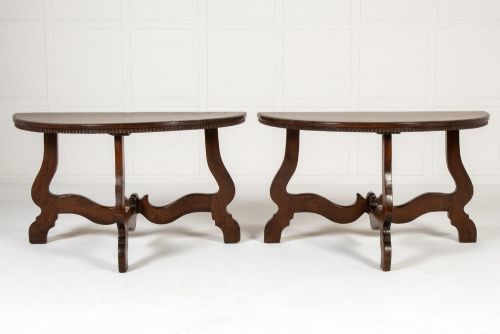

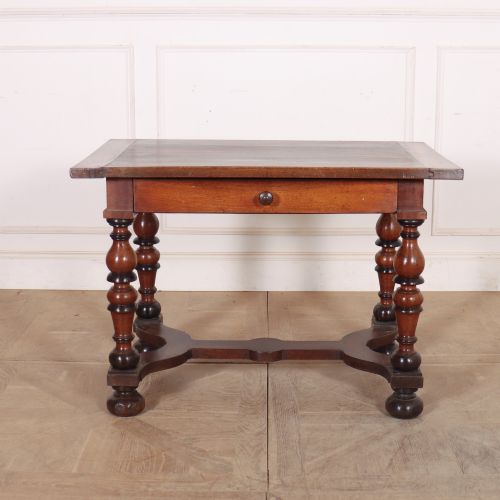


Baroque Walnut Console Table
A baroque walnut console table brings dramatic timber grain and sculptural weight to a hallway, drawing the eye with rich seventeenth and eighteenth-century craftsmanship.
Baroque Walnut Console Table
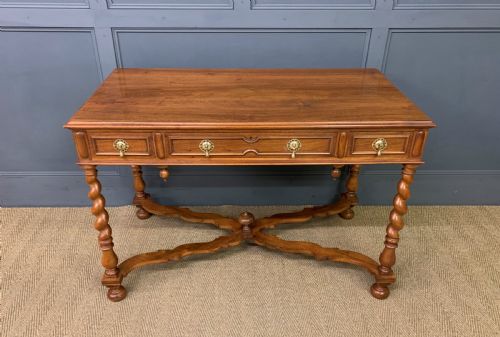
A baroque walnut console table serves as a striking focal point in an interior, originating primarily from seventeenth and eighteenth-century workshops across Spain, Italy, and the Netherlands. These heavy wooden pieces often double as side tables, centre tables, or games tables depending on their regional form and intended placement against a wall.
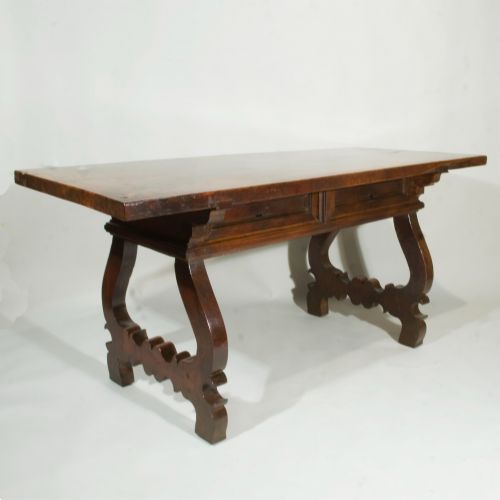
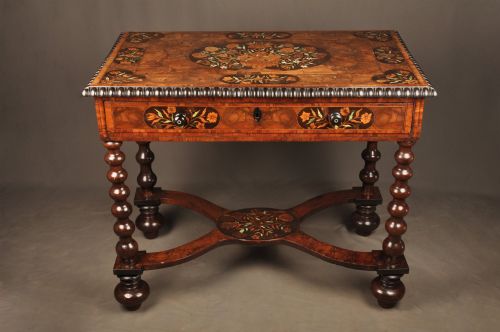
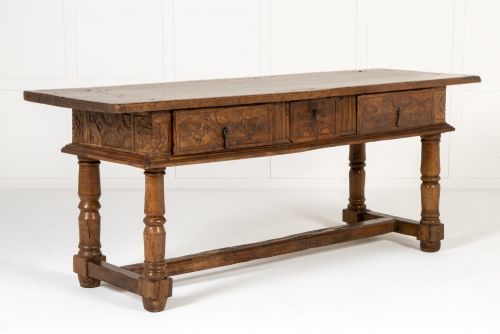
The versions most commonly found here span Spanish and Italian provincial styles alongside Dutch marquetry examples. They range from sober, solid timber constructions with untouched patina to highly decorated specimens featuring intricate fruitwood inlays or carved marble tops.
Buyers encounter forms that shift from utilitarian seventeenth-century Spanish surfaces to elaborate eighteenth-century Dutch card tables and Italian demi-lune designs. Each piece reflects the domestic habits of its period, whether used for formal display or evening card play.
What varies in quality
The distinction between ordinary and exceptional examples rests upon the depth of the carving and the integrity of the timber's surface. Tables featuring crisp, hand-chiselled details like carved eagles or figural supports stand apart from simpler utilitarian boards.
The richness of the original timber grain and the survival of an untainted patina dictate a piece's visual authority. Marquetry work that retains its original contrast without excessive restoration commands greater admiration among collectors.
Baroque Walnut Console Table Retail Price Guide 2026
Typical asking prices for baroque walnut console table among the pieces listed under this phrase on Sellingantiques today, from the lower quarter to the upper quarter. They describe what is for sale here now, not the wider market.
Object types span console tables, side tables, card tables, and desks from various continental origins.
The Baroque Walnut Console Table Glossary
- Patina
- The lustrous surface sheen developed over centuries through handling, waxing, and ageing. It acts as a primary indicator of a piece's untouched historical authenticity.
- Marquetry
- The art of applying small pieces of veneer to a structure to form decorative patterns. Dutch makers utilised fruitwood extensively for this detailed pictorial work.
- Demi-lune
- A half-moon shape commonly seen in eighteenth-century Italian console tables designed to sit flush against a wall. This format allowed smaller tables to fit neatly into tight entrance spaces.
- Serpentine
- A gently undulating curved line characteristic of later baroque and provincial furniture edges. It softens the heavy geometric proportions typical of earlier walnut pieces.
Baroque Walnut Console Table: Frequently Asked Questions
Where should I place a console table?
These tables find a natural home in entrance halls or corridors where their striking timber grain and sculptural silhouettes can be appreciated without cluttering the room.
Because many examples were originally designed to stand against walls or piers, they anchor a space effectively beneath a mirror or painting.
How do I care for antique walnut?
Maintain the timber by applying a traditional beeswax polish sparingly and buffing gently with a soft cloth to preserve the natural lustre.
Keep the wood away from direct heat sources and strong sunlight to prevent the dry cracking or fading of historic finishes.
What is the difference between Spanish and Dutch styles?
Spanish examples tend to favour heavy, solid walnut construction with minimal distraction, sometimes incorporating wrought iron stretchers for raw architectural strength.
Dutch variations lean towards ornate fruitwood marquetry inlay and serpentine curves, reflecting a different regional taste for decorative surface detail.
Are these tables sturdy enough for daily use?
Most pieces possess robust frames built from dense seventeenth or eighteenth-century hardwoods that easily withstand everyday placement of lamps or decorative objects.
Folding card tables require slightly more care when operating their leaves, but generally remain as functional today as they were centuries ago.