



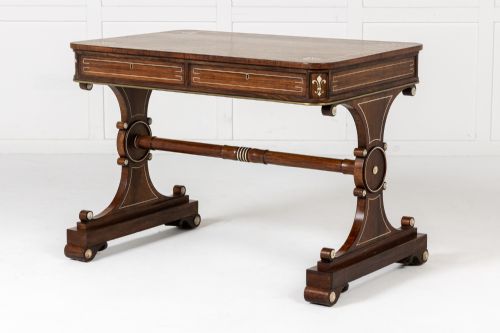


Trestle Base Writing Desk
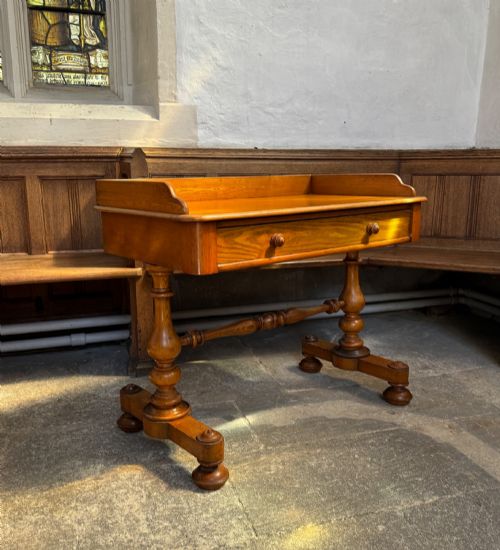
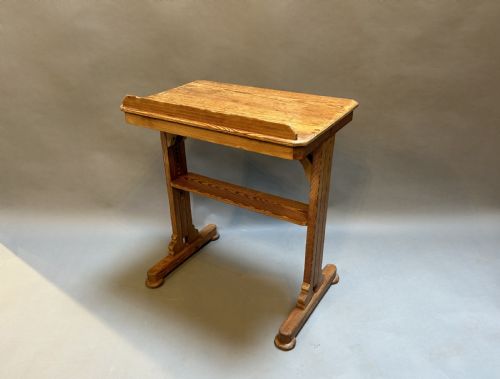
A trestle base writing desk offers a surface for correspondence, drawing its form from centuries of carpentry traditions.
Trestle Base Writing Desk
A trestle base writing desk brings together functional working surfaces and characteristic supporting uprights seen across various historical periods. Pieces span from the 17th century through to the early 20th century, encompassing Regency, Victorian, and William IV styles.
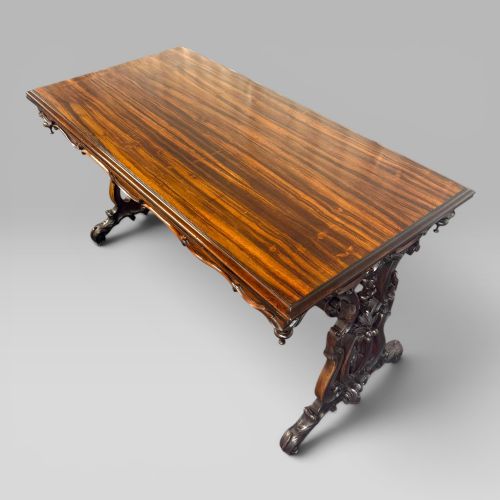
The inventory demonstrates that forms range from grand library tables and sofa tables to smaller writing desks and side tables. Mahogany and rosewood predominate among the timbers, alongside oak, walnut, pine, and exotic veneers such as zebrawood and satinwood.
Makers and workshops including Gillows and Gillingtons of Dublin appear in the historical record, reflecting regional craftsmanship of high standing. Buyers will frequently encounter mahogany and rosewood examples dating from the Regency and Victorian eras on this page.
Materials and construction methods
Cabinet makers utilised dense hardwoods like mahogany, rosewood, and oak to provide stable frames capable of supporting daily use. Inlays of brass and ebony add decorative contrast to the primary timber surfaces.
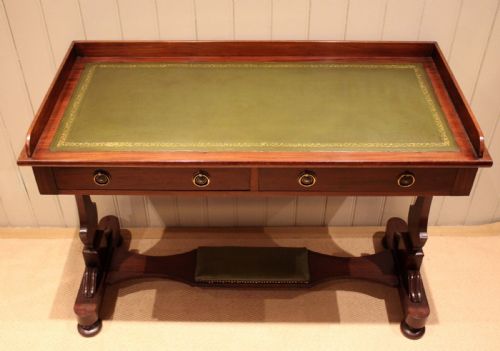
Leather inserts frequently provide the writing surface on tables designed specifically for correspondence. Secondary timbers such as pine appear in the internal drawer construction and less visible structural elements.
Trestle Base Writing Desk Retail Price Guide 2026
Typical asking prices for trestle base writing desk among the pieces listed under this phrase on Sellingantiques today, from the lower quarter to the upper quarter. They describe what is for sale here now, not the wider market.
Assessing craftsmanship and finish
The refinement of timber selection largely dictates the standing of a piece, with figured veneers and choice grain patterns marking superior examples. Grain alignment across drawers and the integration of brass inlay reveal the skill of the original workshop.
Structural integrity depends on the precision of the joints connecting the writing surface to the supporting base. Tables displaying documented attribution to notable makers generally command greater recognition among collectors.
Pairs MFG Co·Gillingtons of Dublin·Gillows
The Trestle Base Writing Desk Glossary
- Trestle base
- A supporting structure consisting of two or more upright frames connected by a horizontal beam.
- Library table
- A large freestanding table designed for a study or library, often fitted with drawers.
- Sofa table
- A small rectangular table traditionally placed against the back of a sofa, typically featuring drop leaves.
- Veneer
- A thin layer of choice wood applied to a commoner timber base to create a decorative surface.
- Brass inlay
- Ornamental metalwork embedded flush into the wood surface to form geometric or floral patterns.
Trestle Base Writing Desk: Frequently Asked Questions
What is a trestle base writing desk?
A trestle base writing desk is a piece of furniture featuring a flat working surface supported by braced vertical uprights rather than four standard corner legs.
These desks were designed for study, correspondence, and administrative tasks in domestic and institutional settings.
How do I identify a Regency writing table?
Regency tables typically display classical proportions, dark exotic timbers like rosewood or mahogany, and sometimes brass stringing or inlay.
They often incorporate sofa table forms with drop leaves and lyre-shaped or column supports.
Where should I place a library table?
Library tables are traditionally freestanding pieces meant to be viewed from all sides, making them suitable for the centre of a room.
They provide a generous working area and look best when allowed sufficient surrounding space.
How do I care for antique wood surfaces?
Antique timber surfaces benefit from regular dusting with a soft, dry cloth and occasional application of appropriate wax polish.
Keep these desks away from direct heat sources and strong sunlight to prevent the timber from drying and warping.