
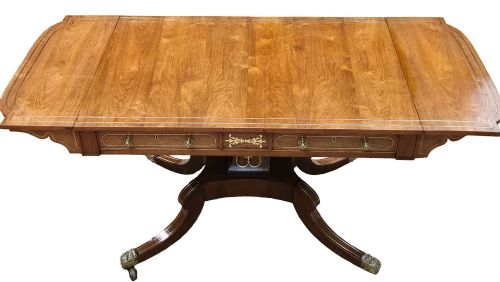
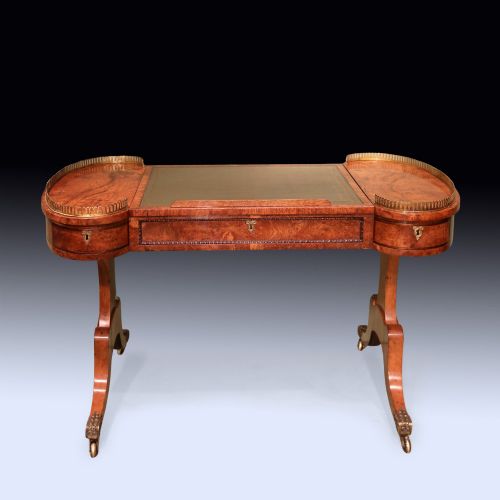
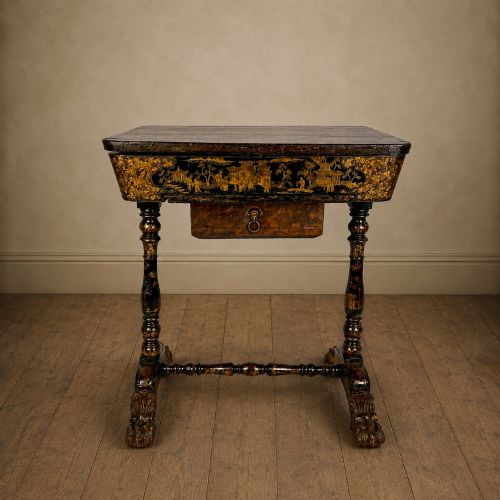
Regency Period Desk
A regency period desk brings architectural dignity and rich timber grain to a room, offering a disciplined surface built for correspondence and study.
Form and Period
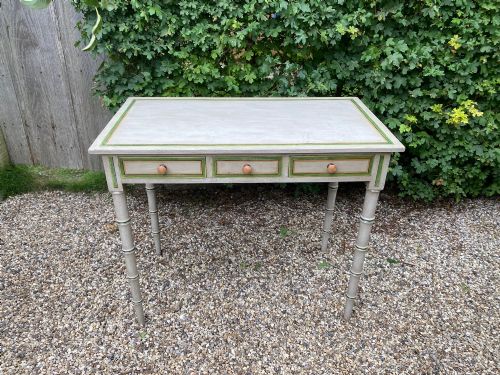
A regency period desk spans compact writing tables and expansive partners desks, defined by the clean lines and classical restraint of the early nineteenth century.
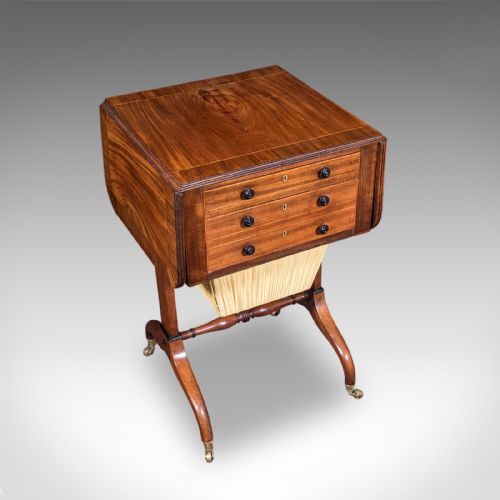
The version most commonly met on this page is the freestanding mahogany pedestal desk or library table, often fitted with a leather writing surface.
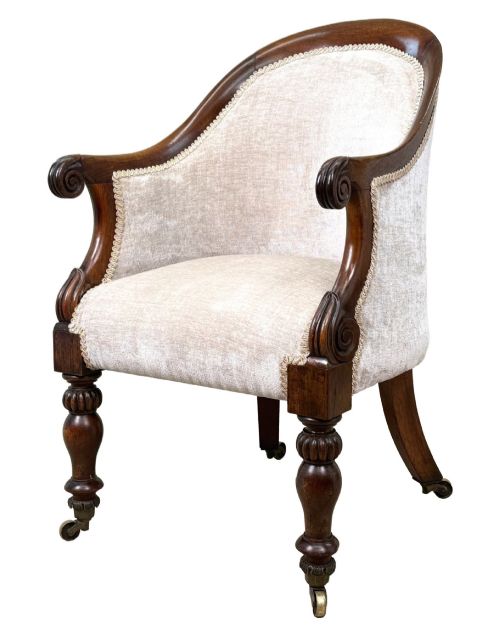
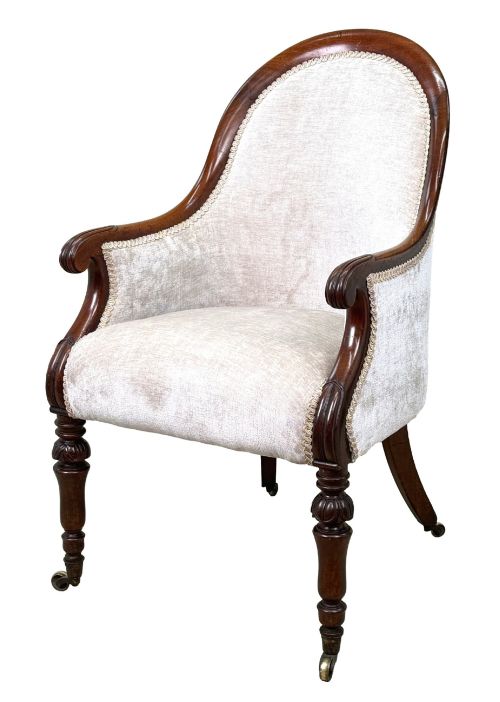
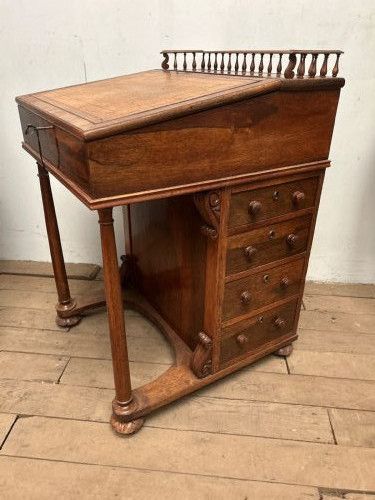
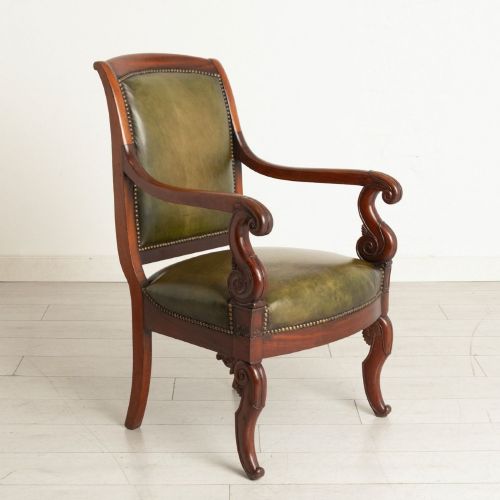
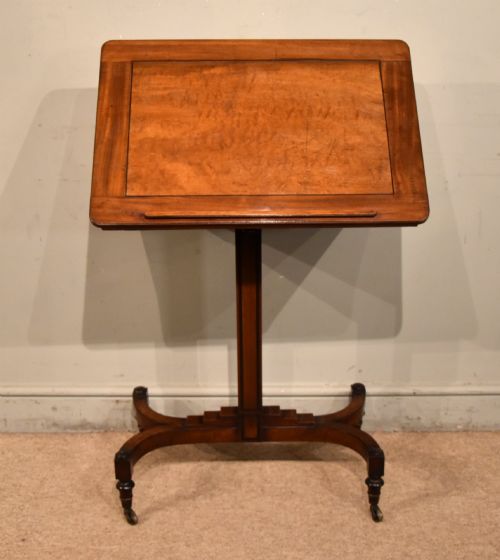
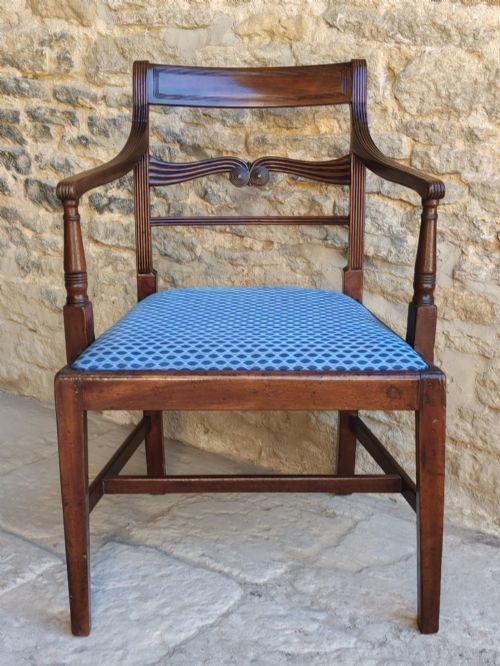
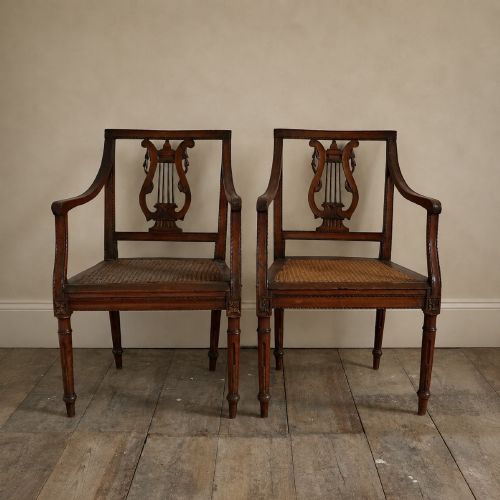
Smaller writing furniture such as the Davenport and the Davenport-style correspondence box also appear, alongside specialised library seating and desk accessories.
Materials and Construction
Cabinetmakers utilised rich dark timbers including mahogany, rosewood, burr oak, and ebonised wood, frequently incorporating contrasting brass inlay or mounts.
Writing surfaces were lined with leather, and structural elements relied on sturdy timber framing designed to support heavy drawers and pedestal cabinets.
Retail Price Guide 2026
Typical UK retail prices for regency period desk, calculated from the Sellingantiques database of over a million retail prices indexed since 2003. This retail price guide relies exclusively on Sellingantiques data; no external sources or auction records are used, so the figures do not describe the wider market.
Listings feature mahogany, rosewood, burr oak, ebonised wood, and walnut, paired with leather writing surfaces and brass details.
Craftsmanship and Proportion
Quality rests in the selection of figured wood veneers, the crispness of brass detailing, and the structural integrity of drawers and pedestals.
Finer examples maintain balanced proportions and careful internal construction using secondary timbers, distinguishing exceptional library tables from utilitarian clerks desks.
The Regency Period Desk Glossary
- Partners desk
- A large double-sided pedestal desk designed with drawers and cupboards on both faces so two people could work opposite each other.
- Davenport
- A compact desk featuring a sloped writing surface above a bank of side drawers, originating in the early nineteenth century.
- Library table
- A freestanding table with a finished top and frieze drawers, utilised in larger rooms for reading and writing.
- Secretaire
- A piece of furniture containing a pull-down writing flap that conceals small drawers and pigeonholes.
- Pedestal desk
- A desk comprising two independent drawer pedestals supporting a wide top.
Frequently Asked Questions
What is a partners desk?
A partners desk is a substantial double-sided piece built with drawers and storage on both faces. This configuration allowed two people to work opposite one another in a shared study or library.
These desks often feature a leather-lined top and heavy pedestal bases. They represent some of the largest writing furniture of the period.
How do I identify a Davenport?
A Davenport is a small, compact desk characterised by a steeply sloped writing surface. It typically rests on a pedestal containing a single bank of drawers.
Many examples include a small compartment at the top for stationery and inkwells. Their diminutive proportions made them suitable for smaller parlours.
What timbers were used?
Cabinetmakers relied primarily on mahogany and rosewood for their rich grain and durability. Burr oak and ebonised wood also appear among surviving pieces.
Decorative elements frequently incorporated brass inlay, mounts, and fine leather writing inserts. These materials reflect the classical aesthetic of the early nineteenth century.
Where should I place a library table?
Library tables are designed to be freestanding with finished backs, making them suitable for the centre of a room rather than pushed against a wall. Their finished appearance allows light to circulate around them.
They provide a generous surface for books and papers while maintaining an open silhouette. Ensure the room has enough clearance for chairs to pull out easily.