
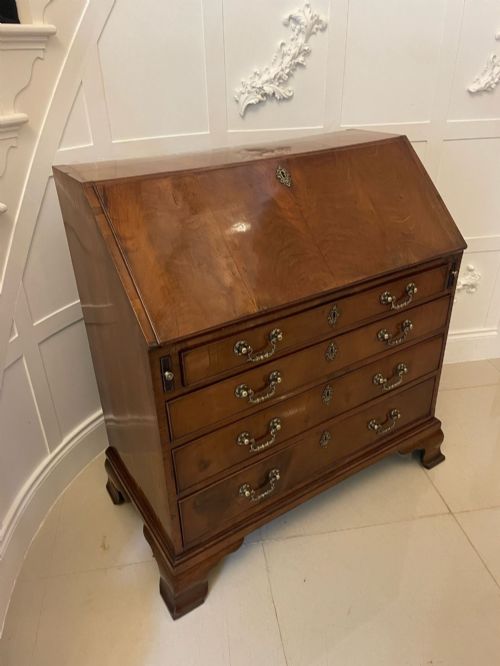
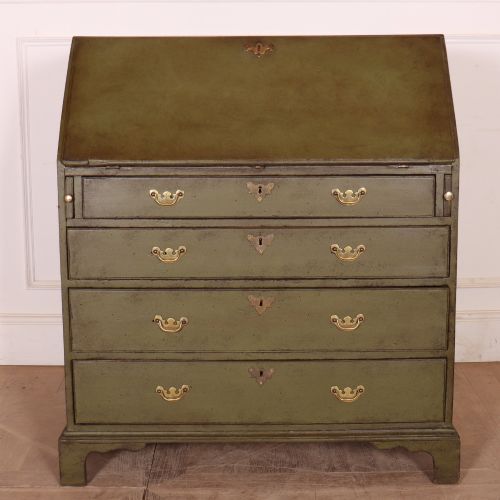

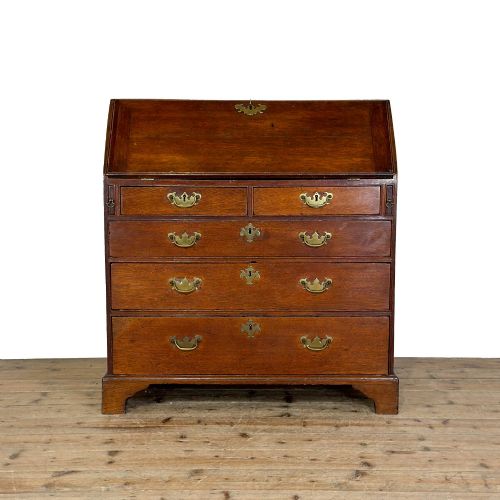
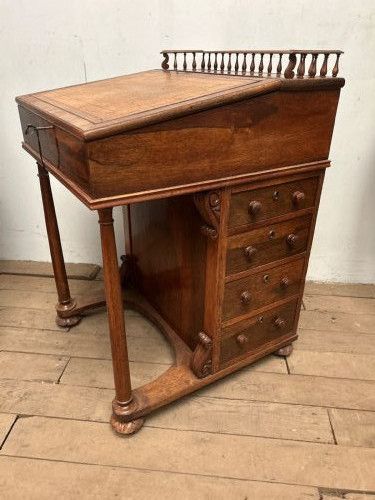
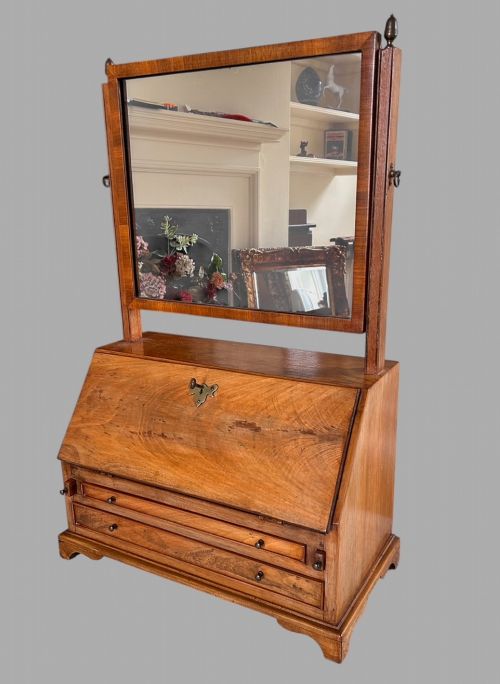
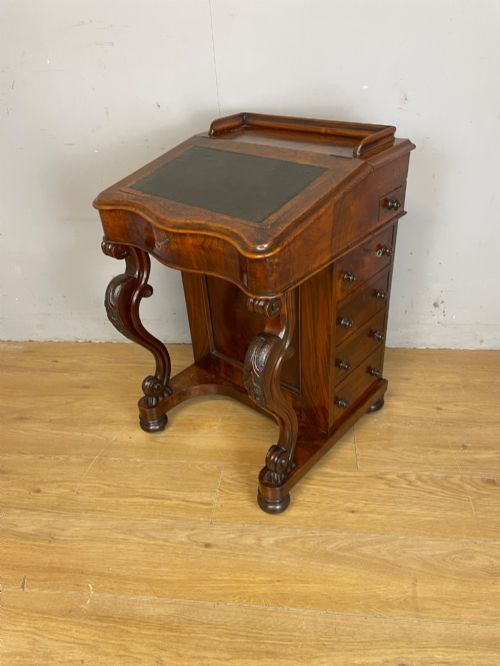
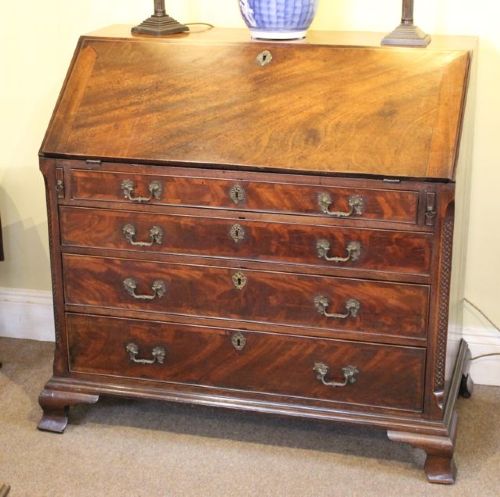
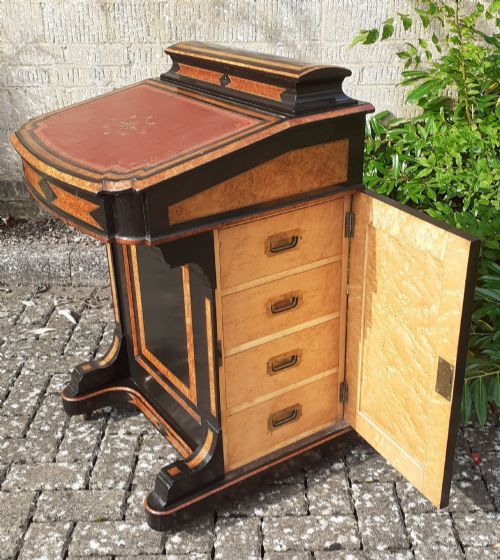
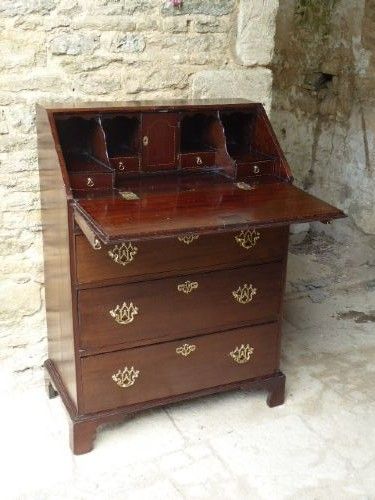
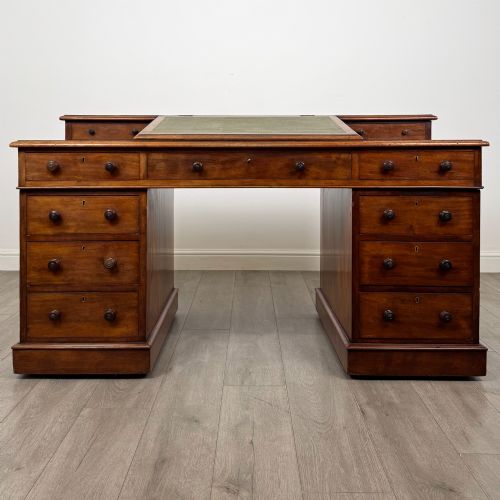
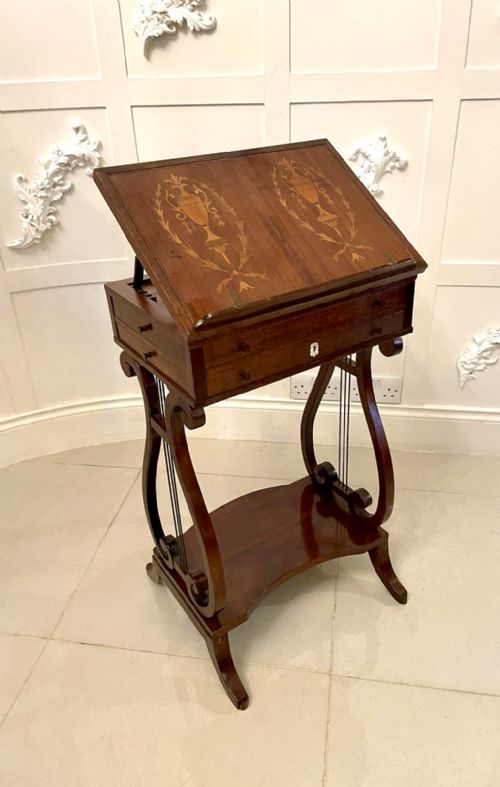
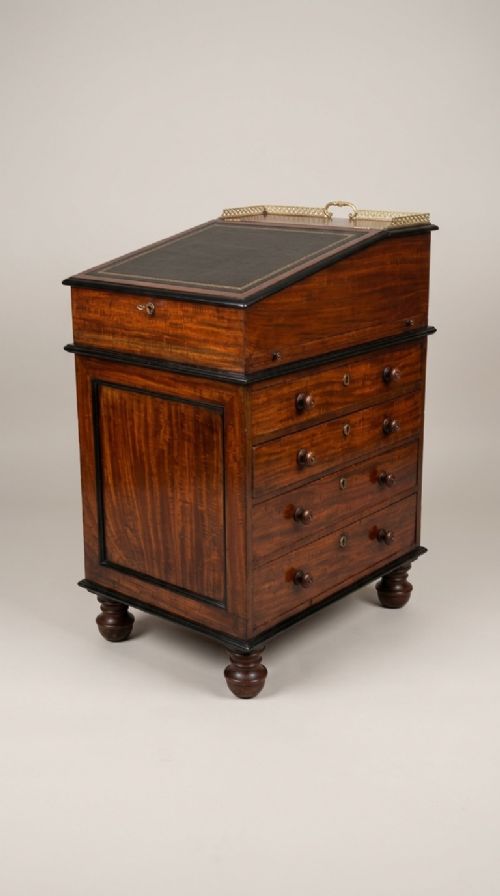
Sloped Top Writing Desk
A sloped top writing desk is a compact, sloping-lidded writing cabinet offering fitted interior storage and a writing surface, prized for its clever workspace economy.

Understanding the sloped top writing desk
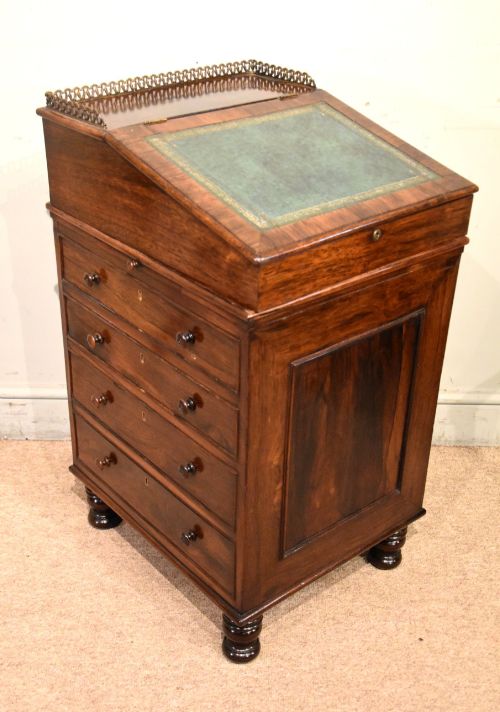
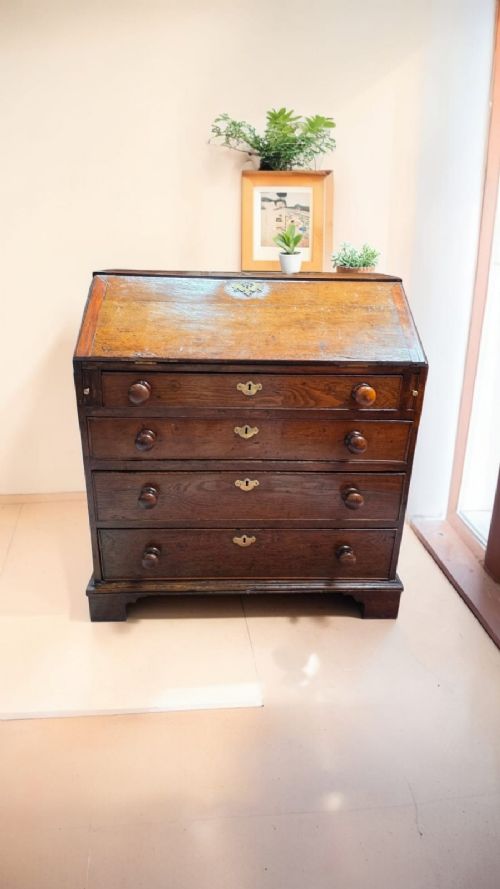
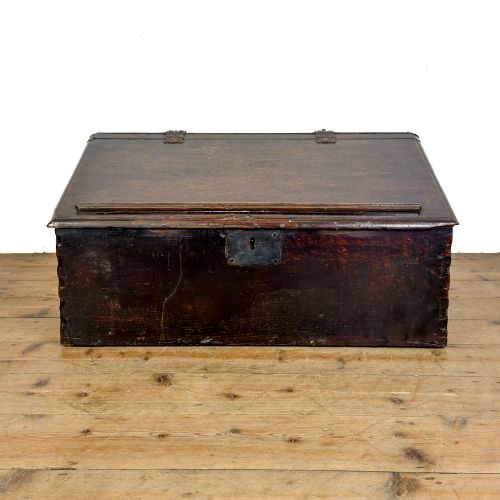
A sloped top writing desk brings together the traditional form of the Davenport alongside compact writing boxes designed for nineteenth-century domestic use. These pieces combine a slanted writing lid with internal drawers or stationary compartments beneath.
Most examples seen here date from the nineteenth century, spanning the Regency and Victorian eras. The form commonly incorporates a fixed or sliding writing slope, frequently lined with leather.
Makers utilised rich timbers including mahogany, walnut, burr walnut, and rosewood to construct these functional pieces. Buyers will find variations ranging from plain mahogany to heavily figured burr walnut variants.
Materials and construction
Cabinet makers constructed these desks using solid and veneered timbers such as mahogany, walnut, burr walnut, and rosewood. The sloping writing surfaces were frequently inset with leather panels to provide a suitable writing medium.
Hardware details included brass fixtures, handles, and small drawer pulls that accented the figured timber grains. Internal compartments and small side drawers were integrated into the carcass to maximise storage within a compact footprint.
Retail Price Guide 2026
Typical UK retail prices for sloped top writing desk, calculated from the Sellingantiques database of over a million retail prices indexed since 2003. This retail price guide relies exclusively on Sellingantiques data; no external sources or auction records are used, so the figures do not describe the wider market.
Early nineteenth-century maritime officers reportedly commissioned the very first Davenport desk to fit compact writing quarters aboard ship.
Distinctions in quality
Quality rests upon the selection of timber figures, particularly the choice of burr walnut or figured mahogany veneers across the sloping lid and exterior panels. Finer examples display meticulous attention to internal drawer construction and matching grain patterns.
The integration of functional brass elements and superior leather inserts separates standard production pieces from higher-tier cabinet work. Freestanding capability and fully fitted interior stationery compartments further distinguish the finer pieces in this range.
Gillows of Lancaster
The Sloped Top Writing Desk Glossary
- Davenport
- A small Victorian or Regency desk featuring a sloping top and drawers to the side. The form was named after a Captain Davenport who commissioned the original design.
- Burr walnut
- A highly decorative wood veneer taken from the burl growth of a walnut tree. It produces intricate, swirling grain patterns highly prized by cabinet makers.
- Regency
- An architectural and design period dating from the early nineteenth century. Furniture from this era often incorporates classical revival motifs and dark tropical hardwoods.
- Victorian
- A period spanning the reign of Queen Victoria during the nineteenth century. Pieces from this era display diverse revival styles and robust manufacturing standards.
- Rosewood
- A dense, dark timber featuring distinct grain markings used extensively in fine cabinet making. Its rich colouration makes it a prominent choice for Regency and Victorian desks.
Frequently Asked Questions
What is a sloped top writing desk?
A sloped top writing desk is a compact piece of furniture featuring a slanted writing surface that usually lifts or opens to reveal storage. These pieces were designed for domestic correspondence and record keeping.
Most variants encountered in these listings take the form of a Davenport, incorporating side drawers and a sloping top into a single freestanding cabinet.
How do I date a sloped top writing desk?
Dating relies upon timber selection, hardware styles, and structural characteristics associated with specific nineteenth-century periods. Regency examples often display classical lines and rosewood, whilst Victorian pieces frequently utilise walnut or burr walnut.
Examining the secondary timbers used inside the drawers and the construction methods provides further clues to the manufacturing era.
Where were these desks placed?
These desks served as personal writing cabinets positioned within drawing rooms, studies, or bedrooms. Their compact dimensions allowed them to sit comfortably in smaller spaces where a full-sized partner desk would prove too large.
Freestanding versions were designed to be viewed from all sides, making them suitable for placement away from walls.
What woods were used for these desks?
Cabinet makers utilised a variety of dense hardwoods including mahogany, walnut, burr walnut, and rosewood. These timbers offered durability alongside attractive grain patterns that could be polished to a high finish.
Leather inserts were commonly applied to the writing slopes to provide a smooth surface for ink and quill work.