





Leather Insert Writing Desk
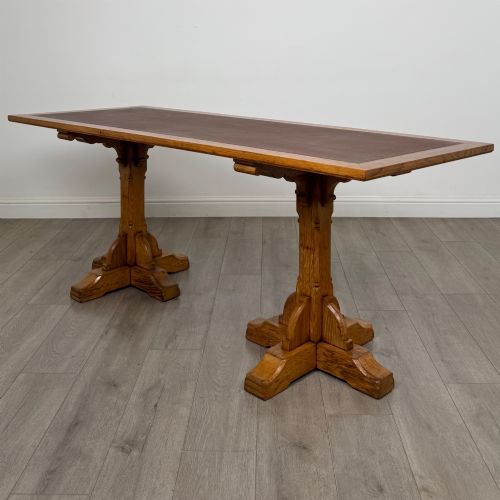
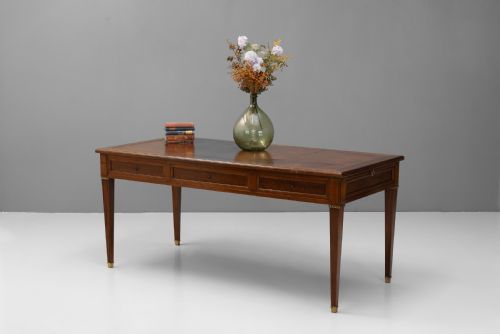
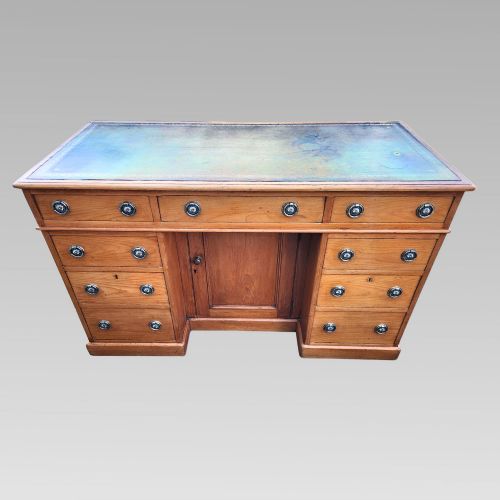
These leather insert writing desk examples bring traditional British workspaces together through fitted writing surfaces and timber construction.
Identifying a leather insert writing desk
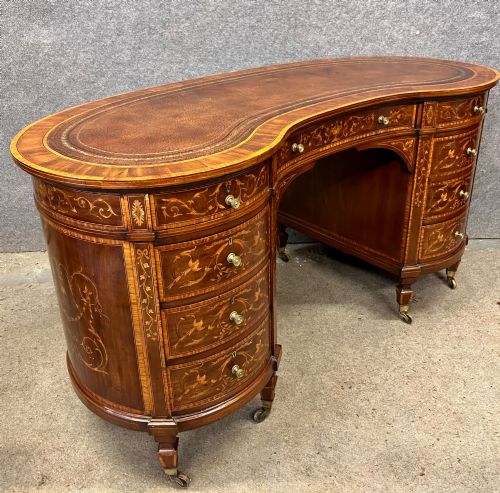
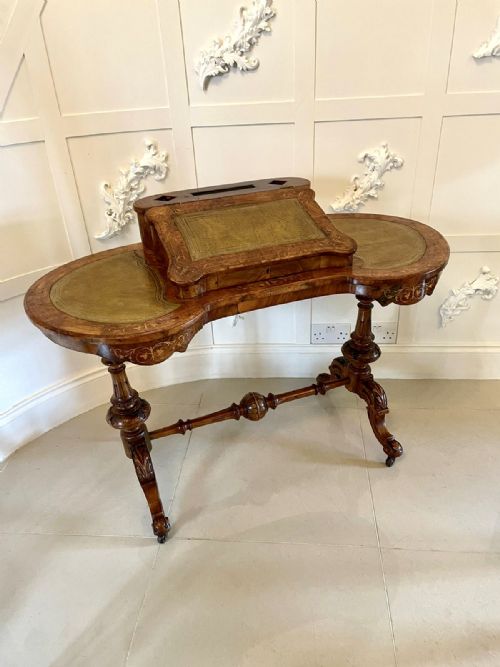
A leather insert writing desk combines a durable writing surface with timber cabinetry, providing a dedicated writing place that dates across the nineteenth and early twentieth centuries. These pieces appear in forms ranging from pedestal desks and twin pedestal configurations to drum tables, kidney shapes, and davenport desks.
The materials span mahogany, burr walnut, pale oak, walnut, blond mahogany, and rosewood, reflecting Georgian style, Regency, Victorian, and Edwardian periods. Buyers encounter variations including brass mounts, ormolu mounts, and inlaid mahogany alongside traditional tambour or sloping desk lids.
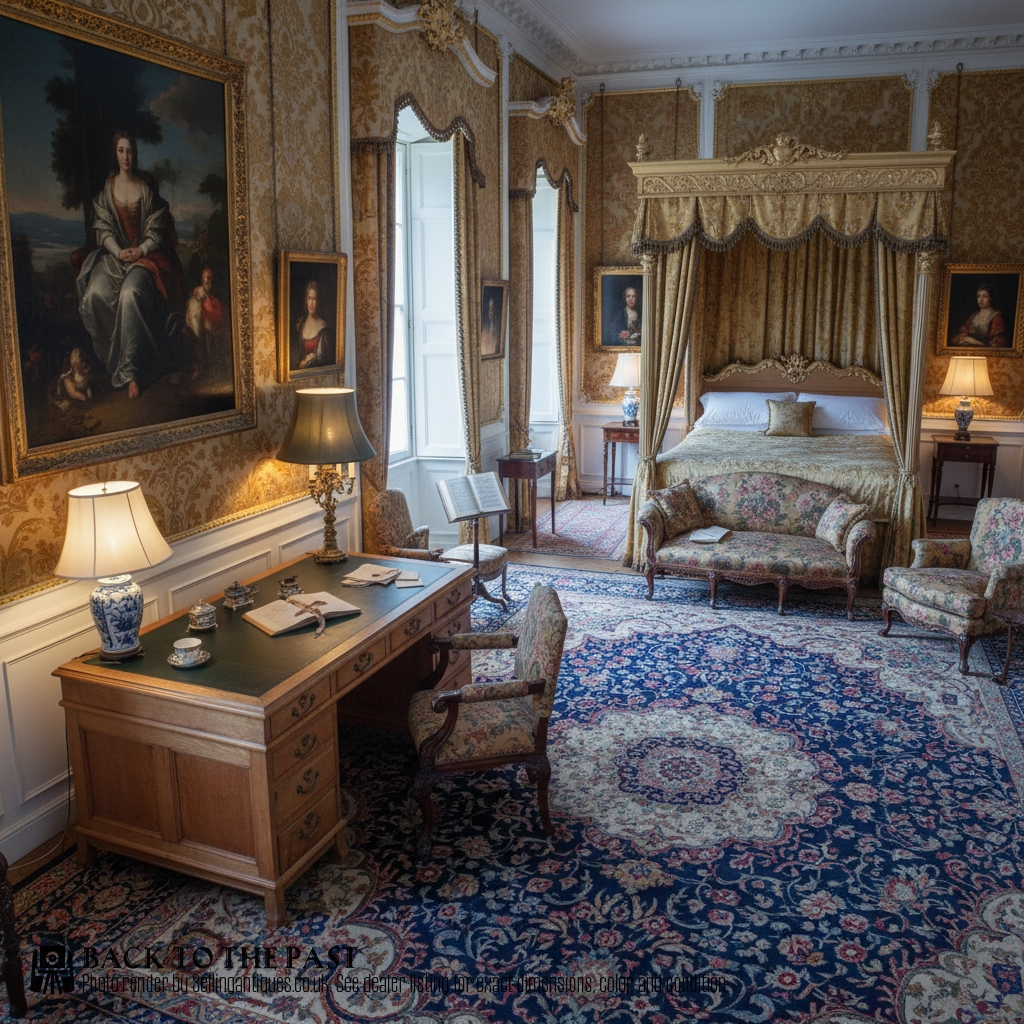
The most frequently met examples on this page date from the nineteenth century, encompassing Victorian and Regency designs fitted with tooled leather tops. These forms suit studies and libraries, maintaining functional surfaces for writing alongside structural drawer spaces.
Materials and construction methods
Makers constructed these desks using solid hardwoods and decorative veneers, selecting mahogany, walnut, burr walnut, and oak for their structural stability and rich grain patterns. Drawer linings and secondary timbers received careful attention, while specialised forms incorporated rosewood and blond mahogany.
Surfaces were completed with inset panels of leather, frequently enhanced with gold tooling around the perimeter. Brass handles, escutcheons, and occasional gilt ormolu mounts finished the drawer fronts and structural edges, while cabriole legs or pedestal columns provided support.
Retail Price Guide 2026
Typical UK retail prices for leather insert writing desk, calculated from the Sellingantiques database of over a million retail prices indexed since 2003. This retail price guide relies exclusively on Sellingantiques data; no external sources or auction records are used, so the figures do not describe the wider market.
Some desks hide secret drawers behind dummy book spines to keep private correspondence safe from wandering eyes.
Distinguishing quality across examples
Quality separates ordinary utility pieces from high workshop output through the selection of timber veneers, such as figured burr walnut or dense mahogany, and the precision of cabinet joinery. The crispness of hand-tooled gold decoration on the leather insert and the weight of cast brass hardware signal higher standards of production.
Proportion and execution define the standing of each piece, where secondary woods, dovetail joints, and internal drawer arrangements demonstrate the maker's competence. Maker attribution, such as work originating from Gillows of Lancaster or Maple and Co, elevates historical interest.
Gillows of Lancaster·Maple and Co
The Leather Insert Writing Desk Glossary
- Pedestal desk
- A freestanding desk comprising two supporting pedestals of drawers with a central writing surface. This form offers generous storage beneath the leather insert top.
- Drum table
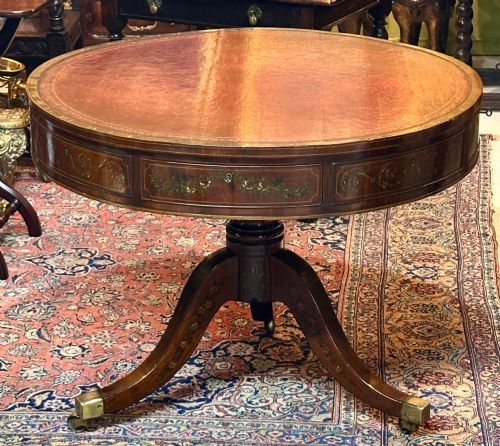
- A circular library table containing a rotating top with frieze drawers around the circumference. These pieces often feature central leather writing surfaces.
- Davenport desk
- A compact writing desk featuring a sloped writing surface above a set of side drawers. They became popular during the nineteenth century for domestic studies.
- Ormolu
- Gilt-bronze decorative mounts applied to furniture frames and drawer fronts. This technique adds metallic contrast to dark timber surfaces.
- Tooled leather
- Leather decorated with pressed patterns, often using gold leaf applied with heated brass tools. It provides a refined border around the writing area.
Frequently Asked Questions
What periods do these desks cover?
The selection spans the Regency, William IV, Victorian, and Edwardian eras, with examples dating from the nineteenth century into the early twentieth century.
Design characteristics shift from Georgian style proportions and Sheraton influences toward heavier Victorian pedestal formats and lighter Edwardian writing tables.
How do I maintain the leather insert?
Leather surfaces benefit from occasional cleaning with specialised leather balms to prevent drying and cracking. Avoiding excessive sunlight preserves the surrounding timber finish and the gold tooling.
Keeping the writing surface clear of moisture protects both the hide and the wooden substrate beneath it.
Where were pedestal desks used?
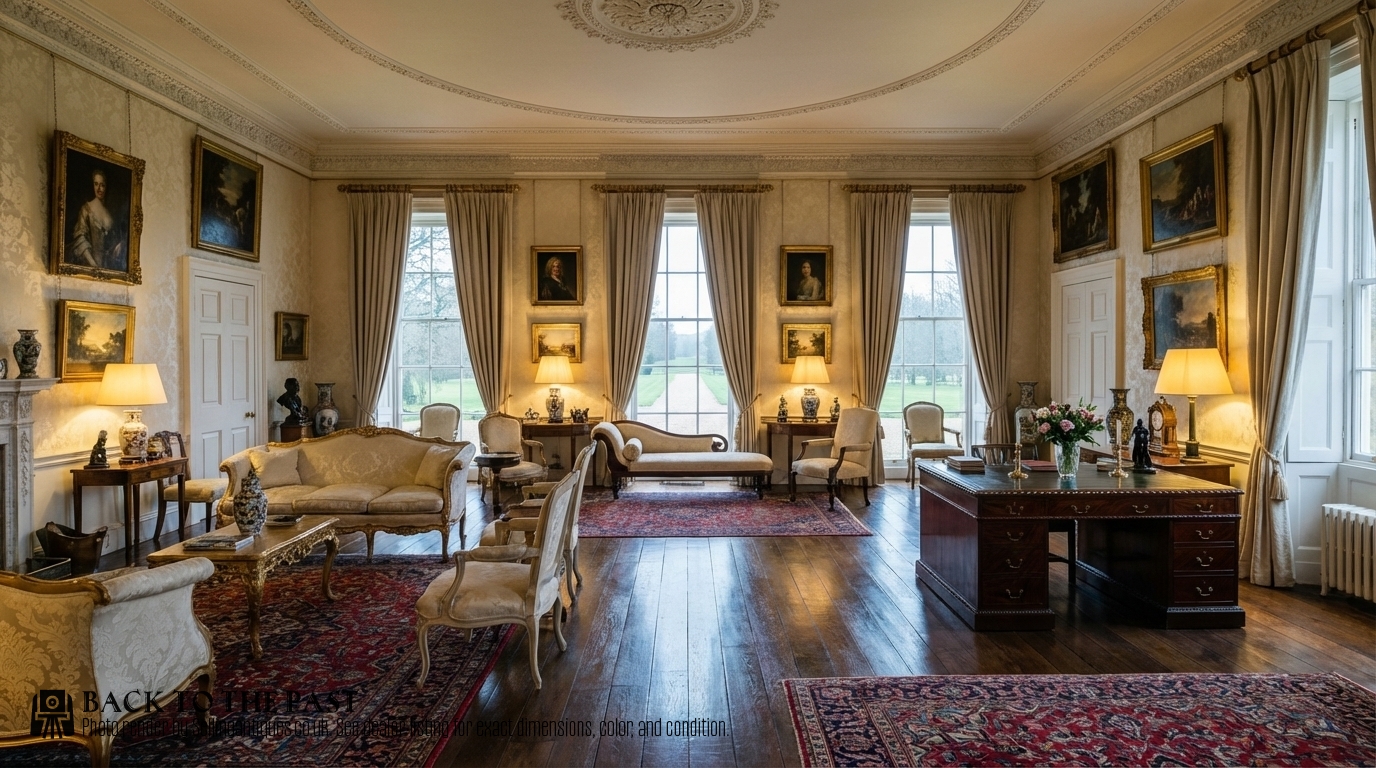
These pieces served as functional writing and administrative surfaces in libraries, studies, and private offices of large houses. Their dual-sided or pedestal storage allowed correspondence and documents to remain organised.
Their substantial footprint made them central fixtures within domestic and professional rooms.
How do I identify a drum table?
A drum table is characterised by a circular top supported on a central pillar and platform base, often fitted with alternating dummy and functional drawers. The top surface typically incorporates a circular leather writing insert.
These tables stood in the centre of libraries rather than against walls.