


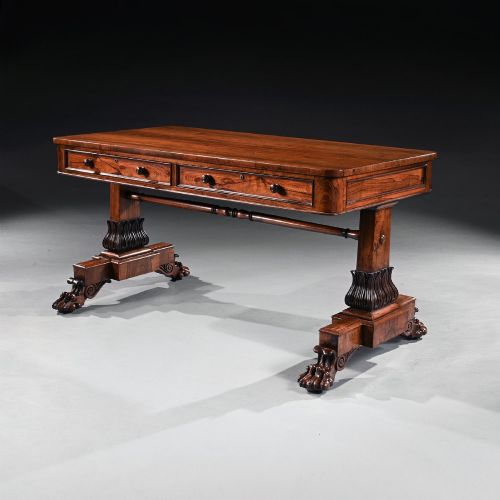
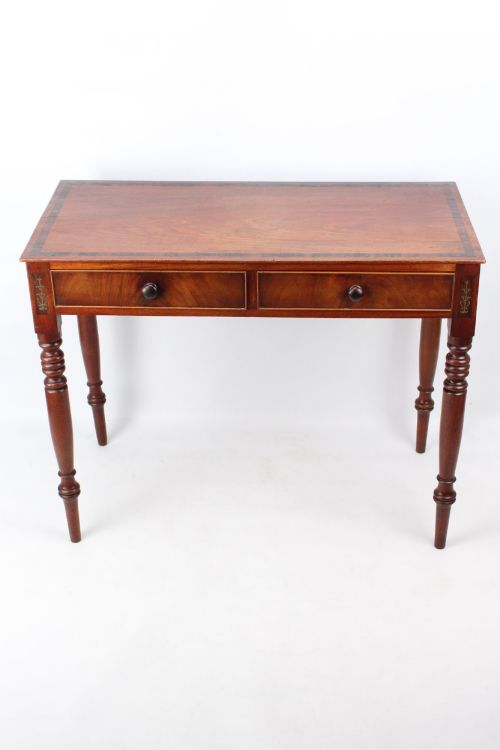
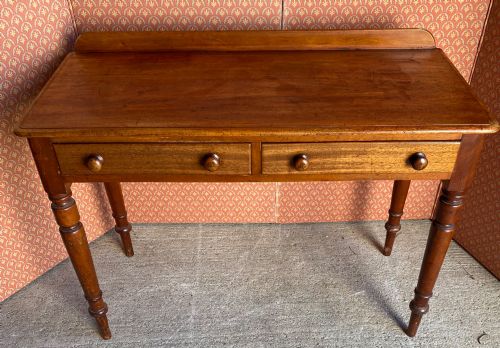
Antique Two Drawer Table
When you need an antique two drawer table, you are looking at functional timber furniture spanning the Georgian, Victorian, and Edwardian eras.

Antique Two Drawer Table
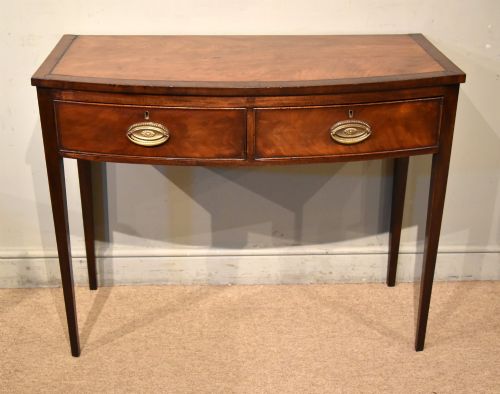
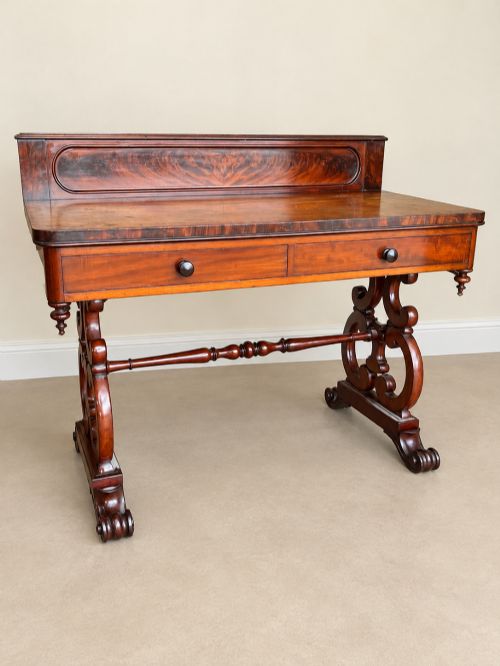
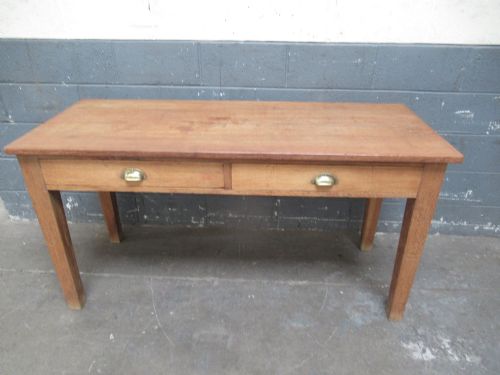
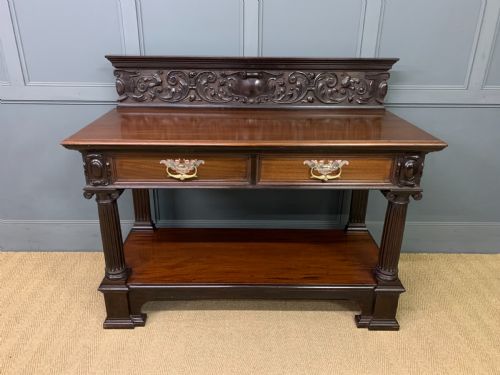
An antique two drawer table serves multiple domestic roles, functioning primarily as a side table, writing desk, or lamp table across various historical periods. The inventory demonstrates that these pieces appear frequently in mahogany, oak, and pine, reflecting both formal reception rooms and provincial farmhouse settings.
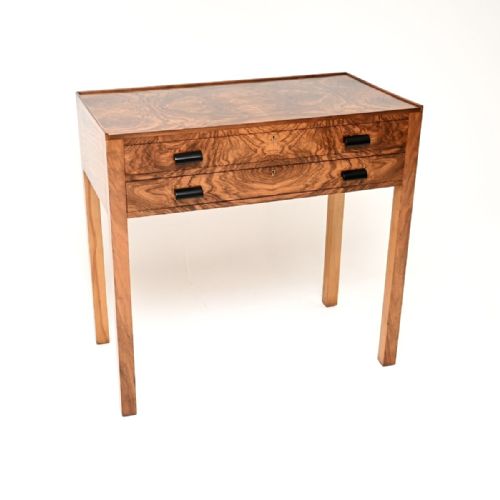
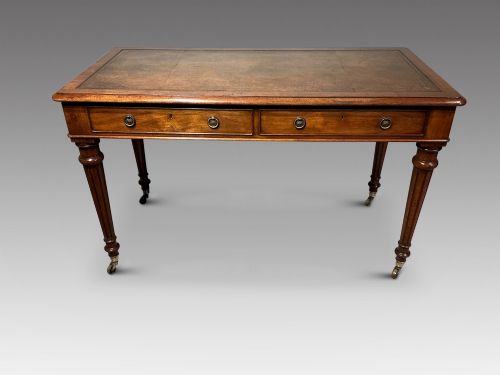
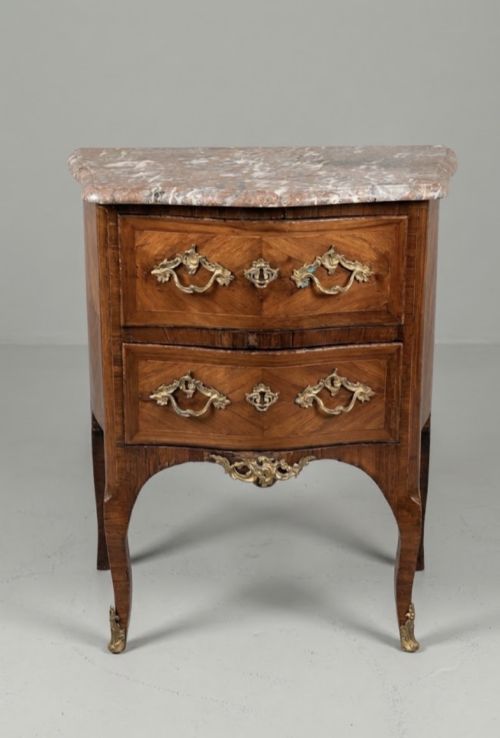
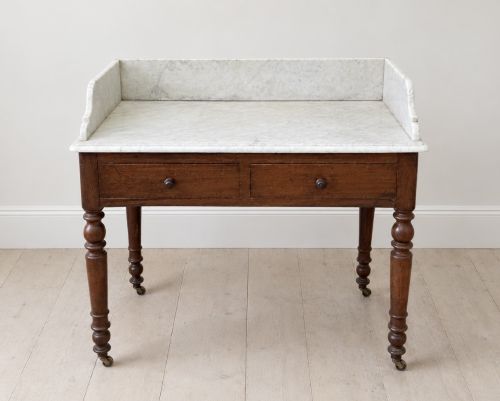
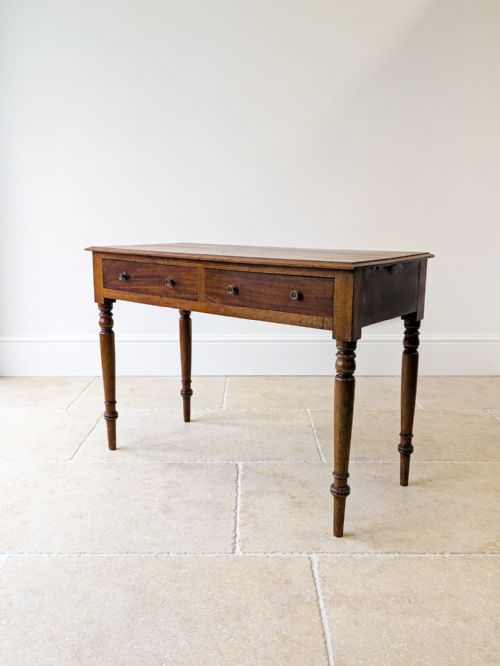
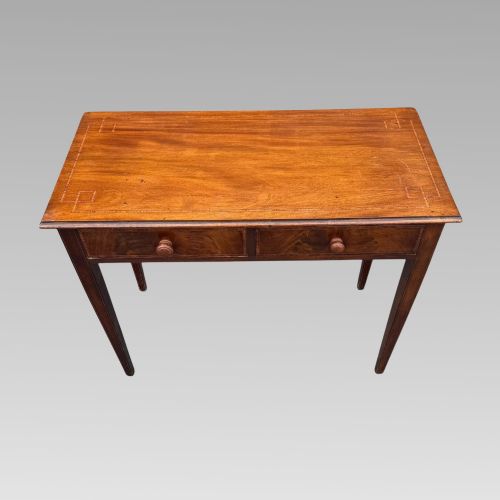
Buyers will most commonly encounter Georgian, Victorian, and 1920s examples configured with twin drawers beneath a rectangular top. These items survive in forms such as lowboys, writing tables, and console tables, matching domestic storage needs from the eighteenth century into the twentieth century.
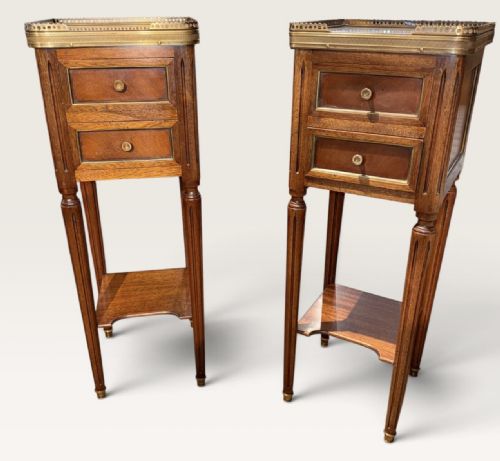
The construction scale ranges from compact bedside cabinets to substantial library and writing tables. Regional variations incorporate English country, Jacobean Revival, and French design influences into the surviving corpus.
How they were made
Cabinetmakers constructed these tables using dense hardwoods like mahogany, walnut, and oak, alongside utilitarian softwoods such as pine and pitch pine. Timber selection dictated whether a piece received fine veneers, marquetry inlay, or a simple painted finish.
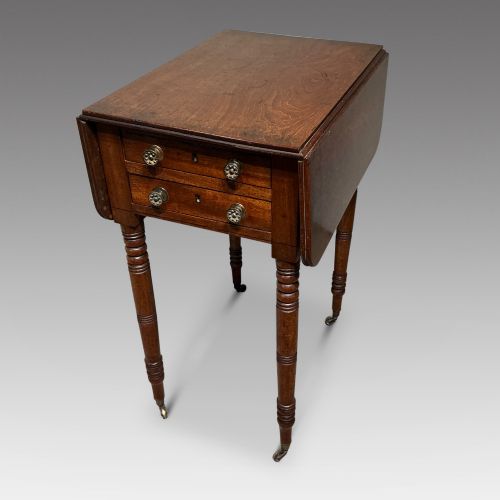
Joinery techniques relied on traditional methods appropriate to the period, incorporating dovetailed drawer construction and turned or tapered legs. Brass handles, ormolu mounts, and occasional leather writing inserts completed the functional hardware of the piece.
Antique Two Drawer Table Retail Price Guide 2026
Typical asking prices for two drawer table among the pieces listed under this phrase on Sellingantiques today, from the lower quarter to the upper quarter. They describe what is for sale here now, not the wider market.
Several pieces feature secret compartments tucked behind the twin drawers for hiding love letters.
What varies in quality
The distinction between standard utility items and finer examples rests on timber selection and decorative execution. Burr walnut veneers, satinwood, and intricate marquetry inlay elevate the visual status of a piece above basic solid oak or pine construction.
Proportion and the retention of original drawer linings, brasses, and structural integrity define the standing of individual tables. Pieces bearing workshop attributions or superior carving demonstrate the higher tiers of period craftsmanship.
Heal and Son·Mein of Kelso·Gillows
The Antique Two Drawer Table Glossary
- Lowboy
- A small eighteenth-century dressing or side table featuring a low set of drawers beneath the work surface. These pieces typically rest on four slender legs.
- Sofa table
- A rectangular occasional table designed to stand in front of a sofa, usually fitted with two frieze drawers. They often incorporate drop leaves at either end.
- Marquetry
- The art of applying decorative veneer pieces in wood to form geometric or floral patterns on a surface. This technique appears on higher-grade cabinet work.
- Frieze drawer
- A drawer integrated directly beneath the tabletop within the horizontal band of the frame. Most two drawer tables house their storage within this upper section.
- Ormolu
- Gilded bronze ornamentation applied to furniture, frequently seen on continental pieces. It adds metallic contrast to mahogany and walnut surfaces.
Antique Two Drawer Table: Frequently Asked Questions
Where were two drawer tables used?
These tables served diverse functions across the home, appearing in libraries, bedrooms, and entrance halls as writing surfaces or serving ledges. Their twin drawer configuration offered practical storage for writing implements, household accounts, or daily accessories.
In provincial settings, they functioned as farmhouse kitchen work tables or side servers. More formal drawing rooms utilised them as lamp tables or console surfaces against walls.
How do I identify a Georgian table?
Georgian examples often display characteristic timber choices such as richly figured mahogany or native oak, constructed with hand-cut dovetails. Their proportions tend to follow classical design principles, featuring straight tapered legs, pad feet, or bracket corners.
Subtle signs of age, including hand-sawn timber marks and period brass pull handles, help distinguish eighteenth-century pieces from later revival items.
What is the difference between a side table and a writing desk?
Writing desks and tables were specifically engineered to provide a comfortable seated posture for correspondence, frequently incorporating inset leather tops or slightly different working heights. Side tables prioritised surface display and general storage over sustained writing tasks.
Despite these design intentions, many period pieces bridged both categories, serving interchangeably as hall furniture and writing surfaces.
How do I care for antique timber furniture?
Maintaining antique wood requires stable room humidity and protection from direct sunlight to prevent timber splitting and veneer lifting. Regular dusting with a dry cloth preserves the polished surface without chemical buildup.
Occasional application of traditional beeswax helps nourish dry timber, particularly on older oak and mahogany pieces that lack modern synthetic protective coats.