
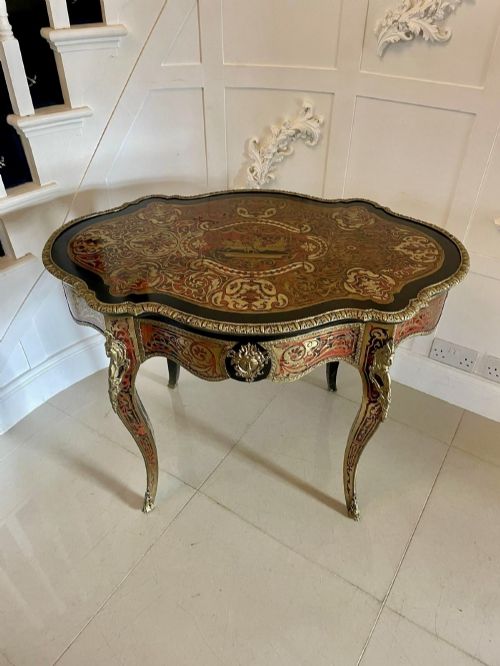
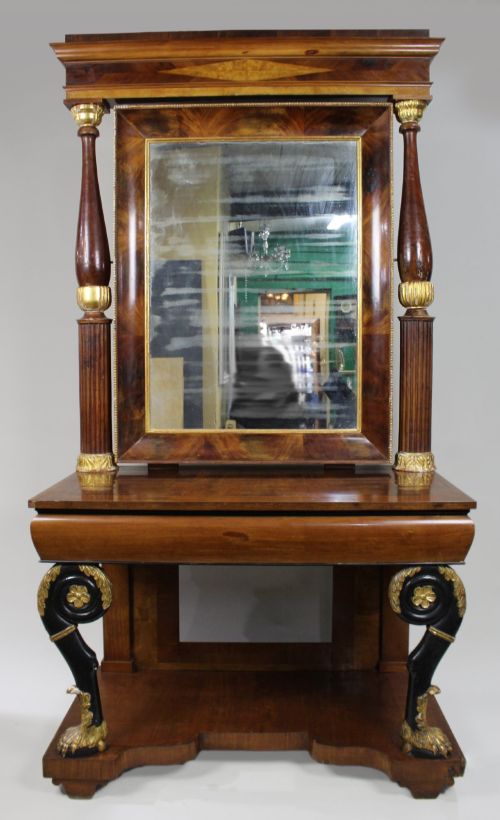
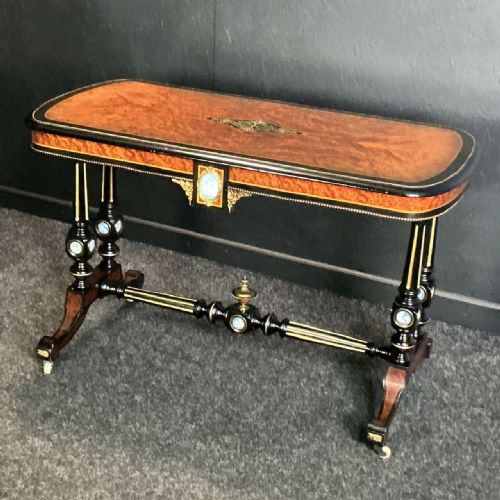
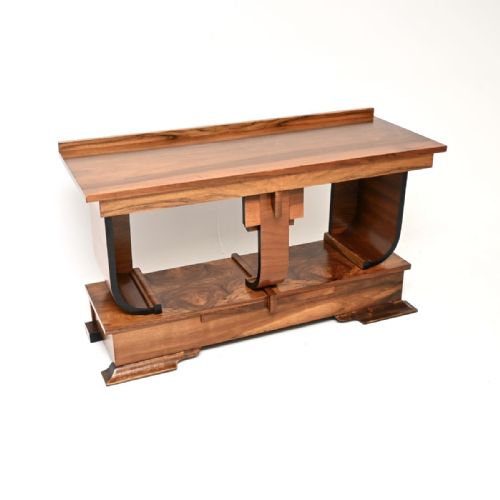
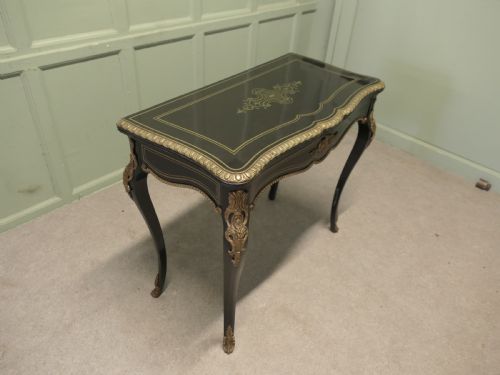
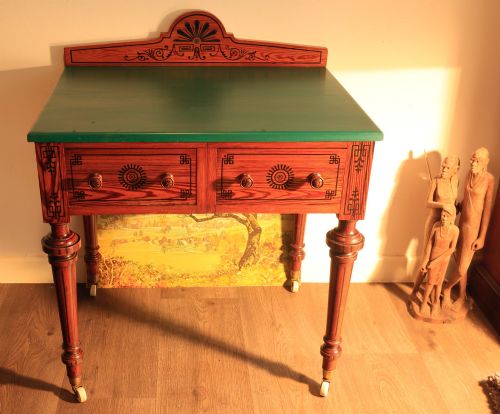
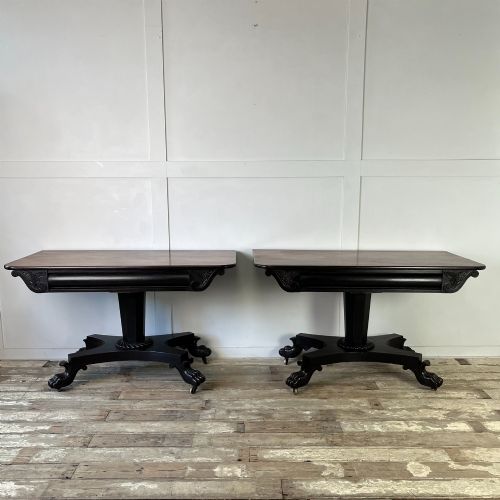


Ebonised Console Table
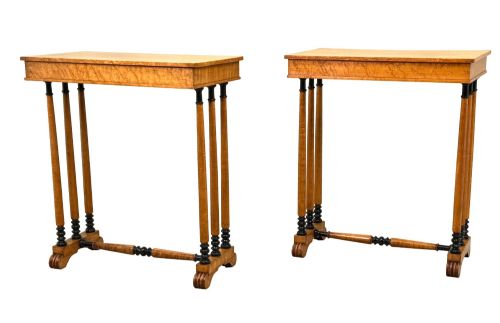
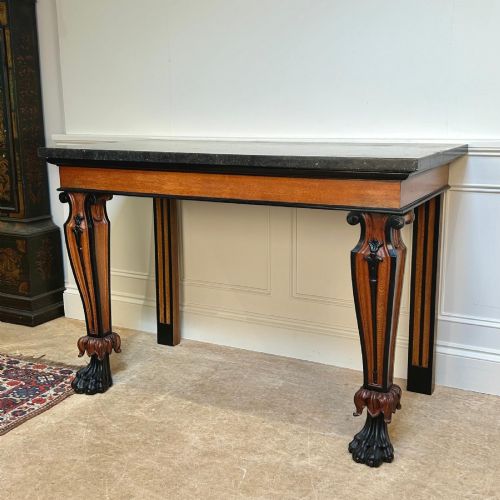
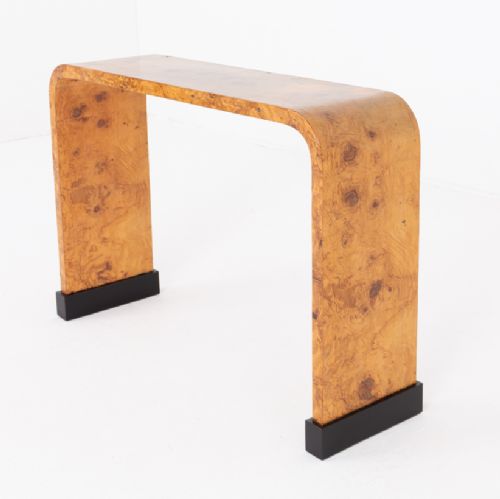
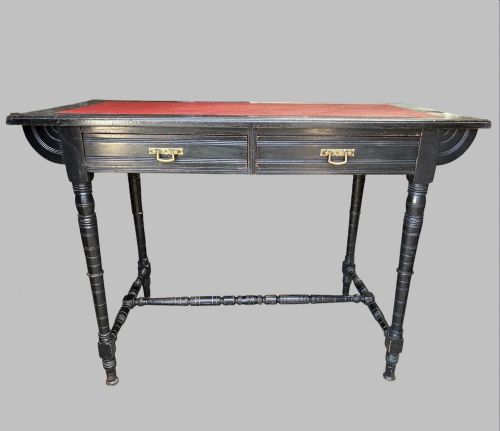
An ebonised console table brings dark sophistication to a hall or reception room, and these examples combine timber with striking contrast.
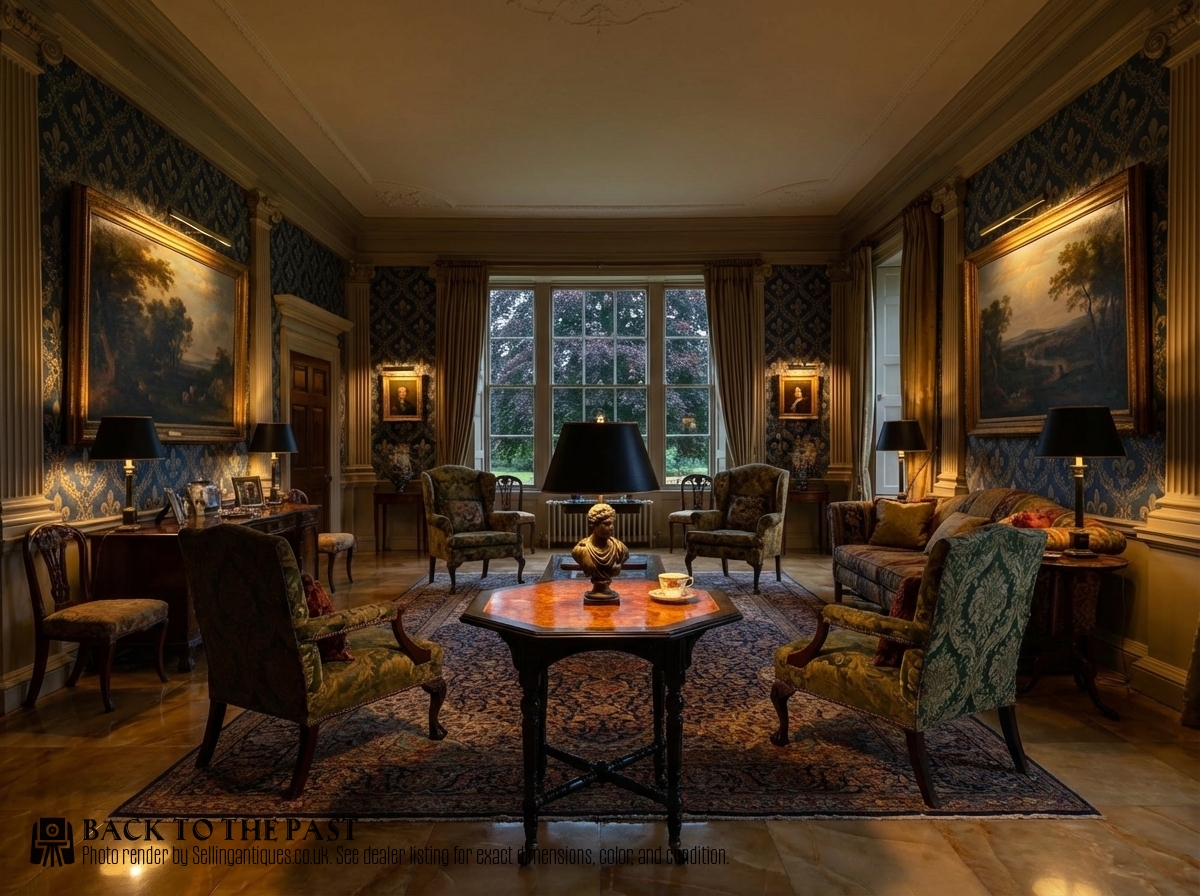
What an ebonised console table is
An ebonised console table is a foundational piece of furniture designed to stand against a wall, frequently appearing in forms spanning the Victorian era, the Aesthetic Movement, and the Georgian period. You will frequently encounter nineteenth century French and Italian variations, often featuring contrasting mounts or marble tops.
The selection here encompasses side tables, writing desks, and hall tables sharing the distinctive dark finish. These surfaces serve practical functions in hallways and reception rooms while providing a strong visual anchor through their monochrome palette.
Materials and construction
Maker workshops achieved the deep black finish by ebonising timber, a process that stained light wood to imitate ebony. This treatment often accompanied secondary materials such as amboyna veneer, brass inlay, or ormolu mounts.
Structural elements incorporate carved woodwork alongside applied decorative details like porcelain plaques, ceramic components, and leather inserts. Marble tops feature heavily on continental examples, particularly from French and Italian sources.
Retail Price Guide 2026
Typical UK retail prices for ebonised console table, calculated from the Sellingantiques database of over a million retail prices indexed since 2003. This retail price guide relies exclusively on Sellingantiques data; no external sources or auction records are used, so the figures do not describe the wider market.
One elephant found its way into the furniture records, proving that ebonised timber could occasionally take on a very literal trunk call.
Distinctions in quality
The standard of a piece rests on the precision of its ebonisation and the crispness of any carving or gilt metal mounting. Superior examples integrate secondary materials like amboyna veneer and porcelain plaques with deliberate balance.
Proportion and scale dictate the visual impact of the table, ranging from large country house items to smaller hall furniture. The execution of structural joints and the quality of inset marble or leather elevate certain works above standard production.
The Ebonised Console Table Glossary
- Ebonised wood
- Timber treated with stain, dye, or polish to replicate the dense, black appearance of natural ebony. This technique gained immense popularity during the nineteenth century.
- Console table
- A wall-mounted or freestanding table supported by brackets or legs, historically placed in formal reception rooms and hallways. These pieces typically feature decorative fronts designed to be viewed from the room.
- Aesthetic movement
- A late nineteenth century design current that rejected heavy industrial ornamentation in favour of artistic refinement, simplicity, and Japanese-inspired motifs. Ebonised surfaces frequently appeared within this stylistic context.
- Ormolu
- Gilt bronze ornamentation applied to furniture, popular in French cabinet making. It provides a bright metallic contrast against dark ebonised wood.
- Demi-lune
- A half-moon shape used for table tops and frames, allowing the furniture to sit flush against a wall. This profile is common in French and Regency console designs.
Frequently Asked Questions
What is an ebonised console table?
An ebonised console table is a wall-standing piece of furniture finished in a dark, black stain that mimics costly ebony wood. These tables function as decorative and practical surfaces in hallways and reception rooms.
They appear across various periods including the Georgian and Victorian eras, often incorporating materials like brass mounts, marble tops, and amboyna veneer.
Where should I place a console table?
Console tables fit naturally against walls in entrance halls, living rooms, and corridors where floor space is limited. Their shallow depth allows them to sit neatly without obstructing pathways.
Pairing them with a mirror or placing decorative objects on top creates a composed focal point upon entering a room.
How do I identify French console tables?
French console tables frequently incorporate white marble tops, gilt metal mounts, and carved demi-lune shapes. Nineteenth-century examples often lean towards Empire or Rococo Revival design motifs.
The inclusion of brass inlay and porcelain plaques further points toward continental craftsmanship traditions.
What is the Aesthetic Movement style?
The Aesthetic Movement prioritised visual beauty and artistic design over heavy historicism during the late nineteenth century. Furniture from this period embraces clean lines and ebonised finishes.
These pieces often highlight the natural grain and texture of the wood through simple yet refined silhouettes.