




Porcelain Plaque Table
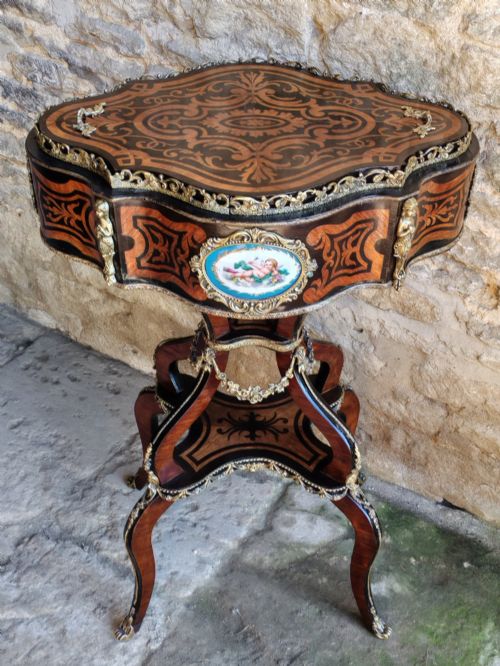
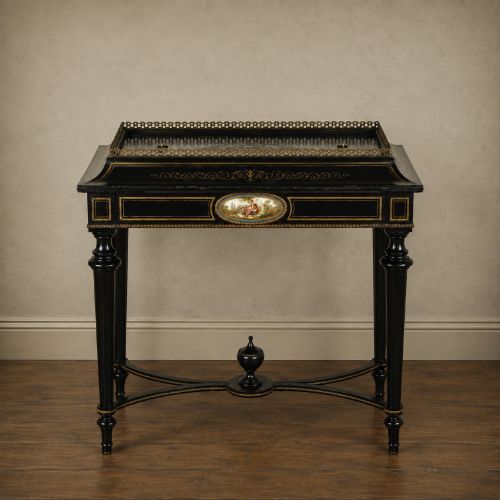
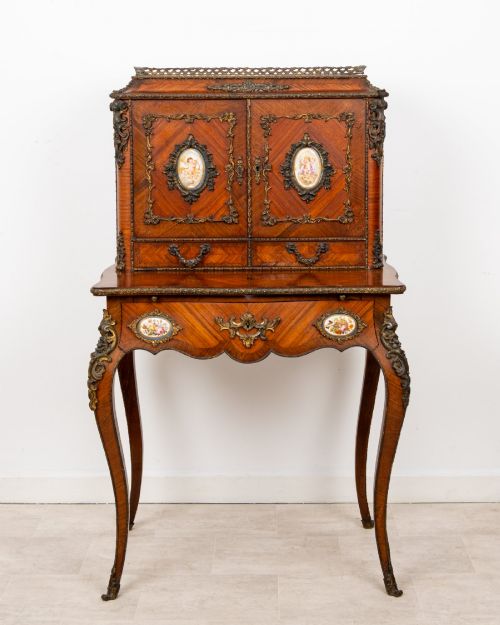
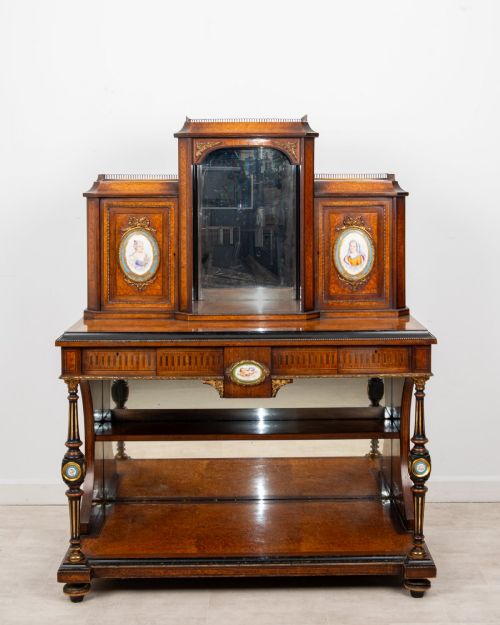
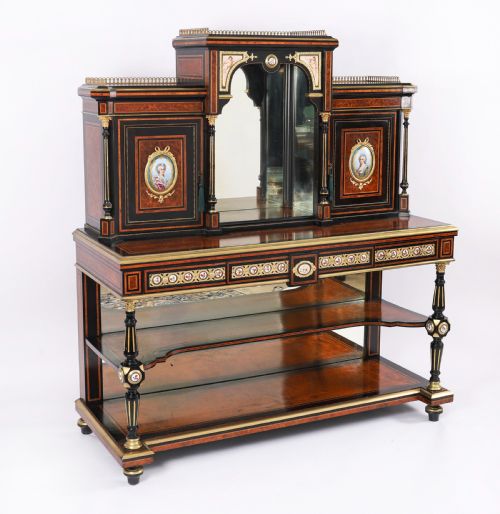
A porcelain plaque table is a polished surface inset with painted ceramics, combining fine cabinet-making with porcelain display.
What porcelain plaque table pieces are
When you search for a porcelain plaque table, you find a range of 19th-century occasional tables, writing desks, and card tables inset with painted ceramics. The pieces on this page span the Victorian era, the Edwardian period, and specific French historicist revivals.
Most examples hail from the 19th Century, capturing the tastes of the Napoleon III, Louis XV, and Louis XVI styles alongside the Aesthetic Movement. You meet occasional tables, side tables, and games tables most frequently in this selection.
Makers integrated ceramics directly into timber frames, ranging from simple occasional stands to complex writing tables and jardinière stands. The porcelain panels themselves range from floral centrepieces to figurative scenes framed by timber and metal mounts.
How they were made
Cabinet-makers utilised exotic and native timbers such as kingwood, rosewood, burr walnut, amboyna, ebonised wood, and walnut to build the foundational structures. Marquetry inlay, brass mounts, and ormolu frames frequently surround the inset ceramic plaques.
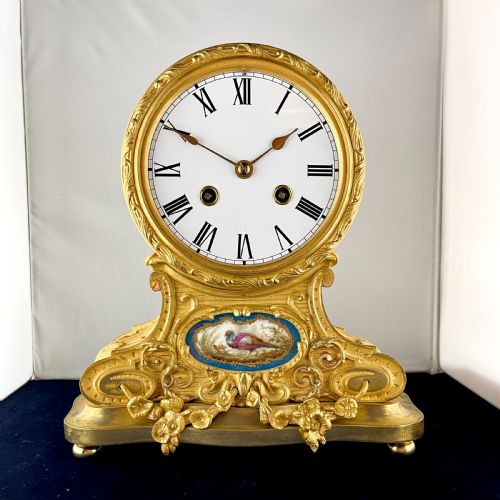
The inset ceramic elements originate from factories such as Chamberlains of Worcester or continental kilns, painted and glazed before mounting into the wooden tops. Metal mounts, gilt metal frames, and brass details secure the porcelain panels into the surrounding wood.
Retail Price Guide 2026
Typical UK retail prices for porcelain plaque table, calculated from the Sellingantiques database of over a million retail prices indexed since 2003. This retail price guide relies exclusively on Sellingantiques data; no external sources or auction records are used, so the figures do not describe the wider market.
Materials span porcelain, ormolu, kingwood, ebonised wood, brass, rosewood, burr walnut, and gilt metal.
What varies in quality
The choice of timber underpins the overall grade of the piece, with figured amboyna, burr walnut, and fine kingwood veneers sitting at the upper end. Finely chased ormolu mounts and intricate marquetry display a higher level of workshop skill than plain brass banding and ebonised timber.
The execution of the painted porcelain plaque dictates artistic merit, distinguishing standard floral decoration from detailed hand-painted figurative scenes. Maker attribution also shifts the standing of a piece, particularly when connected to documented houses like Chamberlains of Worcester.
Chamberlains of Worcester
The Porcelain Plaque Table Glossary
- Ormolu
- Gilded bronze mounts applied to furniture to accent corners, edges, and aprons. This technique was widely utilised in French cabinet-making.
- Marquetry
- Inlaid wood veneers forming decorative patterns or pictures across the surface of the table top. It creates contrasting tones using various timber species.
- Cartonnier
- A desktop filing cabinet or stationery case fitted with compartments for papers. It often incorporates decorative mounts and plaques.
- Jardinière
- A decorative stand or container designed to hold plants or floral arrangements. In these listings, they appear with integrated porcelain plaques.
Frequently Asked Questions
What is a porcelain plaque table?
A porcelain plaque table is a wooden furniture piece featuring a painted ceramic panel inset directly into the surface. These tables include desks, card tables, and occasional stands.
Cabinet-makers framed these ceramics with timbers like rosewood, walnut, and kingwood, often adding ormolu mounts. The style connects traditional woodworking with decorative ceramic arts.
When were porcelain plaque tables made?
The majority of these tables date from the 19th Century, spanning periods like the Victorian era and Edwardian times. French revival styles from this period are especially common.
Maker methods and design details align with 19th-century historicism, drawing inspiration from earlier French royal courts. Some examples extend back into the late 18th century.
How do you clean porcelain plaque tables?
Cleaning requires gentle dusting of the timber frame and porcelain surface with a dry, soft cloth. Avoid harsh chemical cleaners that can damage the glaze or the wood polish.
Moisture should be kept away from the timber joints and the metal mounts to prevent tarnishing. Professional conservation wax helps maintain the finish of the wood veneer.
Where were porcelain plaques manufactured?
Plaques originated from major European and British ceramic factories, including Chamberlains of Worcester. These manufactories produced decorative panels specifically for furniture mounting.
Artists painted botanical or figurative designs on the porcelain before firing and glazing the panels. Furniture makers then integrated these finished plaques into their tables.