

Kingwood Occasional Table
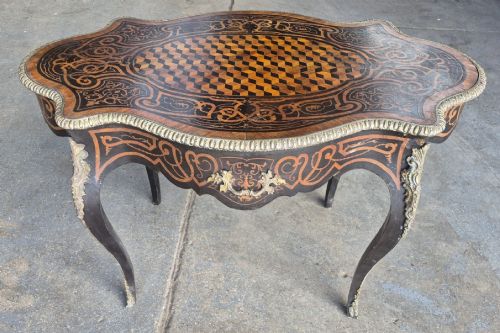
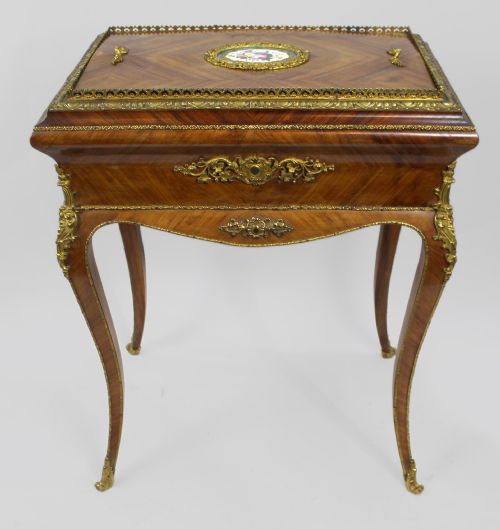
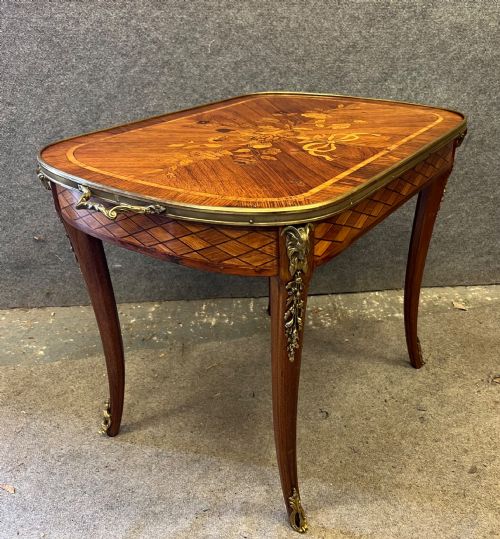
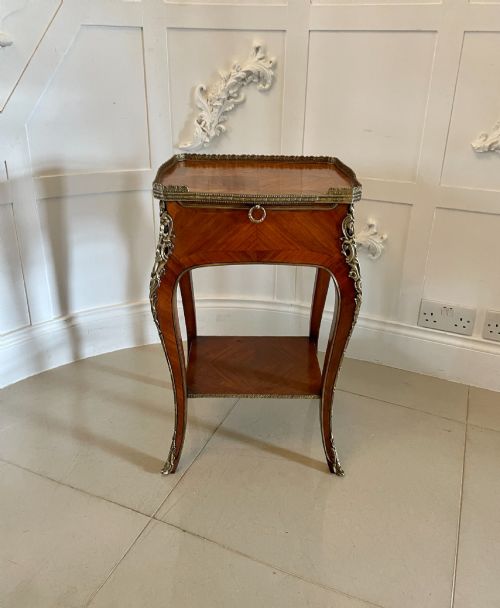
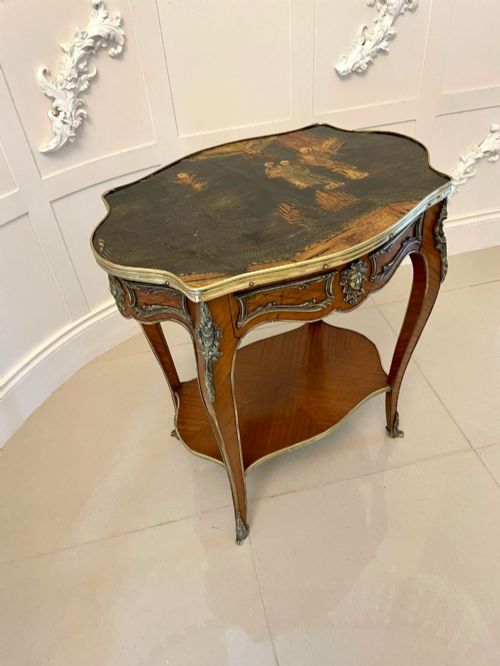
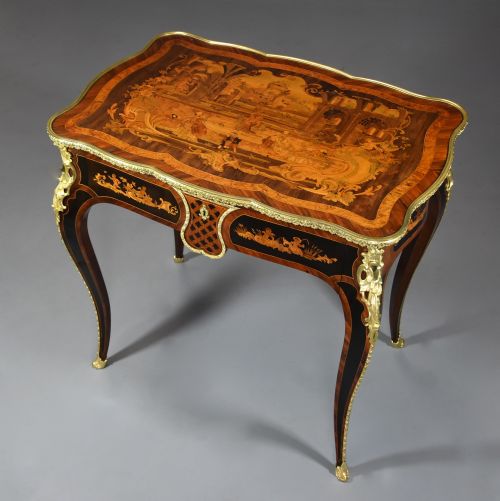
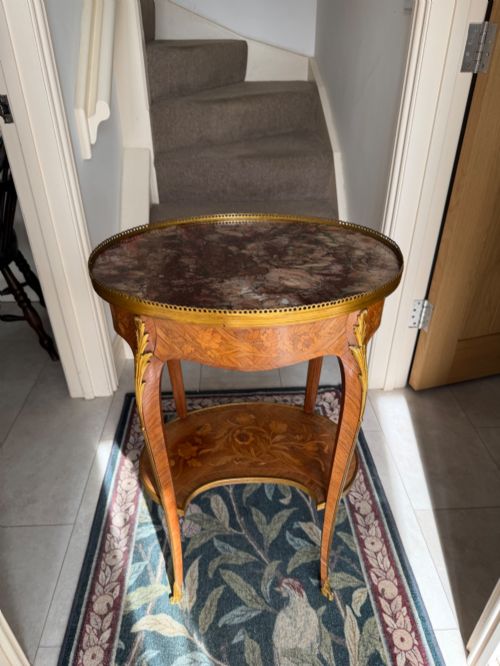
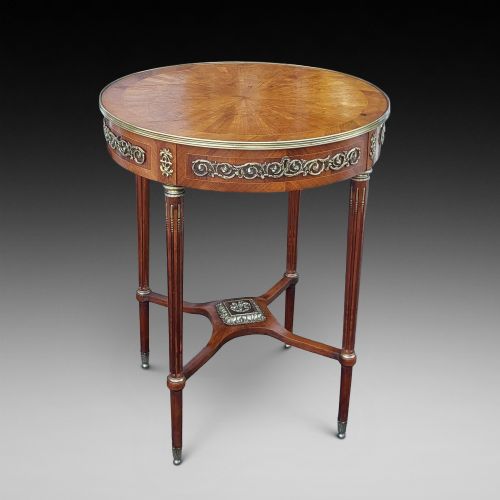
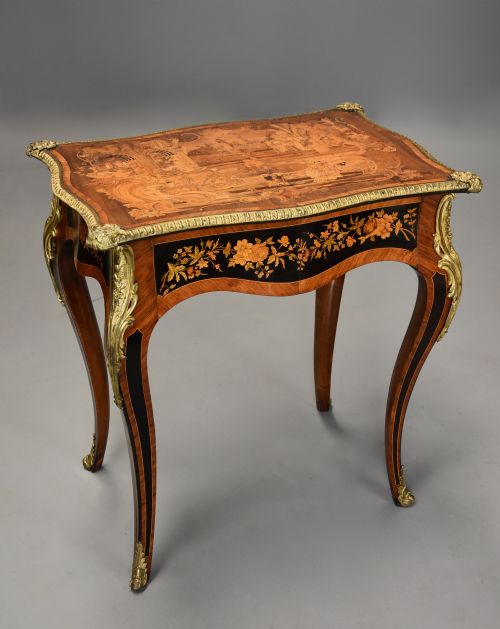
A kingwood occasional table brings rich figure and gilt bronze mounts to a corner, functioning as a compact surface for lamps and objects.
Kingwood Occasional Table
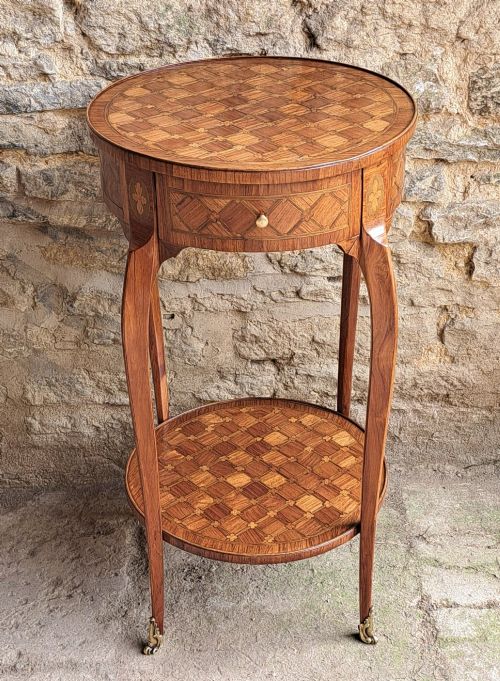
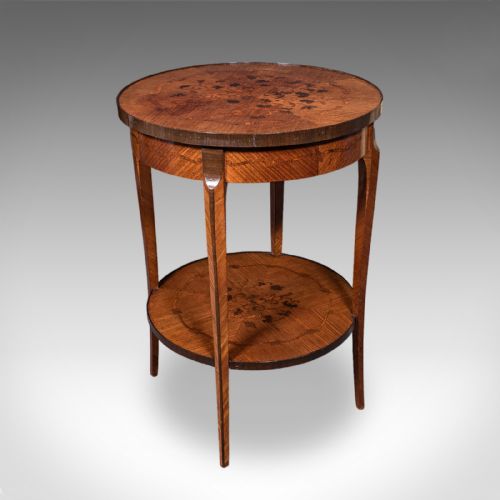
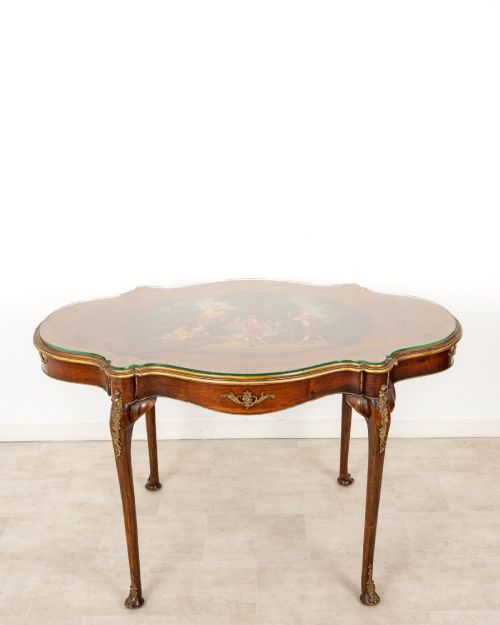
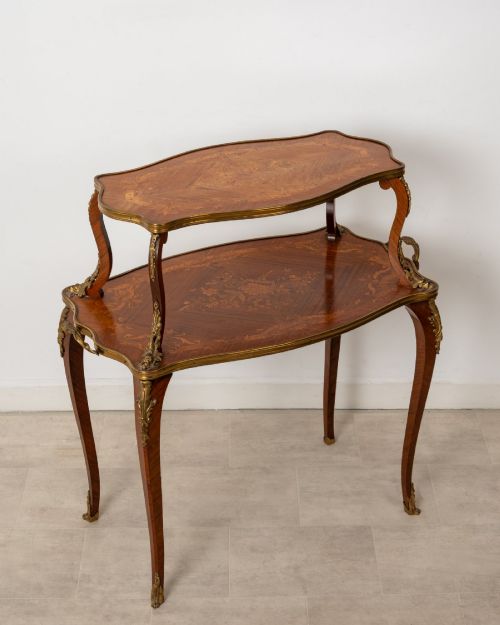
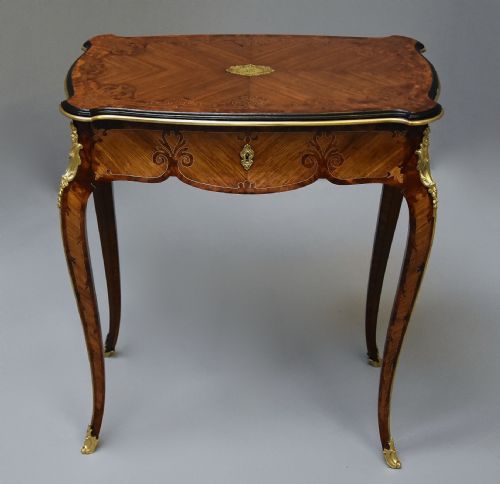
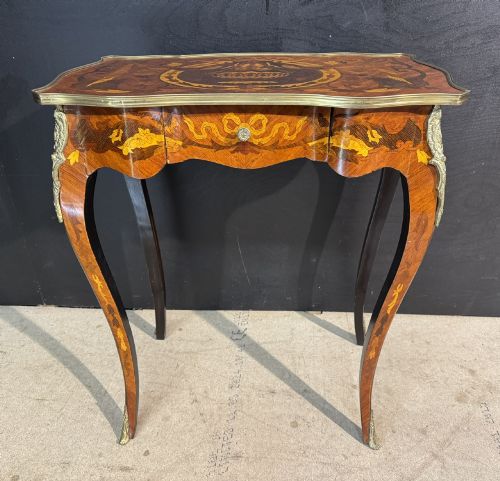
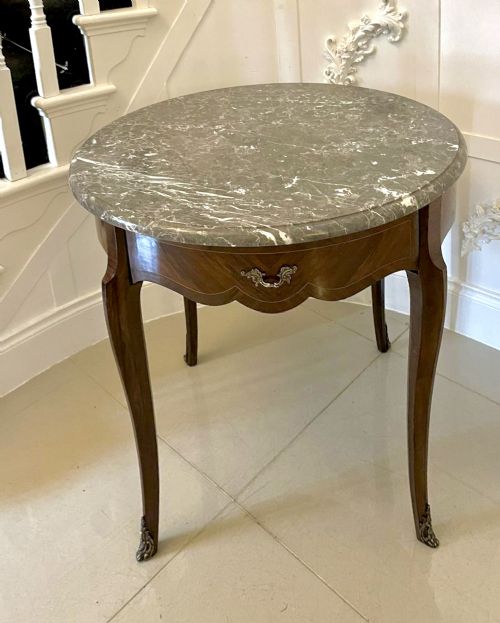
A kingwood occasional table appears primarily in nineteenth-century French forms, drawing upon Louis XV and Louis XVI revival aesthetics. These pieces serve diverse domestic functions, functioning as centre tables, two-tier étagères, kidney-shaped side tables, and lamp tables.
The materials frequently combine dense exotic timbers with marble tops, gilt bronze, and ormolu mounts. Makers from the Victorian and Edwardian eras adapted eighteenth-century furniture traditions into versatile domestic pieces.
Makers such as François Linke, Joseph-Emmanuel Zwiener, Millet, and Collingson & Lock produced these items, ranging from simple inlaid side tables to exhibition-quality works with sophisticated mechanisms.
Materials and construction
Cabinetmakers applied thin veneers of kingwood, rosewood, tulipwood, and satinwood over supportive softwood carcases, creating intricate parquetry and marquetry patterns across the surfaces. This veneering technique allowed makers to arrange contrasting timber grains into geometric or floral compositions.
Foundries cast ormolu and gilt bronze mounts, which were then chased by hand and secured to the corners, apron, and legs of the table. Marble slabs, set into inset table tops, provided durable and decorative working surfaces for lamps and display.
Kingwood Occasional Table Retail Price Guide 2026
Typical asking prices for kingwood occasional table among the pieces listed under this phrase on Sellingantiques today, from the lower quarter to the upper quarter. They describe what is for sale here now, not the wider market.
The listings feature nineteenth-century and Edwardian pieces constructed from kingwood, ormolu, marble, and rosewood within Louis XV and Louis XVI styles.
Assessing quality
Quality rests in the crispness of the gilt bronze chasing, the precision of the marquetry inlay, and the weight of the timber framing. Superior pieces exhibit deeply chased ormolu mounts that integrate cleanly with the wooden carcase, alongside fluid grain selection in the kingwood veneer.
Construction methods also distinguish the work, as demonstrated by balanced proportions, stable marble slabs, and sophisticated internal mechanisms on work or writing tables. Signed or labelled pieces by notable workshops demonstrate higher levels of execution than standard commercial output.
François Linke·Joseph-Emmanuel Zwiener·Millet·Collingson & Lock
The Kingwood Occasional Table Glossary
- Kingwood
- A dense, heavy Brazilian timber with a dark violet-brown colour and distinctive golden streaks. It was widely used in eighteenth-century and nineteenth-century French cabinetmaking for decorative veneer.
- Ormolu
- Gilt bronze mounts applied to furniture for decorative accent and edge protection. The technique involves gilding a bronze base with a mercury-gold amalgam.
- Marquetry
- The art of applying small pieces of veneer to a structure to form decorative patterns and pictures. Craftsmen used various contrasting timbers to create floral or geometric designs.
- Étagère
- A set of open shelves for displaying small objects or books, often designed with multiple tiers. These freestanding pieces appeared frequently in nineteenth-century French interiors.
- Parquetry
- Geometric mosaic woodwork used for flooring and furniture surfaces. It relies on symmetrical arrangements of wood veneers like kingwood and satinwood.
Kingwood Occasional Table: Frequently Asked Questions
What is a kingwood occasional table?
A kingwood occasional table is a small, movable piece of furniture surfaced with decorative violet-brown wood veneer. These tables date predominantly from the nineteenth century and reflect French revival styles.
They appear as side tables, lamp tables, and two-tier étagères. Their compact proportions made them suitable for placement beside seating or in corners.
How do I care for a marble top?
Marble tops require gentle cleaning with mild soap and water, avoiding acidic substances like lemon or vinegar that etch the stone. Regular dusting keeps the polished surface in good condition.
Place protective felt pads beneath heavy lamps or ceramic objects to prevent scratching. Waxing the marble is generally unnecessary unless specific finishes require it.
Are these tables French or English?
The majority of these tables originate from nineteenth-century France, following Louis XV and Louis XVI design traditions. Makers in Paris produced elaborate pieces featuring ormolu mounts and marquetry.
Some examples come from English makers who adopted continental revival styles during the Victorian and Edwardian periods. Timber combinations and construction methods often indicate the country of manufacture.
How do I identify ormolu mounts?
Ormolu consists of cast bronze that has been gilded, providing a bright metallic finish on furniture corners and aprons. Close inspection reveals hand-chased details that add depth to the cast design.
Lower-quality pieces may use plated brass rather than heavy bronze. Genuine nineteenth-century mounts fit tightly against the wood carcase without gaps.