

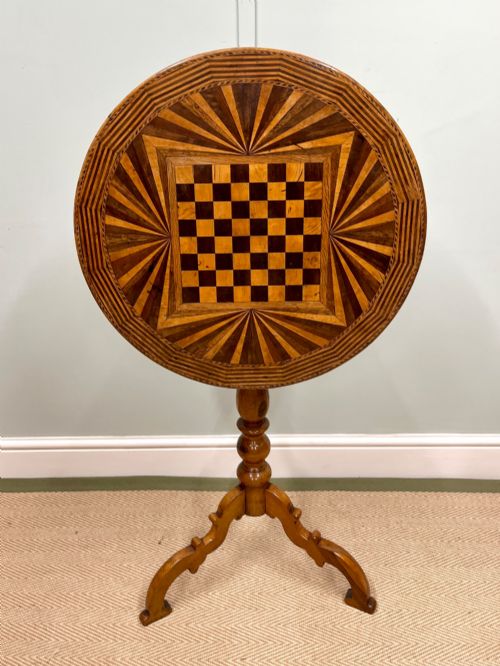
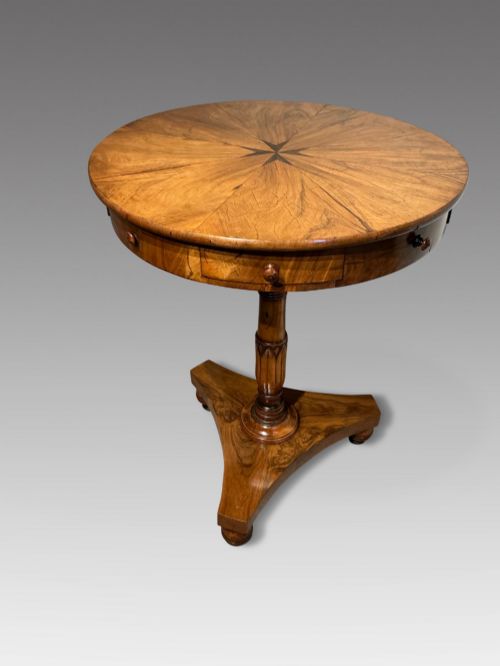
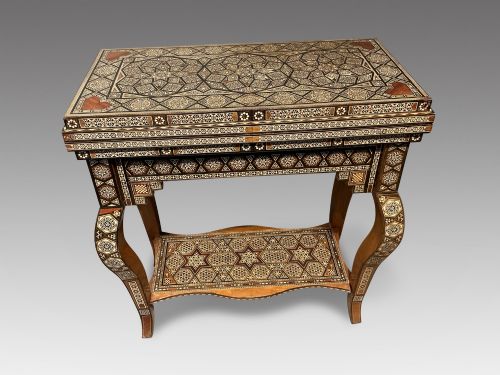
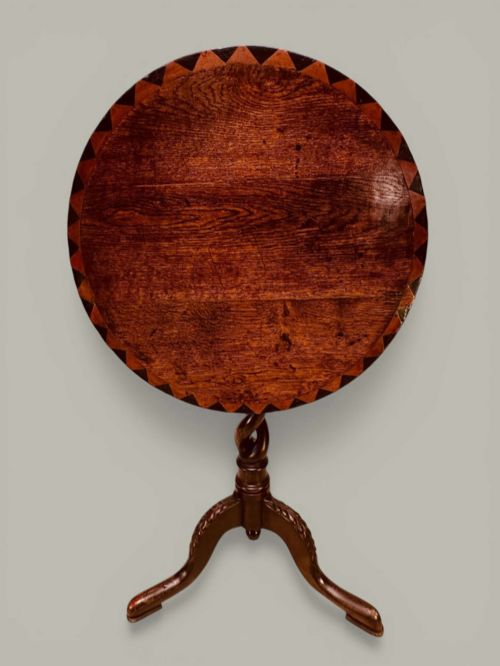
Parquetry Occasional Table
A parquetry occasional table brings geometric timber patterns and compact proportions into a room, serving as a versatile surface for daily use.
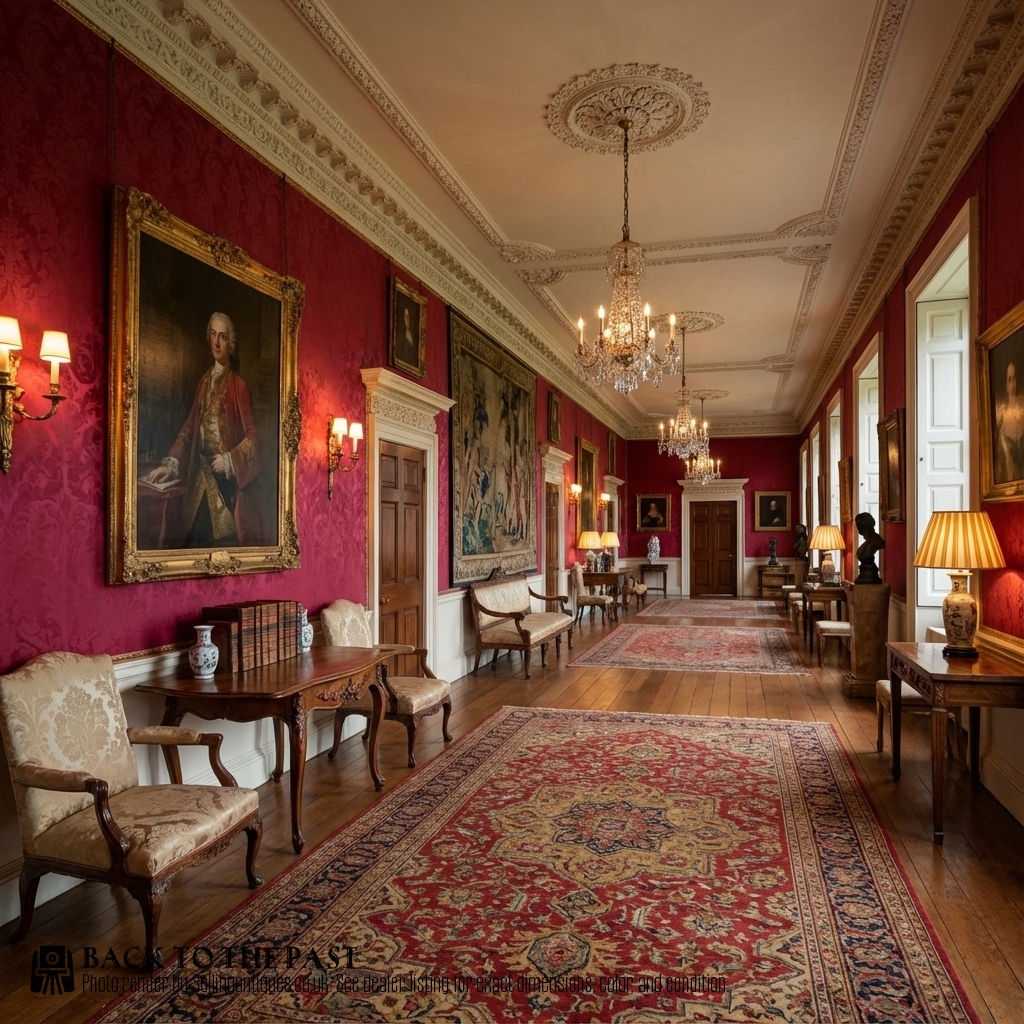
Parquetry Occasional Table
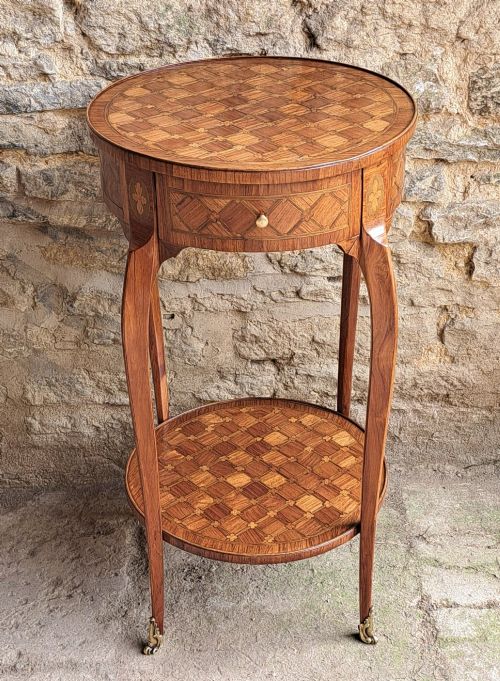
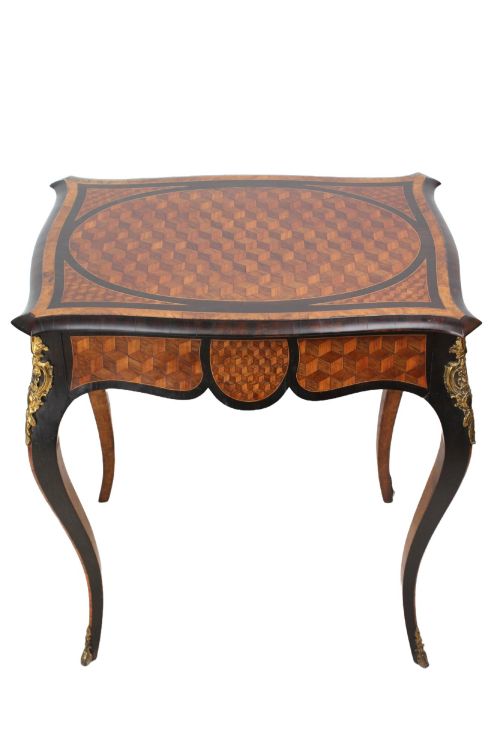
A parquetry occasional table combines a light, movable stand with a geometric wood-inlaid top. These smaller surfaces include side tables, lamp tables, and wine tables designed to sit beside seating or in corners.
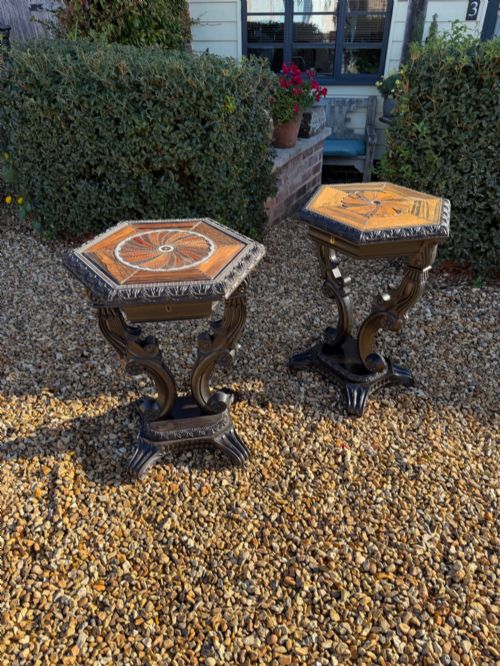
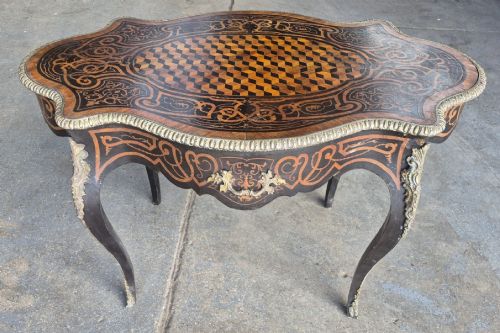
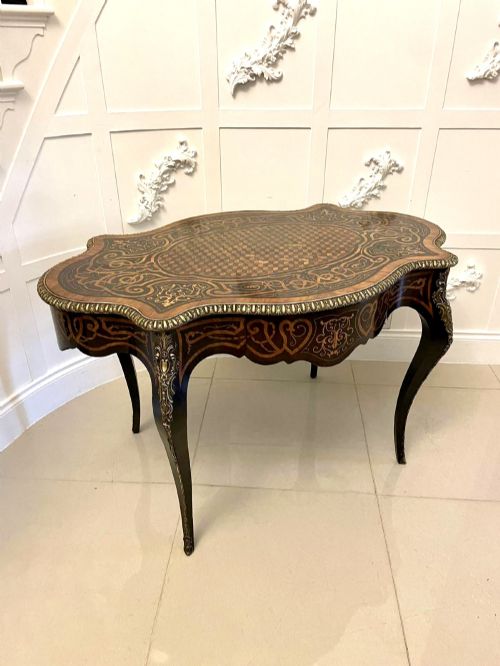
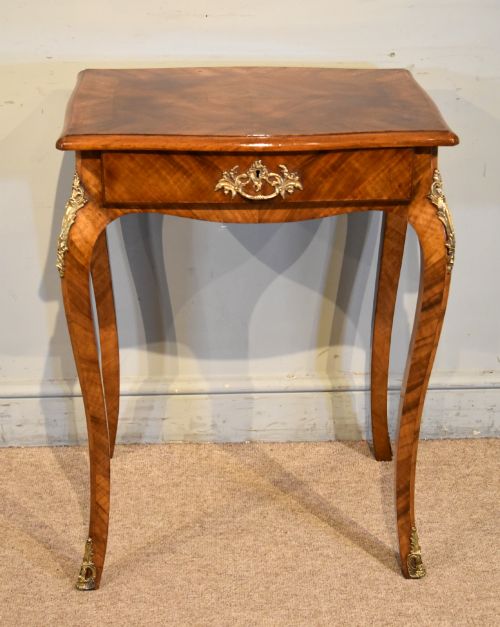
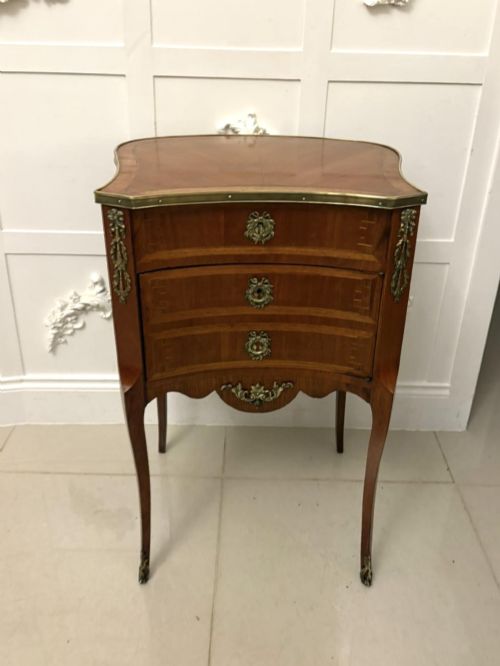
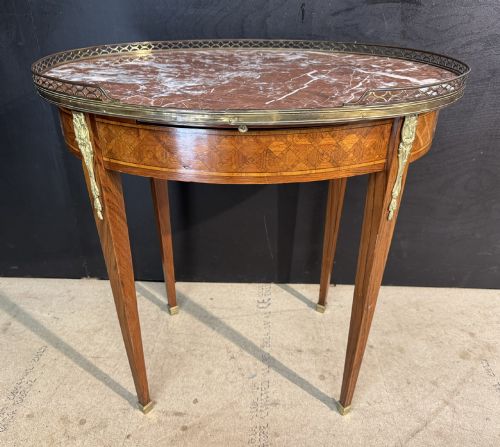
The pieces appearing on this page span the nineteenth century and the early twentieth century, with a strong presence of French Louis XV revival designs. Walnut, kingwood, and rosewood form the primary bodies of these occasional tables.
Makers and workshops across Britain, France, and further afield produced these items for domestic display and entertaining. The form ranges from simple pedestal bases to elaborate kidney-shaped and ormolu-mounted examples.
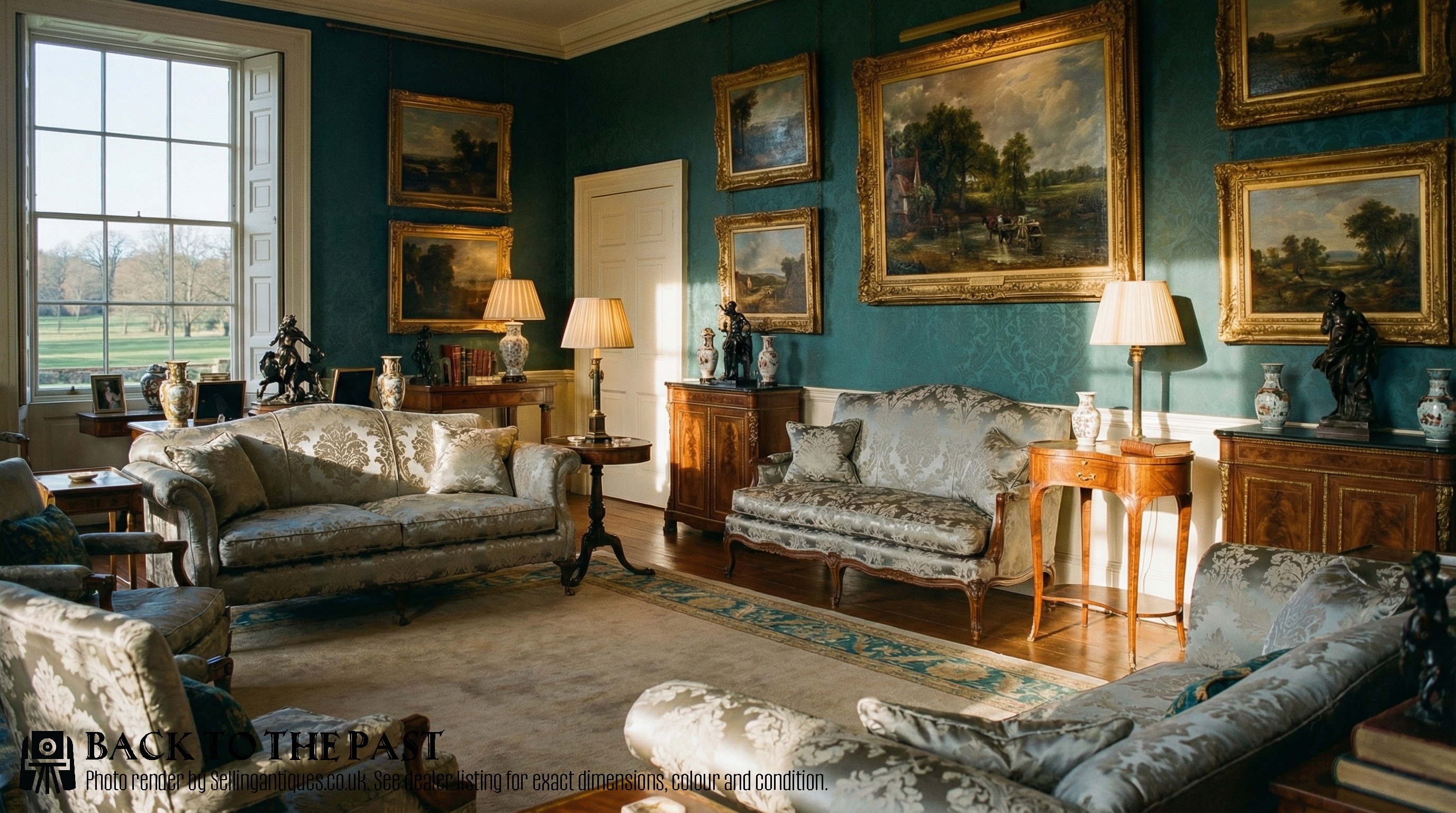
Materials and construction
Cabinetmakers laid thin veneers of exotic and native timbers, such as kingwood, satinwood, and tulipwood, over stable core woods to form the geometric surface patterns. These timber sections were cut with precision to fit tightly together before being polished.
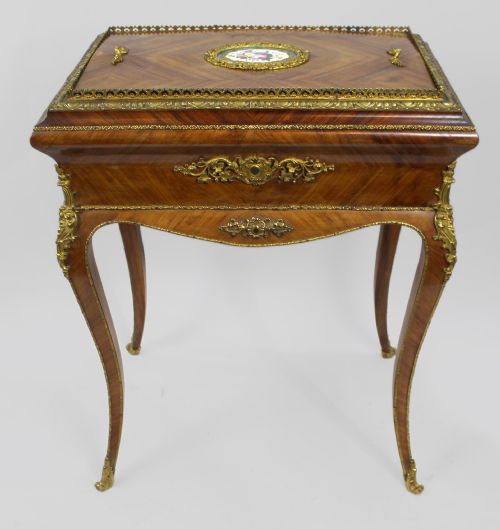
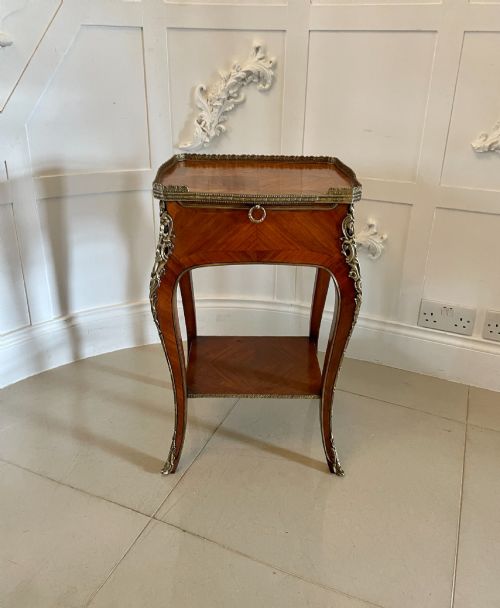
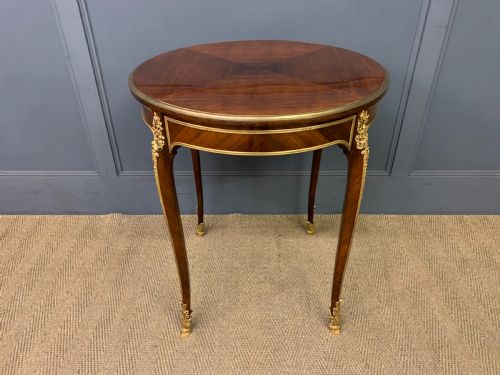
Metal mounts in brass and ormolu frequently frame the tops, legs, and feet of French and English pieces. Cast bronze mounts provide structural protection to corners while adding metallic contrast to the timber tones.
Parquetry Occasional Table Retail Price Guide 2026
Typical asking prices for parquetry occasional table among the pieces listed under this phrase on Sellingantiques today, from the lower quarter to the upper quarter. They describe what is for sale here now, not the wider market.
Listings feature walnut, mahogany, rosewood, and kingwood alongside marble tops and brass mounts.
Judging the standard
The precision of the wood-inlaid geometric pattern dictates the baseline standard of the piece. Sharp junctions between individual timber blocks show superior hand-cutting compared to wider joints filled with dark mastic.
The choice of secondary woods and the weight of the cast ormolu mounts signal the workshop's ambition. Solid bronze mounts with crisp chiselling sit at the upper end of the range, alongside balanced proportions in the supporting legs.

JAS Shoolbred·Joseph-Emmanuel Zwiener·Gillows·Anton Seuffert·L.Martin of Paris·A Hugnet Paris
The Parquetry Occasional Table Glossary
- Parquetry
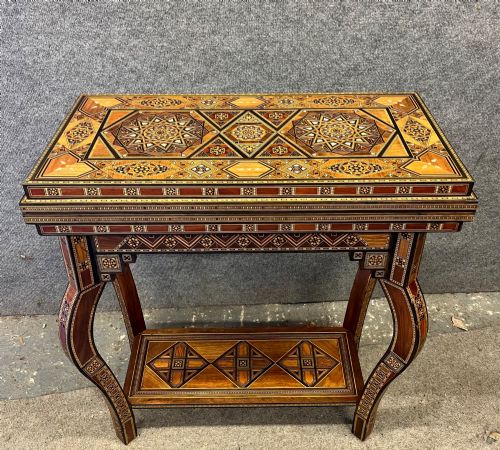
- A geometric mosaic of wood veneer arranged in repeating patterns such as cubes, chequers, or lozenges. This technique forms the decorative surface seen across the tops of these tables.
- Ormolu
- Gilt-bronze mounts applied to furniture for decoration and edge protection. Makers cast and chased these metal elements before fixing them to the timber frame.
- Guéridon
- A small French occasional table supported on one or more central columns or slender legs. These tables gained popularity during the eighteenth century and remained staples into the twentieth.
Parquetry Occasional Table: Frequently Asked Questions
How are parquetry and marquetry different?
Parquetry uses geometric wood blocks arranged in strict repeating patterns like cubes or stripes to cover a surface. Marquetry employs varied veneers to picture pictorial scenes, floral sprays, or scrolls.
While parquetry relies on symmetry and alignment, marquetry allows for flowing, organic designs across the timber top.
Where should an occasional table go?
An occasional table suits placement beside an armchair, next to a sofa, or in a hallway for small items. Their compact footprints allow them to fit into tight spaces where larger furniture cannot go.
Many examples function well as lamp tables or display surfaces for decorative objects in a living room.
How do I care for antique veneer?
Antique veneer requires protection from direct sunlight and extreme humidity changes to prevent the timber from warping or splitting. Keeping the room at a stable temperature preserves the glue beneath the surface.
Applying a traditional wax polish occasionally nourishes the wood and maintains the satin sheen without building up heavy residue.
How do I spot a revival piece?
Revival pieces often replicate eighteenth-century Louis styles using nineteenth-century manufacturing techniques and machine-sawn veneers. Examining the underside and interior timbers reveals clues about the period of construction.
Twentieth-century interpretations may show different secondary woods and modern hardware fixings beneath the decorative surface.