




French Parlour Table
A french parlour table brings continental elegance into a room, offering a versatile surface fashioned from fine timbers and ornate mounts.
French Parlour Table
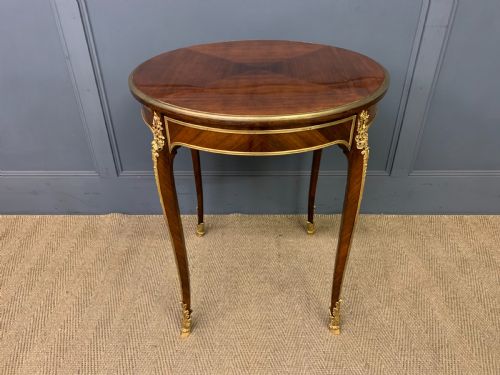
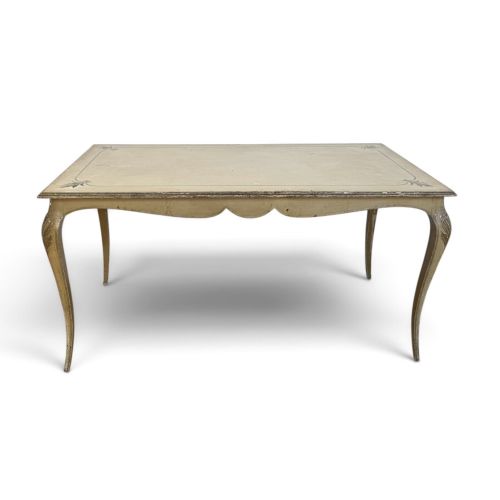
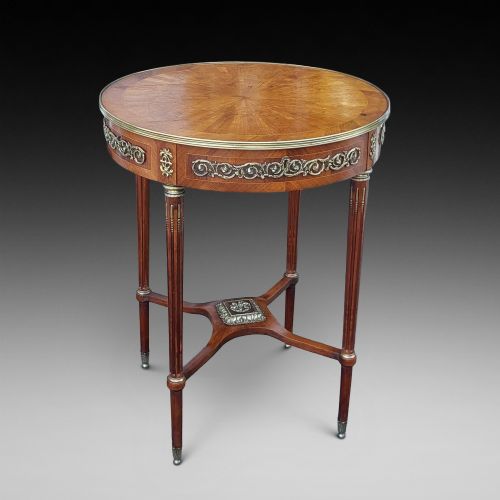
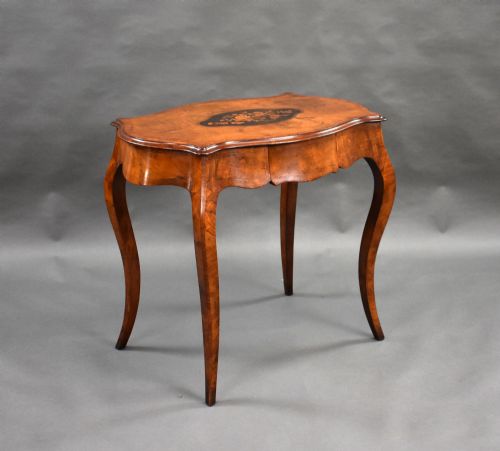
A french parlour table encompasses forms such as centre tables, occasional tables, and side tables spanning the nineteenth and early twentieth centuries. These pieces reflect historical revival movements including Louis XV, Louis XVI, and Empire styles, capturing the ornate decorative tastes of their eras.
Buyers encountering these items on this page will frequently see walnut, mahogany, and kingwood structures augmented by marble tops, marquetry details, or bronze mounts. The selection ranges from compact occasional pieces to large centre tables designed to command a principal room.
Distinguishing quality
The sophistication of the marquetry and the crispness of the bronze casting separate standard production from superior examples. Finely chased ormolu mounts and meticulously hand-cut wood veneers indicate a higher standard of craftsmanship.
Structural integrity and the selection of raw materials dictate long-term durability and aesthetic refinement. Dense hardwoods and well-fitted marble inserts demonstrate deliberate attention to both utility and decoration.
Decorative hardware ranges from cast brass and ormolu mounts to detailed silver inlay work.
François Linke·MAPLE & CO. PARIS
The French Parlour Table Glossary
- Ormolu
- Gilt bronze mounts applied to furniture for decorative effect. This technique involved applying a gold amalgam to bronze before heating.
- Marquetry
- Decorative patterns formed by inlaying pieces of wood veneer onto a structural surface. Craftsmen used various tinted timbers to create pictorial designs.
- Cabriole leg
- A furniture leg that curves outward and then tapers inward, mimicking animal limbs. It is a defining feature of Louis XV revival design.
- Kingwood
- A dense, richly grained exotic timber utilised in high-end cabinetmaking. Its distinct dark figuring made it popular for veneering parlour furniture.
- Centre table
- A freestanding table finished on all sides to be viewed from any angle in a room. These typically occupied the middle of a Victorian parlour.
French Parlour Table: Frequently Asked Questions
What is a french parlour table used for?
These tables served as decorative surfaces in formal reception rooms for displaying ornaments, holding lamps, or gathering for tea and conversation.
Today, they function similarly in modern interiors as statement centrepieces, coffee tables, or occasional surfaces in living spaces.
How do I identify the style?
Examine the decorative motifs, leg shapes, and overall symmetry to determine the design lineage. Louis XV revival pieces feature curved cabriole legs and floral marquetry, while Louis XVI examples display straighter lines and neoclassical symmetry.
Reviewing the primary wood types and mount materials also aids in dating the piece to the nineteenth or early twentieth century.
Are marble tops original?
Many parlour tables were constructed specifically to house inset marble slabs, particularly those originating from French workshops. These heavy stone tops provided a durable and cool surface resistant to everyday use.
Checking the fit against the wooden rebate helps confirm whether the marble matches the period of the base frame.
How should I care for polished wood?
Maintain timber surfaces by dusting regularly with a soft, dry cloth and avoiding placement near direct heat sources or strong sunlight. Proper humidity control prevents the veneer and marquetry from drying out or lifting over time.
Occasional application of appropriate wax preserves the sheen without building up harmful residue on antique finishes.