


Ormolu Mounted Gueridon
An ormolu mounted gueridon is a striking circular occasional table elevated by cast bronze ornaments, prized for bringing French elegance and a polished surface to a room.
Ormolu Mounted Gueridon
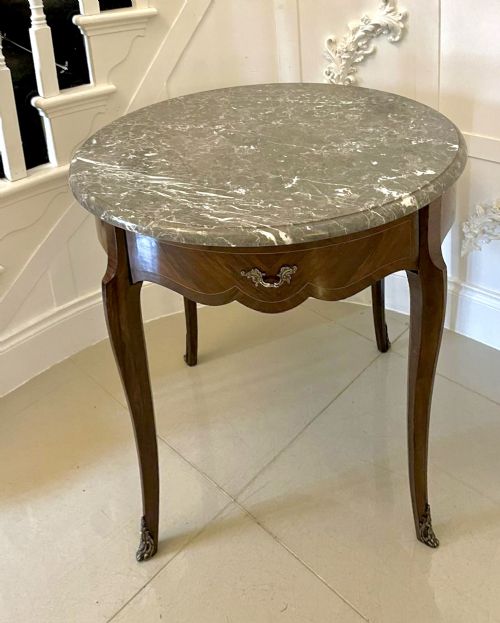
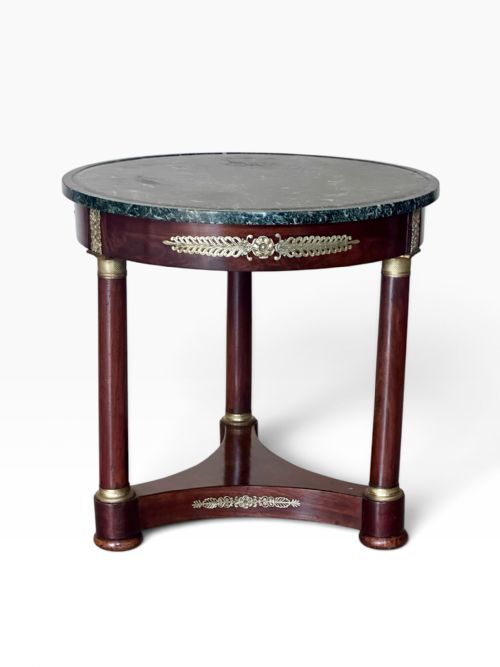
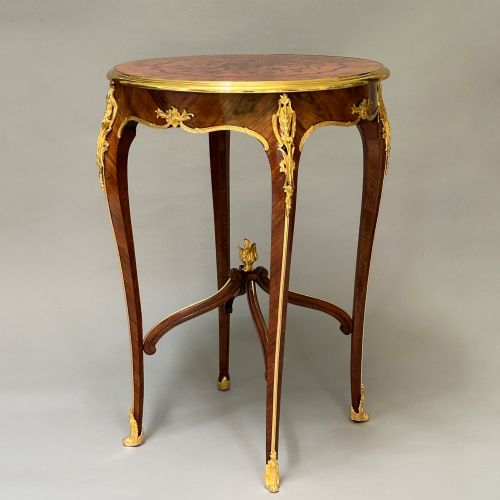
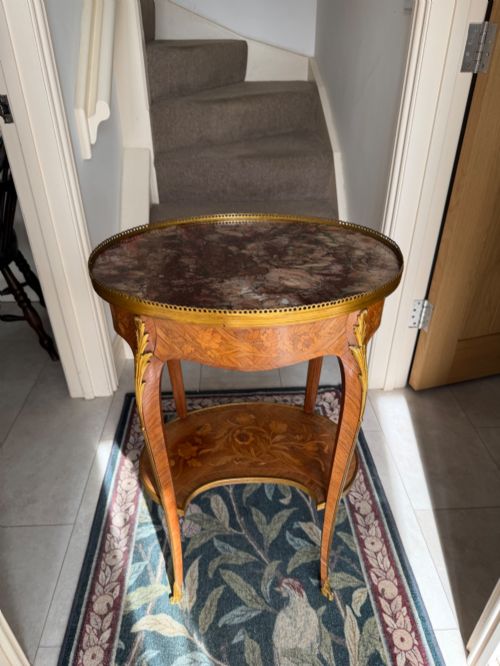
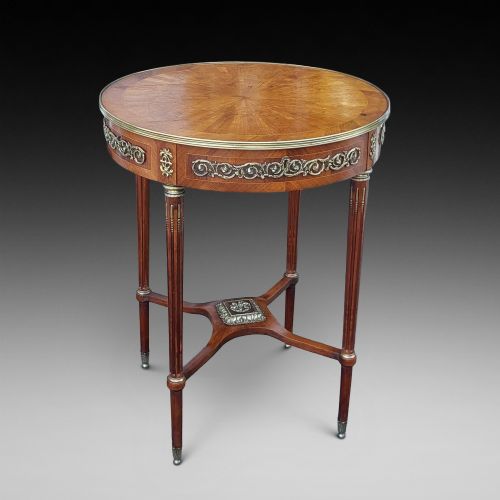
When you search for an ormolu mounted gueridon, you are looking at small circular tables and occasional stands originating from French cabinet-making traditions. The pieces on this page span the nineteenth century and the early twentieth century, taking forms such as centre tables, lamp tables, and wine tables.
You will frequently meet examples bearing Louis XV, Louis XVI, and Empire styles, often incorporating distinct surface treatments like marble tops or detailed marquetry. These tables served practical roles as moveable stands for lamps, ornaments, or wine while displaying decorative timber work.
Origins trace predominantly to French workshops, though related revival pieces appear in various timbers. The primary form remains the round occasional table raised on slender legs, unified by gilt metal mounts that trace the apron and legs.
What varies in quality
The crispness and depth of the cast bronze ormolu mounts separate standard production from master workshops. Finer mounts display sharp chasing, clean undercuts, and heavy gauge metal, whereas lower quality examples show softer, shallower casting details.
The precision of the timber work and marquetry inlay dictates the upper tier of pieces. Tighter veneer joints, balanced grain matching, and well-preserved parquetry indicate superior cabinet-making originating from documented Paris makers rather than generic factory output.
Integration between the stone, timber, and metal components governs structural integrity. Superior tables maintain flush joints where marble meets timber and securely fitted mounts that sit flush against the carcase without movement.
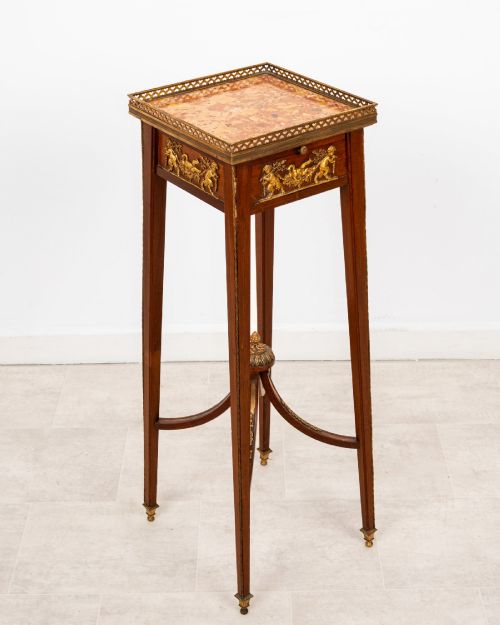
Table forms on this page span side tables, lamp stands, wine tables, and multi-tiered occasional furniture fitted with inset marble.
L.Martin of Paris·Francois Linke·Zwiener Jansen Sucesseur·Henry Dasson
The Ormolu Mounted Gueridon Glossary
- Ormolu
- Gilded bronze or brass applied as decorative mounts on furniture. It provides bright metallic highlights against dark or veneered timbers.
- Gueridon
- A small French occasional table or stand, traditionally round and supported by a central column or several slender legs. It functions as a decorative surface for lamps or ornaments.
- Marquetry
- Inlaid wood veneers arranged in pictorial or decorative patterns across a surface. Craftsmen use contrasting timber tones to create detailed motifs.
- Parquetry
- Geometric patterns formed of wood veneers fitted together. It frequently covers the tops of occasional tables in repeating cube or herringbone designs.
- Gallery
- A raised pierced metal or wooden rail fitted around the edge of a table top. It prevents items from sliding off the marble or wood surface.
Ormolu Mounted Gueridon: Frequently Asked Questions
What is an ormolu mounted gueridon?
An ormolu mounted gueridon is a traditional French round occasional table decorated with gilt bronze or brass ornaments. These tables were designed as moveable stands for display, lighting, or serving.
They combine fine cabinet-making timbers like kingwood and mahogany with contrasting stone or inlaid tops. The metal mounts emphasise the structural lines of the legs and apron.
How do I style a gueridon at home?
A gueridon works effectively beside a sofa or chair as a lamp table, or positioned centrally in a room to display a bronze or ceramic piece. Its compact footprint allows it to fit into corners or narrow spaces.
Keep the surface styling minimal to allow the wood grain and metal mounts to remain visible. Avoid placing heavy items that obscure the parquetry or marble inset.
How do I distinguish Louis XV and Louis XVI styles?
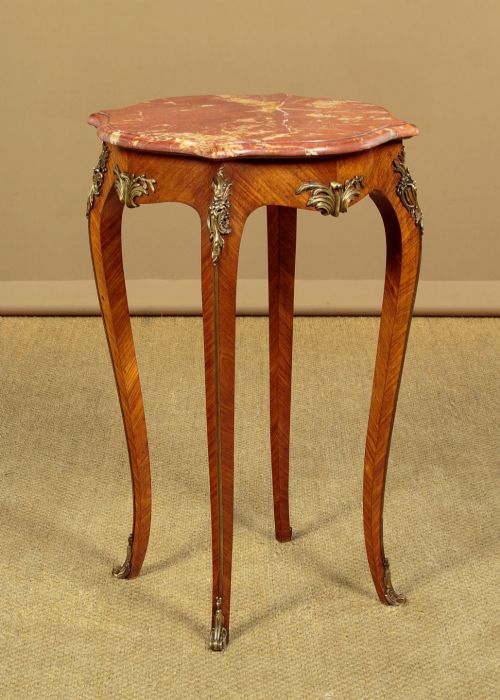
Louis XV style pieces are defined by flowing serpentine lines, asymmetrical curves, and cabriole legs. The ornamentation draws on natural rococo motifs like leaves and scrolls.
Louis XVI style shifts toward straight lines, symmetrical geometry, and neoclassical details such as fluted tapering legs. Ormolu mounts on these pieces tend to feature ribbons, urns, and architectural motifs.
Are marble tops original to these tables?
Marble tops are common on nineteenth-century French gueridons and were fitted during the initial construction to provide a durable, heat-resistant surface. The stone is selected to complement the timber carcase, such as rouge or white marble.
Inspect the seating of the stone within the wooden or brass rim to ensure it rests evenly. Most period pieces retain their original marble inserts matching the proportions of the frame.