
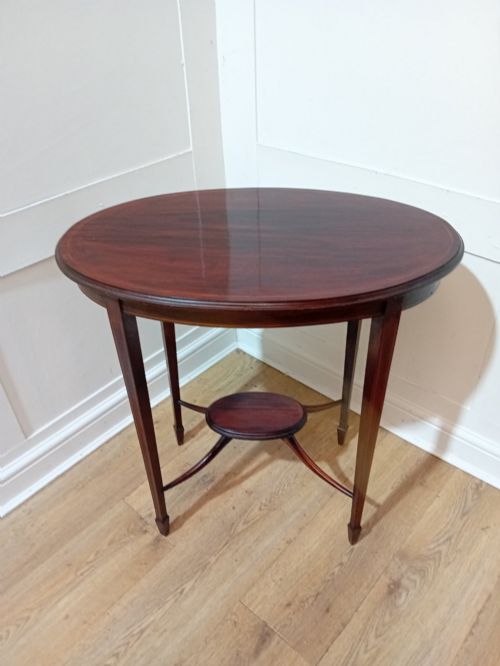
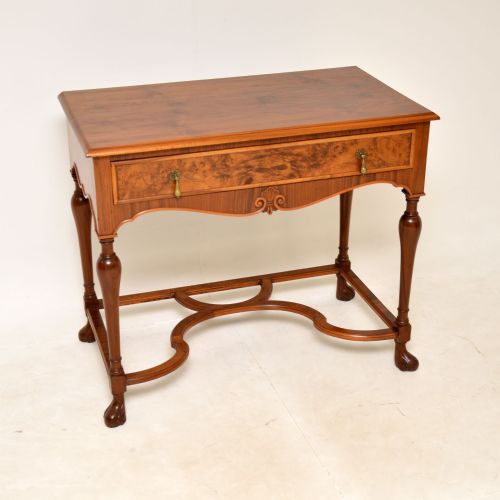


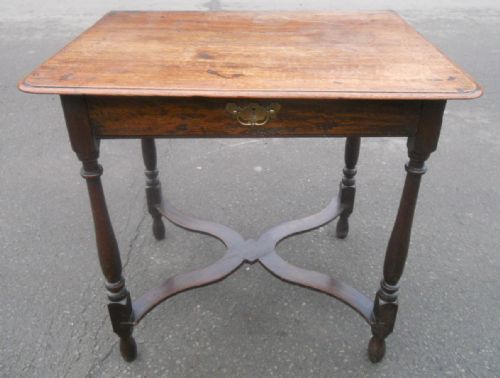
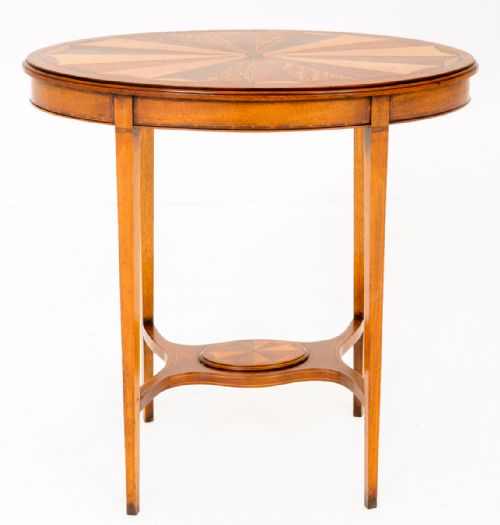


Curved Stretcher Side Table
These curved stretcher side table pieces offer sturdy elegance and classic proportions, combining practical surface space with architectural undercarriage detail for any room.
Curved Stretcher Side Table
A curved stretcher side table brings together functional surface space and distinctive under-bracing designed to add rigidity while creating an appealing silhouette. When you search for a curved stretcher side table, you encounter forms spanning several centuries, from mid-eighteenth-century oak examples to nineteenth-century revival pieces.
Earlier Georgian examples demonstrate plain timber utility, whereas later Victorian and Edwardian iterations often introduce refined veneers and decorative inlays. These pieces function just as effectively beside a chair today as they did when first manufactured.
Construction and Materials
Cabinet makers utilised dense hardwoods such as mahogany, oak, and walnut to build a solid structural foundation that could support daily domestic use. Timber inlay and intricate satinwood veneers added decorative surface contrast to the primary frame.
Curved stretchers required careful woodworking techniques to join table legs securely while maintaining an unbroken aesthetic line beneath the surface top. Additional details like brass hardware and turned bobbin legs completed the construction.
The integration of burr walnut introduced rich figuring to the wood grain, showing how workshops manipulated natural timber patterns for visual impact without relying on excess ornamentation.
Current listings demonstrate a strong presence of Sheraton Revival styling alongside nineteenth-century mahogany and Edwardian satinwood pieces.
Assessing Quality and Craftsmanship
Quality reveals itself in the crispness of the timber inlay and the smoothness of the veneer application across the tabletop and stretcher. Finer pieces demonstrate tight joinery where the legs meet the curved stretcher without visible gaps.
The choice of primary wood and secondary framing timber dictates the overall weight and structural integrity of the table. Better examples maintain balanced proportions where the curve of the stretcher complements the shape of the top, whether oval or rectangular.
The Curved Stretcher Side Table Glossary
- Stretcher
- A horizontal support connecting the legs of a piece of furniture to increase stability. These cross-members are curved for decorative effect rather than straight utility.
- Sheraton Revival
- A late nineteenth-century design movement inspired by the light, neoclassical furniture of George Sheraton. It frequently employs satinwood, mahogany, and delicate timber inlay.
- Occasional Table
- A small, versatile table designed for intermittent use around a home. These pieces easily move between sitting rooms and hallways.
- Console Table
- A table fixed or placed against a wall, often featuring a decorative profile. These items frequently serve entryways and reception areas.
Curved Stretcher Side Table: Frequently Asked Questions
What is a curved stretcher side table used for?
These tables provide a compact surface for lamps, books, or decorative objects in living spaces and hallways. The under-stretcher adds structural rigidity while maintaining an open appearance beneath the top.
Historically placed against walls or beside seating furniture, they offer functional utility without dominating the floor space of a room.
How do I date a wooden side table?
Dating relies on observing the primary wood species, construction methods, and stylistic revival influences present in the piece. Eighteenth-century examples tend to show simpler oak construction.
Later nineteenth-century and Edwardian pieces often display revived Sheraton motifs, satinwood veneers, or specific turned leg forms associated with Victorian production.
What distinguishes Sheraton Revival from Georgian pieces?
Georgian furniture from the mid-eighteenth century prioritises solid timber construction, notably oak, with straightforward structural utility. The proportions are typically heavier and more utilitarian.
Sheraton Revival pieces date from the later nineteenth century and incorporate lighter woods, decorative satinwood veneers, and precise timber inlay inspired by earlier neoclassical designs.
Where should I place a console table?
Console tables sit naturally against hallway walls or in reception rooms where surface space is needed without blocking traffic flow. Their shallow depth makes them suitable for narrow entryways.
Pairing the table with a wall-mounted mirror or placing a small lamp on top creates a balanced focal point upon entering a room.