


Victorian Bobbin Leg Table
These Victorian bobbin leg table examples combine turned supports with practical surfaces for daily use.
Identifying a Victorian bobbin leg table
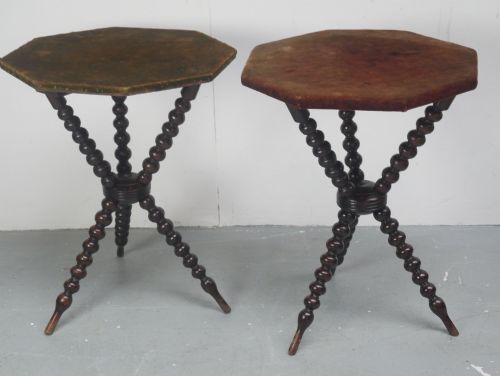
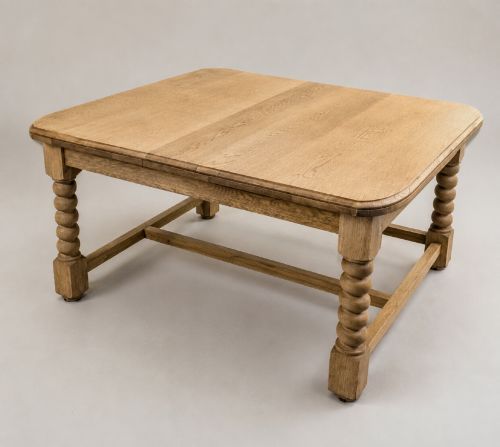
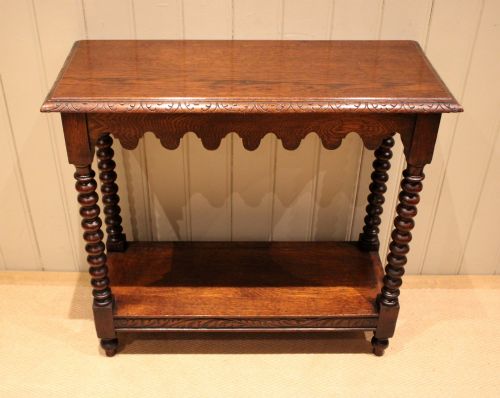
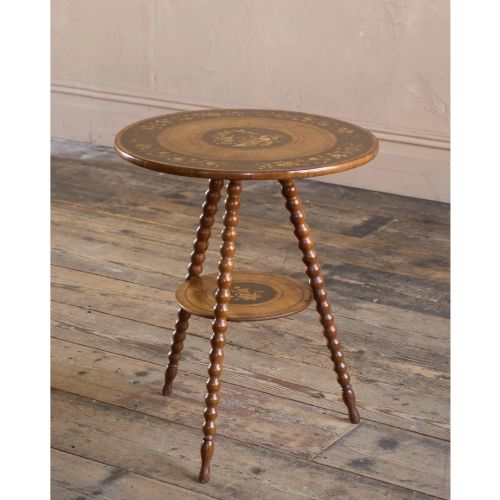
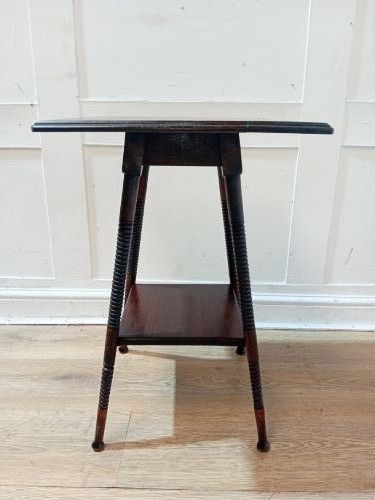
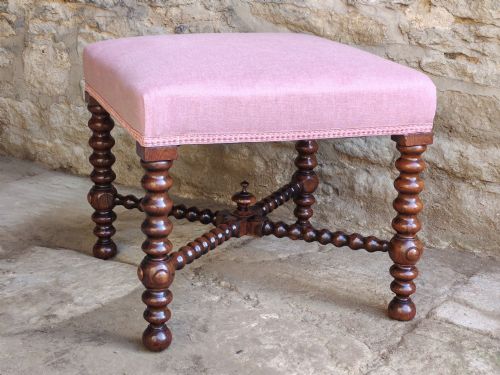
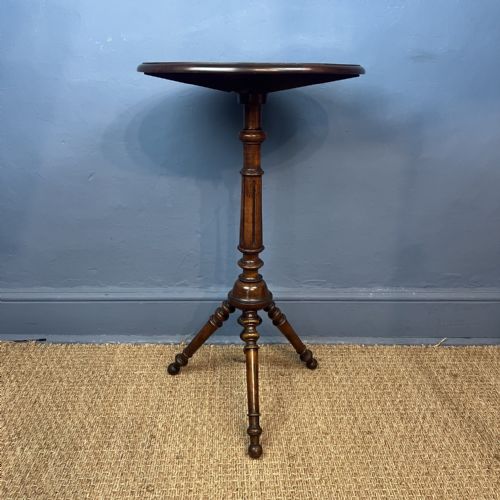
The styles recorded span standard Victorian vernacular alongside Jacobean Revival, rustic farmhouse, and English country aesthetics. Forms include rectangular, square, oval, and octagonal surfaces, often fitted with single drawers, drop leaves, or cross stretchers.
Originating predominantly from the nineteenth century with dates clustering around eighteen eighty to nineteen hundred, these pieces serve practical roles as lamp tables, hall tables, and small side surfaces. The turned leg profile remains the unifying feature across diverse woods and formats.
Materials and construction
Cabinet makers utilised a range of timbers including oak, mahogany, walnut, pine, rosewood, hardwood, and ebonised finishes. Surfaces frequently incorporated solid boards, drop leaves, and occasional brass fittings or carved edges.
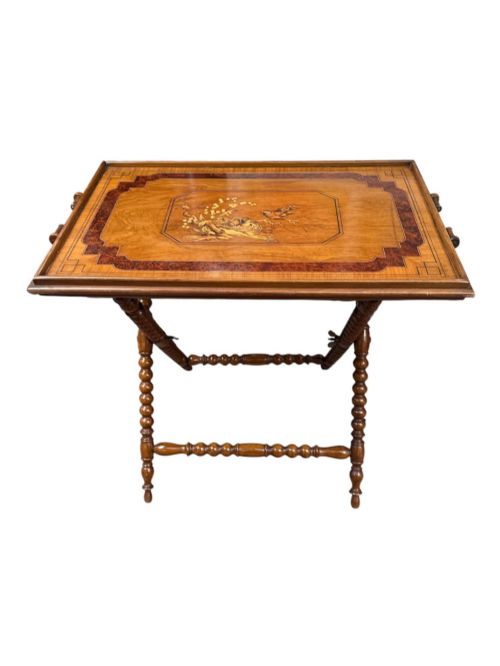
The signature bobbin legs were produced by lathe turning timber into rounded segments, joined together with stretchers for added stability. Tables sometimes feature additional upholstery materials like velvet and fabric on gipsy table tops, or inlaid decorative elements.
Retail Price Guide 2026
Typical UK retail prices for victorian bobbin leg table, calculated from the Sellingantiques database of over a million retail prices indexed since 2003. This retail price guide relies exclusively on Sellingantiques data; no external sources or auction records are used, so the figures do not describe the wider market.
Some tiny Victorian tables feature secret drawers hidden just beneath the bobbin-turned aprons.
Distinctions in quality
Quality rests upon the selection of timber and the precision of the lathe work shaping the bobbin legs. Dense hardwoods like oak, mahogany, and walnut provide greater durability and finer grain pattern clarity compared to softer pine or general hardwood alternatives.
Construction details such as dovetailed drawers, sturdy H stretchers, and well-fitted drop leaf hinges elevate the standard of a piece. The crispness of the turnings and the integration of decorative carving or inlay further distinguish finer examples from simpler vernacular items.
The Victorian Bobbin Leg Table Glossary
- Bobbin turned
- A style of wood turning characterised by a series of rounded, spool-like protuberances carved along the length of a leg or stretcher. This decorative technique creates a rhythmic, textured profile popular in nineteenth century furniture.
- Cricket table
- A small, lightweight three-legged table traditionally designed for uneven floors. These versatile items often feature a round top supported by three splayed legs.
- Gipsy table
- A small occasional table featuring three splayed legs and a fabric-covered top, often trimmed with fringe or velvet. They emerged as popular decorative furnishings during the Victorian era.
- Gateleg table
- A drop leaf table where the hinged leaves are supported by swing-out legs that resemble a gate. This design allows the surface area to expand or contract depending on space requirements.
- H stretcher
- A horizontal wooden brace shaped like the letter H that connects the four legs of a table near the base. It provides structural rigidity and prevents the legs from wobbling.
Frequently Asked Questions
What is a bobbin leg table?
A victorian bobbin leg table is a nineteenth-century furniture piece defined by legs turned on a lathe to resemble a string of bobbins or spools. These tables serve as functional side, occasional, and dining surfaces.
They appear in various woods like oak, mahogany, and walnut, reflecting both simple country craftsmanship and more elaborate Victorian revival styles.
How were these tables used originally?
These tables functioned in domestic spaces as side tables for lamps, hall tables for letters, and occasional tables for tea or games. Drop leaf and gateleg versions provided expandable surfaces for dining or needlework.
Smaller formats like gipsy tables and cricket tables offered portable display spaces in Victorian parlours and sitting rooms.
What woods were used for these tables?
Carpenters and cabinet makers utilised native and imported hardwoods including oak, mahogany, walnut, rosewood, and pine. Ebonised finishes and brass details also appear across surviving examples.
Selection depended on the intended function and the status of the piece, with finer timbers reserved for parlour furniture and robust pine or oak used for farmhouse designs.
How do I care for a Victorian wood table?
Maintain the wood by keeping the table away from direct heat sources and strong sunlight, which can dry out and fade antique timber. Dust regularly with a soft cloth and avoid chemical polishes that build up residue.
Wax finishes benefit from occasional application of traditional beeswax to nourish the grain and preserve the surface sheen.