
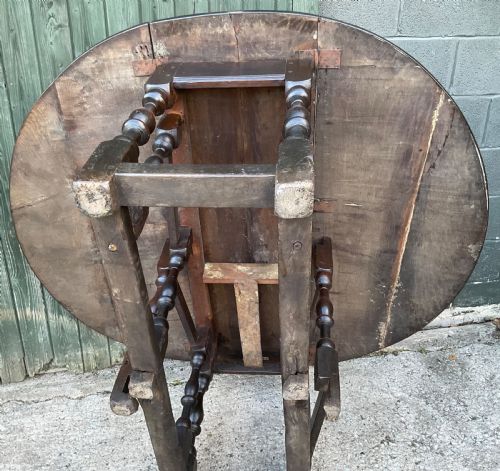


Traditional Oak Gateleg Table
A traditional oak gateleg table provides folding leaves and swinging legs to save space while offering a large surface.
Traditional Oak Gateleg Table
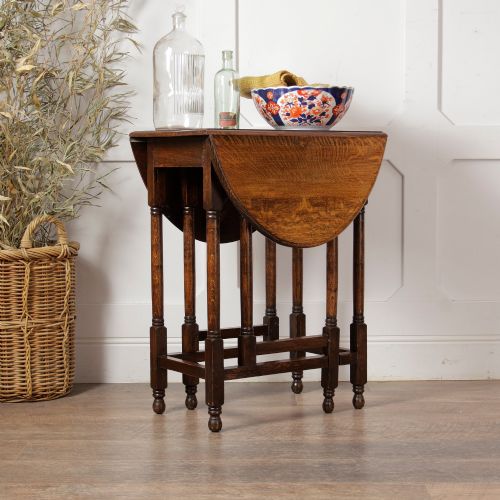
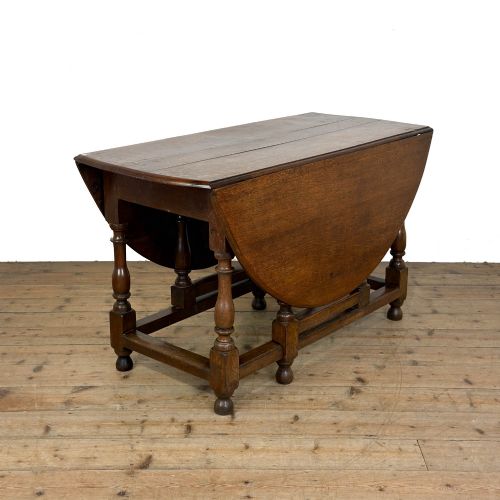
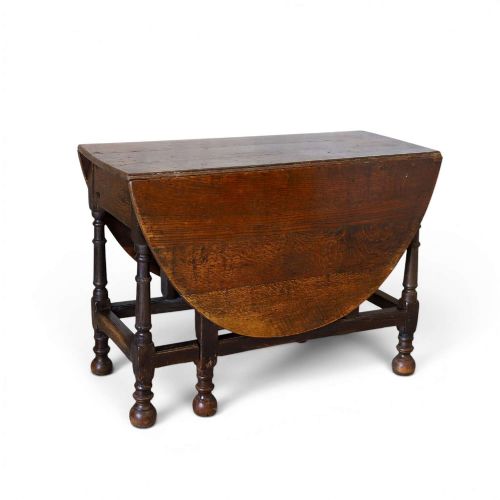
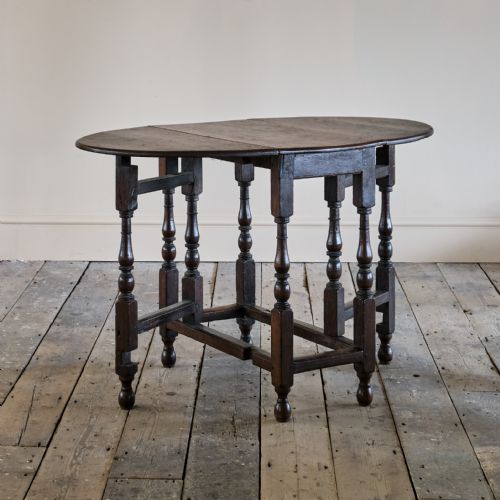
A traditional oak gateleg table is a drop-leaf design resting on pivoted legs that swing outward to support the raised flaps. This layout allows the furniture to sit flat against a wall when folded and expand into a wide oval or circle for dining.
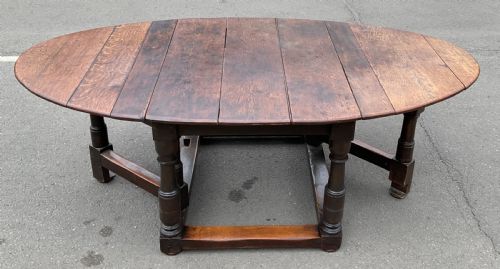
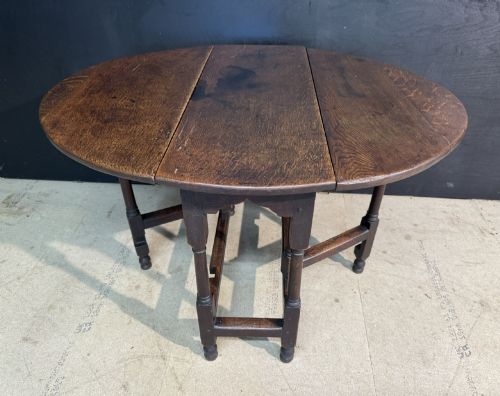
Most examples found on this page date from the seventeenth century and eighteenth century, alongside later revivals from the nineteenth century and early twentieth century. These pieces appear across various sizes, from large six-seater dining tables down to small coffee and side tables.
The primary form involves fixed centre sections with hinged leaves on either side, supported by framed gate structures. Makers constructed these to handle daily use in domestic spaces, balancing sturdy timber frames with movable joints.
How they were made
Carpenters built traditional oak gateleg tables primarily from solid oak, sometimes combining iron or brass for hinges and fittings. Timbers were quarter-sawn or plain-sawn depending on the period, yielding dense construction and visible grain patterns.
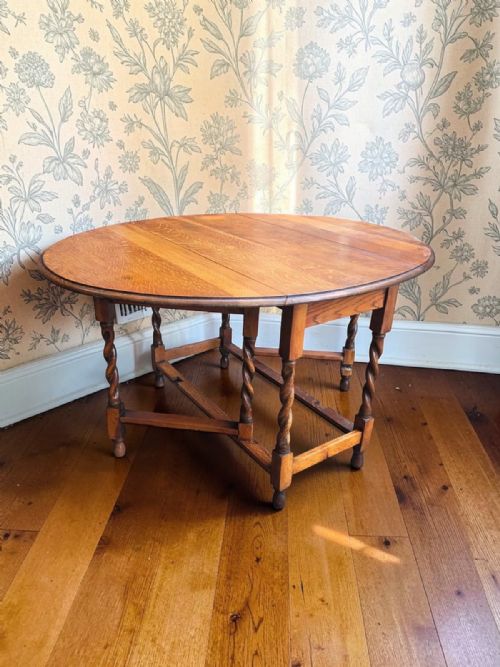
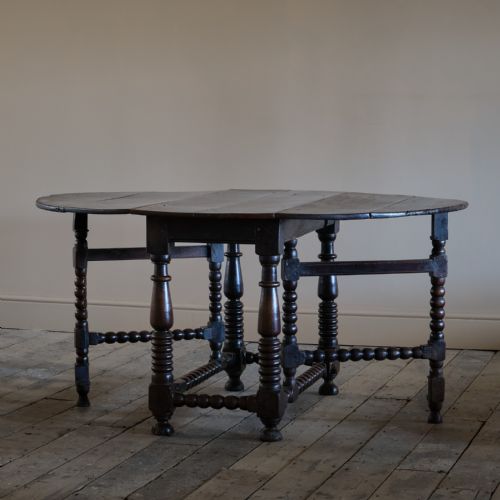
Joinery relied on pegged mortise and tenon joints to secure the main frame, while movable sections utilised wooden pivots or metal hinges. Turning lathes shaped upright supports into barley twist or bobbin turned profiles.
Surface finishing involved hand-planing and polishing the wood to reveal the natural grain, developing a warm patina over decades of handling.
Traditional Oak Gateleg Table Retail Price Guide 2026
Typical asking prices for traditional oak gateleg table among the pieces listed under this phrase on Sellingantiques today, from the lower quarter to the upper quarter. They describe what is for sale here now, not the wider market.
Several tables include clever swivel-top mechanisms designed to puzzle dinner guests.
What varies in quality
Quality separates through the selection of timber and the complexity of the turned woodwork. Tables featuring dense solid oak and intricately shaped bobbin turned or barley twist legs sit at the higher end of the craft.
The precision of the gate mechanism and the integrity of the original hinges dictate mechanical success. Pieces retaining their original iron or brass hardware demonstrate better continuity than those with later replacements.
Proportion and scale distinguish fine dining examples from utilitarian items. Large formats with balanced oval tops require superior structural timber to prevent sagging across the extended leaves.
The Traditional Oak Gateleg Table Glossary
- Gateleg table
- A table with hinged leaves supported by one or more legs that swing out like a gate. This allows the surface area to expand or contract according to space requirements.
- Drop-leaf table
- A table with a fixed central section and movable flaps that hang down at the sides. When raised, these leaves are supported by folding brackets or swinging legs.
- Bobbin turned
- A decorative turning style on wooden furniture legs resembling a string of rounded bobbins or spools. This technique appears frequently on seventeenth-century and revival pieces.
- Barley twist
- A spiral carving resembling a twisted rope, worked into wooden table legs and supports. This decorative detail marks both seventeenth-century originals and early twentieth-century revivals.
- Patina
- The surface sheen and deep coloration developed by wood over years of ageing, polishing, and handling. This visual depth distinguishes older timber from modern finishes.
Traditional Oak Gateleg Table: Frequently Asked Questions
How do I use a gateleg table?
Keep both leaves folded down against the wall to utilise the table as a narrow console or side surface in compact rooms.
Swing the supporting legs outward and lift the hinged flaps when you need a wide surface for dining or working.
How can I tell a seventeenth-century table from a later revival?
Examine the construction marks, tool patterns on the timber, and the nature of the joints used in the frame.
Seventeenth-century originals show hand-carving and pegged joinery, whereas twentieth-century revivals often display machine tooling and more standardised components.
What wood was used for these tables?
Makers relied almost entirely on solid oak for both the structural framework and the surface leaves.
Metal components such as iron or brass appear primarily on hinges, screws, and swivel mechanisms.
Where should I place a small gateleg table?
Position the piece in a hallway or living room with the leaves dropped to function as an occasional coffee or side table.
Pull the table into the centre of a room and raise the leaves when extra surface space is required.