

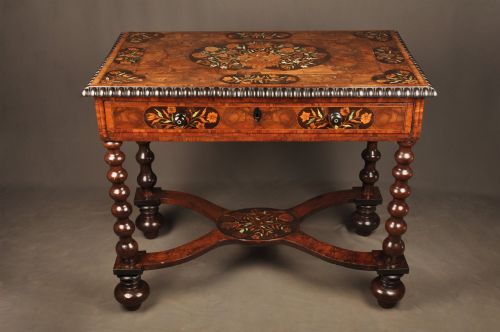
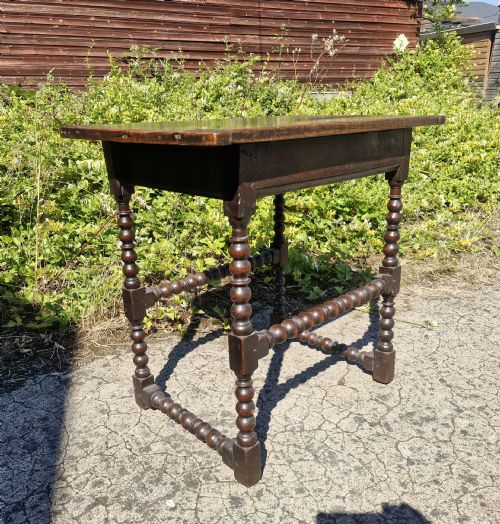
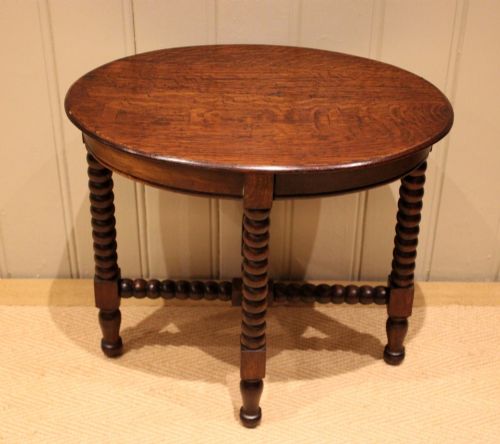
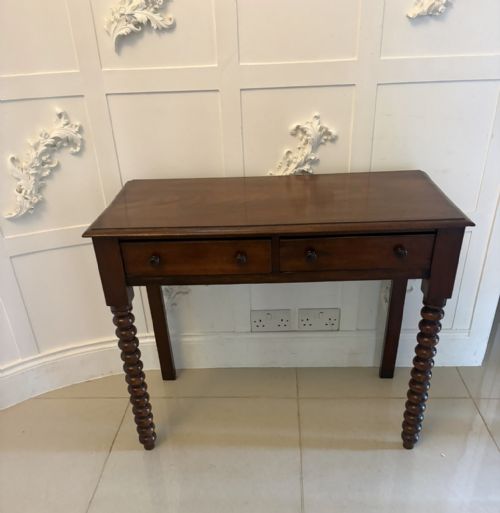
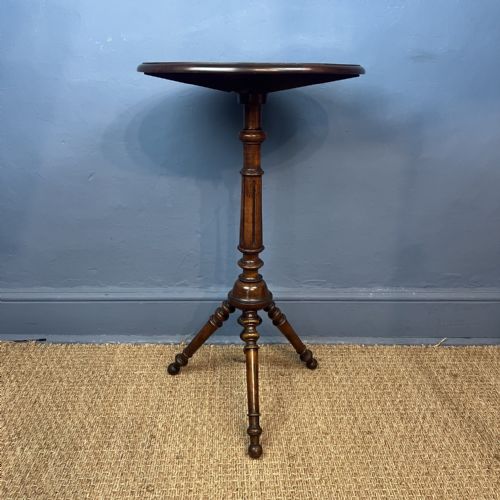
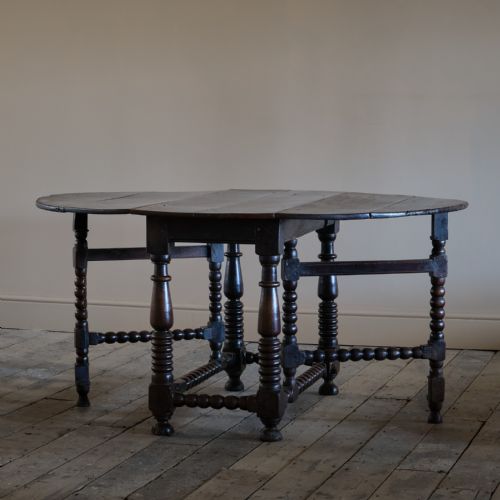

Bobbin Leg Side Table
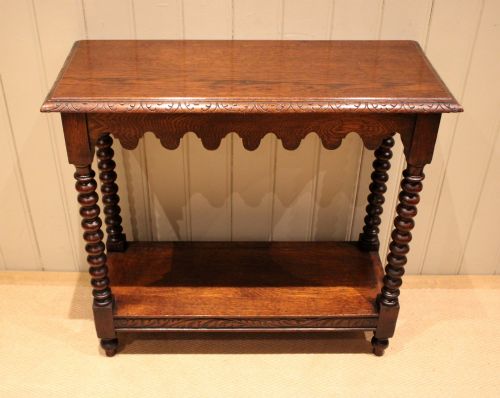
A bobbin leg side table brings seventeenth-century turnery and rich timber grain straight into a modern interior.
What a bobbin leg side table is
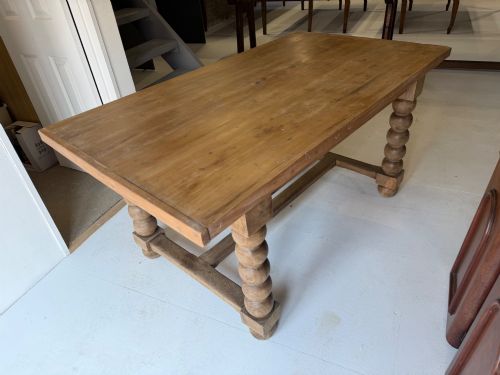
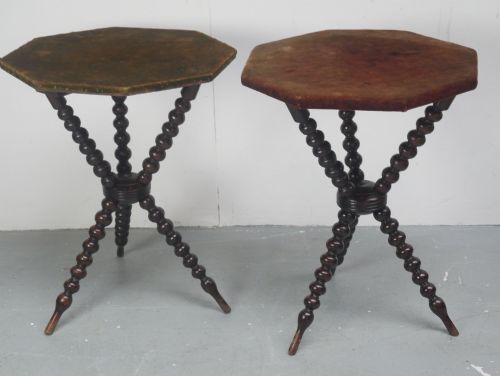
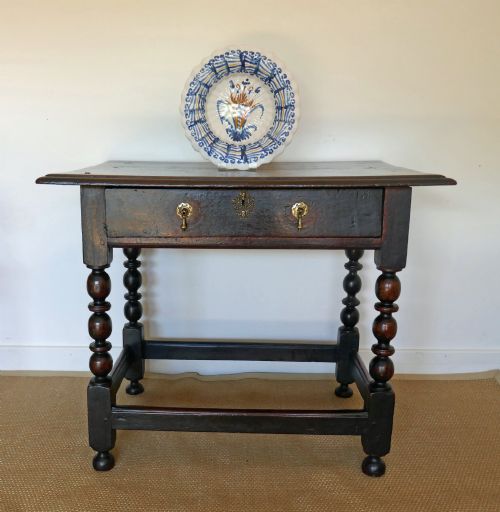
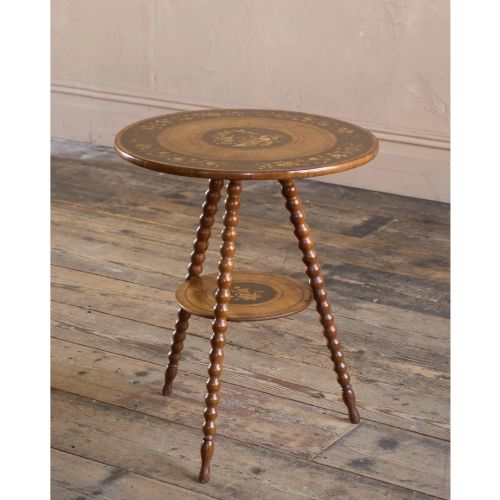
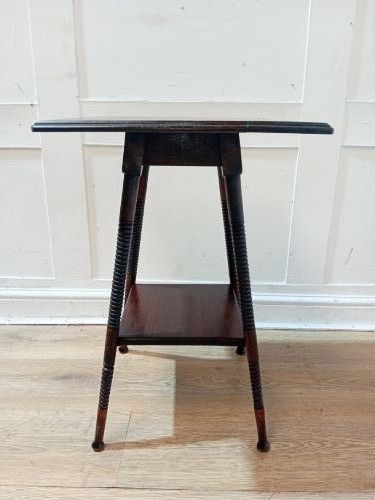
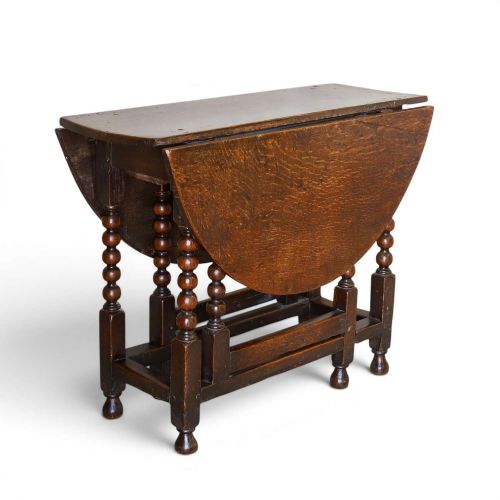
A bobbin leg side table combines a sturdy rectangular or drop-leaf top with distinctive spool turnings along the supports. These practical surfaces appear in various iterations, from compact seventeenth-century Charles II examples to later nineteenth-century revivals.
The versions most frequently met on this page span the seventeenth, eighteenth, and nineteenth centuries. Oak is the primary timber encountered across these periods, often accompanied by walnut, beech, and rosewood in later Victorian interpretations.
Form follows function closely in these designs, yielding side tables, lamp tables, and occasional tables equipped with single drawers or stretchers. Buyers encounter rectangular tops, gateleg configurations, and D-ended formats designed for domestic utility.
What varies in quality
The grade of timber and the crispness of the turnery define the upper tier of these pieces. Dense, figured grain and well-defined spool profiles separate superior examples from simpler utilitarian furniture.
Original construction details, such as period joinery and retained drawer configurations, elevate the standing of a table. Alterations to timber or replaced turnings alter the historical integrity of the piece.
Retail Price Guide 2026
Typical UK retail prices for bobbin leg side table, calculated from the Sellingantiques database of over a million retail prices indexed since 2003. This retail price guide relies exclusively on Sellingantiques data; no external sources or auction records are used, so the figures do not describe the wider market.
Listings feature oak, walnut, beech, and mahogany, spanning the seventeenth to the nineteenth centuries.
The Bobbin Leg Side Table Glossary
- Bobbin turned
- A method of lathe turning that produces a series of rounded, spool-like shapes along the length of a furniture leg or stretcher. This decorative technique appears widely on seventeenth-century and revival furniture.
- Gateleg table
- A drop-leaf table featuring hinged legs that swing outward to support the extended leaves. This form allows the table to expand for dining or contract for placement against a wall.
- Stretcher
- A horizontal wooden rail connecting the legs of a table below the tabletop to provide structural stability. These components frequently feature matching bobbin turnings on seventeenth-century examples.
- Marquetry inlay
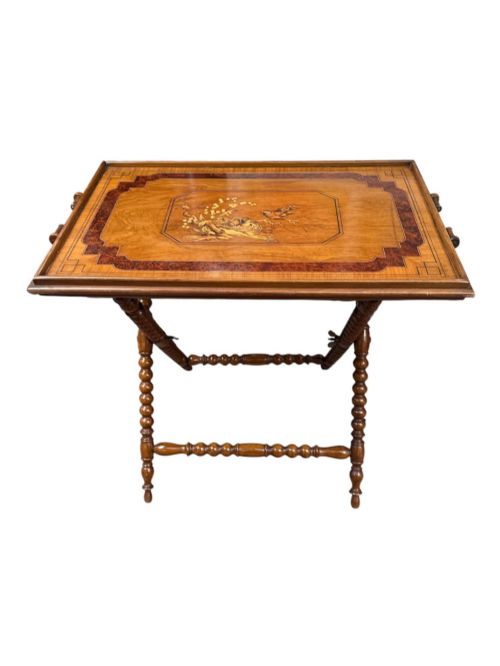
- Decorative patterns formed by fitting contrasting pieces of wood veneer into the primary surface of a table. This technique enhances the visual richness of walnut and mahogany furniture.
Frequently Asked Questions
How do I date a bobbin leg side table?
Dating relies on timber selection, construction methods, and hardware styles. Early pieces utilise solid oak with pegged joints, while nineteenth-century revivals incorporate mahogany or rosewood with machine-cut elements.
Examining the underside and drawer construction reveals whether the timber predates the nineteenth century or belongs to a later stylistic revival.
Where should I place a side table?
These compact tables suit hallways, living rooms, and bedrooms as lamp stands or decorative surfaces. Their narrow profiles allow them to sit flush against walls without obstructing pathways.
Pairing an oak or walnut table with traditional or modern seating creates a functional display area for books and lighting.
Are these tables sturdy enough for daily use?
Solid timber construction and interconnected stretchers provide substantial structural integrity for everyday placement. The inclusion of robust joints ensures the frame supports lamps and decorative objects securely.
Periodic checks of the stretchers and leg joints help maintain stability over decades of household placement.