
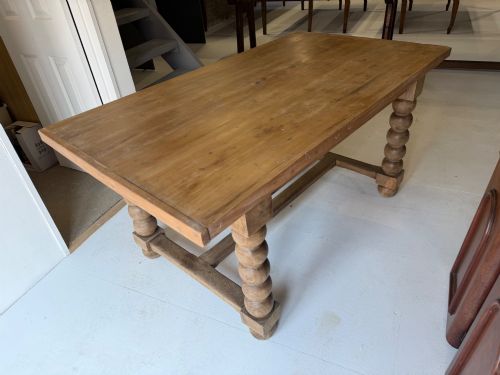

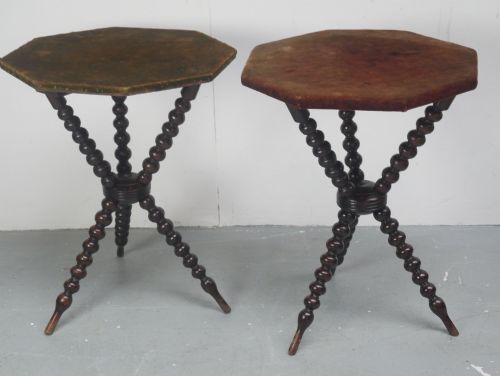
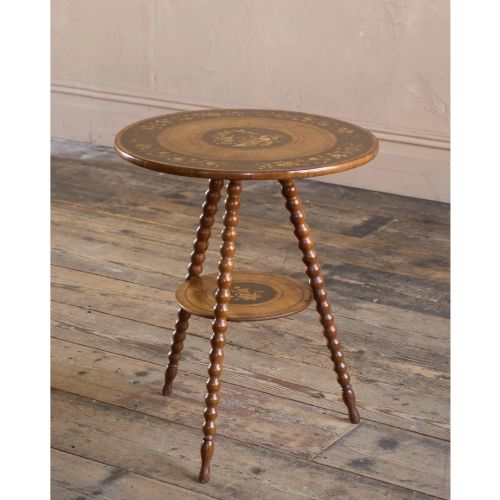
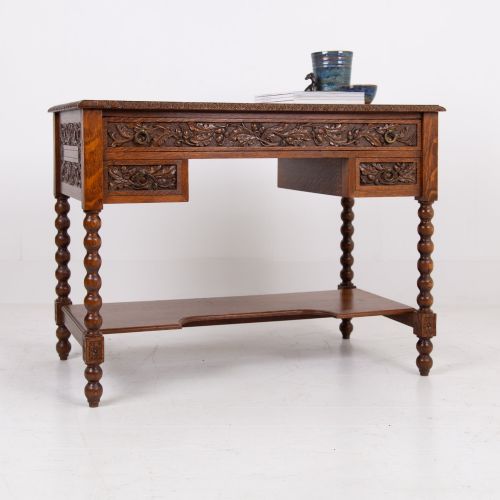
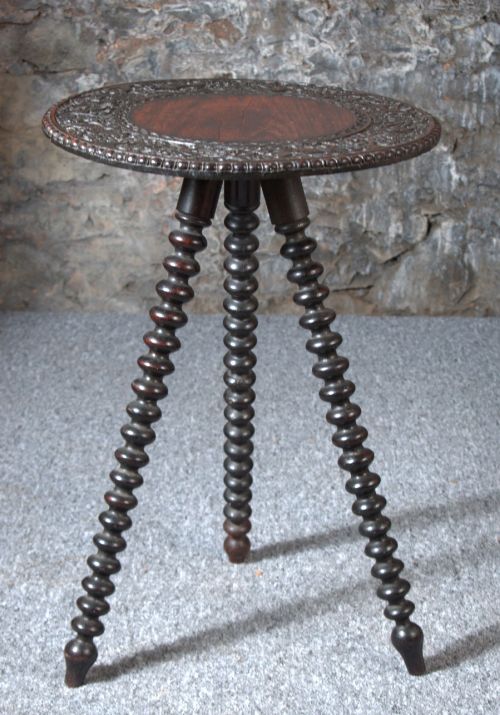


Vintage Bobbin Turned Table
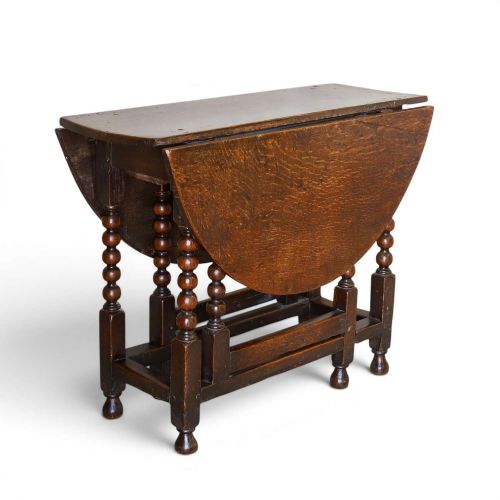
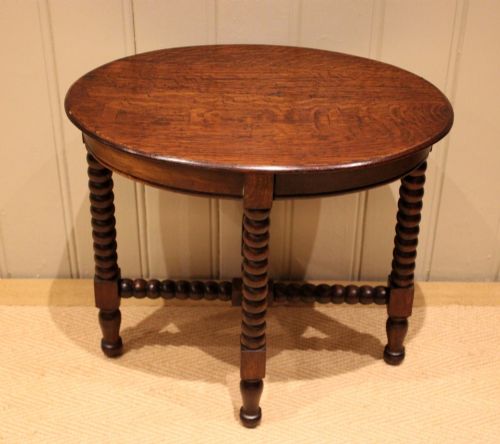
A vintage bobbin turned table brings distinctive spooled legs and seventeenth-century character directly into a modern room.
Vintage Bobbin Turned Table
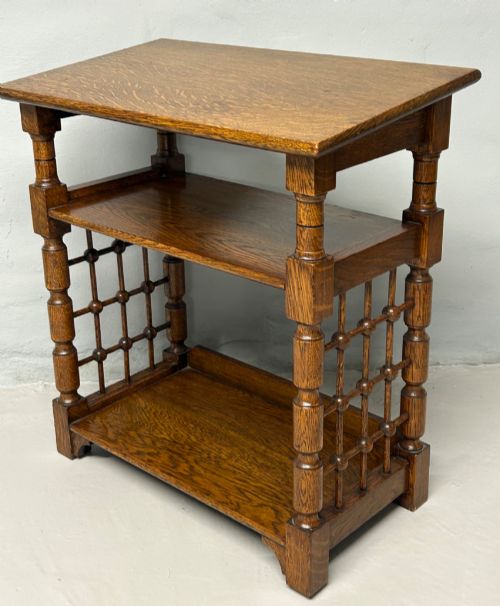
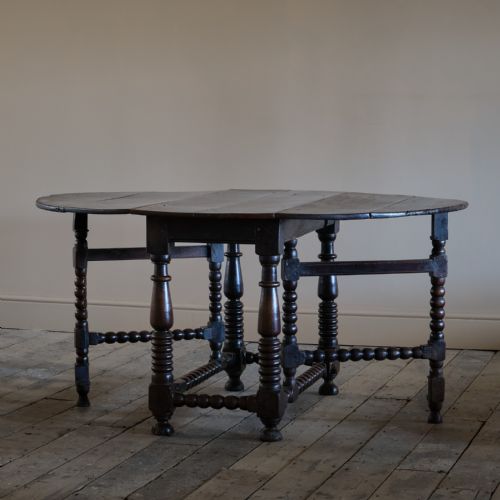
A vintage bobbin turned table centres on heavily turned legs that resemble a string of wooden bobbins or spools, creating a rhythmic and decorative silhouette. Buyers searching this phrase typically encounter sturdy oak side tables, drop-leaf gateleg forms, and compact occasional pieces.
The materials and styles span centuries, ranging from authentic seventeenth-century English oak and walnut examples to Victorian, Edwardian, and later revivals. These tables function easily beside a sofa or in a hallway, offering practical surface space alongside strong historical form.
How they were made
Turned legs require a lathe to shape solid hardwoods like oak, beech, and walnut into uniform series of convex beads and coves. Joinery on these pieces typically relies on traditional pegged mortise and tenon construction, particularly for seventeenth-century and revival gateleg frames.
Secondary materials such as brass fittings, ceramic elements, or inlaid marquetry appear on specific Victorian and Edwardian examples. Unpainted timber surfaces display natural graining, while occasional pieces utilise applied finishes to protect the wood.
Spool-shaped legs were originally turned by hand on pole lathes, meaning no two bobbins matched with machine precision.
What varies in quality
The crispness and symmetry of the spooled turnings dictate the visual success of the base, as inferior work lacks clean definition between the beads. Timber selection also defines the tier of the piece, with dense quarter-sawn oak and figured walnut holding greater presence than plain secondary woods.
Structural integrity separates functional antiques from fragile imitations, particularly where gateleg hinges and swing legs must support weight. Original timber patination and minimal timber replacement preserve the historical integrity that collectors value.
The Vintage Bobbin Turned Table Glossary
- Bobbin turning
- A form of woodturning where a lathe produces a series of rounded, spool-like shapes along the length of a leg or stretcher. This technique gained popularity in the seventeenth century and returned in later Victorian revivals.
- Gateleg table
- A drop-leaf table with hinged flaps supported by legs that swing outward like a gate. This form provides an expandable surface while folding flat for compact placement.
- Jacobean Revival
- A nineteenth-century style mimicking the heavy oak furniture of the early seventeenth century. Pieces from this period often incorporate bold turnings and dark patinated finishes.
- Side table
- A small functional table designed to stand against a wall or beside seating. These items accommodate lamps, books, or decorative objects without dominating a room.
Vintage Bobbin Turned Table: Frequently Asked Questions
How do I spot an earlier table?
Earlier tables from the seventeenth century generally display heavy oak construction, hand-pegged joints, and dense timber patination acquired through centuries of use. Later Victorian and Edwardian revivals often utilise softer beech or walnut with machine-turned consistency.
Examining the underside and drawer construction reveals tool marks and assembly methods consistent with specific historical periods rather than modern manufacturing.
Are gateleg tables stable enough for daily use?
Gateleg tables provide reliable daily function when the swing legs lock firmly into position beneath the drop leaves. The pivoting joints require even flooring to prevent undue stress on the wooden hinges.
Placing the table away from extreme heat sources protects the timber joints from drying and loosening over time.
What woods were used for these tables?
Oak is the predominant timber found in seventeenth-century and revival examples, valued for its strength and distinct grain pattern. Walnut and beech appear frequently in Victorian and Edwardian pieces, offering finer grain and smooth turning capabilities.
Alternative woods like yew, elm, and padouk also feature in specific regional or imported occasional tables.
Where should I place an occasional table?
An occasional table suits small spaces such as hallways, landings, or beside armchairs where a full-sized desk or dining piece is impractical. Their compact surface area holds daily essentials without crowding a room.
Keeping the table away from direct sunlight preserves the original polish and prevents the timber from fading.