






Spool Leg Table
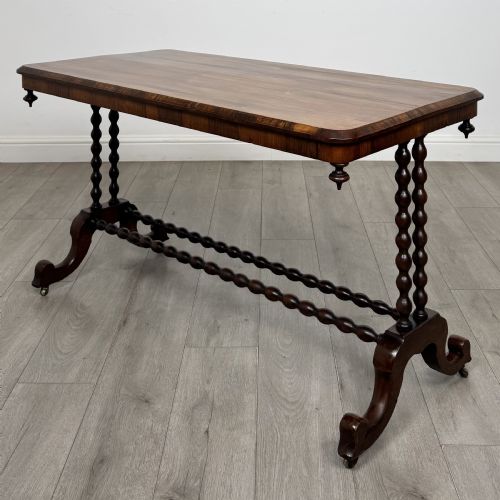
A spool leg table brings tactile character to a room through distinctive turned woodwork.
Spool Leg Table
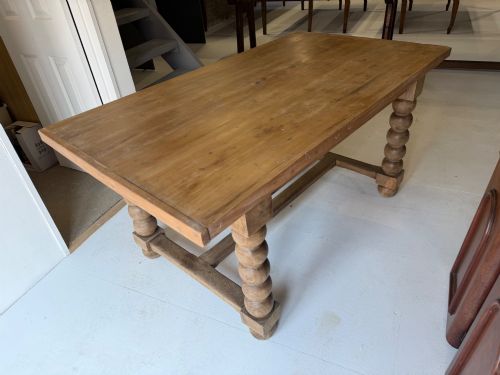
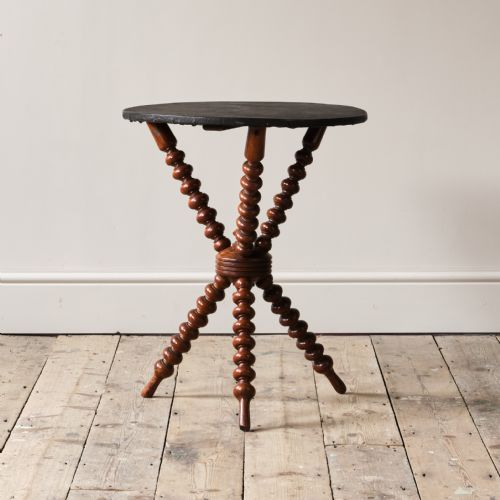
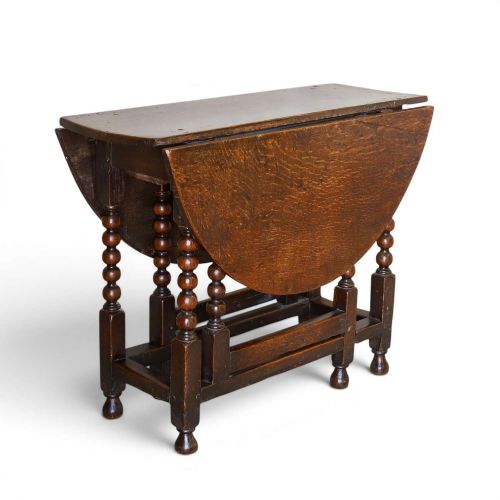
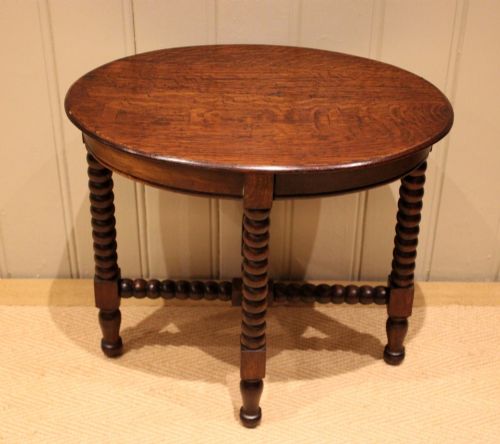
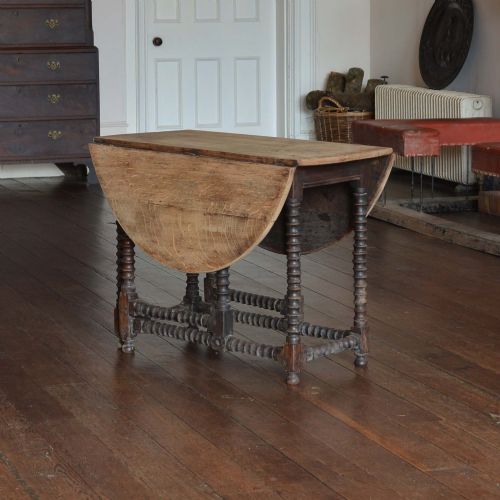
When you search for a spool leg table, you are looking at timber furniture supported by legs turned into repetitive rounded profiles resembling cotton spools or bobbins. The pieces on this page span several centuries, reaching from seventeenth-century oak examples down to Victorian and early twentieth-century interpretations.
Side tables, gateleg dining tables, occasional tables, and hall tables make up the core forms seen here. Oak and pine predominate among the timbers, alongside occasional pieces in walnut, beech, mahogany, and yew wood.
The Victorian and nineteenth-century interpretations of earlier seventeenth-century styles form the bulk of what you meet on this page. These later iterations combine robust timber construction with decorative turnings that echo Jacobean precedents.
How they were made
Cabinetmakers shaped the characteristic legs on a lathe, cutting symmetrical collars and discs into the wood to create the bobbin profile. These turned supports were then joined to solid timber tabletops using traditional framing methods.
Makers utilised a variety of domestic woods, selecting sturdy oak and pine for structural resilience, while employing beech, walnut, and yew wood for specific regional or stylistic variations. Surface treatments range from natural waxed finishes to gilded accents paired with red velvet or leather inserts.
Spool Leg Table Retail Price Guide 2026
Typical asking prices for spool leg table among the pieces listed under this phrase on Sellingantiques today, from the lower quarter to the upper quarter. They describe what is for sale here now, not the wider market.
One unexpected table pairs gilded bobbin turnings with a red velvet top, proving the Victorians loved a touch of theatrical drama.
What varies in quality
The crispness of the lathe turning distinguishes standard production from finer work, as sharply defined collars and uniform spacing demonstrate greater skill on the part of the turner. The choice and figure of the timber itself, particularly in older oak and yew wood tops, sets apart superior examples.
Structural integrity depends upon how cleanly the turned legs join the aprons and frame, influencing the overall stability of the table. Surface preservation also plays a part, distinguishing pieces retaining their original patination from those with heavily altered finishes.
The Spool Leg Table Glossary
- Bobbin turned
- Woodwork shaped on a lathe into a sequence of rounded projections resembling spools of thread. This technique provides the defining visual motif for the entire category.
- Gateleg table
- A table featuring hinged leaves supported by legs that swing outward like a gate. This form allows the surface area to expand or contract according to domestic needs.
- Jacobean Revival
- A nineteenth-century stylistic movement that resurrected seventeenth-century English design motifs. Pieces in this style frequently incorporate heavy turning and dark oak timbers.
- Cricket table
- A small, lightweight occasional table typically supported by three legs. The design derives from early vernacular English domestic utility.
Spool Leg Table: Frequently Asked Questions
What is a spool leg table?
A spool leg table is a piece of furniture defined by legs that have been lathe-turned into rounded, spool-like shapes. They appear in forms ranging from compact side tables to drop-leg dining tables.
These tables draw on seventeenth-century traditions while including numerous nineteenth-century revival interpretations.
How do I style a spool leg table?
The pronounced turning on the legs allows these tables to function as sculptural elements within a room. They suit hallways, sitting rooms, and corners where textural timberwork adds visual warmth.
Pairing them with simple surroundings lets the detailed woodwork remain the focal point of the space.
How can I tell the age of these tables?
Dating relies upon examining the timber species, construction joints, and the sharpness of the lathe work. Seventeenth-century examples typically display heavy oak construction and hand-cut joinery.
Victorian and later nineteenth-century pieces often utilise machine-turned components and softer woods like pine or beech.
Were these tables used for dining?
Certain larger examples, particularly the gateleg configurations, served functional dining purposes in earlier domestic settings. Drop-leaf designs allowed households to save space when meals concluded.
Smaller variants functioned primarily as side tables, occasional tables, or hall surfaces for holding everyday items.