


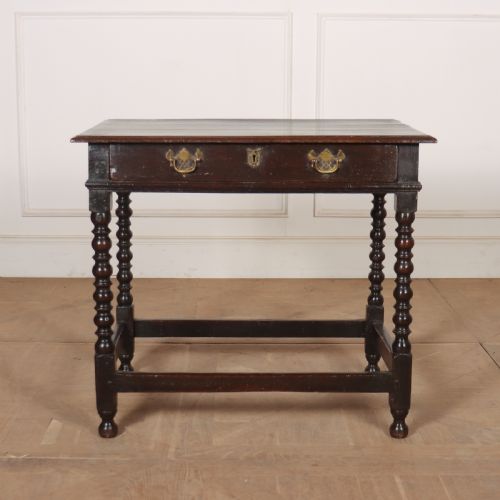

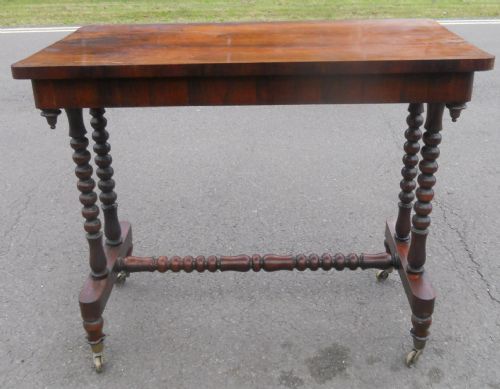


Bobbin Leg Writing Table
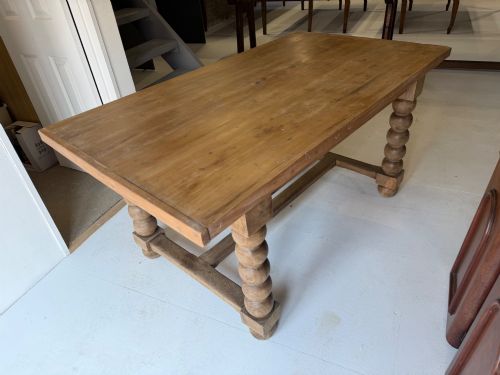
A bobbin leg writing table is a sturdy working desk defined by turned spool supports, offering practical surface space alongside tactile seventeenth and nineteenth century character.
Bobbin Leg Writing Table
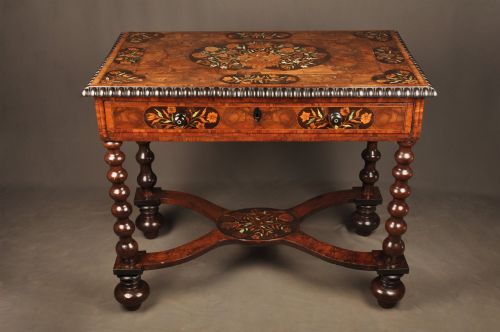
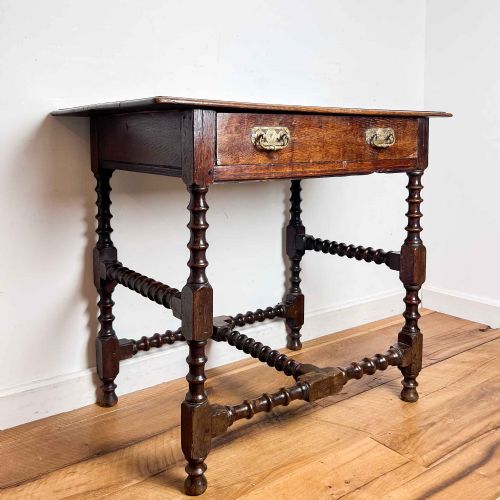
A bobbin leg writing table combines practical workspace with distinctive turned supports, appearing most frequently in sturdy oak across seventeenth, eighteenth, and nineteenth century examples. These pieces serve as functional desks and side tables, utilising timbers such as mahogany, elm, and walnut alongside fruitwood marquetry.
The inventory reflects significant stylistic variety, ranging from rustic farmhouse and English provincial designs to Dutch Baroque and French Provincial interpretations. Buyers encounter tables functioning variously as side tables, centre tables, and dedicated writing desks.
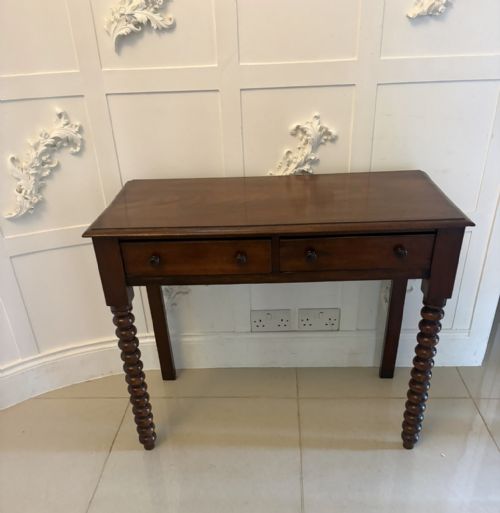
Earlier pieces from the seventeen hundreds rely heavily on solid oak construction, while later Victorian and Regency examples incorporate rosewood, ebonised wood, and brass hardware. This mix of periods ensures that forms adapt readily to contemporary interior settings while retaining their historical integrity.
Materials and construction methods
Makers constructed these tables predominantly using solid hardwoods such as oak, mahogany, and walnut, frequently combining elm or beech for structural components. The distinct bobbin or barley twist legs were shaped on a lathe, requiring steady hand-turning to achieve the repetitive spherical and cylindrical spool motifs.
Surface decoration on select pieces includes intricate fruitwood marquetry and fine brass details, particularly on seventeenth century and Regency examples. Joinery relied on traditional pegged or mortise and tenon methods, ensuring durability across centuries of daily use.
Early turners likely utilised simple foot-powered lathes to carve repetitive wooden bobbins, trusting hand rhythm entirely over measurement.
Factors that define quality
Quality rests in the crispness of the lathe work on the turned legs and the selection of figured timber for the top surface. Tables featuring dense, well-matched oak or rich rosewood demonstrate superior initial craftsmanship compared to plainer utility pieces.
The retention of original hardware, sound structural joinery, and minimal timber replacement elevate an example above heavily restored alternatives. Proportion and the harmony between the turned underframe and the upper board dictate the visual success of the piece.
The Bobbin Leg Writing Table Glossary
- Bobbin turning
- A form of woodturning that creates a series of rounded, spool-like shapes along the length of a leg or stretcher. This decorative technique appears widely on seventeenth century and revival furniture.
- Marquetry
- The art of applying small pieces of veneer to a structure to form decorative patterns or pictures. Craftsmen utilise various fruitwoods to achieve tonal contrast.
- Barley twist
- A spiral turning resembling a twisted rope, carved into furniture legs and uprights. It shares similarities with bobbin work in its reliance on lathe-based precision.
- Side table
- A small functional table designed to stand against a wall. These pieces frequently feature single drawers and versatile top surfaces.
- Centre table
- A freestanding table finished on all sides for placement in the middle of a room. Regency and seventeenth century examples often take this configuration.
Bobbin Leg Writing Table: Frequently Asked Questions
How are these tables used today?
These tables function effectively as compact desks, hallway side tables, or occasional display surfaces in living spaces.
Their practical drawers and sturdy proportions accommodate modern writing implements and laptops while adding historic character to a room.
How do I distinguish seventeenth century from Victorian examples?
Seventeenth century pieces typically utilise heavy, pegged oak construction with hand-split boards and deep patination.
Victorian interpretations often show machine-sawn timbers, standard iron fixings, and occasionally denser woods like rosewood or ebonised finishes.
Are bobbin legs structurally fragile?
Despite their delicate appearance, the repeated spheres of bobbin turnings distribute weight effectively through the vertical grain of the hardwood.
Sound joinery in the box stretchers beneath ensures the legs remain stable during daily writing and placement tasks.
What maintenance do these timber tables require?
Routine care involves occasional dusting with a dry cloth and the sparing application of traditional beeswax to nourish the aged wood.
Keeping tables away from direct heat sources prevents the solid oak or mahogany top panels from splitting over time.