


Victorian Gypsy Table
A Victorian gypsy table brings light, portable character to a corner, combining tripod bases with draped fabric tops.
Forms and periods
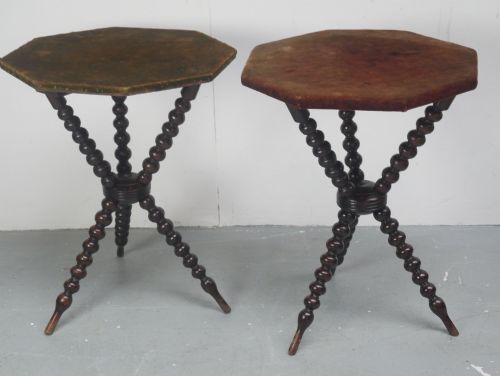
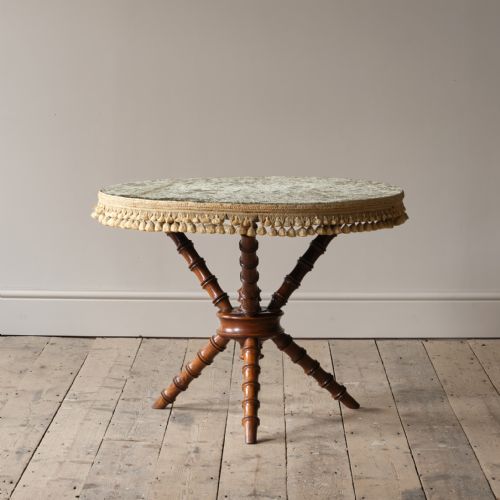
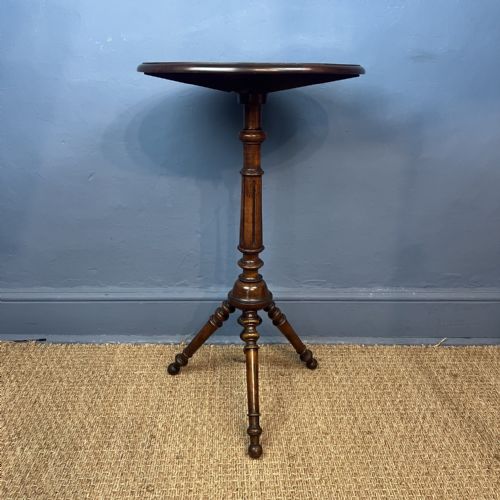
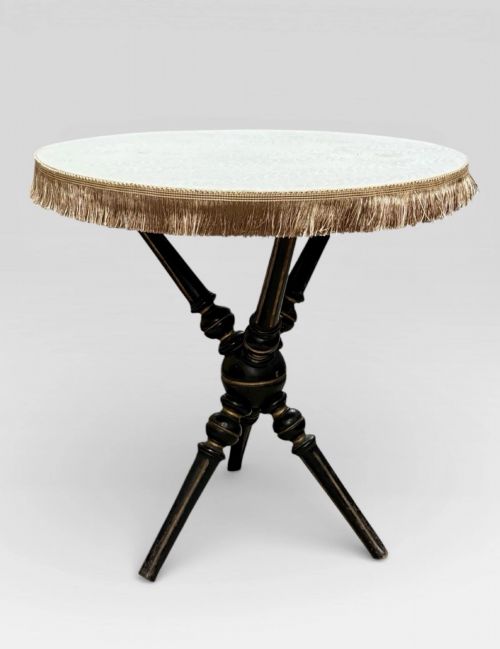
The Victorian gypsy table is a light occasional or side piece, typically built with a tripod base supporting a circular, octagonal, or cloverleaf top. You will frequently find them set in the Aesthetic Movement style, emerging across the nineteenth century from the eighteen sixties to the eighteen nineties.
Makers and workshops across Britain produced these tables in varied timbers including mahogany, walnut, oak, thuyawood, and ebonised beech, often pairing them with turned supports like bobbin or barley twist legs.
Judgments of quality
Quality rests in the choice of timber and the precision of the turned woodwork, where crisp bobbin or barley twist legs distinguish finer items from simpler frames. The integrity of the original wood finish, whether burr walnut, mahogany, or ebonised surfaces, dictates the visual strength of the piece.
The secondary materials elevate certain examples, particularly where dense passementerie fringe, hand-painted decoration, or specialised glass and leather tops survive intact. Maker attribution, such as works stamped by Taylor of Edinburgh, also sets particular pieces apart.
Retail Price Guide 2026
Typical UK retail prices for victorian gypsy table, calculated from the Sellingantiques database of over a million retail prices indexed since 2003. This retail price guide relies exclusively on Sellingantiques data; no external sources or auction records are used, so the figures do not describe the wider market.
Listings feature woods such as mahogany, walnut, oak, thuyawood, and ebonised beech alongside velvet and leather tops.
John Taylor Edinburgh·Taylor of Edinburgh
The Victorian Gypsy Table Glossary
- Gypsy table
- A light nineteenth century tripod occasional table traditionally featuring a draped fabric top or an upholstered surface with fringe trim.
- Tripod base
- A three-legged support structure common on small occasional tables, allowing the piece to stand stable on uneven floors.
- Passementerie
- Elaborate trimmings such as fringes, edgings, and tassels used historically to decorate the borders of soft furnishings and table tops.
- Ebonised wood
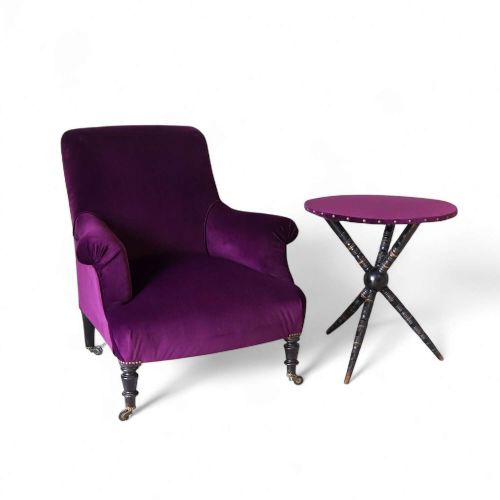
- Timber treated with a dark stain or finish to imitate expensive ebony, widely utilised during the Victorian era.
- Bobbin turned
- Wood turned on a lathe to create a series of rounded spherical shapes resembling a string of beads or bobbins.
Frequently Asked Questions
What is a gypsy table?
A gypsy table is a lightweight Victorian occasional table supported by three splayed legs, traditionally designed with an upholstered or draped top.
These pieces served as flexible side tables for drawing rooms, boudoirs, and parlours during the nineteenth century.
How were gypsy tables used?
Victorians utilised these small tables as portable surfaces for tea, lamps, games, or decorative ornaments.
Their lightweight tripod design allowed them to be easily moved around rooms as household needs changed.
How do I identify an Aesthetic Movement gypsy table?
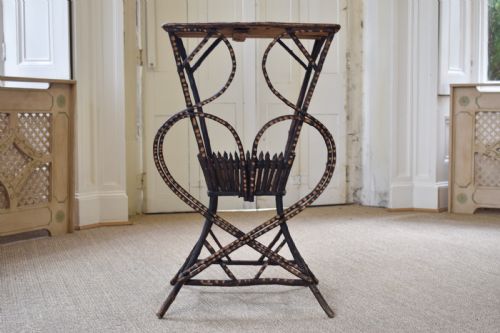
Aesthetic Movement examples often feature ebonised wood, parcel gilding, or simulated bamboo framing paired with rich velvet or fabric tops.
They reflect late nineteenth century tastes for artistic, unconventional design influenced by Japanese and Gothic aesthetics.
What woods were used for Victorian gypsy tables?
Cabinetmakers built these tables from a range of hardwoods including mahogany, walnut, oak, thuyawood, and beech.
Many beech and fruitwood frames were ebonised to simulate more costly materials.