



X Frame Side Table
An x frame side table brings architectural cross-bracing and compact utility to a room, offering sturdy support in a minimal footprint.
X Frame Side Table
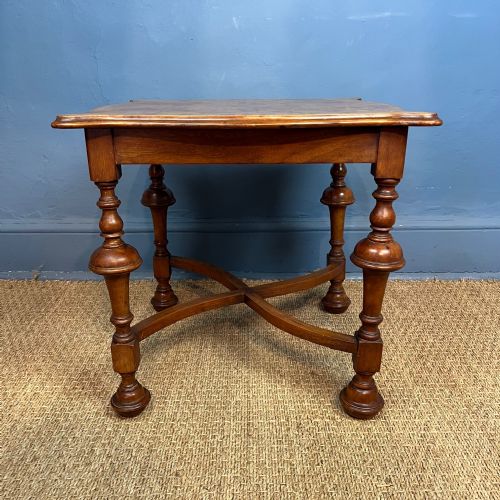
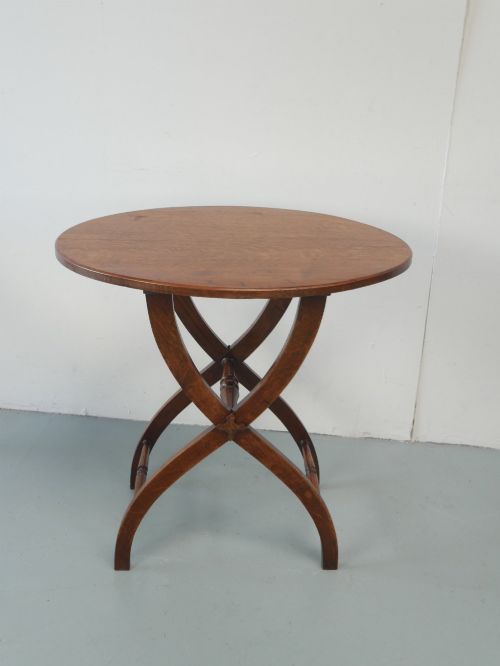
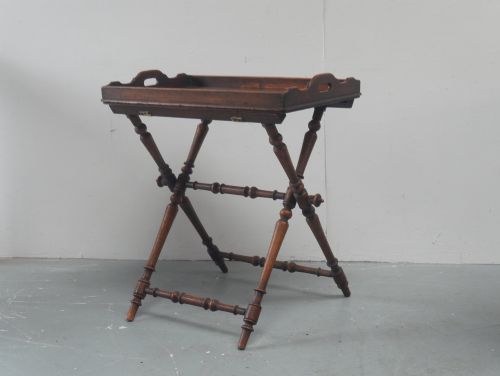
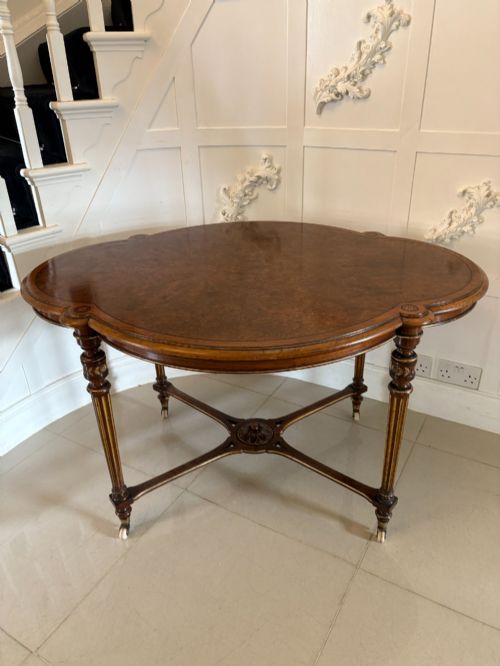
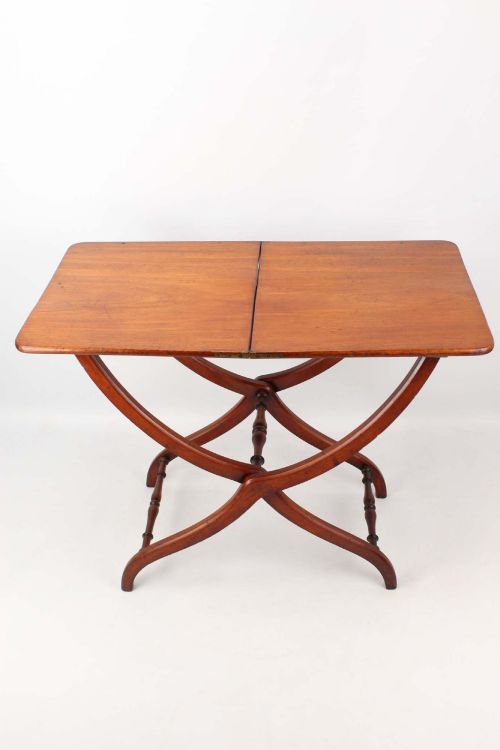
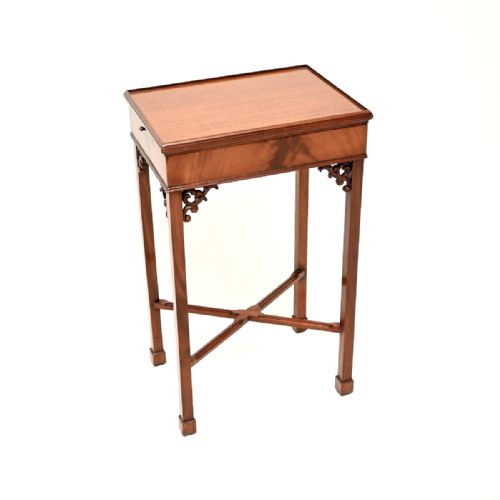
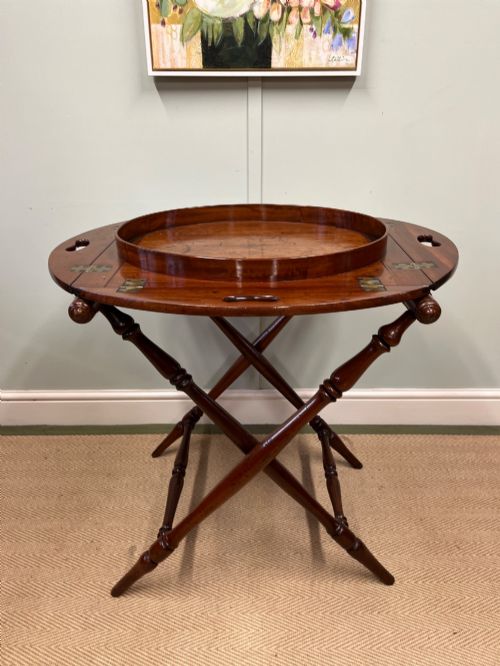
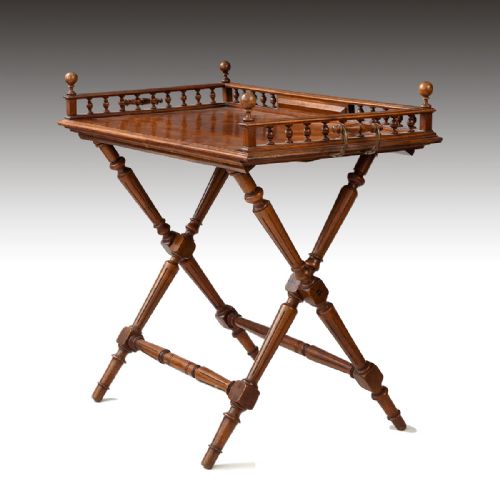
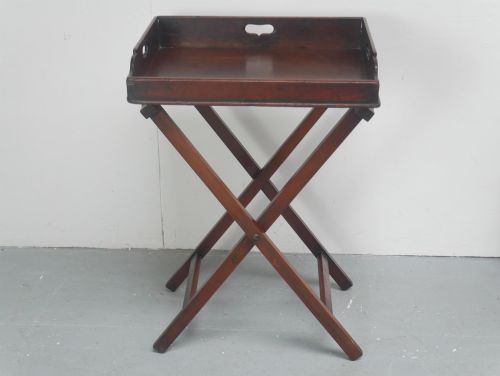
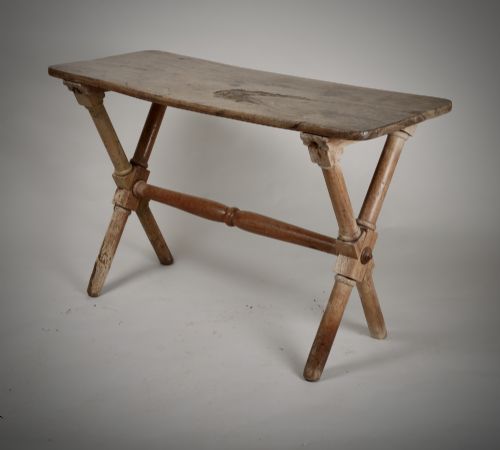
The x frame side table encompasses forms designed with intersecting stretcher supports, appearing across periods from the Georgian era through the Victorian and Edwardian decades. These pieces function variously as tray tables, folding coaching tables, and tavern tables, utilising the crossed base for stability.
The versions most commonly met combine timber frames with occasional folding mechanisms or fixed cross legs. Surviving examples demonstrate origins in mahogany, oak, walnut, and pine, reflecting both formal domestic use and robust utility.
Materials and construction
Cabinet makers utilised dense hardwoods such as mahogany, walnut, and oak to construct the intersecting legs and table tops, ensuring the crossed framework could bear weight without twisting. Brass hinges, mounts, and satinwood or bone inlay occasionally augmented the primary timbers.
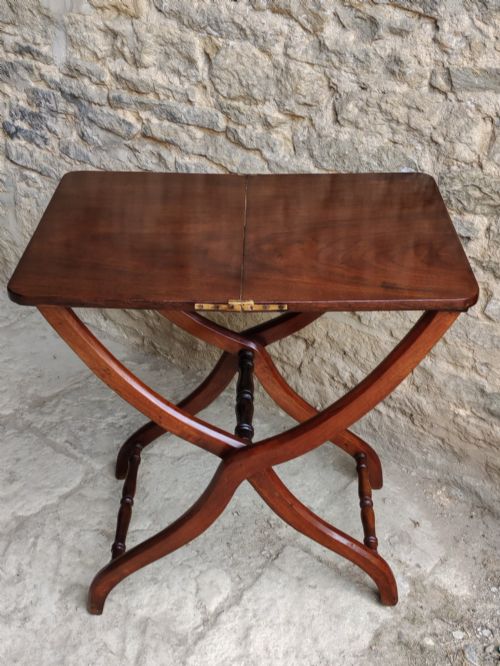
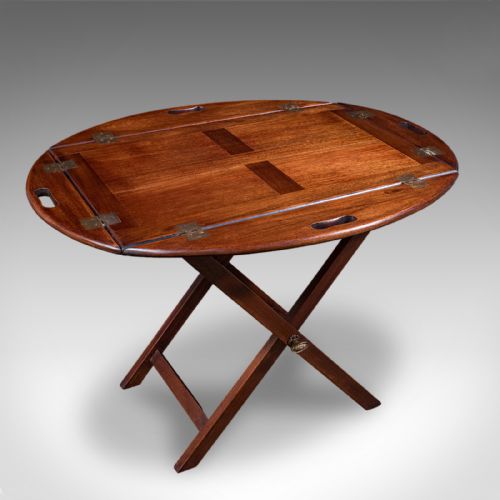
Surface finishes range from polished mahogany and dark walnut to original red paint on pine frames. Folding variants relied on hinged x frames that allowed the stand to collapse beneath a removable tray or top.
X Frame Side Table Retail Price Guide 2026
Typical asking prices for x frame side table among the pieces listed under this phrase on Sellingantiques today, from the lower quarter to the upper quarter. They describe what is for sale here now, not the wider market.
A Welsh pine tavern table survives with its original red paint intact, having weathered centuries of ale and argument.
Assessing quality and execution
Quality rests in the precision of the joinery where the diagonal members cross and lock into the rails. Tighter tolerances in the pivot joints and superior timber selection distinguish finer examples from standard utility pieces.
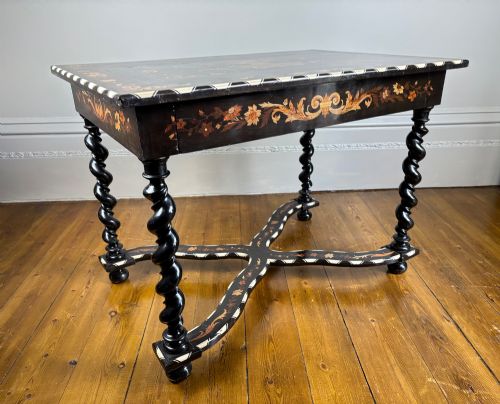
The presence of secondary materials like marble tops, brass fittings, or marquetry elevates the status of a piece beyond plain timber or painted pine variants. Original surface treatments and untouched patination further separate standard items from superior specimens.
John Taylor Edinburgh·Mallett
The X Frame Side Table Glossary
- X frame
- A furniture base constructed from two diagonal members crossing in the centre to form an X shape. This configuration provides lateral stability while maintaining an open profile.
- Butlers tray
- A rectangular wooden tray with hinged or cutout sides, designed to lift off its folding stand. These items were traditionally used for serving refreshments.
- Coaching table
- A portable folding table with an x frame base designed to pack flat for travel or storage. They appear frequently in nineteenth-century domestic settings.
- Marquetry
- Decorative veneer patterns inlaid into the wood surface of a table top using contrasting timbers or bone. This technique requires meticulous hand-cutting.
- Tavern table
- A robust utilitarian table built from native timbers like oak or pine, intended for heavy commercial or domestic use.
X Frame Side Table: Frequently Asked Questions
What is an x frame side table?
An x frame side table is a small support surface defined by its intersecting diagonal leg construction. This design provides structural rigidity while keeping the floor footprint small.
These pieces range from formal mahogany centre tables to folding tray tables and rustic tavern tables. They appear across Georgian, Victorian, and Edwardian periods.
Are these tables sturdy?
The crossed stretcher design inherently distributes weight effectively across the base. Fixed joints provide permanent rigidity, whilst folding versions rely on secure locking pins.
Heavier hardwoods like mahogany and oak offer greater mass and stability than lighter pine or ash equivalents.
How do I date an x frame table?
Dating relies on timber choice, construction methods, and stylistic cues from the period. Georgian and Regency pieces display refined mahogany turning, while Victorian and Edwardian examples often feature simpler folding mechanisms.
Hardware types, such as early brass hinges, also offer chronological markers.