

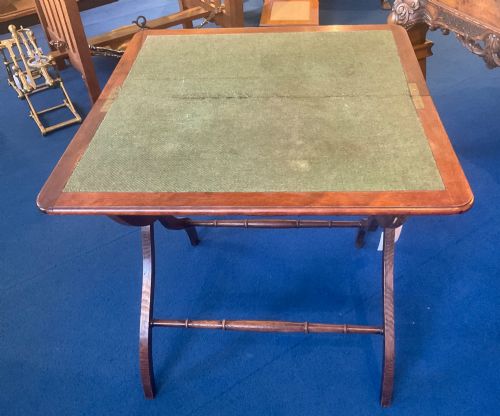
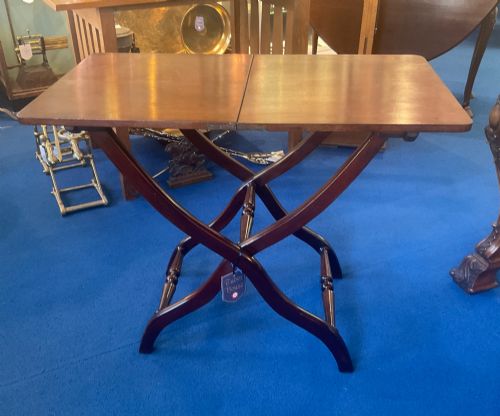


Antique Coaching Table
An antique coaching table offers ingenious portable furniture that folds flat for travel, prized today as a versatile occasional table with a rich history.
Antique Coaching Table
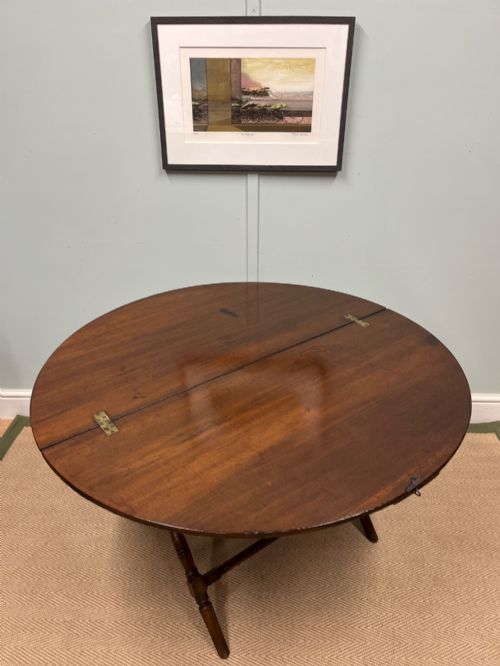
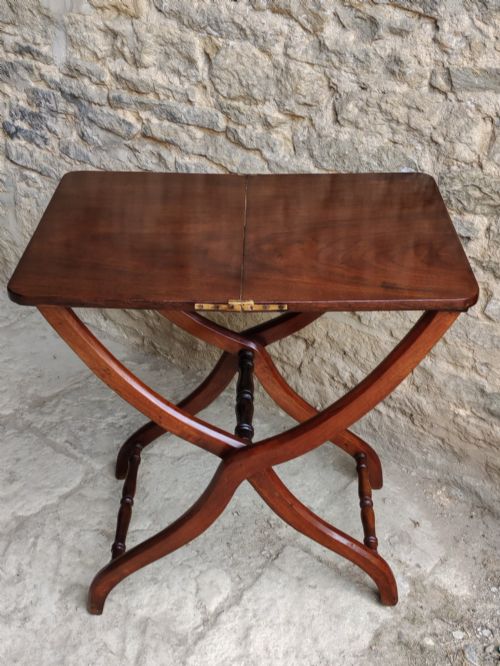
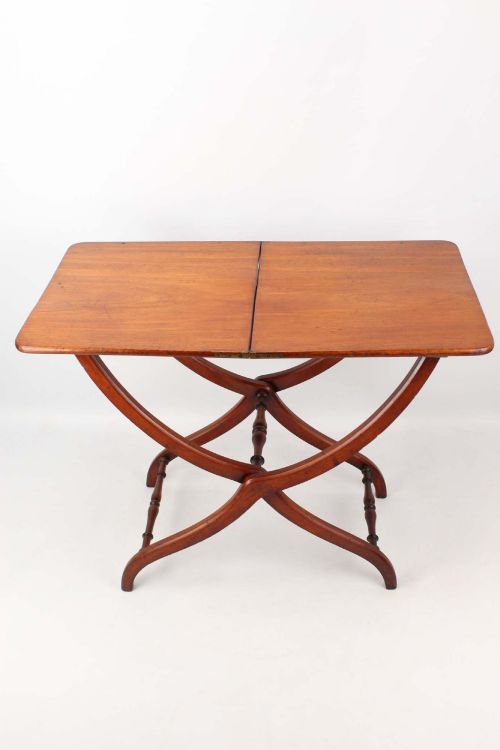
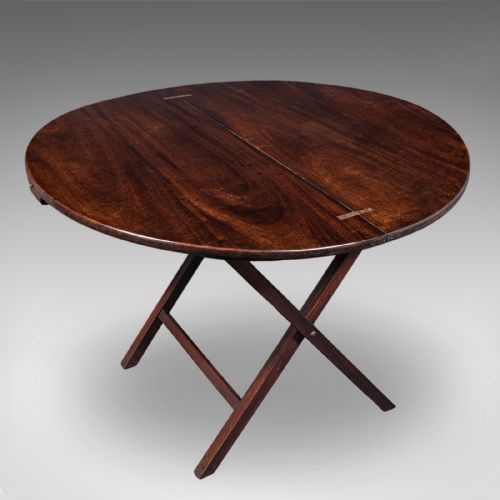
When you search for an antique coaching table, you find folding occasional tables designed originally for travel and easy storage. The examples on this page span the Victorian and Edwardian eras, alongside earlier Georgian and Regency pieces, with mahogany as the predominant timber.
You meet various formats here, from standard folding mahogany boards to kitchen garden tables, occasional tables, and occasional variants fitted with baize or set on bobbin legs. Some retain their original folding X-frame or scissor actions, making them practical for modern rooms where flexible space matters.
Origins range from standard English workshops to Welsh examples and portable travel desks, showing how functional campaign furniture adapted into domestic settings. These tables combine utilitarian folding mechanisms with fine timber surfaces suited to everyday display and use.
How they were made
Cabinet makers constructed these folding tables using dense timbers like mahogany, oak, walnut, and rosewood, often pairing them with brass hinges, brackets, and fittings that enabled the frame to collapse smoothly. Some surfaces feature inlaid details, while others incorporate baize linings intended for card games or writing.
The structural integrity relies on clever folding legs, scissor actions, and occasionally bobbin-turned supports that lock securely when upright. Joinery had to withstand frequent transit, resulting in sturdy cross-framing and durable hinges designed for repeated packing and deployment.
Antique Coaching Table Retail Price Guide 2026
Typical asking prices for coaching table among the pieces listed under this phrase on Sellingantiques today, from the lower quarter to the upper quarter. They describe what is for sale here now, not the wider market.
Recorded forms include kitchen garden tables, occasional tables, games surfaces, and portable travel desks.
What varies in quality
The distinction between standard utility items and superior examples lies in the choice of timber and the refinement of the folding mechanism. Finer pieces employ well-figured mahogany, walnut, or rosewood with precise brass hardware and tight joints that operate without looseness.
Secondary woods, simpler oak construction, or heavy wear mark more utilitarian pieces meant for garden or kitchen use. Signed items bearing maker details or higher decorative ambition, such as inlaid surfaces or specialised folding desks, occupy the upper tier of the range.

Asprey London
The Antique Coaching Table Glossary
- Coaching table
- A portable folding table originally designed for travellers and carriage use. It collapses flat for easy storage and transport.
- X-frame
- A crossing support structure forming an X shape that allows a table frame to fold inward. This provides stability when open and compactness when closed.
- Baize
- A coarse woolen material resembling felt, frequently used to line the tops of games and writing tables. It protects surfaces during use.
- Bobbin leg
- A turned furniture leg shaped with a series of rounded, spool-like swellings resembling bobbins of thread. This decorative turning appears on specific period frames.
- Occasional table
- A small, lightweight table intended for specific, temporary uses rather than permanent placement. These pieces move easily around a room.
Antique Coaching Table: Frequently Asked Questions
What is an antique coaching table?
A coaching table is a portable, folding piece of furniture originally built for travel in carriages or temporary camps. These tables feature hinged tops and collapsible frames designed to pack flat.
Today, they serve as versatile occasional tables that suit small spaces because they fold away when not needed while retaining period character.
How do you fold a coaching table?
Most coaching tables rely on an X-frame or scissor mechanism that allows the supporting legs to fold inward against the underside of the top. You lift or release the locking catches, and the frame collapses flat.
Original brass hinges and pivots guide the movement, so the mechanism should operate smoothly without forcing the timber components.
What woods were used for coaching tables?
Makers predominantly used durable hardwoods like mahogany, oak, and walnut to withstand travel and frequent handling. Some refined Victorian examples feature rosewood or decorative inlay work.
Utilitarian or garden variants often utilised simpler oak or mixed timbers suited to robust, practical tasks rather than formal display.
Where were coaching tables used?
They originated as travel equipment for officers, gentry, and coach passengers who needed functional furniture on the move. The folding design allowed easy storage in carriages or luggage compartments.
In later decades, people brought them indoors as garden tables, occasional tables, or games surfaces, adapting the portable design for permanent home use.
How do you date an antique coaching table?
Dating depends on examining the timber, the style of the turning, and the construction of the folding hardware. Georgian and Regency pieces show different proportions and joinery compared to later Victorian and Edwardian examples. Cues like bobbin legs, brass bracket types, and secondary woods help place the table within the nineteenth or early twentieth century.