
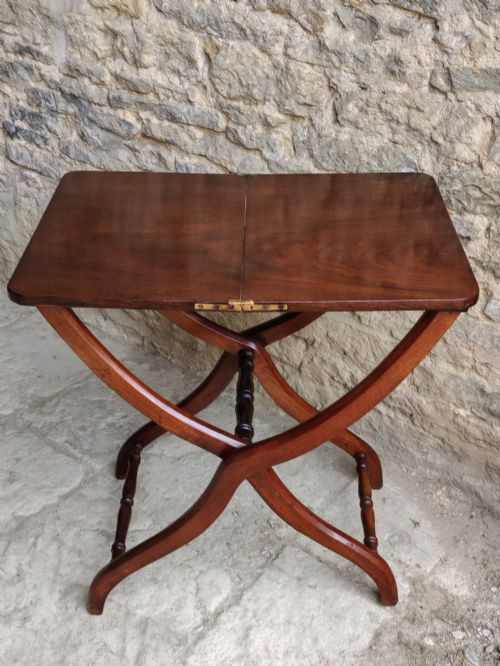
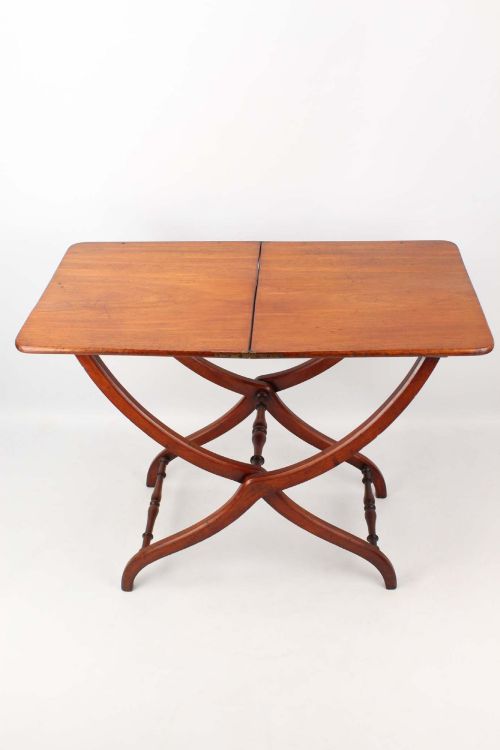
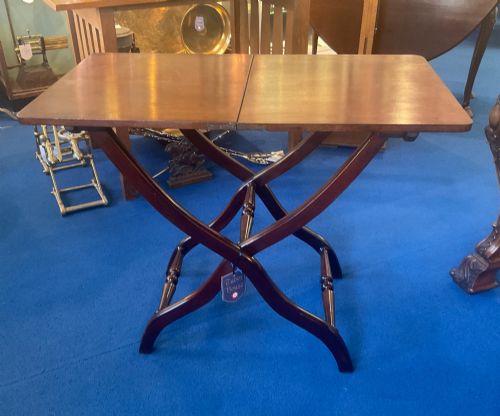


Victorian Coaching Table
These Victorian coaching table pieces are portable folding furniture built for travel, offering sturdy surfaces that fold flat when not in use.
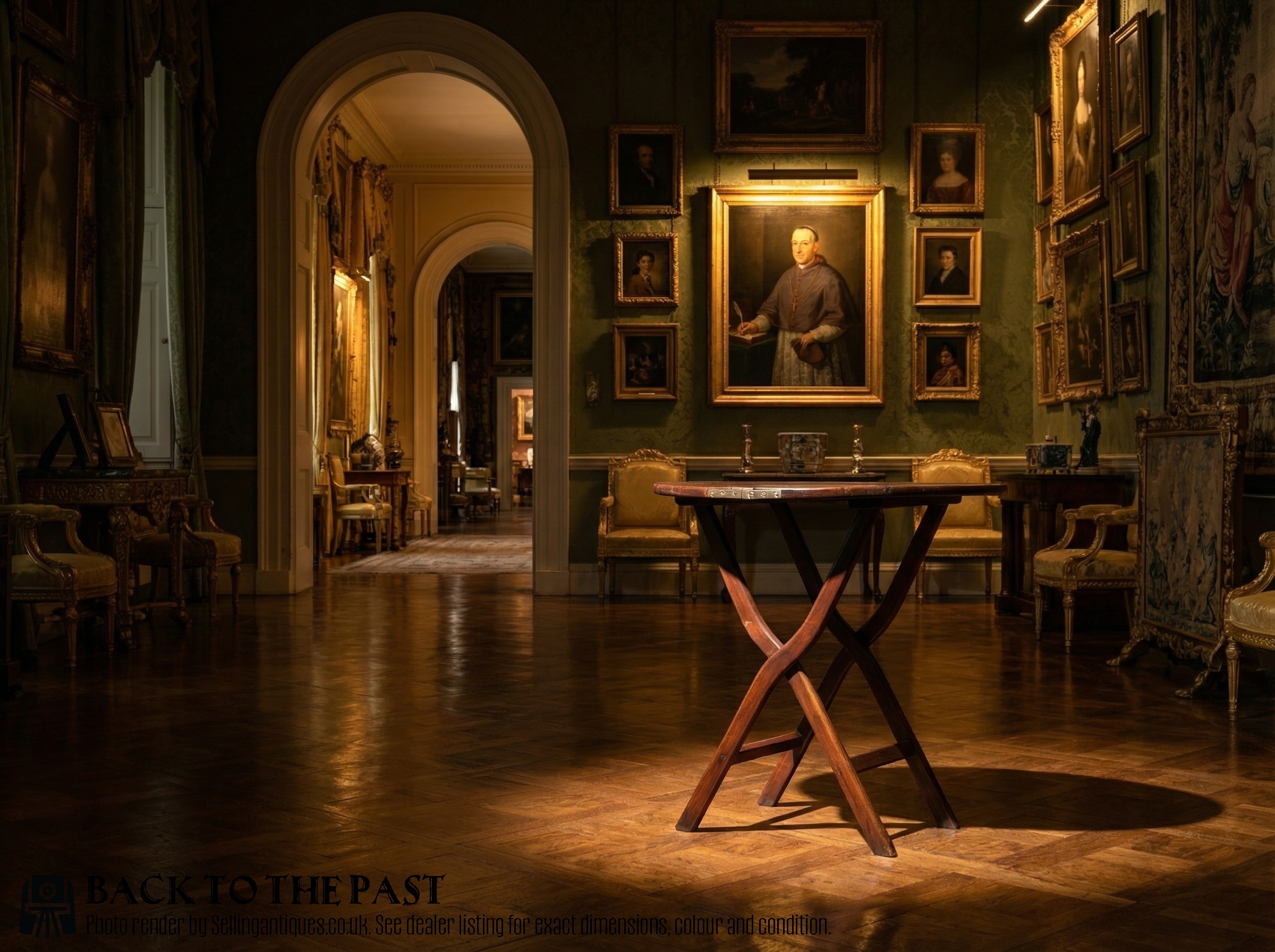
Victorian Coaching Table
A Victorian coaching table is a folding portable stand designed originally for travel and luggage support, folding completely flat for easy storage. Buyers seeking a Victorian coaching table will find sturdy folding frames that double as occasional, side, or garden tables in domestic settings today.
Most examples found here date from the nineteenth century, spanning Victorian, Regency, and Georgian periods, with various folding mechanisms and occasional formats. These versatile pieces frequently appear in mahogany, oak, and rosewood, often featuring characteristic X-frame folding bases.
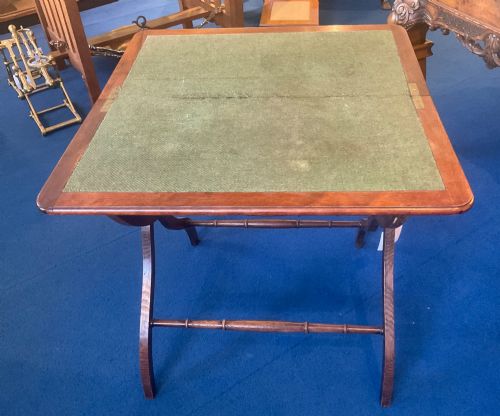
The selections range from simple utilitarian travel pieces to more refined domestic occasional tables with brass mounts or baize surfaces. The primary form remains the folding stand, suited equally to modern living spaces and traditional interiors.
How they were made
These tables rely primarily on timbers like mahogany, oak, rosewood, walnut, and ash, chosen for their durability during frequent transport and folding. Cabinet makers utilised cross-framing and hinged joints to ensure the tables could collapse flat without sacrificing structural integrity when open.
Metal components such as brass brackets, hinges, and bindings reinforce the stress points on campaign and travel furniture. Additional surface details sometimes include inset leather or baize panels, alongside occasional inlaid work on more decorative examples.
Recorded periods span from the Georgian era through Victorian times into the early twentieth century.
What varies in quality
The distinction between standard utility items and finer examples lies in the choice of timber and the precision of the folding mechanism. Superior pieces utilise dense hardwoods like mahogany and rosewood with tight, smooth hinge actions that operate without sticking.
Proportion and finish separate basic camp furniture from refined domestic adaptations, with better-finished edges and cleaner turnings. The crispness of the carpentry and the integration of brass fittings indicate the original maker's intent and budget.
The Victorian Coaching Table Glossary
- Coaching table
- A portable folding table originally designed to be packed into a coach or luggage for travel, featuring a collapsible X-frame base and a removable top.
- Campaign table
- Portable furniture designed for military officers or travellers during the nineteenth century, characterised by folding elements and robust construction.
- X-frame
- A structural support system formed by two intersecting members shaped like the letter X, allowing the table to fold flat.
- Baize
- A coarse woolen material resembling felt, frequently used as a durable writing or games surface on nineteenth-century tables.
Victorian Coaching Table: Frequently Asked Questions
What is a coaching table used for?
These folding tables serve as flexible side tables or occasional surfaces in modern rooms, easily stored away when floor space is needed.
Their historical purpose involved portable travel furniture that could collapse into a flat format for packing inside a carriage.
How do you fold a coaching table?
Most examples rely on a hinged X-frame base where the top lifts off or the legs pivot inward on central pins.
Careful handling of the original wooden hinges and brass pivots ensures the folding action operates smoothly without straining the joints.
Are all coaching tables mahogany?
While mahogany is the most common timber seen across nineteenth-century examples, makers also utilised oak, rosewood, walnut, and ash.
Alternative woods often reflect the domestic adaptation of campaign furniture for static home use rather than active travel.
How do I date a Victorian coaching table?
Dating relies on timber choice, construction methods, and the presence of period brass hardware or specific turnings on the legs.
Most pieces cluster around the Victorian era and the nineteenth century, though occasional Georgian and later 1930s variants appear.