
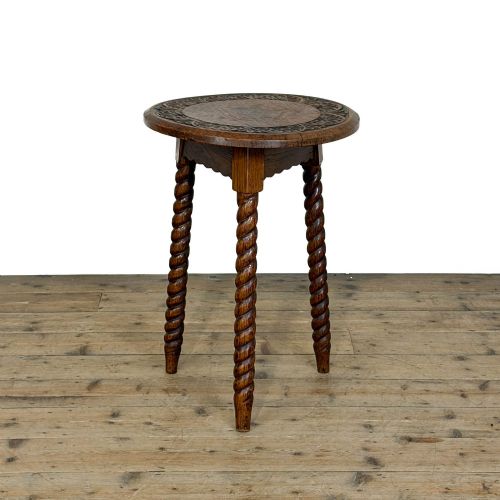
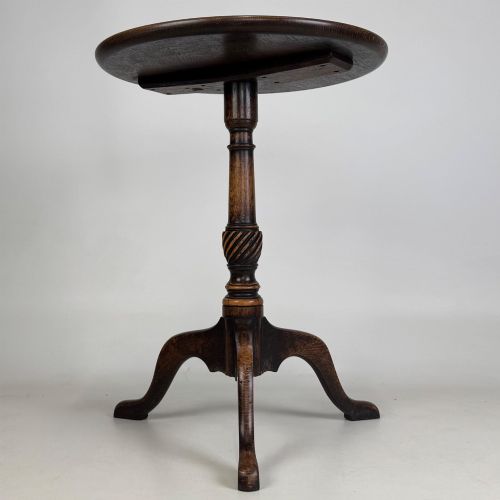
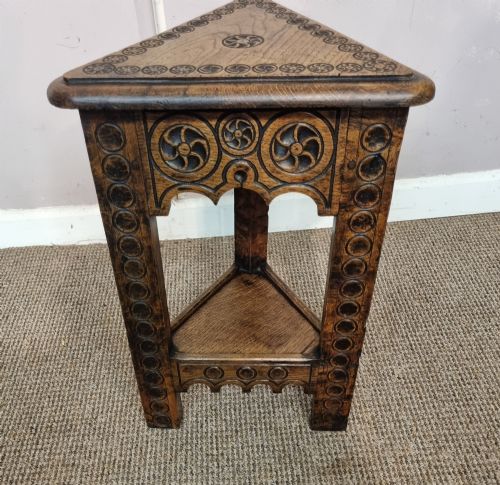
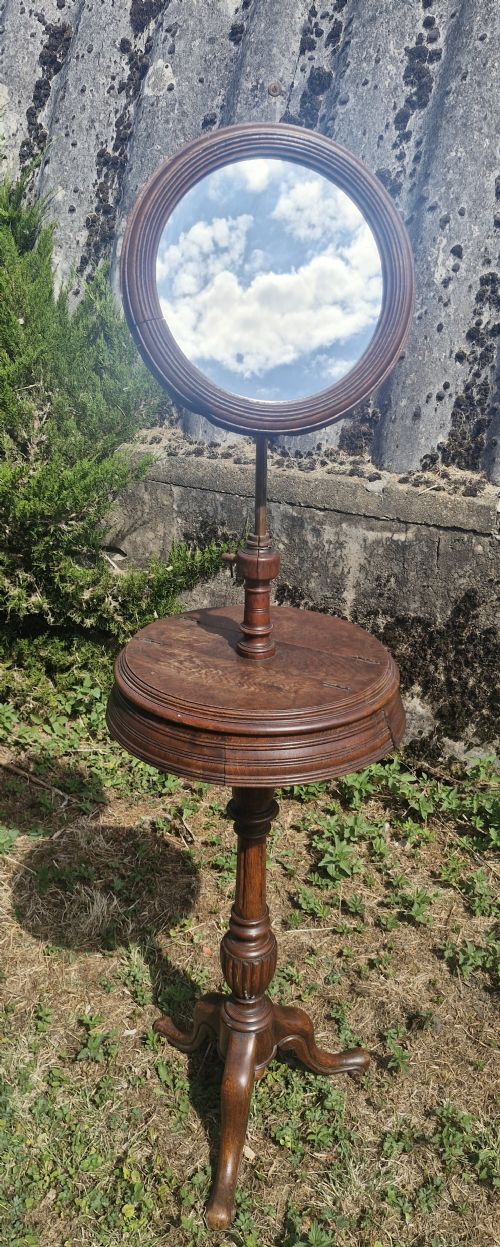
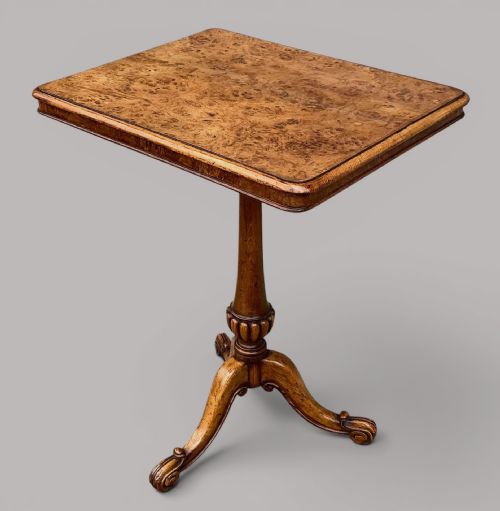
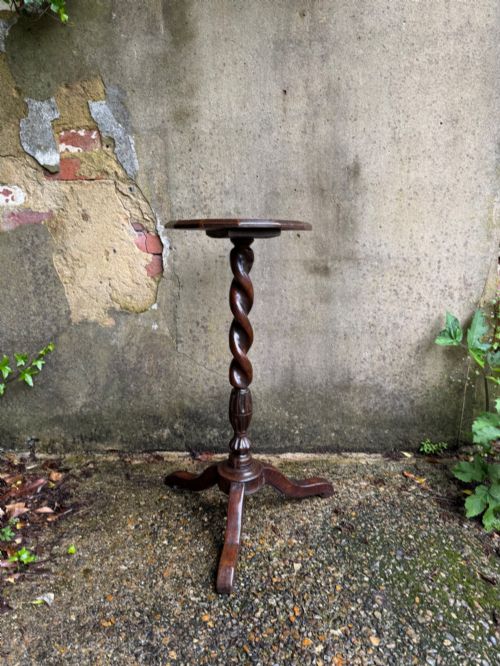
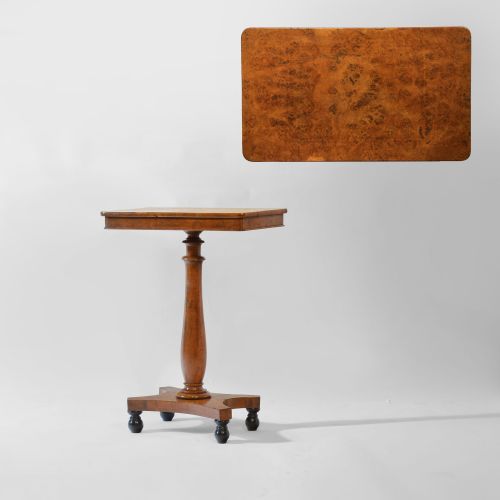
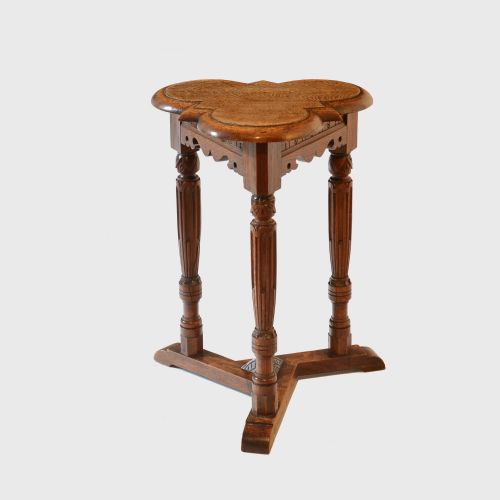


Carved Oak Tripod Table
These carved oak tripod table pieces offer sturdy timber construction and turned supports suited to period and traditional interiors.
Understanding carved oak tripod table examples
A carved oak tripod table brings together sturdy timber construction and a three-legged base configuration designed for stability on uneven floors. These items function primarily as occasional tables, side tables, or wine tables within domestic spaces.
The pieces appearing in this category span the nineteenth century, the Regency era, and the Edwardian period, incorporating styles such as Gothic Revival, Jacobean Revival, and Chippendale. Buyers frequently encounter formats featuring circular tops supported by three splayed legs.
Makers utilised distinctive decorative motifs including trefoil shapes, bobbin turning, and low proportions. Surviving examples reflect the practical requirements of period rooms alongside decorative carving traditions.
Construction and materials
Constructed predominantly from solid oak, these tables utilise durable native timber selected for grain pattern and strength. Brass components occasionally appear in hardware or structural reinforcement.
Woodworking techniques include turned elements such as bobbin legs alongside carved surface decoration. Joinery methods secure the central column to the tripod foot configuration.
Retail Price Guide 2026
Typical UK retail prices for carved oak tripod table, calculated from the Sellingantiques database of over a million retail prices indexed since 2003. This retail price guide relies exclusively on Sellingantiques data; no external sources or auction records are used, so the figures do not describe the wider market.
Listings feature oak as the primary material, occasionally paired with brass fittings across nineteenth-century and Edwardian periods.
Distinctions in quality
Quality differentiates itself through the crispness of the carved details and the proportion of the tripod base relative to the top. Superior examples demonstrate careful timber selection and harmonious joinery.
The integrity of the original surface finish and the balance of the three-legged structure indicate the standard of execution. Pieces retaining original proportions command attention from traditional collectors.
The Carved Oak Tripod Table Glossary
- Tripod table
- A small freestanding table supported by a central pillar resting on three legs. This format gained popularity in domestic interiors for serving drinks or holding decorative objects.
- Bobbin turning
- A type of lathe work producing a series of rounded spheres or discs resembling bobbins along the length of a furniture leg. This decorative turning style appears frequently on revival pieces.
- Gothic Revival
- An architectural and decorative style drawing inspiration from medieval forms, featuring elements such as trefoils and pointed arches. Furniture in this style often displays heavy carved ornamentation.
- Tilt top
- A table mechanism allowing the top to pivot to a vertical position when not in use. This design feature saved space in period rooms.
- Occasional table
- A small movable table intended for specific, intermittent use within a room. These versatile items served as side tables or wine tables.
Frequently Asked Questions
What rooms suit a carved oak tripod table?
These tables fit easily beside seating in sitting rooms or studies as convenient surfaces for lamps and drinks. Their compact three-legged footprint allows them to occupy corners and smaller spaces effectively.
In traditional interiors, they complement period seating and heavy timber furniture. Their varied heights and occasional table formats make them adaptable for everyday use.
How do I identify a Regency period piece?
Regency pieces often display specific proportions, low profiles, or figured oak surfaces characteristic of the early nineteenth century. Comparing the turning style and construction details against known examples helps confirm the date.
Examine the timber quality and the method of joining the central pillar to the legs. Subtle variations in execution distinguish Regency work from later nineteenth century reproductions.
What is the difference between a wine table and an occasional table?
Wine tables typically feature smaller circular tops designed originally for holding drinking vessels during social gatherings. Occasional tables provide slightly larger surfaces suited to a broader range of domestic uses.
Both types share the characteristic three-legged tripod base construction. The distinction usually lies in the diameter of the top and the overall height.
How should I care for antique oak furniture?
Maintain the timber by keeping pieces away from direct heat sources and sudden temperature fluctuations that cause wood to dry out. Regular dusting with a soft, dry cloth preserves the finish.
Apply traditional beeswax occasionally to nourish the oak grain without building up heavy chemical layers. Proper environmental control protects both the timber and any decorative carving.