

Victorian Gothic Table
When you search for a victorian gothic table, you seek the heavy timber and pointed arches characteristic of nineteenth-century revival craftsmanship.
Victorian Gothic Table
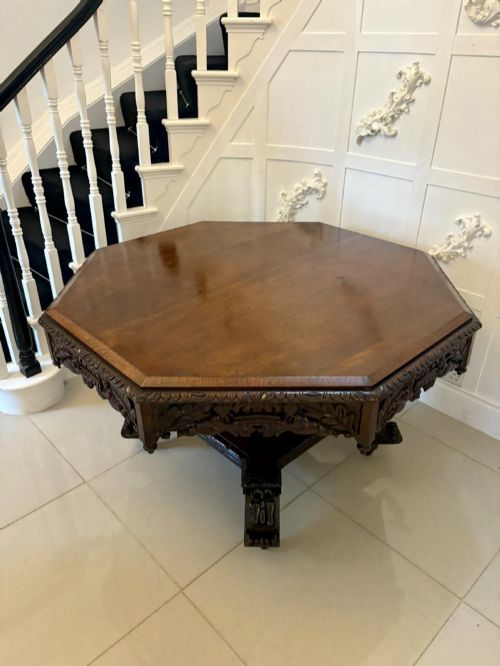
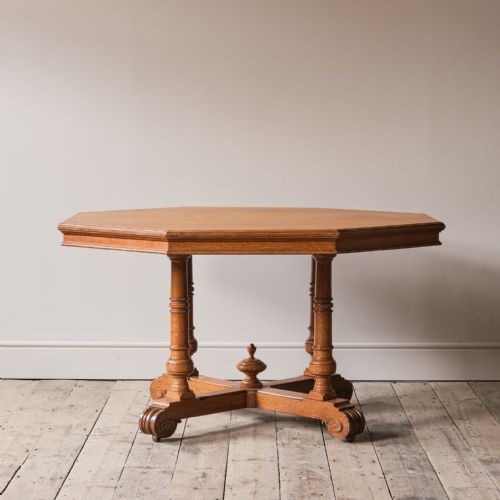
A victorian gothic table typically manifests as a centre table, library table, or side table shaped by nineteenth-century revival ideals.
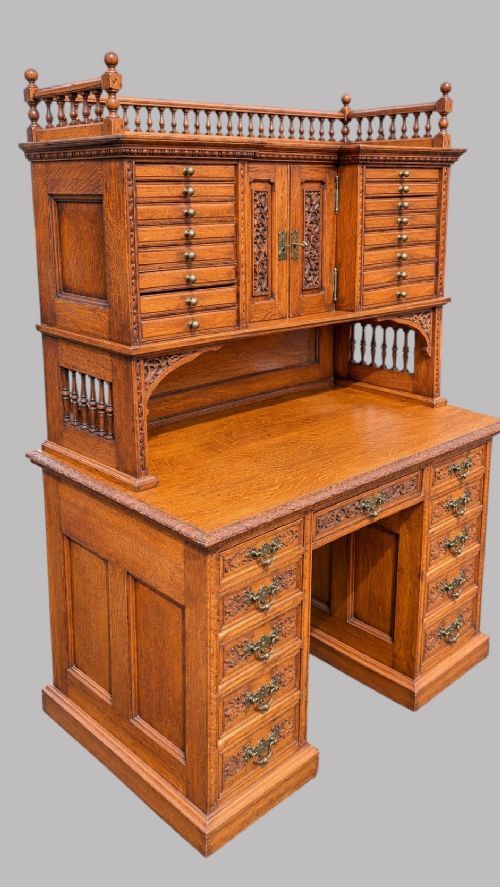
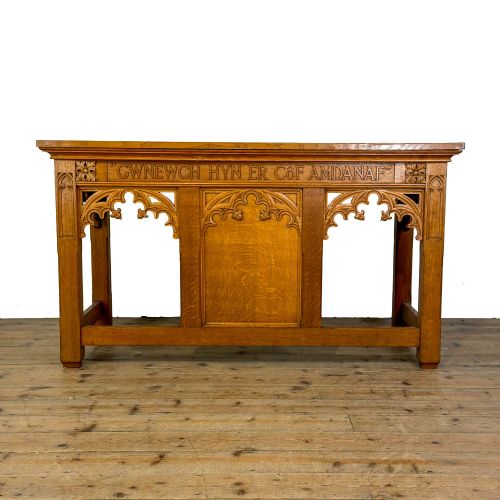
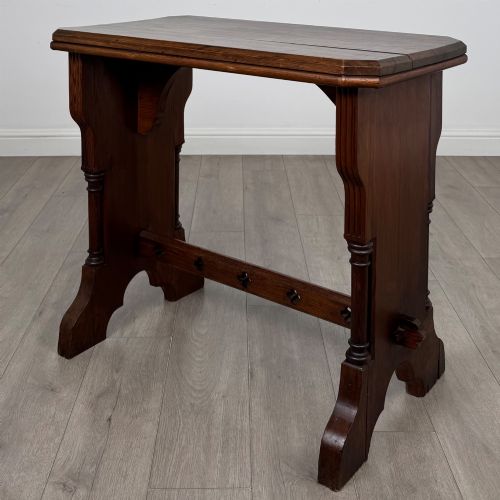
The pieces appearing most frequently on this page are constructed from oak, ranging from compact side tables to large refectory and centre forms.
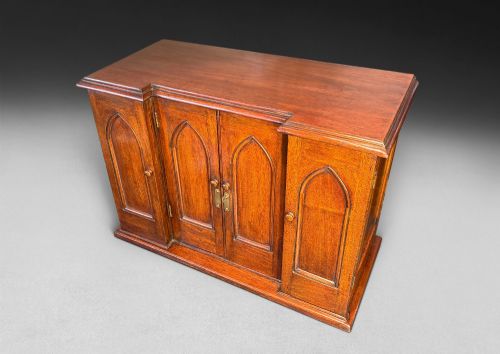
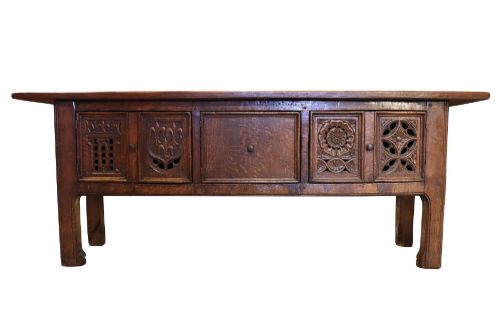
Originating largely from the Victorian era and the broader nineteenth century, these tables incorporate Gothic Revival motifs such as trefoils and linenfold panels.
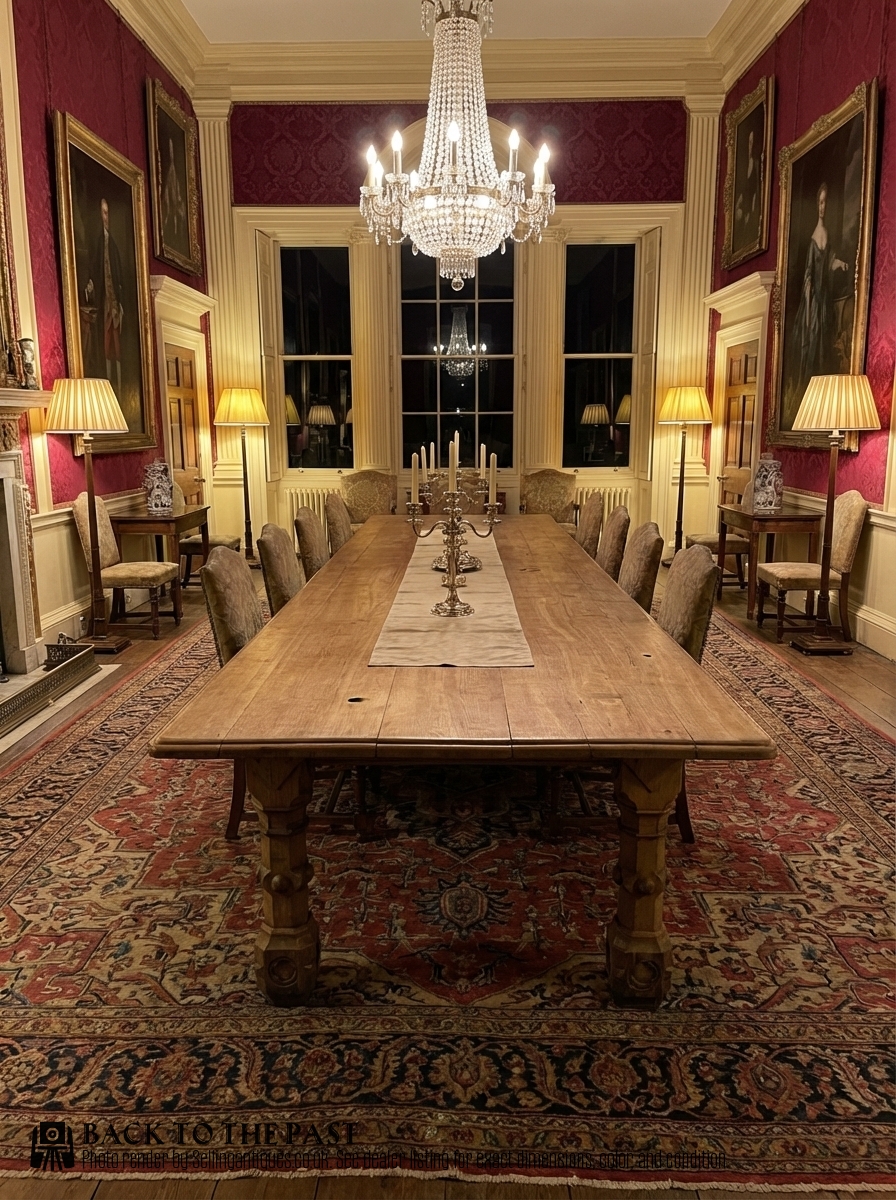
How They Were Made
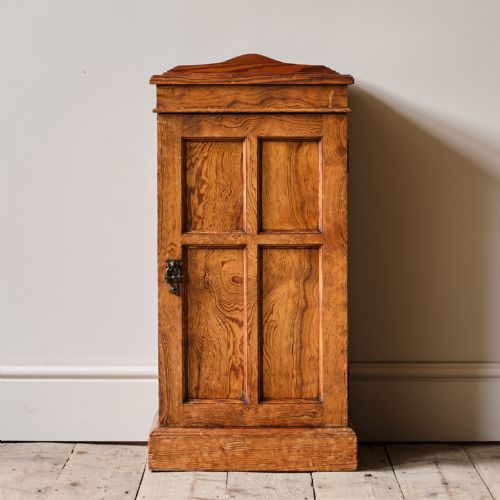
Joiners relied heavily on solid oak, alongside occasional uses of pitch pine, mahogany, and ebonised hardwood, to build stable framework structures.
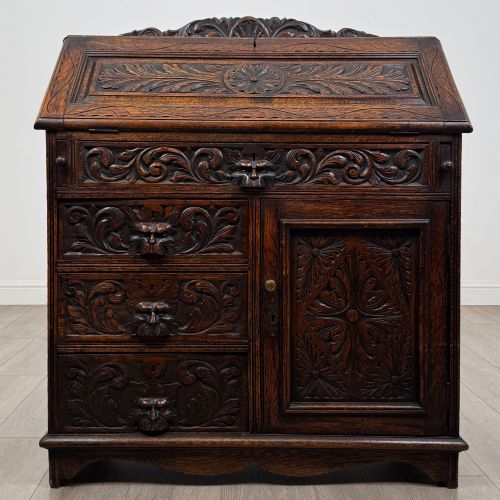
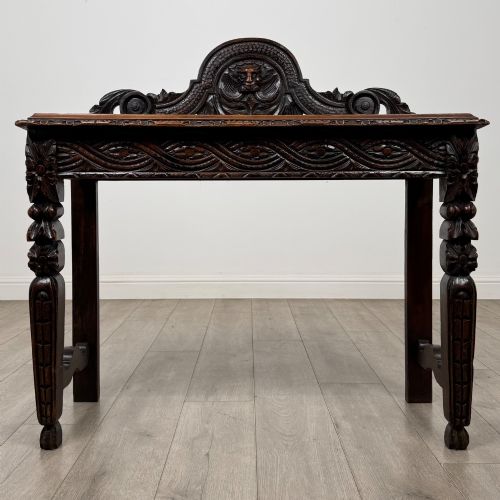
Decoration was achieved through deep chip-carving and profuse hand-tooling, rendering figures like the Green Man or geometric tracery directly into the timber.
Victorian Gothic Table Retail Price Guide 2026
Typical asking prices for victorian gothic table among the pieces listed under this phrase on Sellingantiques today, from the lower quarter to the upper quarter. They describe what is for sale here now, not the wider market.
Keep an eye out for hidden drawers and peering Green Man faces carved right into the frieze.
What Varies in Quality
The distinction between ordinary and superior pieces rests upon the depth and crispness of the woodcarving, where skilled hand execution yields sharp linenfold and figural details.
Structural integrity also separates examples, as heavier tables with sound mortise and tenon joinery endure better than lighter, derivative constructions.
George Wadham·Winterhalder And Hofmeier·Richard Winter·W Williamson And Sons·Richard Bridgen
The Victorian Gothic Table Glossary
- Gothic Revival
- An architectural and decorative style drawing inspiration from medieval forms, pointed arches, and ecclesiastical motifs. This aesthetic dominated much nineteenth-century furniture design.
- Centre Table
- A freestanding table designed to be viewed from all sides, placed in the middle of a room rather than against a wall. These often feature octagonal or circular oak tops.
- Green Man
- A sculptural motif depicting a human face surrounded by or sprouting from foliage. It frequently appears carved into the woodwork of Victorian furniture.
- Refectory Table
- A long, narrow dining table traditionally used in monastic refectories and later revived in heavy oak during the nineteenth century. They rest on substantial stretcher bases.
Victorian Gothic Table: Frequently Asked Questions
Where should a victorian gothic table go?
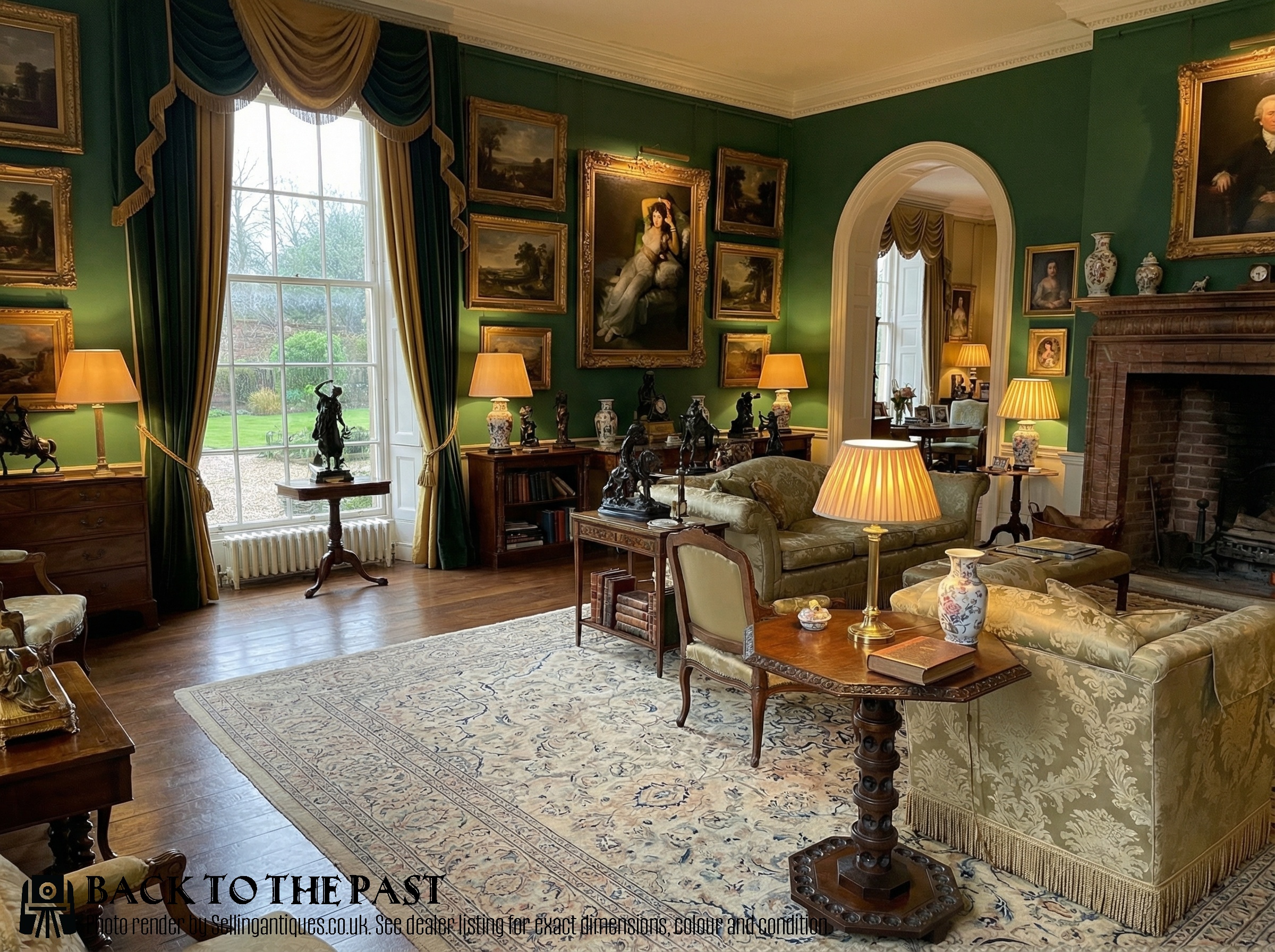
These pieces suit entrance halls, libraries, or central living spaces where their substantial timber presence can anchor the room.
Smaller side and occasional variants fit neatly beside seating areas or against panelled walls.
How do I care for oak surfaces?
Maintain the timber by applying natural beeswax periodically and avoiding direct placement near intense heat sources.
Keep the surface dry to protect the historic grain and any intricate hand-carved details from moisture damage.
What defines the revival style?
The aesthetic borrows heavily from medieval ecclesiastical architecture, featuring pointed arches, trefoils, and deep relief carving.
Makers translated stone building techniques into solid oak and pine furniture forms.
Are these tables suitable for dining?
Larger refectory and centre tables provide ample surface area for daily use or seated dining.
Their robust stretcher bases offer stability, though delicate edge carvings require mindful daily placement.