





Gothic Revival Console
These gothic revival console pieces bring architectural drama and solid timber presence to an interior.
Gothic Revival Console
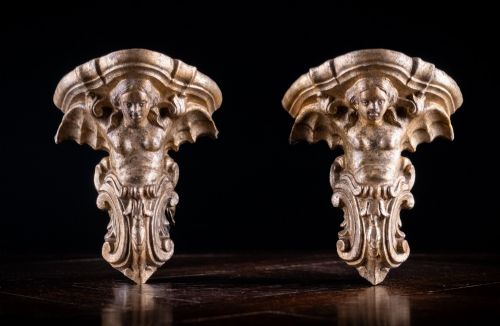
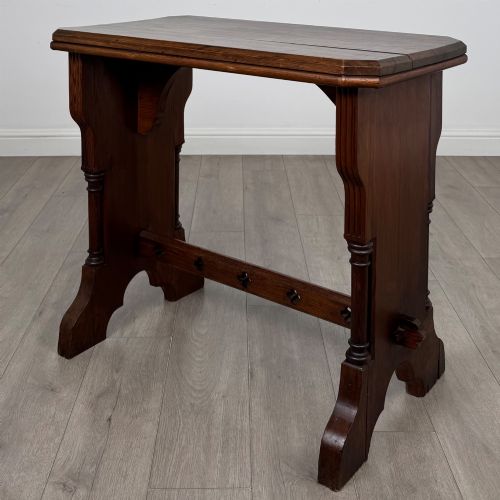
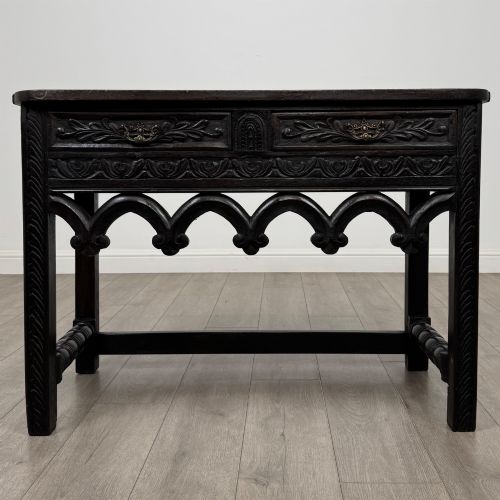
A gothic revival console search reveals tables, side pieces, and wall brackets spanning the nineteenth and early twentieth centuries. These forms borrow heavily from ecclesiastical and medieval architecture, translating stone motifs into domestic furniture.
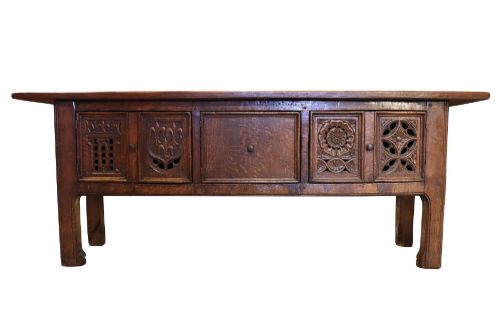
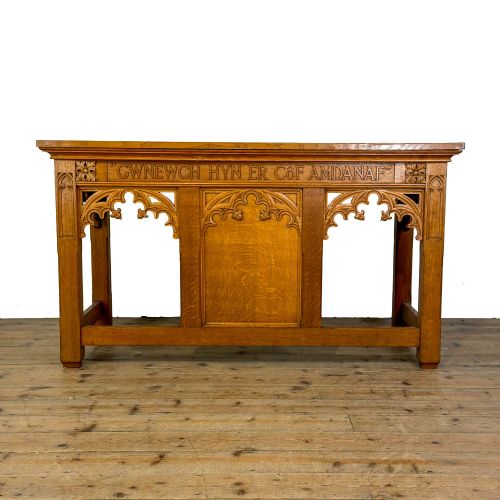
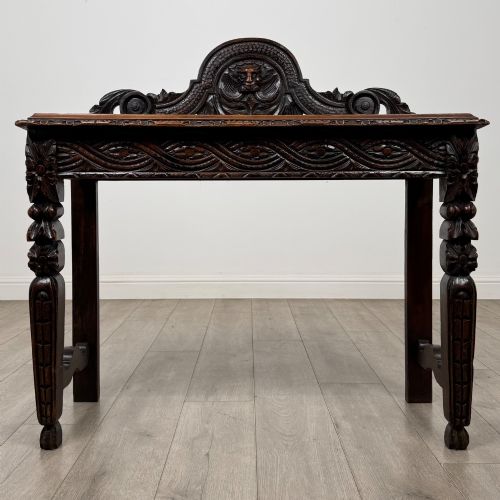
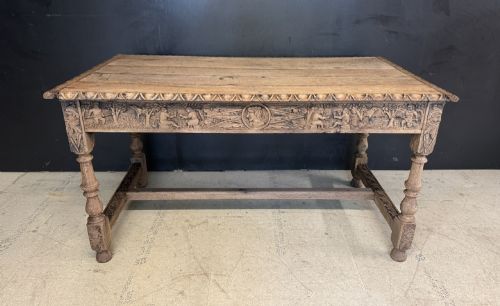
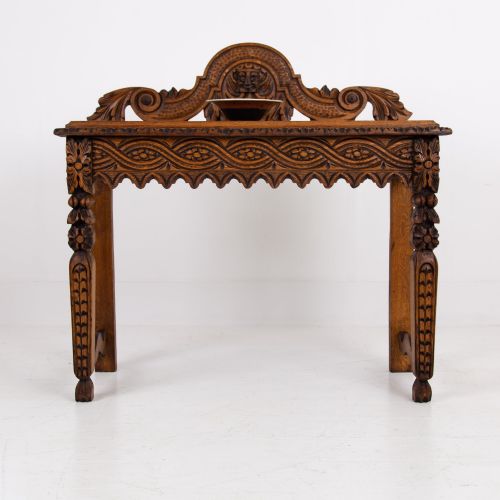
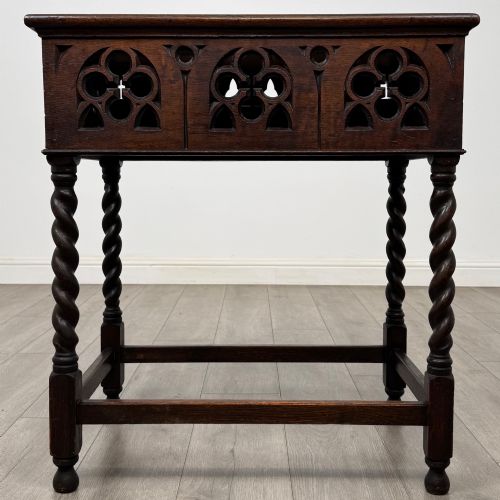
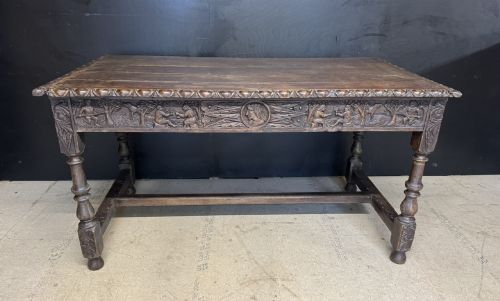
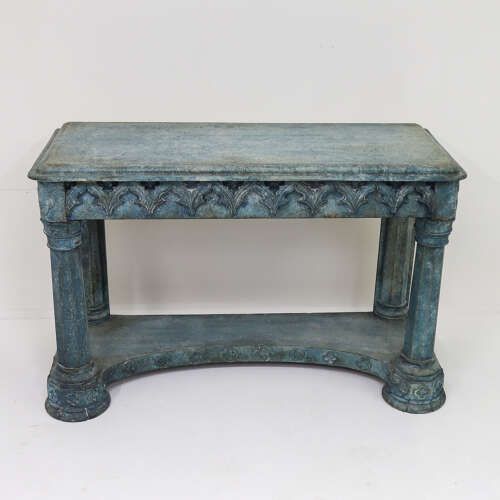
Oak dominates the examples seen here, often carved with heavy tracery, green men, or panelled details. Alongside oak, pieces emerge in pitch pine, walnut, mahogany, and painted wood.
The domestic hall table or side table represents the most common meeting point for this style. Makers adapted church and cathedral designs for Victorian and Edwardian entrance halls and reception rooms.
Materials and construction
Carpenters relied primarily on solid oak, pitch pine, and walnut, working the timber by hand to achieve deep relief carving. Joints are pegged and dowelled, giving these tables the structural integrity needed to support heavy marble or timber tops.
Surface finish is typically waxed or polished timber, though occasional pieces appear in painted wood or accented with gilt terracotta. Carved ornamentation includes linenfold panelling, pointed arches, and structural underframes derived from ecclesiastical woodwork.
Keep an eye out for carved green men peering through the foliage on nineteenth-century oak tables.
Judging the execution
Quality rests in the depth and clarity of the timber carving rather than surface decoration alone. Master carvers brought a crispness to foliage, tracery, and figural elements like the green man that lesser workshops failed to replicate.
Proportion and timber selection separate standard factory production from exceptional pieces. Heavier timbers, well-figured grain, and harmonious architectural scaling distinguish superior tables from routine nineteenth-century output.
Luigi Frullini·AW Pugin·Charles Bevan·Phillips Bristol
The Gothic Revival Console Glossary
- Console table
- A table designed to stand against a wall, frequently fixed or supported by brackets.
- Tracery
- Openwork pattern in stone or timber, characteristic of gothic window design, translated here into panel decoration.
- Green man
- A sculptural motif of a human face disgorged from foliage, common in medieval and revival woodcarving.
- Linenfold
- A style of wood panelling carved to resemble folded cloth, frequently seen on nineteenth-century revival pieces.
Gothic Revival Console: Frequently Asked Questions
Where should I place a gothic revival console?
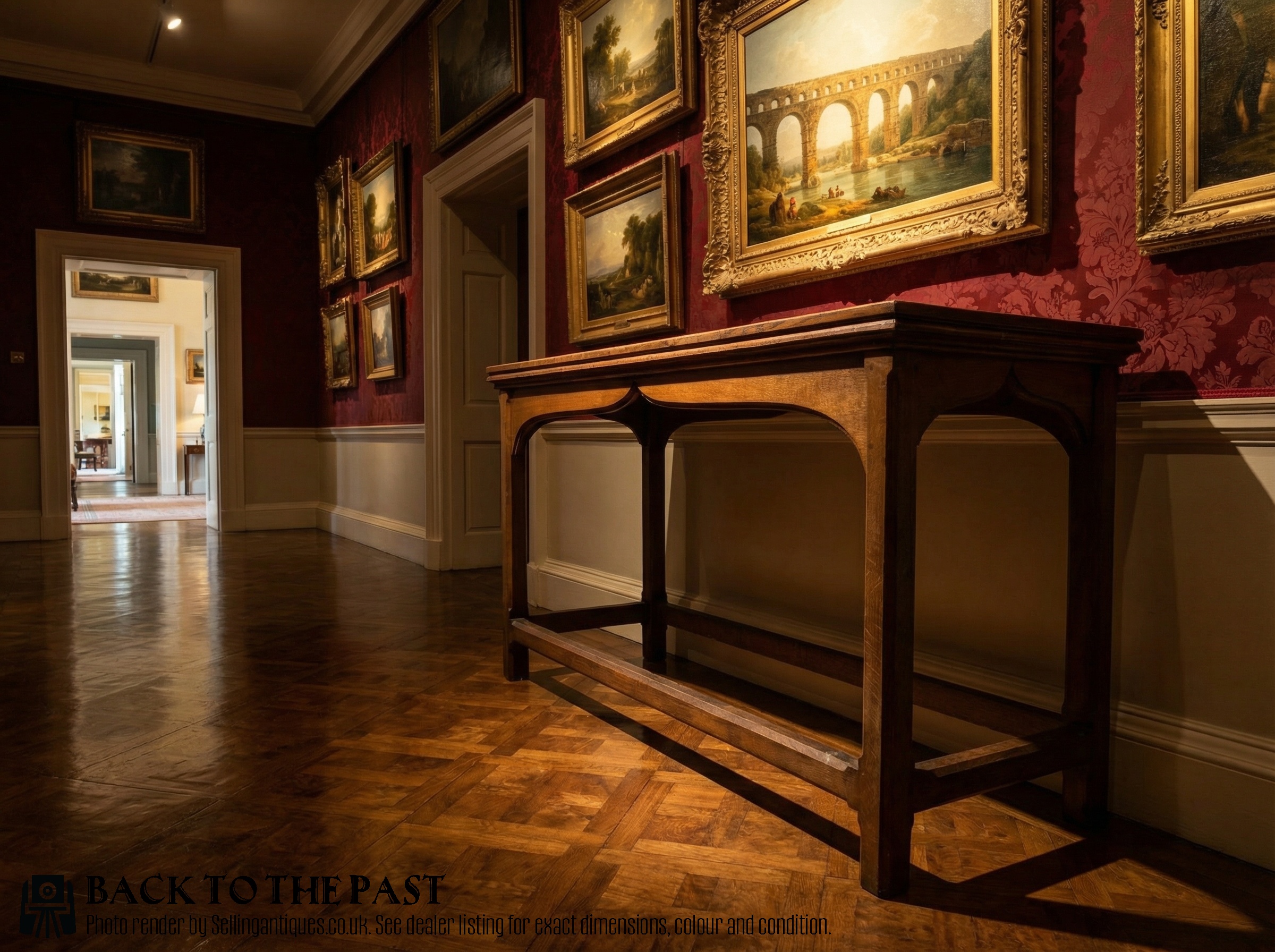
These tables suit entrance halls, corridors, or principal reception rooms where their architectural lines can stand against a plain wall.
Their substantial timber presence also allows them to function effectively as serving tables or writing desks.
How do I date a gothic revival piece?
Dating relies on timber choice, tool marks, and stylistic clues connecting the piece to nineteenth-century revival movements.
Victorian and Edwardian makers often combined medieval motifs with contemporary construction methods visible beneath the top.
Are these tables sturdy enough for daily use?
Constructed from heavy timbers like oak and pitch pine, these pieces were built for durability in busy domestic or ecclesiastical settings.
Their robust underframes and pegged joints provide strong support for everyday items placed upon the surface.
What woods were used in these tables?
Oak is the predominant material, favoured for its strength and historical association with medieval architecture.
Pitch pine, walnut, mahogany, and painted wood also appear across the selection of tables and wall brackets.