

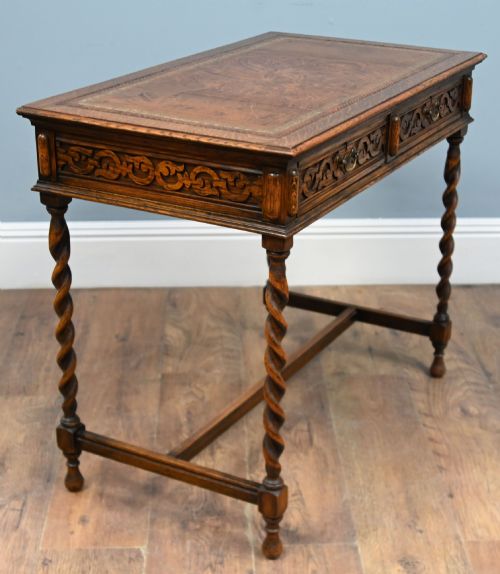

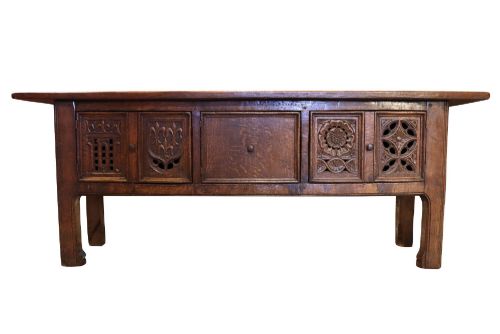
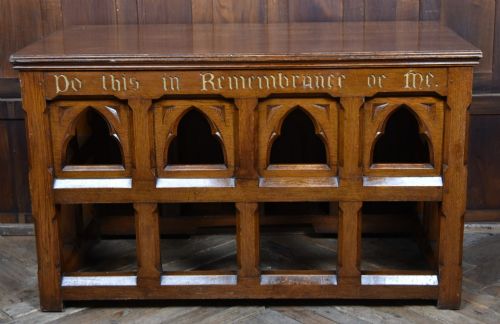
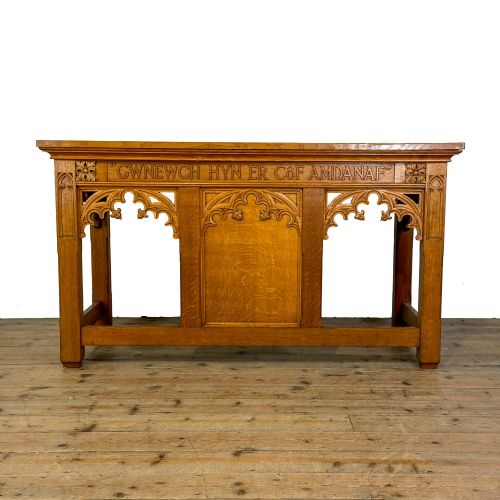



Gothic Oak Console Table
A gothic oak console table brings sturdy architectural lines and deep historical carving into a hallway or living space.
Gothic Oak Console Table
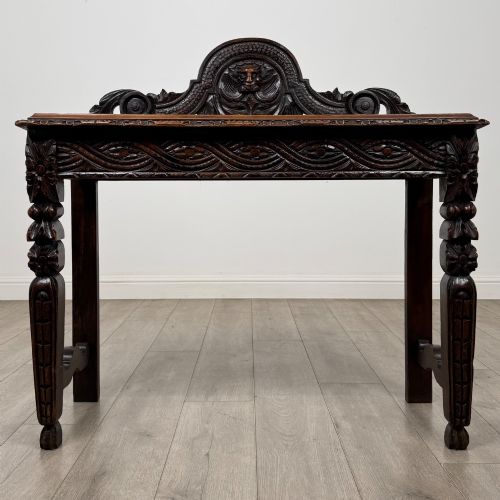
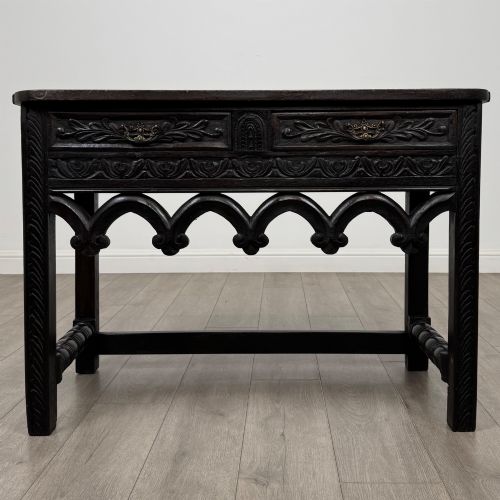
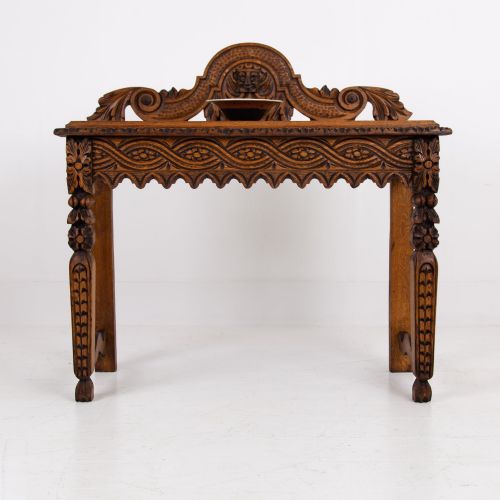
A gothic oak console table is a narrow, flat-backed piece designed to stand against a wall, frequently appearing under the broad banner of Victorian Gothic Revival or Arts and Crafts production. The forms span functional hall tables, narrow serving tables, chapel altars, and side desks built with deliberate medieval and ecclesiastical motifs.
Most examples originate from the nineteenth century, particularly the decades between 1850 and 1900, though early twentieth-century interpretations also surface. They share heavy timber construction and a narrow footprint suited to passages and reception spaces where a deep piece would obstruct movement.
Makers drew heavily on architectural vocabulary, incorporating pointed arches, tracery, and turned supports derived from stone buildings into domestic wooden furniture. The survival of these tables demonstrates the enduring nineteenth-century appetite for serious, revivalist joinery.
How they were made
Solid oak provides the primary structural foundation for these tables, chosen for its density, visible grain, and traditional association with medieval interiors. Subsidiary woods or secondary elements sometimes include walnut, ebonised timber, and brass fittings for keyholes or drawer pulls.
Joinery relies on heavy framing, pegged mortise and tenon joints, and board construction designed to support substantial weight without warping. Carving is executed directly into the solid timber substrate, creating deep relief panels, green man masks, and strapwork that mimics stone or plaster architectural ornamentation.
Gothic Oak Console Table Retail Price Guide 2026
Typical asking prices for gothic oak console table among the pieces listed under this phrase on Sellingantiques today, from the lower quarter to the upper quarter. They describe what is for sale here now, not the wider market.
Listings feature oak, walnut, and ebonised wood across nineteenth-century Victorian, Edwardian, and Arts and Crafts periods.
What varies in quality
The standard of a gothic oak console table rests on the depth and crispness of the hand-carving rather than machine routing or applied mouldings. Tables with spirited relief work, undercut foliage, and expressive figurative details require superior hand-skill compared to flat, repetitive stamping.
Proportion and material selection also distinguish better examples, particularly those utilising dense, figured solid oak or incorporating integrated marble tops and brass details. Finer pieces maintain balanced architectural proportions in narrow dimensions, ensuring the heavy stylistic vocabulary does not overwhelm the practical surface area.
Charles Bevan·Phillips Bristol
The Gothic Oak Console Table Glossary
- Gothic Revival
- A nineteenth-century architectural and decorative movement that revived medieval forms, pointed arches, and heavy timber construction. It dominated domestic and ecclesiastical design across the Victorian era.
- Console table
- A wall-mounted or freestanding table with a narrow top designed for hallways, reception rooms, and spaces with limited depth. They frequently feature decorative underframes and flat backs.
- Green man
- A sculptural motif representing a human face surrounded by or sprouting from foliage, symbolising rebirth. This detail frequently appears carved into the friezes and panels of nineteenth-century revival furniture.
- Tracery
- Architectural stonework patterns adapted into woodwork, featuring intersecting ribwork and geometric shapes. It decorates panels, drawer fronts, and galleries on revival tables.
- Credence table
- A heavy side table originally used in churches for holding sacramental elements, later adapted for domestic serving and display. These pieces often feature tiered lower shelves and robust oak framing.
Gothic Oak Console Table: Frequently Asked Questions
Where should I place a gothic oak console table?
These narrow tables suit hallways, corridors, and living rooms where floor space is limited. Their flat backs allow them to sit flush against walls while providing a useful surface for lamps or mail.
Because of their architectural presence, they anchor an entryway effectively and pair well with plain plaster walls or framed artwork.
How do I date a nineteenth-century oak console?
Look to the construction methods, tool marks, and stylistic indicators such as heavy machine-sawn timber versus hand-planed boards. Victorian pieces often combine Gothic Revival motifs with standard nineteenth-century drawer construction.
Makers frequently incorporated specific period revivals like Jacobean or Renaissance elements alongside Gothic tracery during the mid to late nineteenth century.
What maintenance does solid oak require?
Solid oak benefits from occasional treatment with appropriate beeswax or natural furniture polish to nourish the grain and protect the finish. Avoid placing timber furniture in direct sunlight or near sudden heat sources.
Routine dusting with a soft, dry cloth preserves the hand-carved details and prevents dust accumulation in deep relief work.
Are these tables sturdy enough for daily use?
Nineteenth-century oak tables are built with robust joinery and solid timber frames designed to withstand heavy weight and regular handling. Their pegged construction and dense materials make them exceptionally stable for everyday domestic environments.
Console tables with narrow proportions generally benefit from placement against a wall where additional stability can be maintained.