





Ecclesiastical Oak Furniture
Ecclesiastical oak furniture brings the heavy timber and pointed arches of historic chapels directly into domestic rooms.
Ecclesiastical Oak Furniture
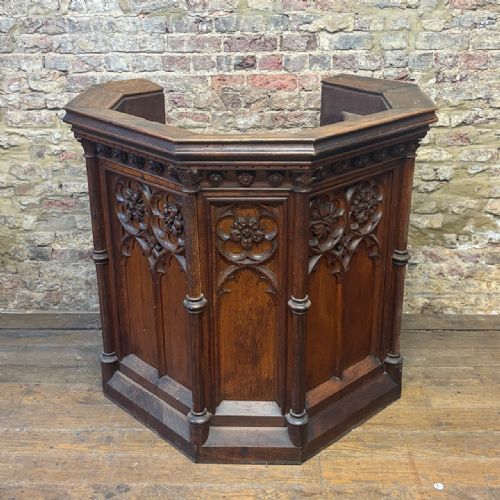
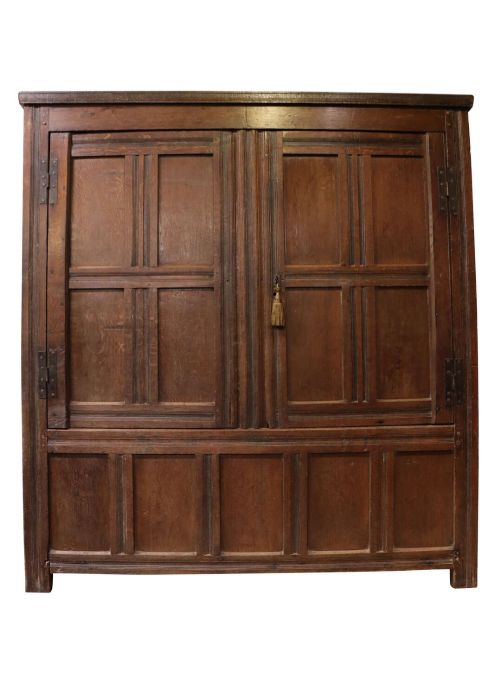
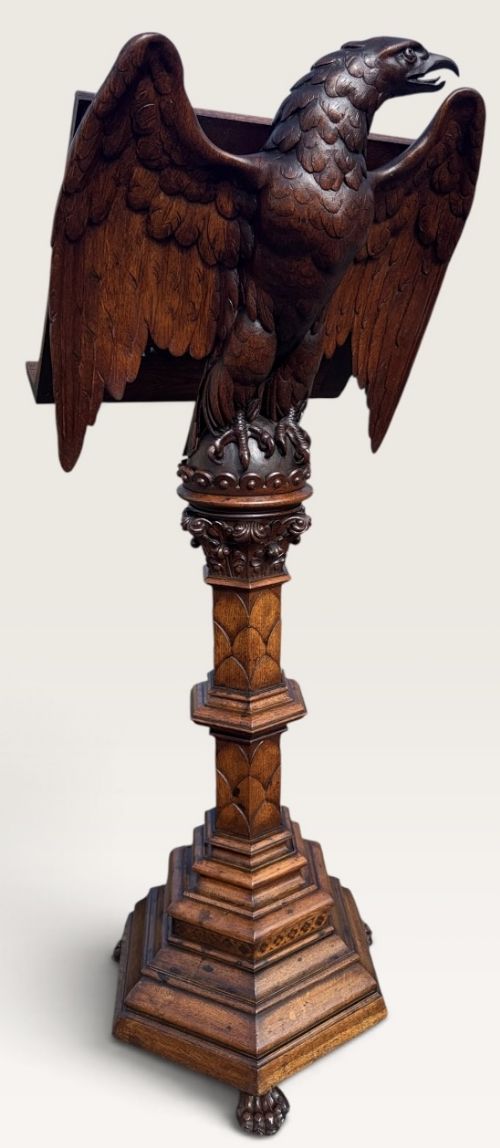
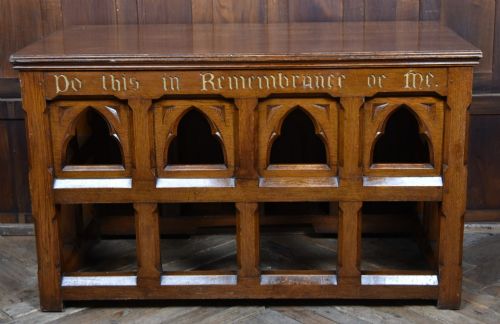
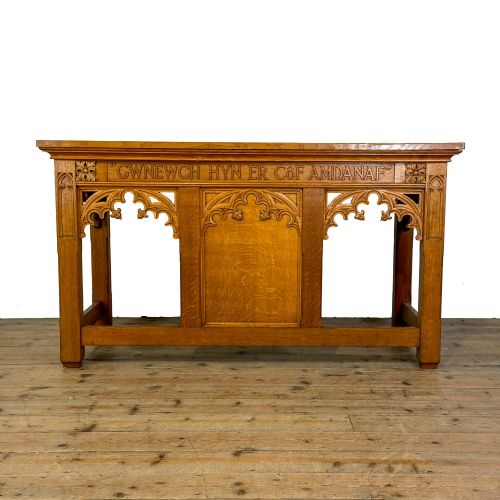
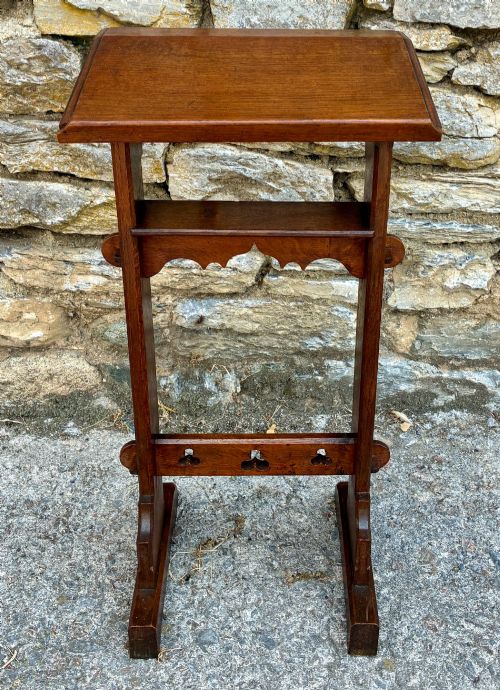
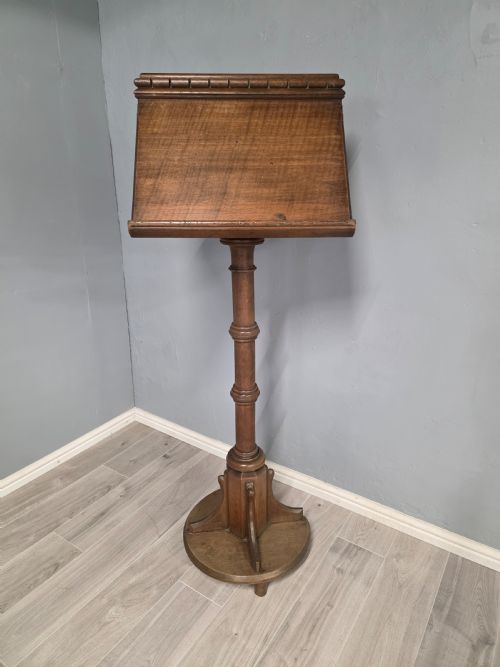
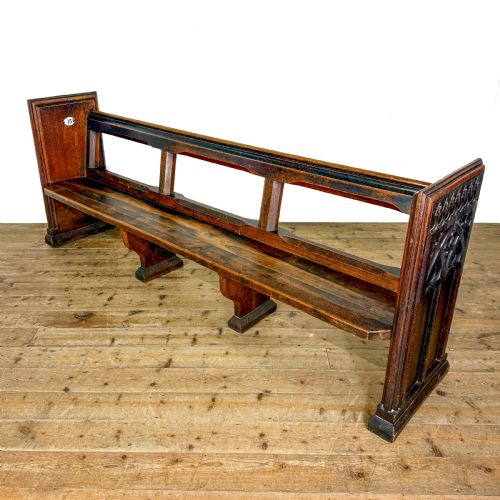
Ecclesiastical oak furniture encompasses heavy devotional items and church fittings originating from periods spanning the sixteenth century to the twentieth century. These pieces include prayer desks, benches, pulpits, altar tables, lecterns, and church chairs built for religious use.
The selection ranges from sixteenth-century pre-Reformation thrones and seventeenth-century carved panels to nineteenth-century Gothic Revival pulpits and pews. Victorian and Edwardian interpretations of earlier styles dominate the items currently available on the market.
Domestic adaptations also appear among these religious survivals, including oak hymn boards, home bars, and mirrors incorporating carved religious panels. Buyers encounter both utilitarian seating from provincial churches and grander liturgical furnishings designed for formal chapels.
Materials and construction
Makers built these pieces primarily from solid oak, utilising its strength and dense grain for heavy structural elements and load-bearing church seating. Secondary materials such as wrought iron and brass appear in hinges, brackets, and decorative mounts.
Carving defines the surface decoration, executed by hand with deep relief work showing Gothic tracery, linenfold patterns, and scriptural motifs. Gold leaf occasionally highlights specific carved details or lettering on boards and altars.
Ecclesiastical Oak Furniture Retail Price Guide 2026
Typical asking prices for ecclesiastical oak furniture among the pieces listed under this phrase on Sellingantiques today, from the lower quarter to the upper quarter. They describe what is for sale here now, not the wider market.
Listings span from the sixteenth century through the Victorian era to the nineteen-thirties, using oak alongside brass, wrought iron, and gold leaf.
Assessing the pieces
Quality rests upon the depth and precision of the hand carving, where crisp architectural tracery separates superior workshop output from simpler vernacular work. The choice of timber also matters, particularly planks displaying well-figured medullary rays in the oak.
Structural integrity dictates value, with items retaining their original joints, boards, and fixings holding more historical interest than heavily restored examples. Retained surface patination from centuries of use provides a visual depth that modern finishing lacks.
The Ecclesiastical Oak Furniture Glossary
- Gothic Revival
- An architectural and decorative style popular during the nineteenth century that revived medieval pointed arches and tracery. It influenced almost all Victorian church seating and pulpits.
- Prie-Dieu
- A small devotional desk or chair designed for kneeling during prayer, typically fitted with a sloping shelf for a book. These items range from plain nineteenth-century examples to elaborate Victorian designs.
- Linenfold
- A style of carved wooden panelling that imitates folded vertical folds of cloth. It appears frequently on sixteenth and seventeenth-century ecclesiastical woodwork.
- Cotswold oak
- Heavy regional timber associated with West Country cabinet making and vernacular church furniture. Pieces from this tradition show robust joinery and straightforward construction.
Ecclesiastical Oak Furniture: Frequently Asked Questions
How do I care for antique oak?
Feed the timber occasionally with a traditional beeswax polish to prevent the dry grain from splitting in modern centrally heated rooms. Avoid placing these heavy items near direct heat sources or in strong sunlight that fades the historic finish.
Dust the deep recesses of the hand carving regularly with a soft brush to prevent dirt accumulation within the intricate Gothic tracery.
Can church pews fit in a home?
Shorter church pews and chapel benches integrate well into hallways, dining rooms, or along living room walls. Measure the available floor space carefully because historic seating often possesses fixed depths that exceed standard modern furniture.
Check whether the feet require minor adjustments to sit level on modern domestic flooring without rocking.
What is a prayer desk?
A prayer desk, or prie-dieu, is a specialised devotional piece combining a lower kneeling platform with an upper sloped shelf for reading scriptures. Victorian examples often incorporate storage space for prayer books within the frame.
They function easily today as compact occasional desks or decorative stands in studies and bedrooms.