

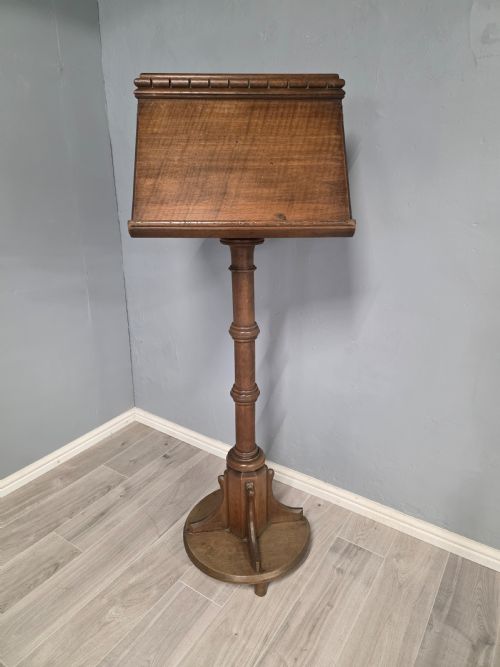


Antique Wooden Pulpit
An antique wooden pulpit brings the weight of history and architectural craft directly into a room, offering an imposing focal point for reading or display.
Antique Wooden Pulpit
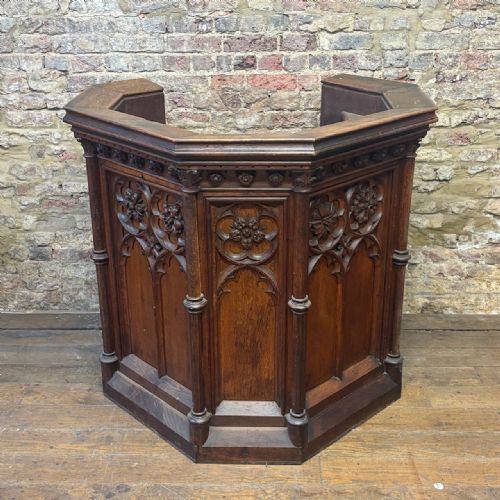
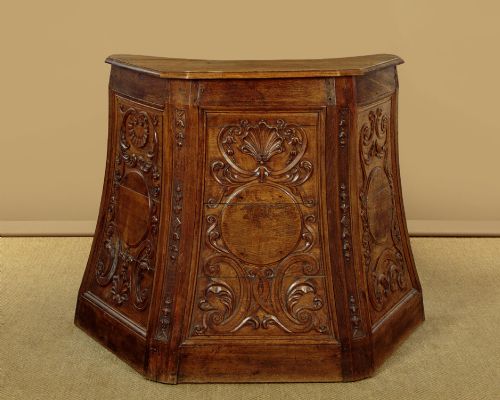
When you search for an antique wooden pulpit, you encounter pieces that originate primarily from the Victorian and early twentieth-century periods. These items range from monumental church pulpits and domestic home bars fashioned from church fittings to smaller reading stands and lecterns.
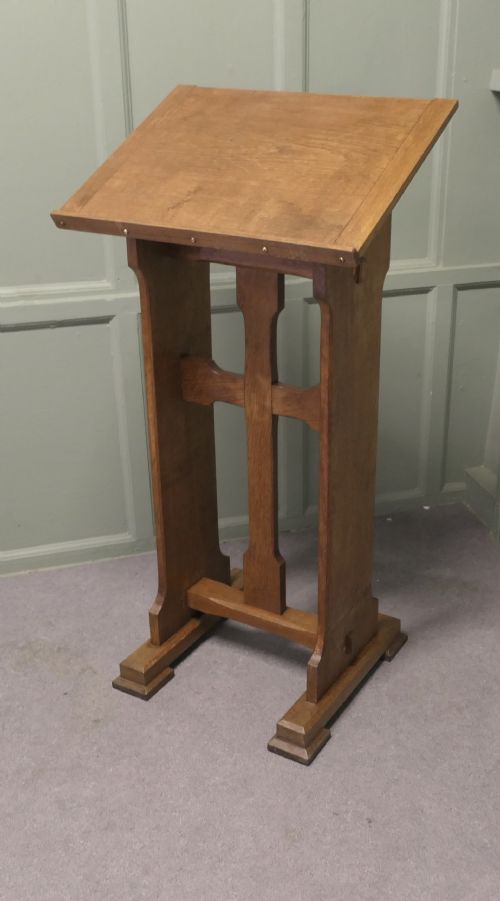
The most common versions met here are oak lecterns and podiums designed in the Gothic Revival and Arts and Crafts styles. They reflect ecclesiastical origins, employing sturdy construction and traditional joinery suitable for public speaking or display.
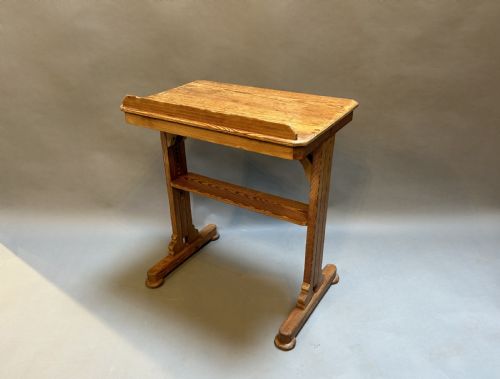
Pieces span various formats, including carved oak church pulpits, golden oak restaurant reception greeters, and pine lectern tables. Each variant retains a distinct architectural presence shaped by its original liturgical or institutional function.
How they were made
The construction of these pieces relies heavily on durable hardwoods and softwoods, predominantly oak and pine, often accented with brass, iron, and leather details. Carpenters utilised solid timber framing and panel construction to ensure structural stability.
Decoration is achieved through traditional carving techniques, visible in the Gothic Revival style motifs and detailed woodwork seen on church pulpits and eagle lecterns. Joinery methods prioritise longevity, utilising pegged joints and heavy timber frameworks.
Materials recorded across the available pieces include solid oak, pine, brass, iron, and leather.
What varies in quality
Quality in these items is determined by the depth and precision of the hand carving and the selection of timber. Dense, figured oak displays superior grain pattern and resilience compared to simpler utility pine builds.
The architectural ambition of the design dictates the upper tier of the range, where complex Gothic Revival tracery and sculptural elements like carved wooden eagles elevate the piece. Simpler utilitarian examples from later periods exhibit more restrained lines and lesser ornamentation.
The Antique Wooden Pulpit Glossary
- Lectern
- A tall stand with a sloped top designed to hold a book or notes for a speaker. These often incorporate sculptural supports, such as carved wooden eagles.
- Arts and Crafts
- A design movement valuing traditional craftsmanship, natural materials, and simple forms. Golden oak podiums from this tradition emphasise honest construction and utility.
Antique Wooden Pulpit: Frequently Asked Questions
How were these pulpits originally used?
These pieces served as elevated platforms or stands for clergy members to deliver sermons and read scriptures during church services. Their imposing height and architectural design ensured the speaker commanded the attention of the congregation.
Over time, many ecclesiastical furnishings transitioned into domestic or commercial environments. Today, surviving examples frequently function as reception desks, reading stands, or unique architectural furniture within private residences.
Can I use an antique lectern at home?
An antique lectern integrates effectively into a home study, library, or living space as a dramatic stand for large books or as a standing desk. Their sturdy wooden construction makes them entirely practical for daily use.
Placing one in a room requires careful consideration of its scale and height. Because many were built for large churches, they demand adequate floor space to look balanced rather than overwhelming.
What woods are commonly found here?
Oak is the predominant timber utilised across these pieces, valued for its strength and traditional association with church furniture. Golden oak and darker carved variants are particularly common in Gothic Revival and Arts and Crafts designs.
Pine also appears, particularly in later or more utilitarian pieces from the early twentieth century. Secondary materials such as brass, iron, and leather occasionally contribute to the structural and decorative detailing.
How do I identify the Gothic Revival style?
The Gothic Revival style is easily recognised by its deliberate emulation of medieval architecture. Look for characteristic motifs such as pointed arches, quatrefoils, and elaborate relief carvings that echo cathedral stonework.
This aesthetic dominated nineteenth-century ecclesiastical design and imparts a solemn, monumental character to the woodwork. Pieces adhering to this style often feature heavy proportions and dark, polished finishes.