
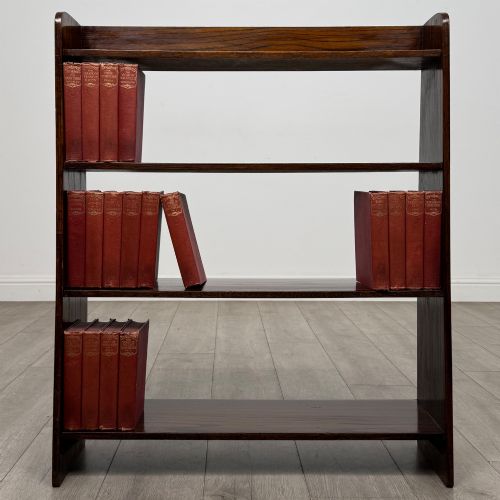
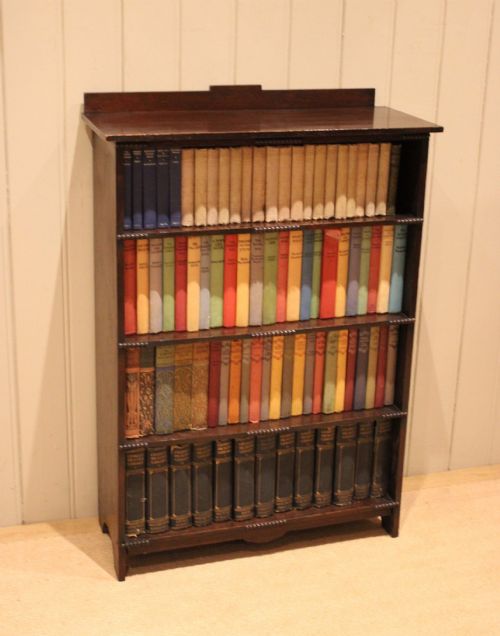
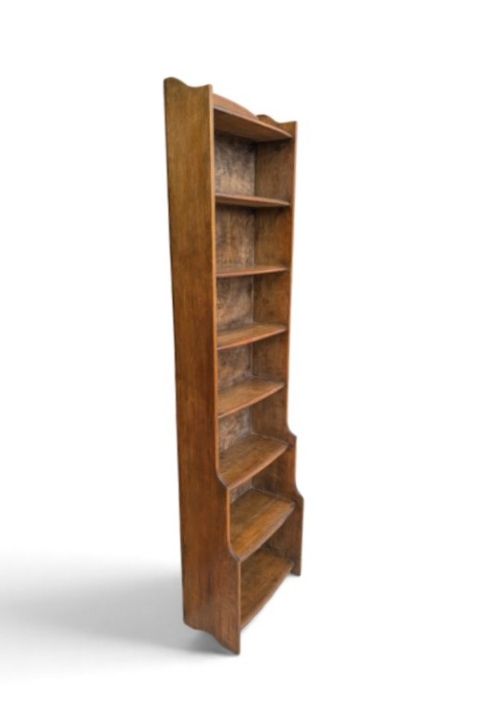
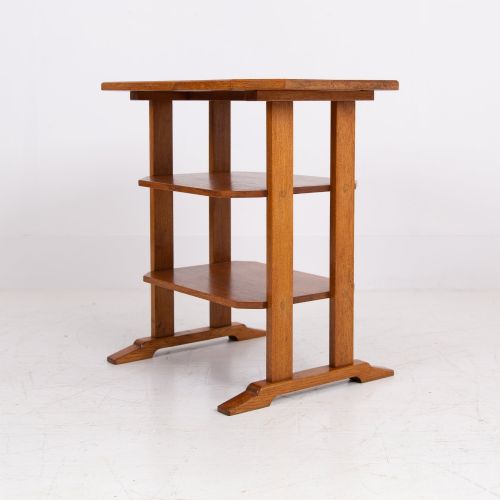
Solid Oak Book Stand
A solid oak book stand brings sturdy grain and honest timber to your daily reading, keeping volumes close at hand.
Solid Oak Book Stand
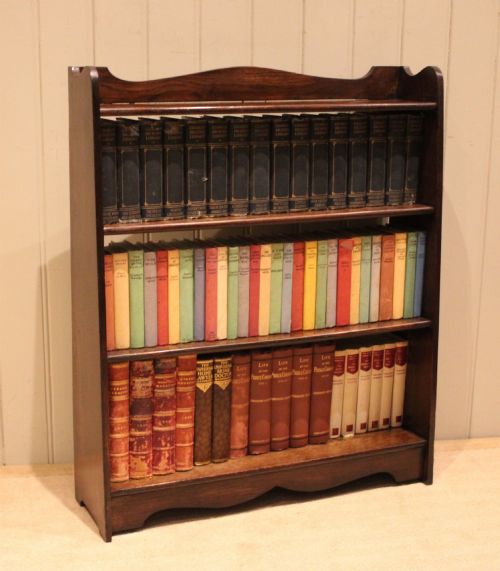
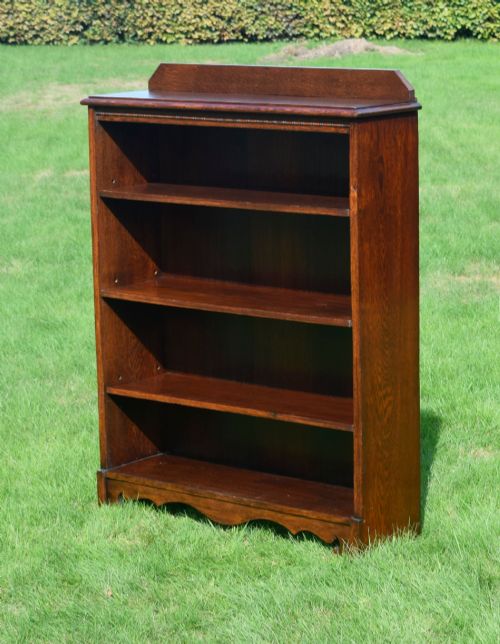
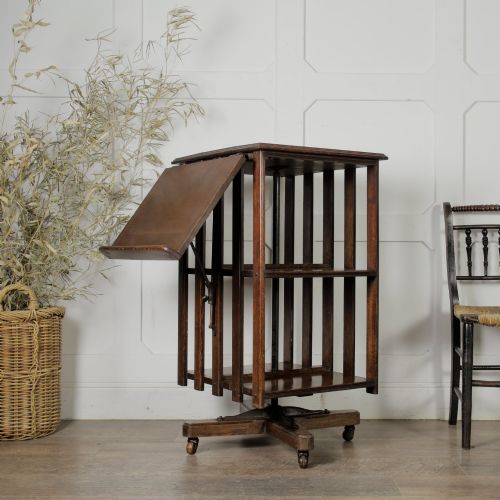
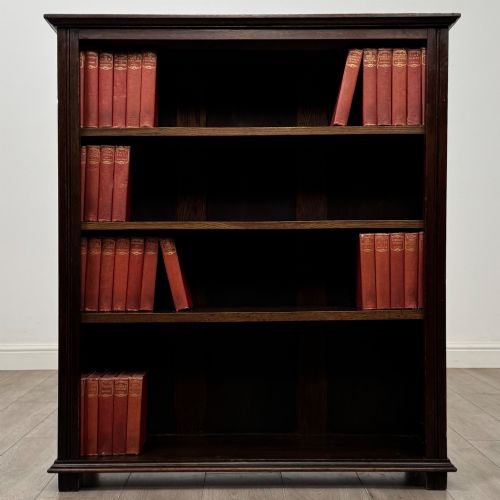
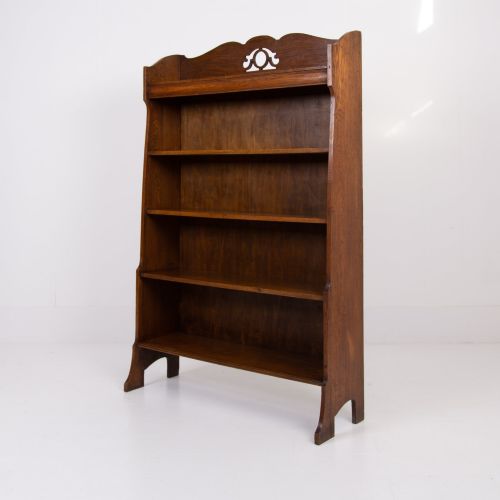
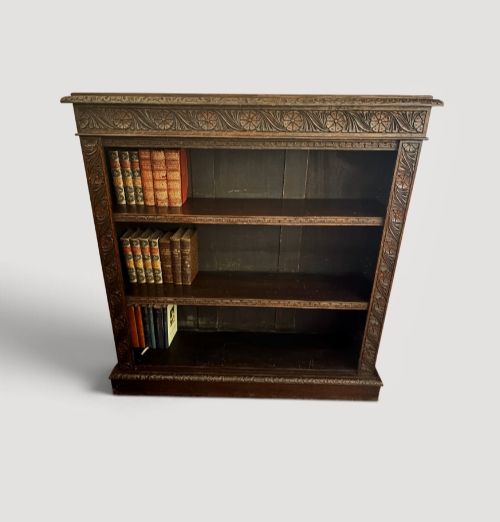
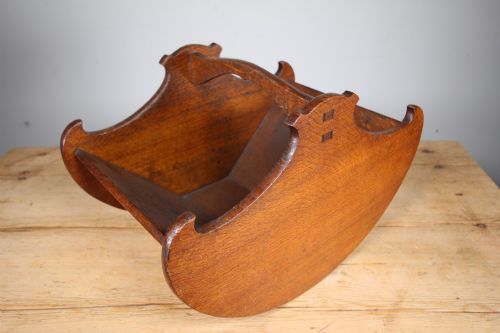
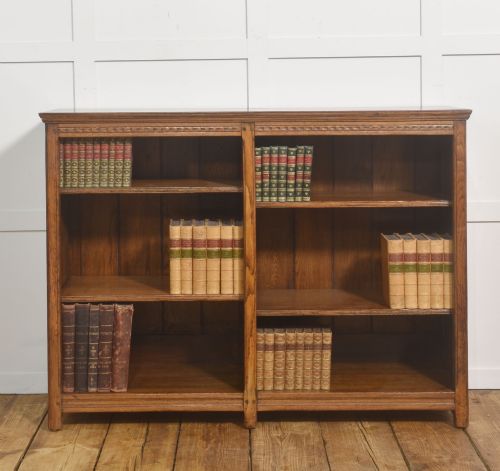
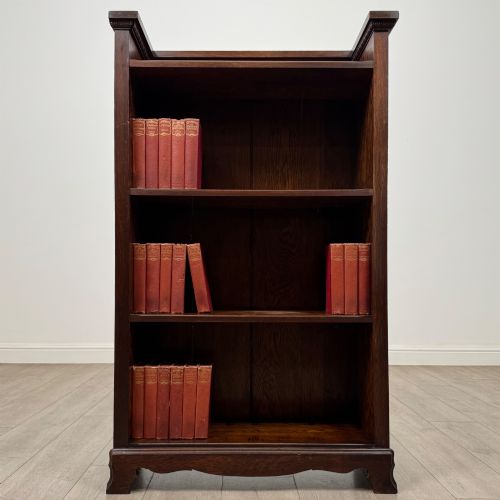
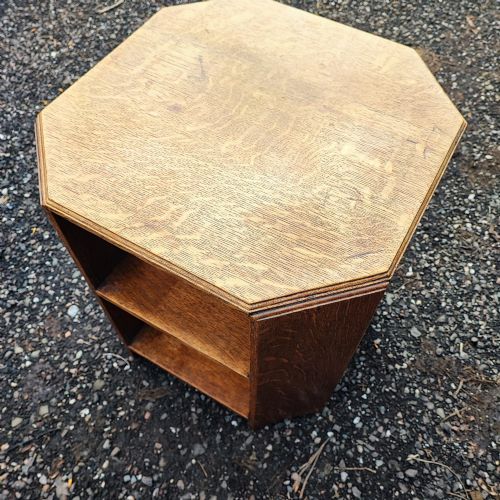
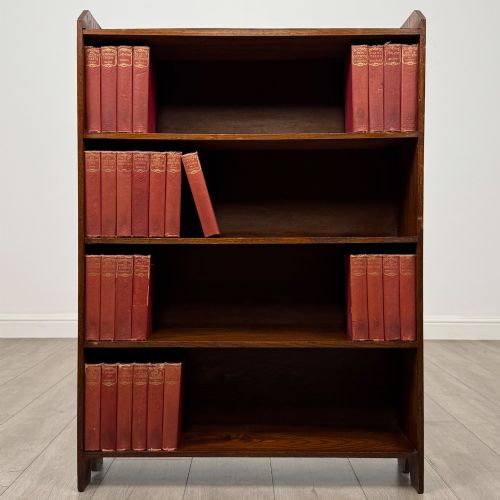
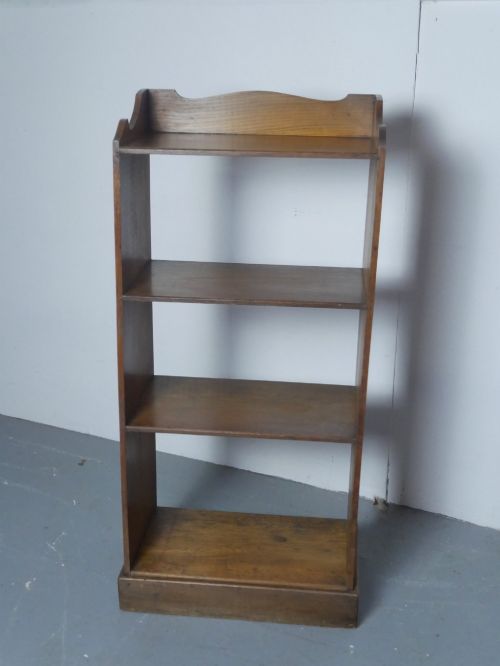
A solid oak book stand serves as a practical reading accessory and display piece, appearing across various forms from revolving bookcases to small book troughs, lecterns, and open shelves. These functional items emerged frequently during the Edwardian era, the Victorian period, and the nineteen-twenties, reflecting domestic and library needs of the past.
The selection encompasses stylistic revivals including Jacobean and traditional English country forms alongside distinct Arts and Crafts and Art Deco interpretations. Pieces vary from utilitarian office or restaurant pieces to finely decorated domestic items featuring carved details and beaded edges.
How they were made
Construction relies heavily on solid oak timbers, occasionally finished in darker tones or highlighted with golden hues to emphasise the natural grain. Workshops utilised robust joinery methods suitable for daily use, incorporating adjustable shelving mechanisms and sturdy upright partitions.
Metal elements such as brass and cast iron appear in functional fittings, hinges, and occasional support structures to complement the heavy timber frames. Decorative touches include marquetries, carved mouldings, and distinctive cut-outs characteristic of period workshop output.
Solid Oak Book Stand Retail Price Guide 2026
Typical asking prices for solid oak book stand among the pieces listed under this phrase on Sellingantiques today, from the lower quarter to the upper quarter. They describe what is for sale here now, not the wider market.
Some golden oak podiums served dual purposes in period restaurants as welcoming stations for hungry diners.
What varies in quality
The standard of a solid oak book stand depends upon the selection of timber and the ambition of the design. Workshops employing skilled carvers and thoughtful proportions produced pieces with greater visual weight and structural harmony.
Makers identified by labels or documented provenance distinguish finer examples from anonymous workshop production. The integration of thoughtful details, such as adjustable shelves, decorative cut-outs, or quality brass hardware, elevates the piece.
Arthur Simpson·Heals·Wylie Lochhead·E.A. Taylor
The Solid Oak Book Stand Glossary
- Arts and Crafts
- A design movement prioritising traditional craftsmanship, simple forms, and visible construction methods over mass-produced ornamentation. It heavily influenced furniture makers of the late nineteenth and early twentieth centuries.
- Book Trough
- A small, open-topped container designed to hold a selection of books upright on a desk or table. These items often feature sloping sides to keep volumes neatly angled.
- Lectern
- A slanted reading desk designed to support a book at a comfortable angle for a standing reader. They frequently appear in institutional or ecclesiastical settings as well as domestic libraries.
- Revolving Bookcase
- A freestanding tiered bookcase mounted on a hidden turntable base. This clever mechanism allows access to multiple shelves of books from a single seated position.
- Waterfall Bookcase
- A set of open shelves where each tier steps back progressively from bottom to top. The resulting profile resembles the descending steps of a cascade.
Solid Oak Book Stand: Frequently Asked Questions
What is a solid oak book stand used for?
These pieces provide accessible storage and display for frequently referenced volumes, keeping books organised on tabletops or floors.
Designs range from dedicated reading desks to small troughs and revolving units suited for domestic studies and living spaces.
How do I date a solid oak book stand?
Dating relies on identifying stylistic markers associated with specific periods, such as Victorian carving or Arts and Crafts simplicity.
Maker labels, construction techniques, and period materials like brass fittings also help establish the approximate age of the piece.
Are these stands suitable for heavy books?
Solid oak construction provides the natural strength required to support substantial volumes and heavy reference libraries.
Many period examples feature reinforced shelves or sturdy upright partitions specifically built to bear significant weight.
What is the difference between a book stand and a bookcase?
Book stands typically focus on desktop utility, angled reading surfaces, or compact open storage for immediate reading selections.
Bookcases are generally larger, taller structures designed to house entire collections across multiple fixed or adjustable shelves.