




Antique Dictionary Stand
An antique dictionary stand gives heavy folios a proper home, combining sturdy timber frames with adjustable book rests for easy reading.
Antique Dictionary Stand
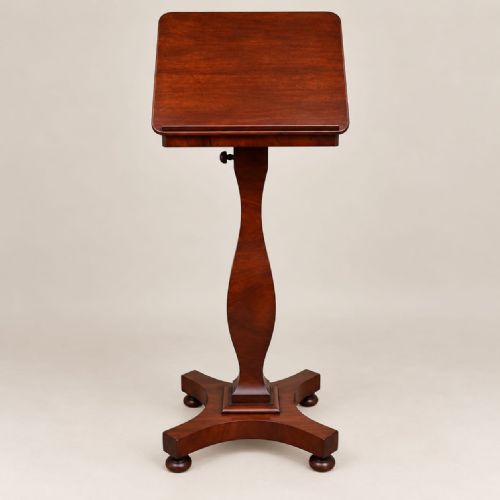
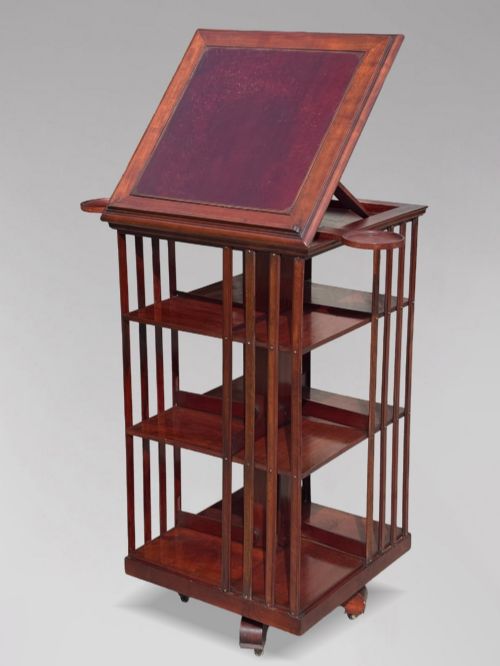
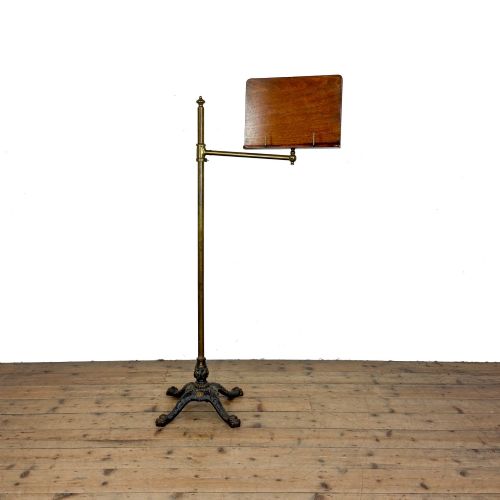
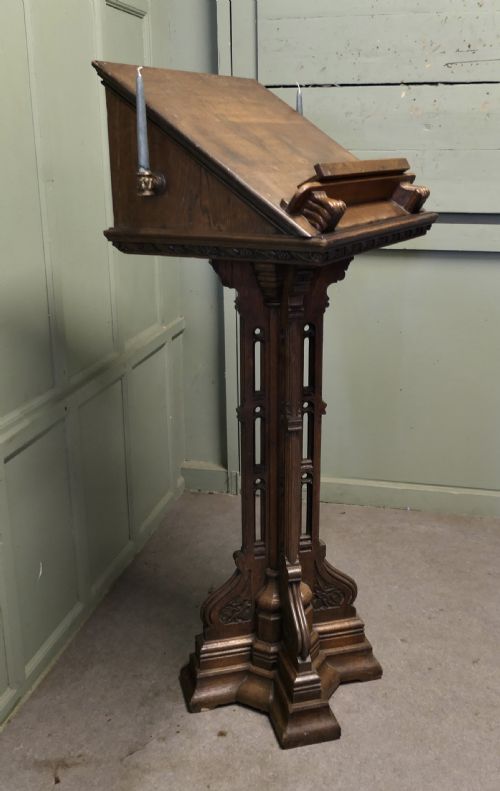
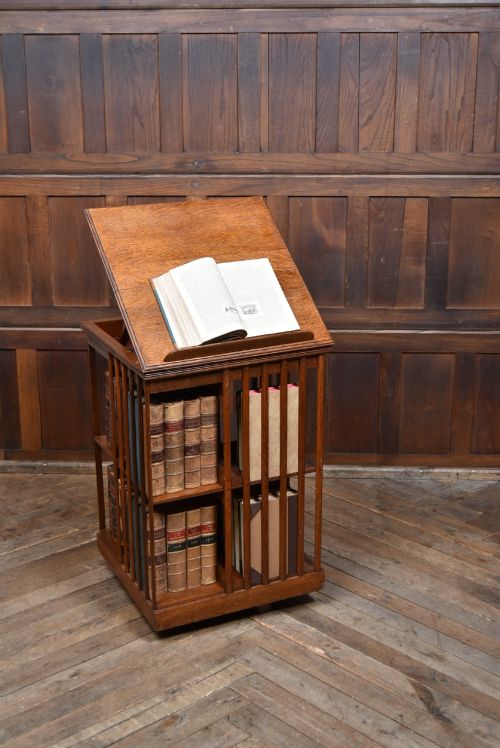
An antique dictionary stand supports large reference books, church service volumes, and music scores at a convenient reading angle. Buyers seeking this phrase encounter various forms, ranging from revolving bookcases and reading podiums to tripod music stands and church lecterns.
The pieces listed on this page span the eighteenth, nineteenth, and early twentieth centuries, drawing on Victorian, Regency, William IV, and Arts and Crafts styles. Mahogany and oak dominate the selection, accompanied by rosewood, walnut, and occasional brass fittings.
Most examples function as adjustable reading tables or music stands, often featuring mechanism-driven book rests. Forms vary from revolving table-top models to heavy floor-standing lecterns designed for public spaces and domestic libraries alike.
Materials and Construction
Cabinetmakers utilised dense hardwoods like mahogany, oak, rosewood, and walnut to build structures capable of supporting heavy volumes. Brass hardware frequently appears in adjustable stems, reading ratchets, and supporting brackets.
Joinery methods reflect the period of manufacture, utilising carved details, turned pedestals, and tripod bases for stability. Metamorphic designs incorporate mechanical actions that raise, lower, or tilt the reading surface.
Antique Dictionary Stand Retail Price Guide 2026
Typical asking prices for dictionary stand among the pieces listed under this phrase on Sellingantiques today, from the lower quarter to the upper quarter. They describe what is for sale here now, not the wider market.
One listed Arts and Crafts reception station comes equipped with its own built-in light for late-night greeters.
Evaluating Quality
Quality rests upon the execution of the mechanical adjustments and the integrity of the timber. Smooth movement in ratchets, screws, and revolving mechanisms distinguishes superior examples.
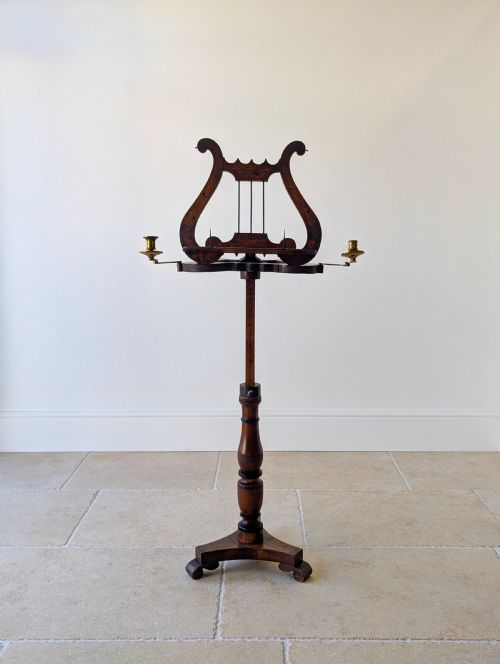
The choice of timber and the crispness of carved details, such as lyre-form supports or brass work, mark the difference between standard production pieces and finer cabinetwork.
Harrods
The Antique Dictionary Stand Glossary
- Lectern
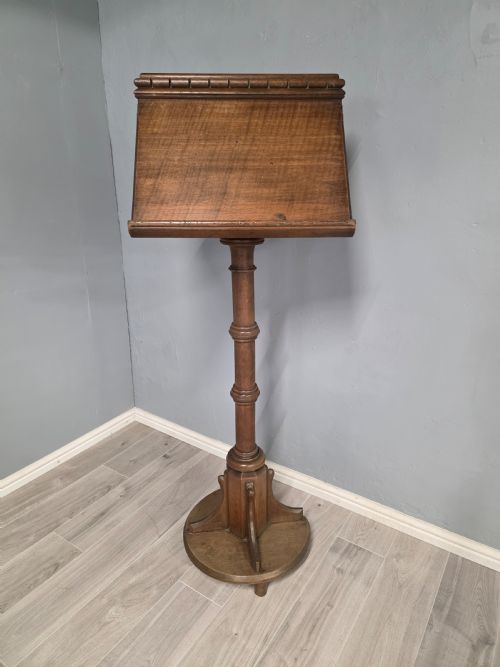
- A tall stand with a sloping top to hold a book or notes for someone reading aloud. These often appear in oak or pine for ecclesiastical or institutional settings.
- Revolving bookcase
- A compact shelving unit designed to spin on a central pivot for easy access to volumes. Edwardian examples in mahogany frequently utilise this form.
- Lyre-form
- A decorative motif shaped like an ancient musical instrument, often seen in the central column or support of nineteenth-century music stands.
- Metamorphic
- Describing furniture that transforms from one form to another, such as a table converting into an adjustable reading stand.
Antique Dictionary Stand: Frequently Asked Questions
How were these stands used originally?
Originally, these stands served scholars, clergy, and musicians by holding heavy texts steady for extended reading. They allowed users to consult large volumes without straining their backs or damaging book bindings.
Church lecterns held service books, while music stands supported scores. Library and domestic reading tables provided a stable surface for dictionaries and encyclopaedias.
How do I choose the right stand for my home?
Consider the available floor space and whether you need a dedicated reading surface or a multi-functional piece. Floor-standing lecterns and tripod music stands make strong statement pieces in a study.
Smaller table-top models or revolving bookcases fit more easily into modern living spaces while still providing a practical function for books.
How do I identify the period of a stand?
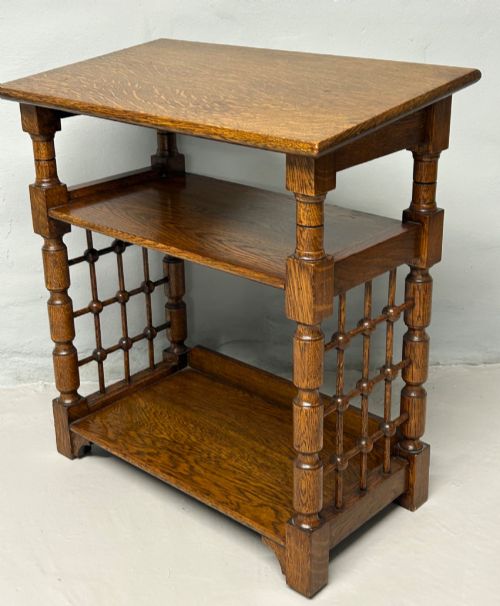
Dating relies on timber choice, construction methods, and prevailing decorative styles. Regency and William IV pieces often feature rosewood and classical motifs like lyre-forms, while Arts and Crafts examples emphasise plain oak and simpler construction.
Adjustable mechanisms also offer clues, as nineteenth-century designs progressed from simple wooden pegs to complex brass ratchets and screw threads.