



Adjustable Book Stand
An adjustable book stand lets you prop open heavy volumes at the right angle, and you will find pieces here in mahogany, oak, and brass.

Adjustable Book Stand
When you search for an adjustable book stand, you are looking at practical furniture designed to hold books, music sheets, or ledgers at a readable tilt. These pieces serve scholars, musicians, and readers who need hands-free support for heavy volumes during study or performance.
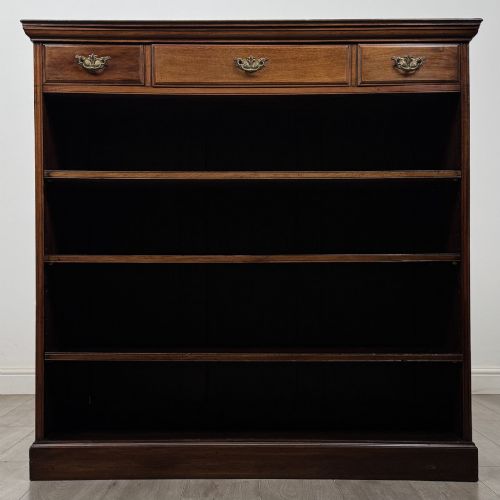
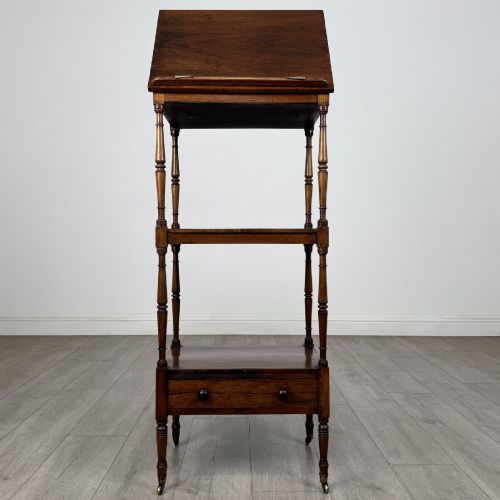
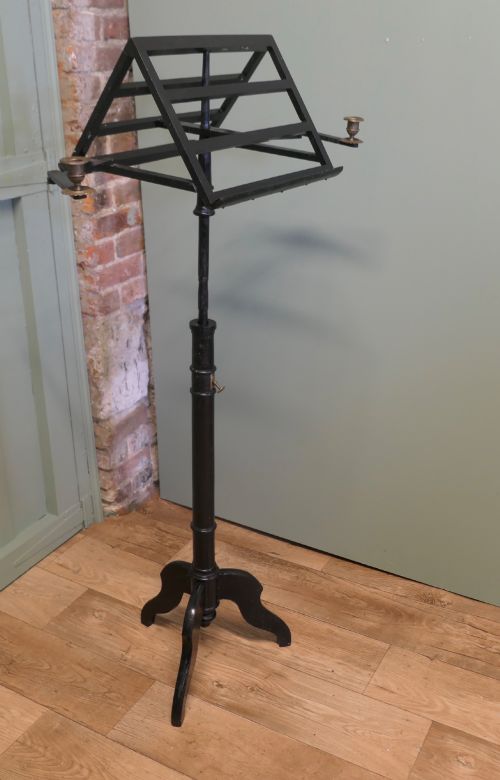
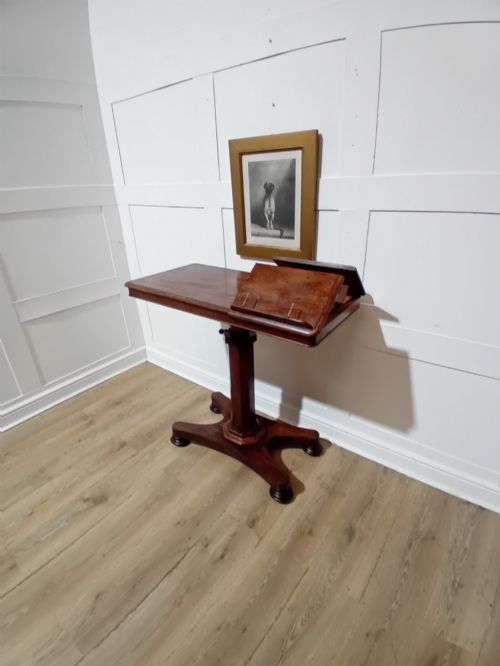
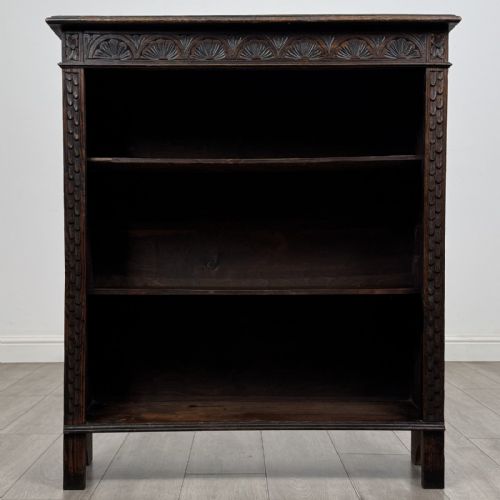
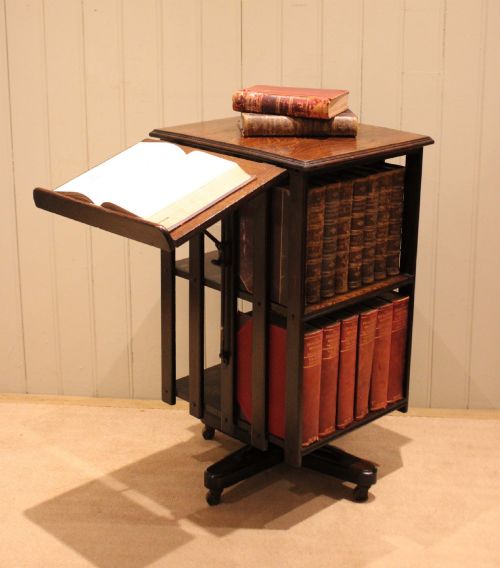
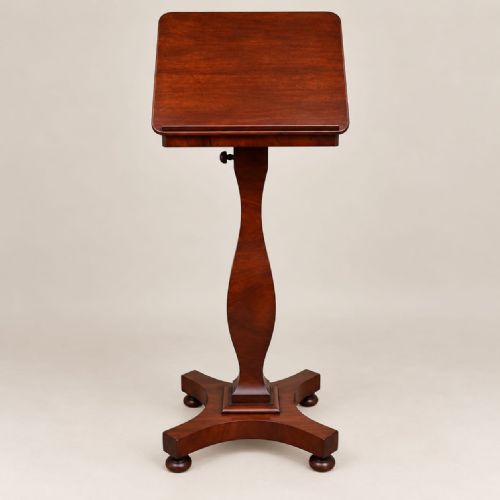
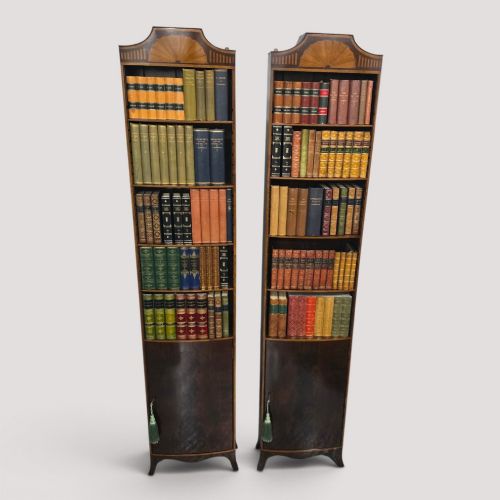
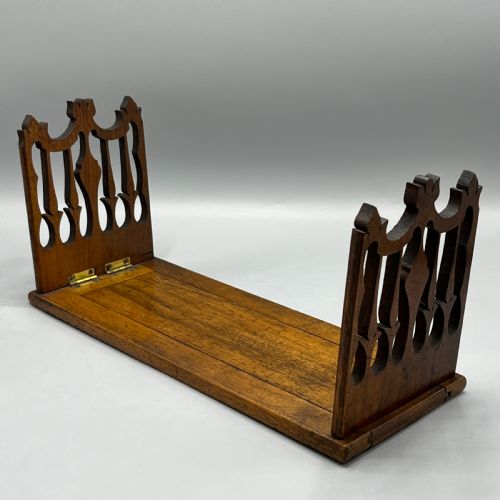
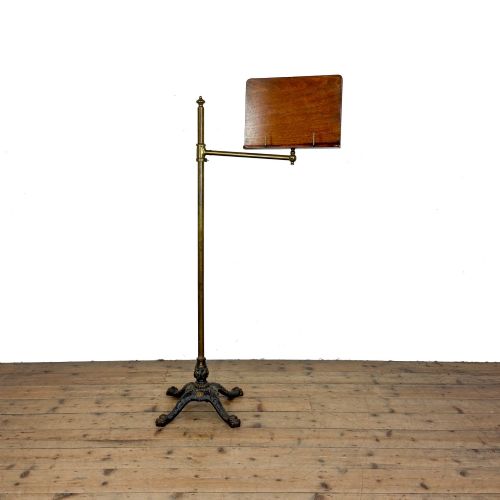
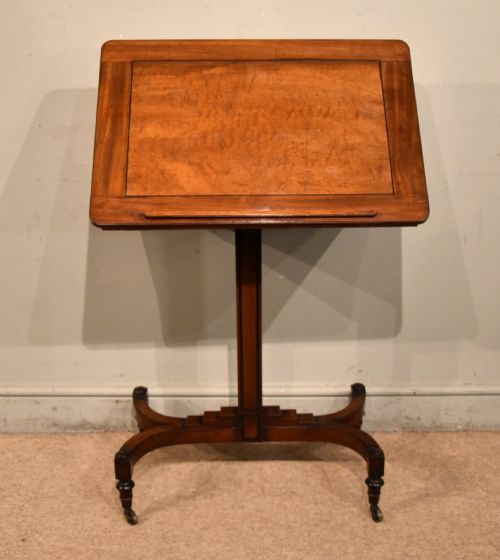
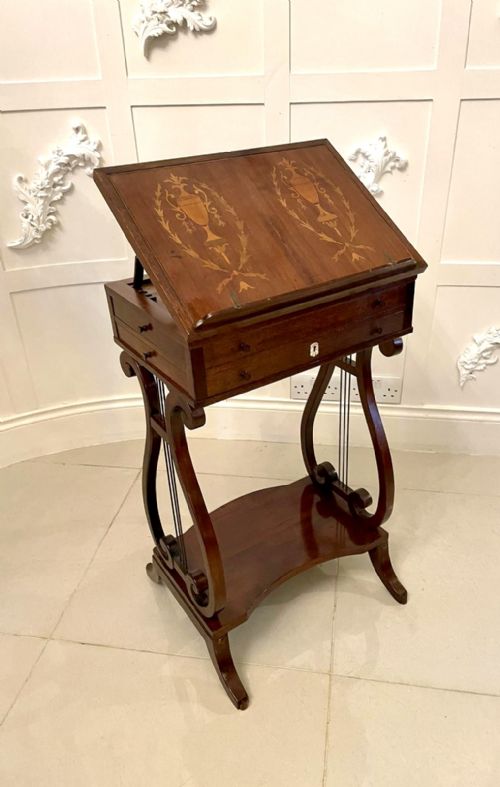
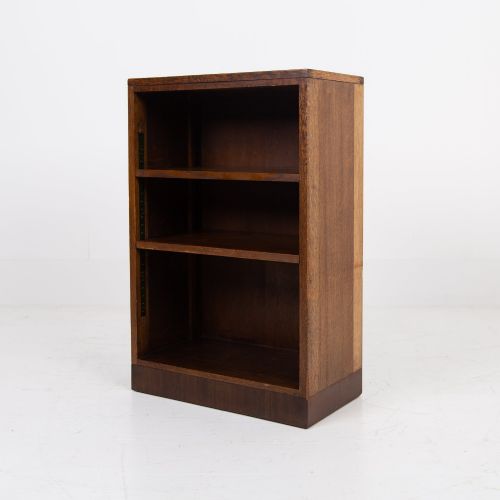
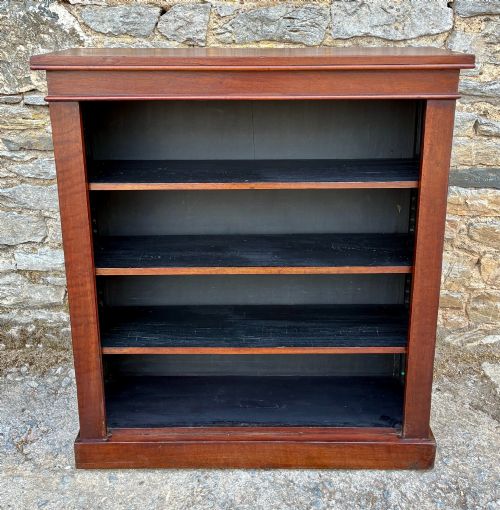
On this page, you are most likely to meet table top reading stands and freestanding reading tables from the nineteenth century. These forms often combine reading slopes with occasional tables, music stands, or floor-standing bookcases featuring adjustable shelves.
The styles range from Georgian and Regency designs to Victorian and Edwardian iterations, reflecting the changing tastes in domestic libraries and music rooms over the decades. Makers utilised specific configurations, such as campaign variants and tripod side tables, to suit different domestic spaces.
Materials and construction methods
Carpenters and cabinet makers relied heavily on timber such as mahogany and oak, occasionally turning to ebonised wood, walnut, rosewood, pine, and inlaid timber. These woods provided the structural integrity needed to support heavy books and standing library volumes.
Metal components, notably brass and cast iron, appear in the mechanical ratchets, hinges, and supports that allow the stands to tilt and adjust. Inlaid details and parquetry further decorated the surfaces of finer reading stands and book rests.
Adjustable Book Stand Retail Price Guide 2026
Typical asking prices for adjustable book stand among the pieces listed under this phrase on Sellingantiques today, from the lower quarter to the upper quarter. They describe what is for sale here now, not the wider market.
Listings feature mahogany, oak, walnut, rosewood, pine, and ebonised wood alongside brass and cast iron fittings.
Distinctions in quality
The refinement of the adjustment mechanism separates standard pieces from the finest examples. Smooth movement in the brass ratchets and sturdy locking action indicate superior craftsmanship.
The selection of timber grain, such as figured mahogany or solid golden oak, alongside precise joinery and inlay work, distinguishes utilitarian stands from more ambitious library furniture.
Carters Of London·Gillows·Swann And Millican
The Adjustable Book Stand Glossary
- Campaign
- Portable furniture designed for travel, featuring folding or dismantling elements used by military officers.
- Ebonised
- Timber treated with a finish to imitate ebony, creating a dark, uniform appearance.
- Parquetry
- Geometric mosaic woodwork used for decorative surface patterns on tables and stands.
- Ratchet
- A mechanical device with teeth and a pawl that allows an adjustable stand to lock at various angles.
- Tripod
- A three-legged support base commonly found on music stands and occasional reading tables.
Adjustable Book Stand: Frequently Asked Questions
What is an adjustable book stand?
An adjustable book stand is a piece of furniture designed to hold open books or music sheets at a comfortable reading angle. These stands vary from small table top reading slopes to larger freestanding library furniture.
They appear in materials like mahogany and oak, often incorporating brass ratchets for tilting mechanisms.
How were adjustable book stands used?
Readers, scholars, and musicians used these stands to support heavy volumes, ledgers, or sheet music hands-free. The adjustable angle reduced neck strain during long periods of study or performance.
Many designs doubled as occasional tables or music stands in nineteenth-century parlours and libraries.
How do I date an adjustable book stand?
Dating relies on observing the timber, style characteristics, and the engineering of the adjustment mechanism. Georgian and Regency pieces display classical proportions and simpler brass fittings.
Victorian and Edwardian examples often introduce heavier cast iron supports, more ornate carving, or varying wood choices like ebonised timber.
Where should I place a reading stand?
Table top reading stands sit comfortably on desks, side tables, or occasional tables within a study or library. Freestanding versions function well beside armchairs or as standalone pieces in a room.
Ensure they sit away from direct heat sources to protect the timber and brass mechanisms.